Building Blocks
Subcategorias de "Building Blocks"
- Ácidos Borónicos e Derivados de Ácido Borónico(5.774 produtos)
- Building Blocks Quirais(1.237 produtos)
- Building Blocks Hidrocarbonetos(6.098 produtos)
- Building Blocks orgânicos(60.970 produtos)
Foram encontrados 205134 produtos de "Building Blocks"
2-Cyclopropylphenol
CAS:2-Cyclopropylphenol is a hydrogen chloride derivative of 2-cyclohexen-1-one. It has been shown to have high affinity for the α receptor, which is a functional group in the integrin receptor that mediates cell adhesion. 2-Cyclopropylphenol has been shown to be effective for the treatment of hepatitis. 2-Cyclopropylphenol also forms an organometallic complex with platinum, which can be used as an anticancer agent and shows good antiviral activity against hepatitis C virus (HCV). The molecular modeling of this compound was done by using quantum chemical calculations and NMR spectra. The synthesis of this compound was developed from benzene and ethynylbenzene. The photochemical properties of this compound were investigated by methane monooxygenase reconstitution studies.Fórmula:C9H10OPureza:Min. 95%Peso molecular:134.18 g/mol5-Ketohexanenitrile
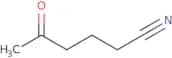
CAS:5-Ketohexanenitrile is a liquid that is used in the production of medicine. The compound has been shown to be an effective inhibitor of the enzyme, dehydrogenase, which catalyzes the conversion of 5-ketohexanoic acid to hexadecanoic acid. This reaction is important for the oxidation of fatty acids and can be found in all living organisms. 5-Ketohexanenitrile has also been shown to inhibit the enzyme, hydrogen peroxide oxidase, which catalyzes the conversion of hydrogen peroxide to water and oxygen gas. 5-Ketohexanenitrile is also an intermediate in acrylonitrile production. It can be produced by vaporizing hexadecanoic acid with a catalyst such as trimethylpyridine or acetic acid. 5-Ketohexanenitrile can exist as two isomers: cis and trans. It is a primary amine that reacts with alkali metals such asFórmula:C6H9NOPureza:Min. 95%Peso molecular:111.14 g/mol2-(Methoxycarbonyl)-1,3-oxazole-4-carboxylic acid
CAS:Versatile small molecule scaffoldFórmula:C6H5NO5Pureza:Min. 95%Peso molecular:171.11 g/mol(2-Chloropyridin-3-yl)acetic acid
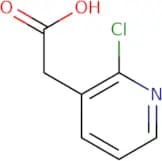
CAS:Versatile small molecule scaffoldFórmula:C7H6ClNO2Pureza:Min. 95%Peso molecular:171.6 g/mol4-(3-Aminopropyl)aniline
CAS:Versatile small molecule scaffoldFórmula:C9H14N2Pureza:Min. 95%Peso molecular:150.22 g/molMethyl 4-(2-Bromoethyl)benzoate
CAS:Methyl 4-(2-bromoethyl)benzoate is a potent HDAC6 inhibitor. It has been shown to inhibit cancer cell growth and induce apoptosis in vitro and in vivo. Methyl 4-(2-Bromoethyl)benzoate is also an anti-cancer agent that inhibits the histone deacetylase enzyme, which then prevents the transcription of genes involved in cancer development. In addition, this agent inhibits the production of prostaglandin E2, which may contribute to its anti-cancer activity. The most common side effects are nausea and vomiting.Fórmula:C10H11BrO2Pureza:Min. 95%Peso molecular:243.1 g/molN-(4-Aminophenyl)-N-methyl-2-(4-methylpiperazin-1-yl)acetamide
CAS:N-(4-Aminophenyl)-N-methyl-2-(4-methylpiperazin-1-yl)acetamide is an environmental and industrial chemical that is used as a formate, benzoate, and methyl benzoate intermediate. It reacts with nitric acid to form N-(4-aminophenyl)-N-methyl-2-(4-nitrophenoxy)acetamide (NPA). NPA has been shown to have antiangiogenic properties. NPA inhibits the proliferation of endothelial cells by interfering with the cell cycle and inducing apoptosis.Fórmula:C14H22N4OPureza:Min. 95%Peso molecular:262.35 g/mol2,4,6-trichloropyridine-3-carbonitrile
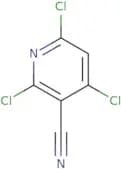
CAS:Versatile small molecule scaffoldFórmula:C6HCl3N2Pureza:Min. 95%Peso molecular:207.4 g/mol3,3²-Dithiobis(propionitrile)
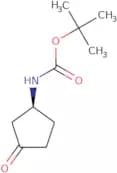
CAS:3,3²-Dithiobis(propionitrile) is a molecule that includes sodium hydroxide solution and acrylonitrile. It reacts with 3-mercaptopropionic acid to form sodium hydrogen ester compounds. This reaction takes place in a sealed container and is catalyzed by carbonic and hydrochloric acids. The product of this reaction is 3-thiocyanatoacrylic acid.Fórmula:C6H8N2S2Pureza:Min. 95%Peso molecular:172.27 g/mol(S)-tert-Butyl (3-oxocyclopentyl)carbamate
CAS:Versatile small molecule scaffoldFórmula:C10H17NO3Pureza:Min. 95%Peso molecular:199.25 g/mol4-Chloro-1H-pyrazolo[3,4-b]pyridine-3-carboxylic acid
CAS:Versatile small molecule scaffoldFórmula:C7H4ClN3O2Pureza:Min. 95%Peso molecular:197.58 g/moltert-butyl (2-amino-2-methylpropyl)carbamate
CAS:Versatile small molecule scaffoldFórmula:C9H20N2O2Pureza:Min. 95%Peso molecular:188.27 g/molTimonacic
CAS:Timonacic is an analog of nicotinamide that has been shown to be an effective inhibitor of energy metabolism in the mitochondria. It has antioxidative properties and can protect against the development of heart disease by inhibiting the production of reactive oxygen species. Timonacic's anti-inflammatory properties may be due to its ability to inhibit prostaglandin synthesis. It also has a high affinity for fatty acids, which may contribute to its inhibitory effects on lipid peroxidation. This drug has a carboxy terminal and is used as a sodium salt, which may play a role in its enzyme inhibition activity. Timonacic inhibits the activities of enzymes such as carnitine acetyltransferase and pyruvate dehydrogenase kinase, which are involved in the biosynthesis of fatty acids. The intramolecular hydrogen bonds formed with timonacic may contribute to its inhibitory effect on these enzymes.
Fórmula:C4H7NO2SPureza:Min. 95%Peso molecular:133.17 g/mol4-[4-(Tetramethyl-1,3,2-dioxaborolan-2-yl)-1H-pyrazol-1-yl]pyridine
CAS:Versatile small molecule scaffoldFórmula:C14H18BN3O2Pureza:Min. 95%Peso molecular:271.12 g/molBromo-PEG4-azide
CAS:Bromo-PEG4-azide is a PEG compound with two different functional groups (also known as heterobifunctional). Unlike homobifunctional PEG compounds (same functional group on both ends), this type of compounds are more versatile as have two different anchor points. Bromo-PEG4-azide is used as a linker and spacer to add a PEG moiety, via pegylation (a bioconjugation technique) to proteins, peptides, oligonucleotides, small molecules and nanoparticles.
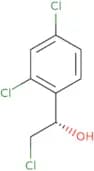
Fórmula:C10H20BrN3O4Pureza:Min. 95%Peso molecular:326.19 g/mol(S)-2,4-Dichloro-±-(chloromethyl)benzyl Alcohol
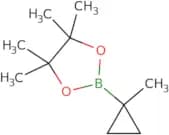
CAS:Versatile small molecule scaffoldFórmula:C8H7Cl3OPureza:Min. 95%Peso molecular:225.49 g/mol4,4,5,5-Tetramethyl-2-(1-methylcyclopropyl)-1,3,2-dioxaborolane
CAS:Versatile small molecule scaffoldFórmula:C10H19BO2Pureza:Min. 95%Peso molecular:182.07 g/molMethyl 5-Hexynoate
CAS:Methyl 5-hexynoate is a synthetic product that can be synthesized from soybean lipoxygenase and hydrogenation reduction. This product has been shown to be a useful synthon for the synthesis of monoclonal antibodies with high binding affinity. The synthetic pathway, which involves cross-coupling and asymmetric synthesis, is outlined in the diagram below. The following are the steps involved in the production of methyl 5-hexynoate: 1) Addition of ethyl bromide to terminal alkynes 2) Addition of hydrochloric acid 3) Reaction with potassium tert-butoxide 4) Hydrogenation reduction 5) Cross-coupling reaction 6) Asymmetric synthesis
Fórmula:C7H10O2Pureza:Min. 95%Peso molecular:126.15 g/mol8-Chlorotetrazolo[1,5-A]pyrazine
CAS:8-Chlorotetrazolo[1,5-A]pyrazine is a chlorine-containing compound. It is a heterocyclic aromatic organic compound and an important intermediate in the synthesis of other compounds. 8-Chlorotetrazolo[1,5-A]pyrazine is not found in nature. The elimination of chlorine from 8-chlorotetrazolo[1,5-A]pyrazine produces benzotriazole and the molecule tetrazole. 8-Chlorotetrazolo[1,5-A]pyrazine is used as a raw material for many organic syntheses.Fórmula:C4H2N5ClPureza:Min. 95%Peso molecular:155.54 g/mol2-(Prop-2-ynyloxy)acetic acid
CAS:Versatile small molecule scaffoldFórmula:C5H6O3Pureza:Min. 95%Peso molecular:114.1 g/mol






![4-Chloro-1H-pyrazolo[3,4-b]pyridine-3-carboxylic acid](/_next/image/?url=https%3A%2Fstatic.cymitquimica.com%2Fproducts%2F3D%2Fthumb-webp%2FULD13261.webp&w=3840&q=75)


![4-[4-(Tetramethyl-1,3,2-dioxaborolan-2-yl)-1H-pyrazol-1-yl]pyridine](/_next/image/?url=https%3A%2Fstatic.cymitquimica.com%2Fproducts%2F3D%2Fthumb-webp%2FARC54869.webp&w=3840&q=75)


![8-Chlorotetrazolo[1,5-A]pyrazine](/_next/image/?url=https%3A%2Fstatic.cymitquimica.com%2Fproducts%2F3D%2Fthumb-webp%2FCDA88819.webp&w=3840&q=75)