Building Blocks
Esta seção contém produtos fundamentais para a síntese de compostos orgânicos e biológicos. Building blocks são os materiais de partida essenciais usados para construir moléculas complexas através de várias reações químicas. Eles desempenham um papel crítico na descoberta de medicamentos, ciência dos materiais e pesquisa química. Na CymitQuimica, oferecemos uma ampla gama de building blocks de alta qualidade para apoiar suas pesquisas inovadoras e projetos industriais, garantindo que você tenha os componentes essenciais para uma síntese bem-sucedida.
Subcategorias de "Building Blocks"
- Ácidos Borónicos e Derivados de Ácido Borónico(5.778 produtos)
- Building Blocks Quirais(1.243 produtos)
- Building Blocks Hidrocarbonetos(6.097 produtos)
- Building Blocks orgânicos(61.052 produtos)
Foram encontrados 201390 produtos de "Building Blocks"
Ordenar por
Pureza (%)
0
100
|
0
|
50
|
90
|
95
|
100
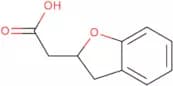
2-(2,3-Dihydro-1-benzofuran-2-yl)acetic acid
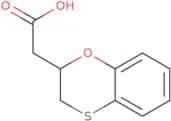
CAS:<p>Versatile small molecule scaffold</p>Fórmula:C10H10O3Pureza:Min. 95%Peso molecular:178.18 g/mol2-(2,3-Dihydro-1,4-benzoxathiin-2-yl)acetic acid
CAS:<p>Versatile small molecule scaffold</p>Fórmula:C10H10O3SPureza:Min. 95%Peso molecular:210.25 g/molN-{[4-(Aminomethyl)phenyl]methyl}acetamide
CAS:Versatile small molecule scaffoldFórmula:C10H14N2OPureza:Min. 95%Peso molecular:178.23 g/molUndec-10-en-1-amine
CAS:Undec-10-en-1-amine is a chemical compound with the molecular formula C11H23N. It has a reactive chemical structure that can undergo reactions with other molecules. Undec-10-en-1-amine is used as a model system in carbohydrate chemistry and biological studies. It is also used in silicon polymerizations, glycopolymer synthesis, and primary amino acid synthesis. Undec-10-en-1-amine has been shown to be cytotoxic, which may be due to its ability to deaminate cytidine residues on DNA. This reaction results in the formation of uracil, which blocks RNA synthesis and leads to cell death.Fórmula:C11H23NPureza:Min. 95%Peso molecular:169.31 g/mol5,5-dimethylazepan-2-one
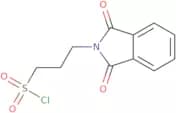
CAS:<p>Versatile small molecule scaffold</p>Fórmula:C8H15NOPureza:Min. 95%Peso molecular:141.21 g/mol3-(1,3-dioxo-1,3-dihydro-2H-isoindol-2-yl)propane-1-sulfonyl chloride
CAS:Versatile small molecule scaffoldFórmula:C11H10ClNO4SPureza:Min. 95%Peso molecular:287.71 g/mol3-Methanesulfonyl-5-methoxyaniline
CAS:Versatile small molecule scaffoldFórmula:C8H11NO3SPureza:Min. 95%Peso molecular:201.25 g/molBicyclo[4.1.0]heptane-1-carbaldehyde
CAS:Versatile small molecule scaffoldFórmula:C8H12OPureza:Min. 95%Peso molecular:124.18 g/mol{Bicyclo[4.1.0]heptan-1-yl}methanol
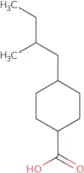
CAS:<p>Versatile small molecule scaffold</p>Fórmula:C8H14OPureza:Min. 95%Peso molecular:126.2 g/mol4-(2-Methylbutyl)cyclohexane-1-carboxylic acid
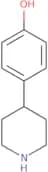
CAS:Versatile small molecule scaffoldFórmula:C12H22O2Pureza:Min. 95%Peso molecular:198.3 g/mol4-(Piperidin-4-yl)phenol
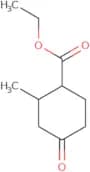
CAS:<p>4-(Piperidin-4-yl)phenol is a potent antipsychotic drug that belongs to the group of piperidines. It has been shown to be active in animal models and as an antipsychotic agent in humans. 4-(Piperidin-4-yl)phenol binds to alpha and beta adrenergic receptors, serotonin receptors, dopamine receptors, and histamine H1 receptors. It has been shown to have high potency and affinity for these receptors. This drug is also cloned from human brain tissue and has acted as a subtype-selective antagonist at cloned human alpha 1A-adrenergic receptor.</p>Fórmula:C11H15NOPureza:Min. 95%Peso molecular:177.25 g/molEthyl 2-methyl-4-oxocyclohexane-1-carboxylate
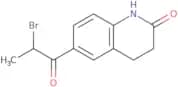
CAS:Versatile small molecule scaffoldFórmula:C10H16O3Pureza:Min. 95%Peso molecular:184.23 g/mol6-(2-Bromopropanoyl)-1,2,3,4-tetrahydroquinolin-2-one
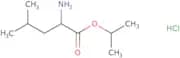
CAS:Versatile small molecule scaffoldFórmula:C12H12BrNO2Pureza:Min. 95%Peso molecular:282.13 g/molPropan-2-yl (2S)-2-amino-4-methylpentanoate hydrochloride
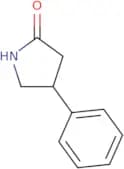
CAS:Versatile small molecule scaffoldFórmula:C9H20ClNO2Pureza:Min. 95%Peso molecular:209.71 g/mol(4S)-4-Phenylpyrrolidin-2-one
CAS:Versatile small molecule scaffoldFórmula:C10H11NOPureza:Min. 95%Peso molecular:161.2 g/mol(2S)-2-{[(tert-Butoxy)carbonyl]amino}-3-(3,4-dihydroxyphenyl)-2-methylpropanoic acid
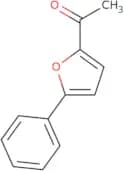
CAS:Versatile small molecule scaffoldFórmula:C15H21NO6Pureza:Min. 95%Peso molecular:311.3 g/mol1-(5-Phenylfuran-2-yl)ethan-1-one
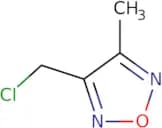
CAS:<p>1-(5-Phenylfuran-2-yl)ethan-1-one is a chemical compound that has been shown to be an effective method for synthesizing indole derivatives from 5-phenyl furan-2-carboxylic acid. The indole ring of the 1-(5-Phenylfuran-2-yl)ethan-1-one is derived from the furan ring, which is formed by a rearrangement of the carboxylic acid. This transformation can also be accomplished with other electrophilic reactants, such as thionyl chloride or phosphorus pentachloride. The synthesis of 1-(5-Phenylfuran-2-yl)ethan-1 can be achieved by the rearrangement of 2,3,4,5 tetrahydrofuran.<br>Synlett 2004, 1670</p>Fórmula:C12H10O2Pureza:Min. 95%Peso molecular:186.21 g/mol3-Chloromethyl-4-methyl-furazan
CAS:3-Chloromethyl-4-methyl-furazan is a colorless liquid that is soluble in alcohol, ether and benzene. It has a boiling point of 104°C and an average molecular weight of 183.3. 3-Chloromethyl-4-methyl-furazan reacts with strong bases to form sulfuryl chloride, which is used as a precursor to other compounds. It can also be used for the chlorination of organic compounds or the manufacture of various sulfonyl chlorides.Fórmula:C4H5ClN2OPureza:Min. 95%Peso molecular:132.55 g/mol7-Aminoheptanoic Acid Hydrochloride
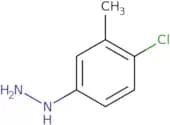
CAS:7-Aminoheptanoic Acid Hydrochloride is a product that is obtained from the reaction of diethyl malonate with hydroxylamine. It is a nucleophilic compound that can react with various electrophiles, such as phthalimide. This product has high yields and can be used in organic synthesis to make other compounds. The crystallization of 7-Aminoheptanoic Acid Hydrochloride can be done by refluxing in hydrochloric acid and then decompressing the solution. The crystallizing agent used for this process can be either an organic solvent or water. This product can also be produced on a large scale using the malonate method.Fórmula:C7H16ClNO2Pureza:Min. 95%Peso molecular:181.66 g/mol(4-Chloro-3-methyl-phenyl)-hydrazine
CAS:<p>Versatile small molecule scaffold</p>Fórmula:C7H9ClN2Pureza:Min. 95%Peso molecular:156.62 g/mol

![N-{[4-(Aminomethyl)phenyl]methyl}acetamide](/_next/image/?url=https%3A%2Fstatic.cymitquimica.com%2Fproducts%2F3D%2Fthumb-webp%2FMCA59205.webp&w=3840&q=75)



![Bicyclo[4.1.0]heptane-1-carbaldehyde](/_next/image/?url=https%3A%2Fstatic.cymitquimica.com%2Fproducts%2F3D%2Fthumb-webp%2FMCA60934.webp&w=3840&q=75)
![{Bicyclo[4.1.0]heptan-1-yl}methanol](/_next/image/?url=https%3A%2Fstatic.cymitquimica.com%2Fproducts%2F3D%2Fthumb-webp%2FMCA60935.webp&w=3840&q=75)
![(2S)-2-{[(tert-Butoxy)carbonyl]amino}-3-(3,4-dihydroxyphenyl)-2-methylpropanoic acid](/_next/image/?url=https%3A%2Fstatic.cymitquimica.com%2Fproducts%2F3D%2Fthumb-webp%2FMCA63137.webp&w=3840&q=75)