Building Blocks
Esta seção contém produtos fundamentais para a síntese de compostos orgânicos e biológicos. Building blocks são os materiais de partida essenciais usados para construir moléculas complexas através de várias reações químicas. Eles desempenham um papel crítico na descoberta de medicamentos, ciência dos materiais e pesquisa química. Na CymitQuimica, oferecemos uma ampla gama de building blocks de alta qualidade para apoiar suas pesquisas inovadoras e projetos industriais, garantindo que você tenha os componentes essenciais para uma síntese bem-sucedida.
Subcategorias de "Building Blocks"
- Ácidos Borónicos e Derivados de Ácido Borónico(5.756 produtos)
- Building Blocks Quirais(1.242 produtos)
- Building Blocks Hidrocarbonetos(6.095 produtos)
- Building Blocks orgânicos(61.051 produtos)
Foram encontrados 199813 produtos de "Building Blocks"
Ordenar por
Pureza (%)
0
100
|
0
|
50
|
90
|
95
|
100
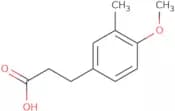
3-(4-Methoxy-3-methylphenyl)propanoic acid
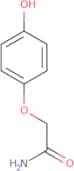
CAS:<p>Versatile small molecule scaffold</p>Fórmula:C11H14O3Pureza:Min. 95%Peso molecular:194.23 g/mol2-(4-Hydroxyphenoxy)acetamide
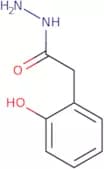
CAS:<p>Versatile small molecule scaffold</p>Fórmula:C8H9NO3Pureza:Min. 95%Peso molecular:167.16 g/mol2-(2-Hydroxyphenyl)acetohydrazide
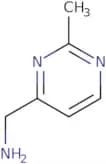
CAS:<p>Versatile small molecule scaffold</p>Fórmula:C8H10N2O2Pureza:Min. 95%Peso molecular:166.18 g/mol(2-Methylpyrimidin-4-yl)methanamine
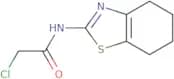
CAS:<p>Versatile small molecule scaffold</p>Fórmula:C6H9N3Pureza:Min. 95%Peso molecular:123.16 g/mol2-Chloro-N-(4,5,6,7-tetrahydro-1,3-benzothiazol-2-yl)acetamide
CAS:Versatile small molecule scaffoldFórmula:C9H11ClN2OSPureza:Min. 95%Peso molecular:230.72 g/mol4-Bromomethanesulfonylmorpholine
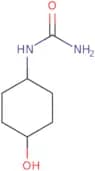
CAS:<p>Versatile small molecule scaffold</p>Fórmula:C5H10BrNO3SPureza:Min. 95%Peso molecular:244.11 g/mol(4-Hydroxycyclohexyl)urea
CAS:<p>Versatile small molecule scaffold</p>Fórmula:C7H14N2O2Pureza:Min. 95%Peso molecular:158.2 g/mol1H,2H,3H,3aH,4H,9H-Pyrrolo[2,1-b]quinazolin-9-one
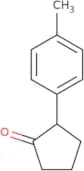
CAS:<p>Versatile small molecule scaffold</p>Fórmula:C11H12N2OPureza:Min. 95%Peso molecular:188.23 g/mol2-(4-Methylphenyl)cyclopentan-1-one
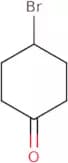
CAS:<p>Versatile small molecule scaffold</p>Fórmula:C12H14OPureza:Min. 95%Peso molecular:174.24 g/mol4-bromocyclohexan-1-one
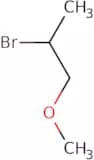
CAS:<p>4-Bromocyclohexan-1-one is a dicarbonyl compound with a cyclohexane ring. It is used as an intermediate in the synthesis of other chemicals, such as dibromobenzene and monomers. This chemical has been shown to have anti-tumor activity against colon cancer cells in vitro and in vivo. 4-Bromocyclohexan-1-one has been shown to bind to DNA, inhibiting DNA synthesis and RNA synthesis. 4-Bromocyclohexan-1-one also inhibits the growth of human tumor cells in culture. The chemical is biodegradable, which limits its toxicity to the environment.</p>Fórmula:C6H9BrOPureza:Min. 95%Peso molecular:177 g/mol2-bromo-1-methoxypropane
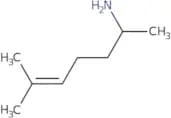
CAS:<p>2-bromo-1-methoxypropane (BMP) is a molecule that inhibits the activity of the enzyme cytochrome P450. It has high solubility and permeability, which makes it suitable for oral administration. BMP is metabolized by esterases and glucuronidases to produce 2-bromo-1-hydroxypropane, which is more soluble in water than 2-bromo-1-methoxypropane. This drug has been shown to be orally bioavailable when administered in rats and monkeys. BMP also has a low molecular weight, which facilitates its passage across cellular membranes. The metabolic stability of BMP has been optimized to increase its bioavailability.</p>Fórmula:C4H9BrOPureza:Min. 95%Peso molecular:153.02 g/mol6-Methylhept-5-en-2-amine
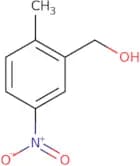
CAS:<p>Versatile small molecule scaffold</p>Fórmula:C8H17NPureza:Min. 95%Peso molecular:127.23 g/mol(2-Methyl-5-nitrophenyl)methanol
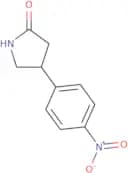
CAS:<p>(2-Methyl-5-nitrophenyl)methanol is an ionic, synthetic and diaxial analog that summarizes the diversity of ketones, nitro compounds and dopamine. It has been synthesized from 2-methylphenol and nitric acid in one step. This compound has been found to be a precursor for the biosynthesis of natural products such as dobutamine, dopamine and nitric oxide. The rearrangement of this compound leads to the formation of an aromatic ring with a nitrogen atom at its center. The synthesis of this compound is summarized in Figure 1.</p>Fórmula:C8H9NO3Pureza:Min. 95%Peso molecular:167.16 g/mol4-(4-nitrophenyl)pyrrolidin-2-one
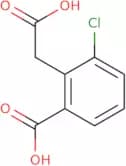
CAS:<p>Versatile small molecule scaffold</p>Fórmula:C10H10N2O3Pureza:Min. 95%Peso molecular:206.2 g/mol2-(Carboxymethyl)-3-chlorobenzoic acid
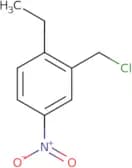
CAS:Versatile small molecule scaffoldFórmula:C9H7ClO4Pureza:Min. 95%Peso molecular:214.6 g/mol2-(Chloromethyl)-1-ethyl-4-nitrobenzene
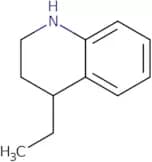
CAS:Versatile small molecule scaffoldFórmula:C9H10ClNO2Pureza:Min. 95%Peso molecular:199.63 g/mol4-Ethyl-1,2,3,4-tetrahydroquinoline
CAS:<p>Versatile small molecule scaffold</p>Fórmula:C11H15NPureza:Min. 95%Peso molecular:161.24 g/mol(3-Bromopropoxy)cyclohexane
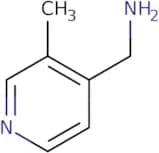
CAS:<p>Versatile small molecule scaffold</p>Fórmula:C9H17BrOPureza:Min. 95%Peso molecular:221.13 g/mol(3-Methylpyridin-4-yl)methanamine
CAS:<p>Versatile small molecule scaffold</p>Fórmula:C7H10N2Pureza:Min. 95%Peso molecular:122.17 g/mol2-Cyclohexylbenzoic Acid
CAS:<p>2-Cyclohexylbenzoic acid is a chiral compound that belongs to the class of pharmaceutical preparations. It is used as an inhibitor of enzymes such as hydroxylase, which is involved in the production of prostaglandins and leukotrienes, and has been shown to be effective in treating bowel disease. 2-Cyclohexylbenzoic acid may also be effective in the treatment of chronic bronchitis and autoimmune diseases. <br>2-Cyclohexylbenzoic acid binds to the active site on certain enzymes, thereby inhibiting their function. This drug also has a strong inhibitory effect on inflammation and oxidative stress, which may be due to its ability to inhibit phospholipase A2 (PLA2), an enzyme that triggers inflammatory reactions by catalyzing the release of arachidonic acid from membrane phospholipids. The light exposure can cause photochemical damage to the skin by inducing oxidation or perox</p>Fórmula:C13H16O2Pureza:Min. 95%Peso molecular:204.26 g/mol


![1H,2H,3H,3aH,4H,9H-Pyrrolo[2,1-b]quinazolin-9-one](/_next/image/?url=https%3A%2Fstatic.cymitquimica.com%2Fproducts%2F3D%2Fthumb-webp%2FXAA45810.webp&w=3840&q=75)