Building Blocks
Subcategorias de "Building Blocks"
- Ácidos Borónicos e Derivados de Ácido Borónico(5.774 produtos)
- Building Blocks Quirais(1.237 produtos)
- Building Blocks Hidrocarbonetos(6.098 produtos)
- Building Blocks orgânicos(60.970 produtos)
Foram encontrados 205134 produtos de "Building Blocks"
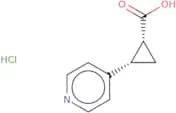
rac-(1R,2S)-2-(Pyridin-4-yl)cyclopropane-1-carboxylic acid hydrochloride
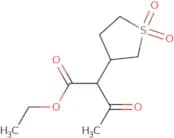
CAS:Versatile small molecule scaffoldFórmula:C9H10ClNO2Pureza:Min. 95%Peso molecular:199.6 g/molα-Acetyltetrahydro-3-thiopheneacetic acid ethyl ester 1,1-dioxide
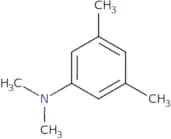
CAS:Versatile small molecule scaffoldFórmula:C10H16O5SPureza:Min. 95%Peso molecular:248.3 g/molN,N,3,5-Tetramethylaniline
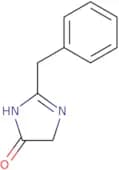
CAS:N,N,3,5-Tetramethylaniline is a colorless liquid that is soluble in water. It has an aromatic odor and is used as a solvent. N,N,3,5-Tetramethylaniline has been shown to react with 4-dimethylaminobenzoic acid to form a thioxanthone by an irreversible oxidation process. This reaction requires activation energies of 34.2 kcal/mol for the initiation step and 17.1 kcal/mol for termination. The reaction mechanism can be described as:Fórmula:C10H15NPureza:Min. 95%Peso molecular:149.24 g/mol2-Benzyl-1H-imidazol-4(5H)-one
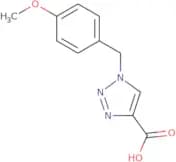
CAS:Versatile small molecule scaffoldFórmula:C10H10N2OPureza:Min. 95%Peso molecular:174.2 g/mol1-(4-Methoxyphenyl)-1H-1,2,3-triazole-4-carboxylic acid
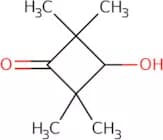
CAS:Versatile small molecule scaffoldFórmula:C11H11N3O3Pureza:Min. 95%Peso molecular:233.22 g/mol3-Hydroxy-2,2,4,4-tetramethylcyclobutan-1-one
CAS:3-Hydroxy-2,2,4,4-tetramethylcyclobutan-1-one is a monomer that is soluble in organic solvents. It can be isolated by centrifugation of the reaction mixture and purified by filtration or recrystallization. 3-Hydroxy-2,2,4,4-tetramethylcyclobutan-1-one has been used as a catalyst for the polymerization of ethylene oxide to polyethers. 3-Hydroxy-2,2,4,4-tetramethylcyclobutan-1-one is also an excellent solvent for ruthenium metal and can be used as a reaction solvent for reactions involving this metal.Fórmula:C8H14O2Pureza:Min. 95%Peso molecular:142.2 g/mol2-(3-Methylcyclohexyl)ethan-1-ol
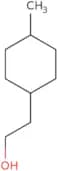
CAS:Versatile small molecule scaffoldFórmula:C9H18OPureza:Min. 95%Peso molecular:142.24 g/mol2-(4-Methylcyclohexyl)ethan-1-ol
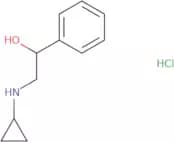
CAS:Versatile small molecule scaffoldFórmula:C9H18OPureza:Min. 95%Cor e Forma:Clear LiquidPeso molecular:142.24 g/mol2-(Cyclopropylamino)-1-phenylethan-1-ol hydrochloride
CAS:Versatile small molecule scaffoldFórmula:C11H16ClNOPureza:Min. 95%Peso molecular:213.7 g/molDimenhydrinate Related Compound E
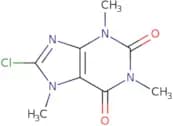
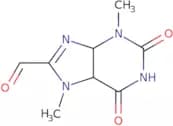
CAS:Produto ControladoDimenhydrinate Related Compound E is a test compound that has shown potentiation of the inhibitory properties of hydrochloric acid against a variety of enzymes. This compound inhibits the enzyme activity of cyclooxygenase-1 (COX-1) and COX-2, which are important in the production of prostaglandins. Dimenhydrinate Related Compound E also has anticancer activity, which may be due to its ability to cause DNA damage by inhibiting the synthesis of proteins needed for cell replication. The use of this compound may have genotoxic effects and chronic exposure should be avoided.Fórmula:C8H9ClN4O2Pureza:Min. 95%Peso molecular:228.64 g/mol3,7-Dimethyl-2,6-dioxo-2,3,6,7-tetrahydro-1H-purine-8-carbaldehyde
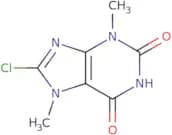
CAS:Versatile small molecule scaffoldFórmula:C8H10N4O3Pureza:Min. 95%Peso molecular:210.19 g/mol8-Chloro-3,7-dimethyl-2,3,6,7-tetrahydro-1H-purine-2,6-dione
CAS:Produto ControladoVersatile small molecule scaffold
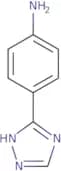
Fórmula:C7H7ClN4O2Pureza:Min. 95%Peso molecular:214.61 g/mol4-(4H-1,2,4-Triazol-3-yl)aniline
CAS:Versatile small molecule scaffold
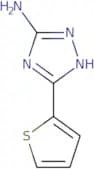
Fórmula:C8H8N4Pureza:Min. 95%Peso molecular:160.18 g/mol5-(Thiophen-2-yl)-4H-1,2,4-triazol-3-amine
CAS:Versatile small molecule scaffoldFórmula:C6H6N4SPureza:Min. 95%Peso molecular:166.21 g/mol2-Chloro-3-nitroimidazo[1,2-a]pyridine
CAS:2-Chloro-3-nitroimidazo[1,2-a]pyridine is a chlorinated derivative of imidazo[1,2-a]pyridine. The nitro group gives the molecule two sites for functionalization and enables it to undergo Suzuki coupling reactions with anilines. The chloro substituent provides the molecule with a high degree of chemical diversity. This compound can be used in cross-coupling reactions with anilines and other heterocycles, such as thiophenes and furans. In addition, this compound has been shown to react with nucleophiles in a nucleophilic substitution reaction to form 2-chloro-5-(substituted)imidazo[1,2-a]pyridinium ions.
Fórmula:C7H4ClN3O2Pureza:Min. 95%Peso molecular:197.58 g/mol5-Bromo-3-methylimidazo[1,2-a]pyridine
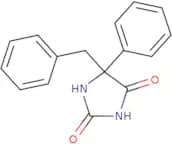
CAS:Versatile small molecule scaffoldFórmula:C8H7BrN2Pureza:Min. 95%Peso molecular:211.06 g/mol5-Benzyl-5-phenylimidazolidine-2,4-dione
CAS:Versatile small molecule scaffoldFórmula:C16H14N2O2Pureza:Min. 95%Peso molecular:266.3 g/molN2,N2-Dimethylpyridine-2,5-diamine
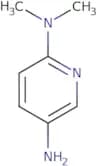
CAS:N2,N2-Dimethylpyridine-2,5-diamine is a gadolinium complex that is used as a contrast agent in magnetic resonance imaging. N2,N2-Dimethylpyridine-2,5-diamine has been shown to be effective in the treatment of cancers and can be used for both diagnostic and therapeutic purposes. The drug can be conjugated with monoclonal antibodies or other drugs to target specific cancer cells. It can also be used to monitor the effectiveness of chemotherapy treatments. The salt form of this drug is soluble in water and stable at acid pH levels. When administered intravenously, it has a high degree of biodistribution and is excreted through the kidneys.
Fórmula:C7H11N3Pureza:Min. 95%Peso molecular:137.18 g/molN2-Phenylpyridine-2,5-diamine
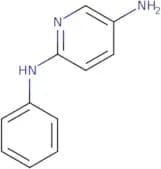
CAS:Versatile small molecule scaffold
Fórmula:C11H11N3Pureza:Min. 95%Peso molecular:185.22 g/mol2-Hydrazinyl-4,6-dimethylpyridine
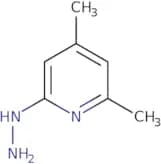
CAS:Versatile small molecule scaffold
Fórmula:C7H11N3Pureza:Min. 95%Peso molecular:137.18 g/mol


![2-Chloro-3-nitroimidazo[1,2-a]pyridine](/_next/image/?url=https%3A%2Fstatic.cymitquimica.com%2Fproducts%2F3D%2Fthumb-webp%2FEAA92652.webp&w=3840&q=75)
![5-Bromo-3-methylimidazo[1,2-a]pyridine](/_next/image/?url=https%3A%2Fstatic.cymitquimica.com%2Fproducts%2F3D%2Fthumb-webp%2FEAA92654.webp&w=3840&q=75)