Building Blocks
Subcategorias de "Building Blocks"
- Ácidos Borónicos e Derivados de Ácido Borónico(5.778 produtos)
- Building Blocks Quirais(1.243 produtos)
- Building Blocks Hidrocarbonetos(6.098 produtos)
- Building Blocks orgânicos(61.042 produtos)
Foram encontrados 204339 produtos de "Building Blocks"
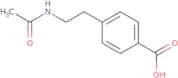
4-(2-Acetamidoethyl)benzoic acid
CAS:Versatile small molecule scaffold
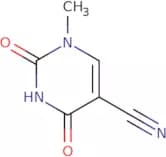
Fórmula:C11H13NO3Pureza:Min. 95%Peso molecular:207.23 g/mol1-Methyl-2,4-dioxo-1,2,3,4-tetrahydro-5-pyrimidinecarbonitrile
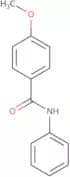
CAS:Versatile small molecule scaffoldFórmula:C6H5N3O2Pureza:Min. 95%Peso molecular:151.13 g/mol4-Methoxy-N-phenyl-benzamide
CAS:4-Methoxy-N-phenyl-benzamide is a biomolecule that belongs to the class of amides. It is synthesized from anilines and amines by coupling with diazo compounds. The reaction mechanism involves the formation of a carbon-nitrogen bond in an electrophilic aromatic substitution reaction. The Langmuir adsorption isotherm technique was used to study the adsorption of 4-methoxybenzamide on copper salt, which has been shown to have high adsorption capacity. This compound also has acidic properties, as it reacts with nitric acid to form a nitro group.
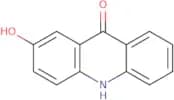
Fórmula:C14H13NO2Pureza:Min. 95%Peso molecular:227.26 g/mol2-Hydroxy-9,10-dihydroacridin-9-one
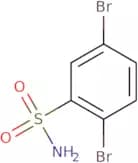
CAS:Versatile small molecule scaffoldFórmula:C13H9NO2Pureza:Min. 95%Peso molecular:211.22 g/mol2,5-Dibromobenzenesulfonamide
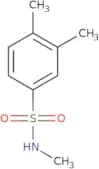
CAS:Versatile small molecule scaffoldFórmula:C6H5Br2NO2SPureza:Min. 95%Peso molecular:314.99 g/molN,3,4-Trimethylbenzene-1-sulfonamide
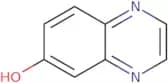
CAS:Versatile small molecule scaffoldFórmula:C9H13NO2SPureza:Min. 95%Peso molecular:199.27 g/molQuinoxalin-6-ol
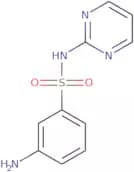
CAS:Quinoxalin-6-ol is an antibacterial agent that has shown to be effective against gram-negative bacteria such as Escherichia coli, Salmonella enteritidis, and Pseudomonas aeruginosa. It also has antifungal activity against Candida albicans and Saccharomyces cerevisiae. Quinoxalin-6-ol is a quinone that can be synthesized from crotonic acid or ethyl acetoacetate. This compound can be found in the form of two isomers (E and Z) which are distinguished by their physical properties.Fórmula:C8H6N2OPureza:Min. 95%Peso molecular:146.15 g/mol3-Amino-N-(pyrimidin-2-yl)benzene-1-sulfonamide
CAS:Versatile small molecule scaffoldFórmula:C10H10N4O2SPureza:Min. 95%Peso molecular:250.28 g/mol4-(2-Methylbut-3-yn-2-yl)morpholine
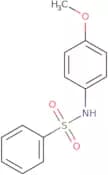
CAS:Versatile small molecule scaffoldFórmula:C9H15NOPureza:Min. 95%Peso molecular:153.22 g/molN-(4-Methoxyphenyl)benzenesulfonamide
CAS:N-(4-Methoxyphenyl)benzenesulfonamide is a pyridinium salt that can be used as a heterogeneous catalyst. It is soluble in organic solvents, such as acetonitrile and amines, and forms micelles at higher concentrations. The pyridinium salt has been shown to be effective in the reduction of indian boronic acids by electrolysis and homogeneous catalysts. It can also be used for the synthesis of conjugates through the reaction with polyvinylpyrrolidone (PVP) or hydrotalcite (HT). This drug was encapsulated into nanoparticles for oral administration.Fórmula:C13H13NO3SPureza:Min. 95%Peso molecular:263.31 g/mol7-(2-Bromoethoxy)-4-methyl-2H-chromen-2-one
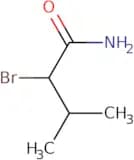
CAS:Versatile small molecule scaffoldFórmula:C12H11BrO3Pureza:Min. 95%Peso molecular:283.12 g/mol2-Bromo-3-methylbutanamide
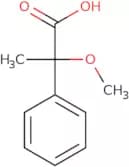
CAS:Versatile small molecule scaffoldFórmula:C5H10BrNOPureza:Min. 95%Peso molecular:180.04 g/mol2-Methoxy-2-phenylpropanoic acid
CAS:2-Methoxy-2-phenylpropanoic acid is a fatty acid that is an immunoregulatory agent. It has been shown to have anti-inflammatory effects in animal models of inflammatory bowel disease and other inflammatory diseases. 2-Methoxy-2-phenylpropanoic acid also has cancer preventive properties, which are mediated through its ability to reduce the formation of amines and hydroxyl groups from amino acids. 2-Methoxy-2-phenylpropanoic acid is used as a pharmaceutical preparation because it is soluble in water, has a low viscosity, and does not react with proteins or other chemicals. This drug can be used as both a dietary supplement and as a pharmaceutical preparation for UV absorption.
Fórmula:C10H12O3Pureza:Min. 95%Peso molecular:180.2 g/molN-[3-(Dimethylamino)phenyl]acetamide
CAS:Versatile small molecule scaffold
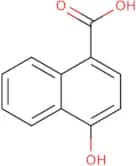
Fórmula:C10H14N2OPureza:Min. 95%Peso molecular:178.23 g/mol4-Hydroxynaphthalene-1-carboxylic acid
CAS:4-Hydroxynaphthalene-1-carboxylic acid (4HNAC) is a naturally occurring compound, which has been isolated from the Streptomyces lividans. 4HNAC can be synthesized in the laboratory by reacting p-hydroxybenzoic acid with ammonia and sodium hydroxide. 4HNAC is an inhibitor of aerobic respiration, and it can be used as a preservative for food because it inhibits spoilage microorganisms such as fungi and yeast. 4HNAC also reacts with amines to form diazo compounds that are useful as dyestuffs or fungicides.Fórmula:C11H8O3Pureza:Min. 95%Peso molecular:188.18 g/mol3,4-Dimethyloxolane-2,5-dione
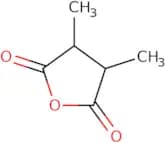
CAS:3,4-Dimethyloxolane-2,5-dione is an organic compound with a molecular weight of 136.16 g/mol and a melting point of −36 °C. This compound has been used as a model for hydrogen bonds in urine samples to detect hiv infection. It is also reactive with hydrochloric acid and has been used for the treatment of inflammatory diseases. 3,4-Dimethyloxolane-2,5-dione has been shown to have anti-inflammatory properties and may be useful in the treatment of pain models. 3,4-Dimethyloxolane-2,5-dione has also been shown to inhibit the activity of diacylglycerol acyltransferase (DGAT) which is involved in lipid metabolism in hepatocytes cells.
Fórmula:C6H8O3Pureza:Min. 95%Peso molecular:128.13 g/molMethyl 2-chloro-2-phenylacetate
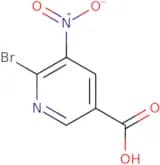
CAS:Methyl 2-chloro-2-phenylacetate is a pyrimidine compound that has been shown to have anti-inflammatory effects. It inhibits the activity of histone deacetylase (HDAC) enzyme, which prevents the activation of inflammatory bowel disease. This drug also has an inhibitory effect on the synthesis of proinflammatory cytokines and chemokines, such as IL-1β and TNFα. Methyl 2-chloro-2-phenylacetate is an inhibitor of clopidogrel, which is used for the prevention of cardiovascular diseases. The molecule does not inhibit CYP450 enzymes in vitro, which means that it does not affect the metabolism of other drugs. Methyl 2-chloro-2-phenylacetate has been shown to be effective against autoimmune diseases such as multiple sclerosis and Crohn's disease.Fórmula:C9H9ClO2Pureza:Min. 95%Peso molecular:184.62 g/mol6-Bromo-5-nitropyridine-3-carboxylic acid
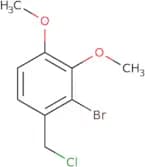
CAS:Versatile small molecule scaffoldFórmula:C6H3BrN2O4Pureza:Min. 95%Peso molecular:247 g/mol2-Bromo-1-(chloromethyl)-3,4-dimethoxybenzene
CAS:Versatile small molecule scaffold
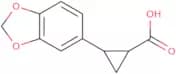
Fórmula:C9H10BrClO2Pureza:Min. 95%Peso molecular:265.53 g/molrac-(1R,2R)-2-(1,3-Dioxaindan-5-yl)cyclopropane-1-carboxylic acid
CAS:Versatile small molecule scaffoldFórmula:C11H10O4Pureza:Min. 95%Peso molecular:206.19 g/mol



![N-[3-(Dimethylamino)phenyl]acetamide](/_next/image/?url=https%3A%2Fstatic.cymitquimica.com%2Fproducts%2F3D%2Fthumb-webp%2FHAA47495.webp&w=3840&q=75)