Building Blocks
Esta seção contém produtos fundamentais para a síntese de compostos orgânicos e biológicos. Building blocks são os materiais de partida essenciais usados para construir moléculas complexas através de várias reações químicas. Eles desempenham um papel crítico na descoberta de medicamentos, ciência dos materiais e pesquisa química. Na CymitQuimica, oferecemos uma ampla gama de building blocks de alta qualidade para apoiar suas pesquisas inovadoras e projetos industriais, garantindo que você tenha os componentes essenciais para uma síntese bem-sucedida.
Subcategorias de "Building Blocks"
- Ácidos Borónicos e Derivados de Ácido Borónico(5.778 produtos)
- Building Blocks Quirais(1.243 produtos)
- Building Blocks Hidrocarbonetos(6.098 produtos)
- Building Blocks orgânicos(61.057 produtos)
Foram encontrados 200710 produtos de "Building Blocks"
Ordenar por
Pureza (%)
0
100
|
0
|
50
|
90
|
95
|
100
2-(Benzyloxy)-4-methylcyclohexan-1-ol
CAS:Versatile small molecule scaffoldFórmula:C14H20O2Pureza:Min. 95%Peso molecular:220.31 g/mol3-Cyclopropyl-4,5-dihydro-1,2-oxazole-5-carboxylic acid
CAS:Versatile small molecule scaffoldFórmula:C7H9NO3Pureza:Min. 95%Peso molecular:155.2 g/mol1,2-Difluoro-4-isocyanato-5-nitrobenzene
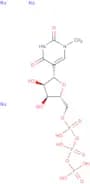
CAS:Versatile small molecule scaffoldFórmula:C7H2F2N2O3Pureza:Min. 95%Peso molecular:200.1 g/molN1-Methyl-pseudouridine-5'-triphosphate trisodium, 100mM aqueous solution
CAS:Methyl-pseudouridine-5'-triphosphate trisodium is the triphosphate of 1-Methylpseudouridine is a substitute for uridine in modified mRNA. This substitution has shown to increase transfection by reducing immuogenicity. UV max wavelength = 272nmFórmula:C10H17N2O15P3•Na3Pureza:Min. 95%Cor e Forma:Clear LiquidPeso molecular:567.17 g/mol4-Diazobenzenesulfonic Acid
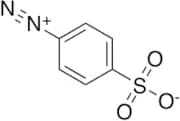
CAS:<p>Applications 4-Diazobenzenesulfonic acid (cas# 305-80-6) is a useful research chemical.<br></p>Fórmula:C6H4N2O3SPeso molecular:184.171,3,5-Trifluorotrichlorobenzene
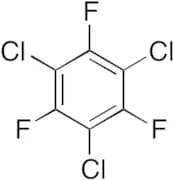
CAS:<p>Applications 1,3,5-Trifluorotrichlorobenzene is a useful reagent.<br></p>Fórmula:C6Cl3F3Peso molecular:235.42Cytosine
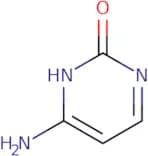
CAS:<p>Pyrimidine nucleobase; component of nucleic acids</p>Fórmula:C4H5N3OPureza:(Hplc) Min. 99%Cor e Forma:White PowderPeso molecular:111.1 g/molCyclobutanesulfonyl chloride
CAS:Cyclobutanesulfonyl chloride is a reagent that is used for the synthesis of 1-6-alkylcyclobutanes. It can be used to synthesize heterocyclic compounds, including those with high optical purity. Cyclobutanesulfonyl chloride has been shown to have antiviral and antiproliferative properties. It has also been shown to exhibit anticancer activity in vitro and in vivo. The mechanism of action for this compound is unclear, but it may inhibit protein synthesis by attacking the amino acid methionine in proteins or by inhibiting DNA replication.Fórmula:C4H7ClO2SPureza:Min. 95%Cor e Forma:Clear LiquidPeso molecular:154.62 g/mol(3S)-3- [4- [(2-Chlorophenyl) methyl] phenoxy] tetrahydrofuran
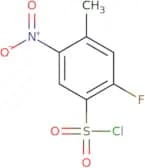
CAS:Please enquire for more information about (3S)-3- [4- [(2-Chlorophenyl) methyl] phenoxy] tetrahydrofuran including the price, delivery time and more detailed product information at the technical inquiry form on this pagePureza:Min. 95%2-Fluoro-4-methyl-5-nitrobenzene-1-sulfonyl chloride
CAS:Versatile small molecule scaffoldFórmula:C7H5ClFNO4SPureza:Min. 95%Cor e Forma:PowderPeso molecular:253.64 g/molTriglycol dichloride
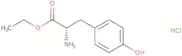
CAS:Triglycol dichloride is a synthetic, water-soluble solid that is prepared by the reaction of 3-chloroperoxybenzoic acid with a hydroxide solution. It has been used in a variety of applications such as the preparation of hemicyanine, the synthesis of polymers, and the degradation of chlorinated hydrocarbons. Triglycol dichloride also has synergistic effects with other photocatalysts, increasing their activity and reducing their cost. Triglycol dichloride can be used to synthesize polymer films or coatings that are biodegradable, have low environmental impact, and are structurally stable. This compound is also unaffected by water or neutral pH and can be used in the production of semiconductors.Fórmula:C6H12Cl2O2Pureza:Min. 95%Cor e Forma:Clear LiquidPeso molecular:187.06 g/molL-Tyrosine ethyl ester hydrochloride
CAS:<p>L-Tyrosine ethyl ester hydrochloride is a non-protein amino acid that inhibits the activity of metalloproteases, which are enzymes that break down proteins. It has been shown to be effective against bowel disease and cancer by inhibiting the release of inflammatory cytokines. L-Tyrosine ethyl ester hydrochloride also has anti-inflammatory properties and can be used in the treatment of depression and liver cirrhosis. This drug is an inhibitor of hydroxylase, which is an enzyme involved in the synthesis of melanin. It is a structural analogue to L-DOPA, which is used for Parkinson's disease. L-Tyrosine ethyl ester hydrochloride has been shown to have antihypertensive effects and can be used as a diuretic agent.</p>Fórmula:C11H15NO3·HClPureza:Min. 95%Cor e Forma:PowderPeso molecular:245.7 g/mol1-Trityl-1H-imidazole-4-carbaldehyde
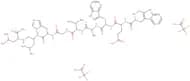
CAS:<p>1-Trityl-1H-imidazole-4-carbaldehyde is a phosphorane that has been synthesized in the laboratory. It is an organometallic compound with a chloroformate ligand and a mononuclear, dimethylformamide complex. 1-Trityl-1H-imidazole-4-carbaldehyde has shown to be an electrophile and binds to receptor sites with high affinity. This may be due to its ability to form hydrogen bonds with the receptor site, which often occurs for pharmacokinetic profiles.</p>Fórmula:C23H18N2OPureza:Min. 95%Peso molecular:338.4 g/molRC-3095 trifluoroacetate
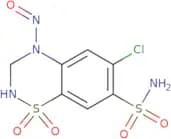
CAS:Please enquire for more information about RC-3095 trifluoroacetate including the price, delivery time and more detailed product information at the technical inquiry form on this pageFórmula:C56H79N15O9•C2HF3O2Pureza:Min. 95%Peso molecular:1,220.35 g/molN-Nitroso hydrochlorothiazide
CAS:Please enquire for more information about N-Nitroso hydrochlorothiazide including the price, delivery time and more detailed product information at the technical inquiry form on this pageFórmula:C7H7ClN4O5S2Pureza:Min. 95%Peso molecular:326.74 g/molN-Nitroso ramipril
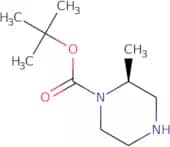
<p>Please enquire for more information about N-Nitroso ramipril including the price, delivery time and more detailed product information at the technical inquiry form on this page</p>Fórmula:C23H31N3O6Pureza:Min. 95%Cor e Forma:PowderPeso molecular:445.51 g/mol(S)-1-N-Boc-2-methylpiperazine
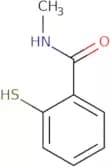
CAS:(S)-1-N-Boc-2-methylpiperazine is a quinolone synthon that has been shown to have antibacterial activity against bacteria. The synthesis of this compound is done through the condensation of piperazine with an N-Boc protected 2,6-dichloroquinoline. This reaction proceeds in good yield and enantioselectivity. The antibacterial properties of (S)-1-N-Boc-2-methylpiperazine are not yet known.Fórmula:C10H20N2O2Pureza:Min. 95%Cor e Forma:White PowderPeso molecular:200.28 g/mol2-Mercapto-N-methylbenzamide
CAS:<p>2-Mercapto-N-methylbenzamide is a synthetic compound that has been shown to have inhibitory activities against activated brain cells and cell lines. This drug has been used in the synthesis of axitinib, a cancer drug that inhibits cellular growth. 2-Mercapto-N-methylbenzamide is also used as a preservative in cosmetics and can be found in carbonated drinks and foods. It has been shown to inhibit the production of serotonin in microbicidal reactions by inhibiting the enzyme hydroxymethyl transferase, which catalyzes the conversion of 5-hydroxytryptophan to serotonin. It also prevents the reaction products from being formed by reacting with hypoxanthine, xanthine, and phosphoribosyl pyrophosphate (PRPP). 2-Mercapto-N-methylbenzamide also reacts with plasma samples to form ethylmercaptoacetate, which is then oxidized to merc</p>Fórmula:C8H9NOSPureza:Min. 95%Cor e Forma:White PowderPeso molecular:167.23 g/mol1H-Indol-2-ylmethanol
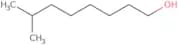
CAS:<p>1H-Indol-2-ylmethanol is a model compound for the synthesis of bioactive molecules. It is used in biological studies as an inhibitor of chronic lymphocytic leukemia, heart disease, and inflammatory pain. The nitro group on 1H-Indol-2-ylmethanol has been shown to activate various enzymes involved in the inflammatory response. The hydroxy group on 1H-Indol-2-ylmethanol has been shown to inhibit cyclooxygenase (COX) enzymes, which are responsible for the production of prostaglandins that cause inflammation.</p>Fórmula:C9H9NOPureza:Min. 95%Cor e Forma:PowderPeso molecular:147.17 g/molIsononyl alcohol
CAS:<p>Isononyl alcohol is a polycarboxylic acid that has been used in the treatment of skin conditions, such as atopic dermatitis and psoriasis. It has been shown to penetrate the skin and stimulate the production of sebum. Isononyl alcohol is also used as a plasticizer for polyvinyl chloride (PVC) and other plastics, which increases their flexibility. This chemical also has a hydrophobic effect, which may be due to its hydroxyl group. The unsaturated alkyl chain on this chemical also makes it susceptible to oxidation by ozone in air and water vapor in air. Isononyl alcohol is metabolized by humans through conjugation with glucuronic acid or sulfate esters.</p>Fórmula:C9H20OPureza:Min. 95%Cor e Forma:Clear LiquidPeso molecular:144.25 g/mol



![(3S)-3- [4- [(2-Chlorophenyl) methyl] phenoxy] tetrahydrofuran](/_next/image/?url=https%3A%2Fstatic.cymitquimica.com%2Fproducts%2F3D%2Fthumb-webp%2FFC181171.webp&w=3840&q=75)