Building Blocks
Esta seção contém produtos fundamentais para a síntese de compostos orgânicos e biológicos. Building blocks são os materiais de partida essenciais usados para construir moléculas complexas através de várias reações químicas. Eles desempenham um papel crítico na descoberta de medicamentos, ciência dos materiais e pesquisa química. Na CymitQuimica, oferecemos uma ampla gama de building blocks de alta qualidade para apoiar suas pesquisas inovadoras e projetos industriais, garantindo que você tenha os componentes essenciais para uma síntese bem-sucedida.
Subcategorias de "Building Blocks"
- Ácidos Borónicos e Derivados de Ácido Borónico(5.778 produtos)
- Building Blocks Quirais(1.243 produtos)
- Building Blocks Hidrocarbonetos(6.098 produtos)
- Building Blocks orgânicos(61.046 produtos)
Foram encontrados 203857 produtos de "Building Blocks"
Ordenar por
Pureza (%)
0
100
|
0
|
50
|
90
|
95
|
100
tert-Butyl N-[2-(4-bromophenyl)-2-oxoethyl]carbamate
CAS:Versatile small molecule scaffoldFórmula:C13H16BrNO3Pureza:Min. 95%Peso molecular:314.18 g/mol3-[(Pyrimidin-2-yl)amino]propanoic acid
CAS:Versatile small molecule scaffoldFórmula:C7H9N3O2Pureza:Min. 95%Peso molecular:167.17 g/mol2-(3-Chlorophenyl)-2-({[(9H-fluoren-9-yl)methoxy]carbonyl}amino)acetic acid
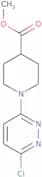
CAS:Versatile small molecule scaffoldFórmula:C23H18ClNO4Pureza:Min. 95%Peso molecular:407.8 g/molMethyl 1-(6-chloro-3-pyridazinyl)-4-piperidinecarboxylate
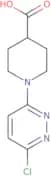
CAS:Methyl 1-(6-chloro-3-pyridazinyl)-4-piperidinecarboxylate is an antibacterial agent that inhibits the growth of bacteria by inhibiting the synthesis of proteins needed for cell wall biosynthesis. It has been shown to be more potent than other quaternary ammonium compounds, such as tetrachloropyridazine and tetrachloropyrimidine. Methyl 1-(6-chloro-3-pyridazinyl)-4-piperidinecarboxylate is used in coatings for use in agriculture, as well as in industrial processes that involve ethylene glycol or ether. This compound is also used in the production of neodymium and ethanol.Fórmula:C11H14ClN3O2Pureza:Min. 95%Peso molecular:255.71 g/mol1-(6-Chloropyridazin-3-yl)piperidine-4-carboxylic acid
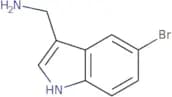
CAS:Versatile small molecule scaffoldFórmula:C10H12ClN3O2Pureza:Min. 95%Peso molecular:241.68 g/mol5-Bromo-1H-indol-3-methylamine
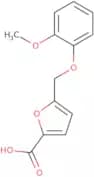
CAS:<p>Versatile small molecule scaffold</p>Fórmula:C9H9BrN2Pureza:Min. 95%Peso molecular:225.08 g/mol5-(2-Methoxy-phenoxymethyl)-furan-2-carboxylic acid
CAS:Versatile small molecule scaffoldFórmula:C13H12O5Pureza:Min. 95%Peso molecular:248.23 g/mol1-[3-(Pyridin-4-yl)phenyl]ethan-1-one
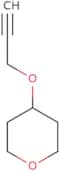
CAS:Versatile small molecule scaffoldFórmula:C13H11NOPureza:Min. 95%Peso molecular:197.23 g/mol4-(Prop-2-yn-1-yloxy)oxane
CAS:<p>Versatile small molecule scaffold</p>Fórmula:C8H12O2Pureza:Min. 95%Peso molecular:140.18 g/mol1-[(2-Bromoethyl)sulfanyl]-4-fluorobenzene
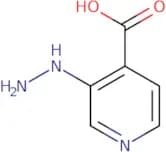
CAS:Versatile small molecule scaffoldFórmula:C8H8BrFSPureza:Min. 95%Peso molecular:235.12 g/mol3-Hydrazinylpyridine-4-carboxylic acid
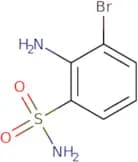
CAS:3-Hydrazinylpyridine-4-carboxylic acid is a chemical compound that is a demethylase inhibitor. It has been shown to penetrate the blood brain barrier and inhibit histone lysine demethylases, which are enzymes responsible for altering the methylation state of histones. 3-Hydrazinylpyridine-4-carboxylic acid has been studied extensively in biochemical assays and cellular models, but its mechanistic activity remains unclear. The medicinal chemistry optimization of this compound may provide insight into other potential therapeutic applications.Fórmula:C6H7N3O2Pureza:Min. 95%Peso molecular:153.14 g/mol2-Amino-3-bromobenzene-1-sulfonamide
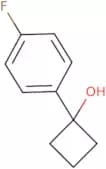
CAS:<p>Versatile small molecule scaffold</p>Fórmula:C6H7BrN2O2SPureza:Min. 95%Peso molecular:251.1 g/mol1-(4-Fluorophenyl)cyclobutan-1-ol
CAS:<p>Versatile small molecule scaffold</p>Fórmula:C10H11FOPureza:Min. 95%Peso molecular:166.19 g/mol2-(Furan-3-yl)-6-hydroxy-3,4-dihydropyrimidin-4-one
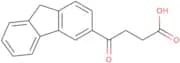
CAS:<p>Versatile small molecule scaffold</p>Fórmula:C8H6N2O3Pureza:Min. 95%Peso molecular:178.1 g/mol4-(9H-Fluoren-3-yl)-4-oxobutanoic acid
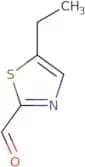
CAS:Versatile small molecule scaffoldFórmula:C17H14O3Pureza:Min. 95%Peso molecular:266.29 g/mol5-Ethyl-1,3-thiazole-2-carbaldehyde
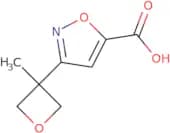
CAS:<p>Versatile small molecule scaffold</p>Fórmula:C6H7NOSPureza:Min. 95%Peso molecular:141.19 g/mol3-(3-Methyloxetan-3-yl)-1,2-oxazole-5-carboxylic acid
CAS:Versatile small molecule scaffoldFórmula:C8H9NO4Pureza:Min. 95%Peso molecular:183.2 g/mol3-{[(tert-Butoxy)carbonyl]amino}-1-[(9H-fluoren-9-ylmethoxy)carbonyl]pyrrolidine-3-carboxylic acid
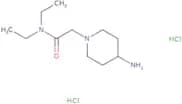
CAS:Versatile small molecule scaffoldFórmula:C25H28N2O6Pureza:Min. 95%Peso molecular:452.5 g/mol2-(4-Aminopiperidin-1-yl)-N,N-diethylacetamide dihydrochloride
CAS:Versatile small molecule scaffoldFórmula:C11H25Cl2N3OPureza:Min. 95%Peso molecular:286.24 g/molKIRA6
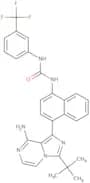
CAS:KIRA6 is a neurotrophic factor that functions as a chemoattractant for neuronal cells and regulates neuronal cell growth. It also has been shown to be a potent inhibitor of serine protease, which is important in the inflammatory response pathway. KIRA6 is used in cancer research to study the response pathway of cancer cells to chemical inhibitors. The KIRA6 protein has homology to other neurotrophic factors, such as nerve growth factor (NGF) and brain-derived neurotrophic factor (BDNF). KIRA6 also has been shown to inhibit the influenza virus and reduce inflammation in mice with inflammatory diseases.Fórmula:C28H25F3N6OPureza:Min. 95%Peso molecular:518.53 g/mol
![tert-Butyl N-[2-(4-bromophenyl)-2-oxoethyl]carbamate](/_next/image/?url=https%3A%2Fstatic.cymitquimica.com%2Fproducts%2F3D%2Fthumb-webp%2FPNA18570.webp&w=3840&q=75)

![3-[(Pyrimidin-2-yl)amino]propanoic acid](/_next/image/?url=https%3A%2Fstatic.cymitquimica.com%2Fproducts%2F3D%2Fthumb-webp%2FPNA19550.webp&w=3840&q=75)
![2-(3-Chlorophenyl)-2-({[(9H-fluoren-9-yl)methoxy]carbonyl}amino)acetic acid](/_next/image/?url=https%3A%2Fstatic.cymitquimica.com%2Fproducts%2F3D%2Fthumb-webp%2FPNA20890.webp&w=3840&q=75)
![1-[3-(Pyridin-4-yl)phenyl]ethan-1-one](/_next/image/?url=https%3A%2Fstatic.cymitquimica.com%2Fproducts%2F3D%2Fthumb-webp%2FPNA33376.webp&w=3840&q=75)
![1-[(2-Bromoethyl)sulfanyl]-4-fluorobenzene](/_next/image/?url=https%3A%2Fstatic.cymitquimica.com%2Fproducts%2F3D%2Fthumb-webp%2FPNA36385.webp&w=3840&q=75)
![3-{[(tert-Butoxy)carbonyl]amino}-1-[(9H-fluoren-9-ylmethoxy)carbonyl]pyrrolidine-3-carboxylic acid](/_next/image/?url=https%3A%2Fstatic.cymitquimica.com%2Fproducts%2F3D%2Fthumb-webp%2FPNC08456.webp&w=3840&q=75)