Building Blocks
Subcategorias de "Building Blocks"
- Ácidos Borónicos e Derivados de Ácido Borónico(5.778 produtos)
- Building Blocks Quirais(1.243 produtos)
- Building Blocks Hidrocarbonetos(6.099 produtos)
- Building Blocks orgânicos(61.038 produtos)
Foram encontrados 205376 produtos de "Building Blocks"
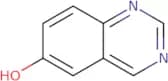
Quinazolin-6-ol
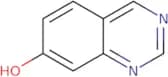
CAS:Quinazolin-6-ol is a quinone that is synthesized by the reaction of anilines and phthalic acid. Quinazolin-6-ol inhibits NF-κB transcriptional activity in vitro, which may be due to its ability to bind to the heme moiety of the protein. This compound has been shown to have antibacterial activity against Gram-negative bacteria such as Phytophthora, but not Gram-positive bacteria such as Staphylococcus aureus or Bacillus cereus.Fórmula:C8H6N2OPureza:Min. 95%Peso molecular:146.15 g/molQuinazolin-7-ol
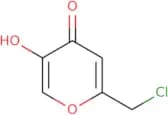
CAS:Quinazolin-7-ol is a cancer drug that inhibits the growth of tumor cells by blocking the activity of epidermal growth factor receptors. It has been shown to inhibit tumor growth in vivo and to have an antitumor activity. Quinazolin-7-ol also inhibits the activation of epidermal growth factor receptor and tyrosine kinase, which are factors that activate the cell cycle and promote tumor cell proliferation. As an antineoplastic drug, it has shown an inhibitory effect on lung cancer cells and other types of cancer cells in vitro. Quinazolin-7-ol can be used as a chemotherapeutic agent for drug resistant tumors.Fórmula:C8H6N2OPureza:Min. 95%Peso molecular:146.15 g/mol2-(Chloromethyl)-5-hydroxy-4H-pyran-4-one
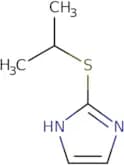
CAS:2-(Chloromethyl)-5-hydroxy-4H-pyran-4-one (2CHP) is a nucleophilic compound that has been shown to be effective against colorectal adenocarcinoma cells. 2CHP is synthesized from the reaction of 2,5-dichloro-4H-pyran with hydroxylamine and HCl in water. It is also used for the treatment of infectious diseases such as malaria and tuberculosis. This compound induces tyrosinase activity through an intramolecular hydrogen bond with the hydroxyl group, which causes the hydroxyl group to become nucleophilic and react with a chlorine atom in order to form an acid conjugate.Fórmula:C6H5ClO3Pureza:Min. 95%Peso molecular:160.56 g/mol2-(Propan-2-ylsulfanyl)-1H-imidazole
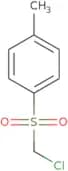
CAS:Versatile small molecule scaffoldFórmula:C6H10N2SPureza:Min. 95%Peso molecular:142.22 g/molp-Toluenesulfonylmethyl Chloride
CAS:p-Toluenesulfonylmethyl Chloride is a reactive compound that can be used as an alkylating agent. It has a carbonyl group, which reacts with nucleophiles and can be used to form carbon-carbon bonds. p-Toluenesulfonylmethyl Chloride is also able to react with aldehydes and sulfoxides, forming anions and pyridazine. This chemical is used in the synthesis of organic compounds, including acetaldehyde. In addition, it can be used in magnetic resonance spectroscopy (MRS) experiments to identify the structure of aldehydes.Fórmula:C8H9ClO2SPureza:Min. 95%Peso molecular:204.67 g/mol2-(5-Chloro-2-methoxyphenyl)ethan-1-ol
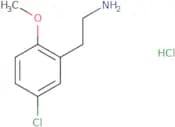
CAS:Versatile small molecule scaffoldFórmula:C9H11ClO2Pureza:Min. 95%Peso molecular:186.63 g/mol2-(5-Chloro-2-methoxyphenyl)ethan-1-amine hydrochloride
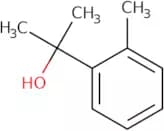
CAS:Produto ControladoVersatile small molecule scaffoldFórmula:C9H13Cl2NOPureza:Min. 95%Peso molecular:222.11 g/mol2-(2-Methylphenyl)propan-2-ol
CAS:2-(2-Methylphenyl)propan-2-ol is an abiotic chemical that is used as a solvent for ethanol. It has been shown to be toxic to microalgae and fatty acids, by inhibiting the conversion of nitrate into nitrogen gas. 2-(2-Methylphenyl)propan-2-ol has also been shown to inhibit denitrification in the presence of nitrate and carbon sources. The mechanism of inhibition is unknown, but it may be due to the formation of an unidentified aromatic hydrocarbon that prevents nitrite reduction.
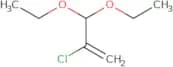
Fórmula:C10H14OPureza:Min. 95%Peso molecular:150.22 g/mol2-Chloro-3,3-diethoxyprop-1-ene
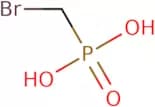
CAS:Versatile small molecule scaffoldFórmula:C7H13ClO2Pureza:Min. 95%Peso molecular:164.63 g/mol(Bromomethyl)phosphonic acid
CAS:Bromomethylphosphonic acid is a molecule that contains a carbonyl group, aliphatic hydrocarbon and an aromatic hydrocarbon. When reacted with humans, the molecule can be found in the reaction solution. Bromomethylphosphonic acid has been shown to have chemical stability and is not affected by alcohol residue or nitro groups. It has also been observed to inhibit fatty acid synthesis and to inhibit the activity of animal enzymes such as carboxylesterases in animals. This compound has optical properties that are acidic and are used in pharmaceutical preparations.
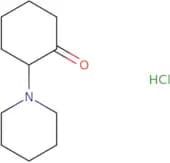
Fórmula:CH4BrO3PPureza:Min. 95%Peso molecular:174.92 g/mol2-(Piperidin-1-yl)cyclohexan-1-one hydrochloride
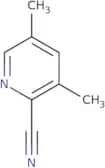
CAS:Versatile small molecule scaffoldFórmula:C11H20ClNOPureza:Min. 95%Peso molecular:217.73 g/mol3,5-Dimethylpyridine-2-carbonitrile
CAS:3,5-Dimethylpyridine-2-carbonitrile is a chiral organic compound that has the formula CHNO. It is used in organic syntheses as a building block for various products. 3,5-Dimethylpyridine-2-carbonitrile can be synthesized by nitroaldol reaction of 3,5-dimethoxybenzaldehyde and formaldehyde catalyzed by copper(II) acetate. This product is also an important intermediate in the synthesis of bipyridines and oxazolines, which are useful in the manufacture of catalysts and amino alcohols.
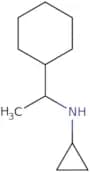
Fórmula:C8H8N2Pureza:Min. 95%Peso molecular:132.17 g/molN-(1-Cyclohexylethyl)cyclopropanamine
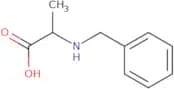
CAS:Versatile small molecule scaffoldFórmula:C11H21NPureza:Min. 95%Peso molecular:167.29 g/mol(2S)-2-(Benzylamino)propanoic acid
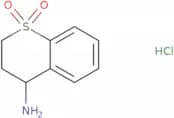
CAS:(2S)-2-(Benzylamino)propanoic acid is an optical prodrug that has a high selectivity index against viruses. It is hydrolyzed to formamide and benzylamine in the presence of water, which can be used as a precursor for the synthesis of purines. 2-(Benzylamino)propanoic acid also has antiviral activity and can be used to synthesize nitroaromatic compounds. This compound displays nonlinear optical properties with an effective wavelength range of 400-500 nm, making it useful for applications such as laser treatment and photodynamic therapy. The solvents used in this reaction are n-dimethyl formamide (DMF) and hydrochloric acid.Fórmula:C10H13NO2Pureza:Min. 95%Peso molecular:179.22 g/mol3,4-Dihydro-2H-thiochromen-4-amine 1,1-dioxide hydrochloride
CAS:Versatile small molecule scaffold
Fórmula:C9H12ClNO2SPureza:Min. 95%Peso molecular:233.72 g/mol1-(4-Methyl-1,3-thiazol-2-yl)ethan-1-ol
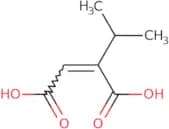
CAS:Versatile small molecule scaffoldFórmula:C6H9NOSPureza:Min. 95%Peso molecular:143.21 g/mol(2E)-2-(Propan-2-yl)but-2-enedioic acid
CAS:(2E)-2-(Propan-2-yl)but-2-enedioic acid is a solid catalyst for the oxidation of alcohols to carbonyl compounds. It is used in vitro to study the effects of genotoxic agents on cells and to evaluate the efficacy of cancer treatments. (2E)-2-(Propan-2-yl)but-2-enedioic acid has been shown to induce mutations in corynebacterium, corynebacterium glutamicum, and other bacteria. This compound can also be used as a neutral pH buffer in assays. The gene product catalyzes the conversion of oxaloacetate into acetyl coenzyme A (acetyl CoA). Acetyl CoA is an important intermediate in cellular respiration that helps to generate energy. In vivo tests have shown that (2E)-2-(Propan-2-yl)but-2-enedioic acid inhibits the growthFórmula:C7H10O4Pureza:Min. 95%Peso molecular:158.15 g/mol4-Hydroxy-1-benzofuran-6-carboxylic acid
CAS:Versatile small molecule scaffoldFórmula:C9H6O4Pureza:Min. 95%Peso molecular:178.14 g/mol3-[(Piperidin-1-yl)methyl]benzoic acid hydrochloride
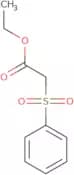
CAS:Versatile small molecule scaffoldFórmula:C13H18ClNO2Pureza:Min. 95%Peso molecular:255.74 g/molEthyl Phenylsulfonylacetate
CAS:Ethyl phenylsulfonylacetate (EPSA) is an organic compound that contains a hydroxy group, halides, and a hydrogen bond. EPSA inhibits the activity of palladium complexes by binding to the active methylene group. The phosphite group in EPSA may act as an absorber for electron density in the benzyl groups. This results in an intramolecular hydrogen bond formation and asymmetric synthesis that leads to higher isolated yields of EPSA.Fórmula:C10H12O4SPureza:Min. 95%Peso molecular:228.26 g/mol




![3-[(Piperidin-1-yl)methyl]benzoic acid hydrochloride](/_next/image/?url=https%3A%2Fstatic.cymitquimica.com%2Fproducts%2F3D%2Fthumb-webp%2FHAA59682.webp&w=3840&q=75)