Building Blocks
Subcategorias de "Building Blocks"
- Ácidos Borónicos e Derivados de Ácido Borónico(5.784 produtos)
- Building Blocks Quirais(1.244 produtos)
- Building Blocks Hidrocarbonetos(6.105 produtos)
- Building Blocks orgânicos(61.076 produtos)
Foram encontrados 205455 produtos de "Building Blocks"
JMS-17-2
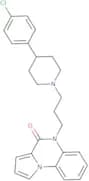
CAS:JMS-17-2 is a small molecule that was shown to have a potent and selective inhibitory effect on the production of chemokines in cancer cells. It blocks the interaction between CXCL12 and its receptor, CXCR4. This interaction is important for normal bone tissue development and function, as well as for chemotaxis and metastasis of cancer cells. JMS-17-2 has been shown to prevent tumor growth in animal models by inhibiting angiogenesis, or the formation of new blood vessels to supply nutrients to tumors. The drug also inhibits tumor growth by decreasing the number of primary tumors, reducing bone lesions, and inhibiting the progression of pancreatic cancer. Clinical trials are currently being conducted to assess the efficacy of JMS-17-2 in humans with advanced solid tumors.
Fórmula:C25H26ClN3OPureza:Min. 95%Peso molecular:419.95 g/mol2-Chloro-6-(4-methylpiperazine-1-carbonyl)pyrazine
CAS:Versatile small molecule scaffold
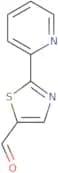
Fórmula:C10H13ClN4OPureza:Min. 95%Peso molecular:240.69 g/mol2-(Pyridin-2-yl)-1,3-thiazole-5-carbaldehyde
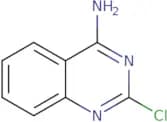
CAS:Versatile small molecule scaffoldFórmula:C9H6N2OSPureza:Min. 95%Peso molecular:190.22 g/mol2-chloroquinazolin-4-amine
CAS:2-Chloroquinazolin-4-amine (CQA) is an anti-oxidant that exhibits significant cytotoxicity against human cancer cells. It is a competitive inhibitor of the enzyme chloride channel protein, which is involved in regulating the concentration of chloride ions in the blood. CQA has been shown to inhibit chemotaxis of white blood cells and platelets, and to have a protective effect on muscle tissue. The cytotoxic effects of CQA were shown to be due to its ability to induce apoptosis, or programmed cell death.
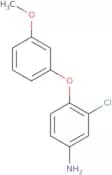
Fórmula:C8H6ClN3Pureza:Min. 95%Peso molecular:179.6 g/mol3-Chloro-4-(3-methoxyphenoxy)aniline
CAS:Versatile small molecule scaffold
Fórmula:C13H12ClNO2Pureza:Min. 95%Peso molecular:249.69 g/mol(1S)-1-(2,5-Dimethoxyphenyl)ethan-1-ol
CAS:Versatile small molecule scaffold
Fórmula:C10H14O3Pureza:Min. 95%Peso molecular:182.22 g/mol3-(5-Chlorothiophen-2-yl)propan-1-amine
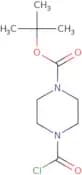
CAS:Versatile small molecule scaffoldFórmula:C7H10ClNSPureza:Min. 95%Peso molecular:175.68 g/moltert-Butyl 4-chlorocarbonylpiperazine-1-carboxylate
CAS:Versatile small molecule scaffoldFórmula:C10H17ClN2O3Pureza:Min. 95%Cor e Forma:PowderPeso molecular:248.71 g/mol2-({[(9H-Fluoren-9-yl)methoxy]carbonyl}amino)-3,3-dimethylbutanoic acid
CAS:Versatile small molecule scaffold
Fórmula:C21H23NO4Pureza:Min. 95%Peso molecular:353.4 g/mol1-(4-Chlorophenyl)prop-2-yn-1-ol
CAS:Versatile small molecule scaffold
Fórmula:C9H7ClOPureza:Min. 95%Peso molecular:166.6 g/mol[Cyclopropyl(pyridin-3-yl)methyl](methyl)amine dihydrochloride
CAS:Versatile small molecule scaffold
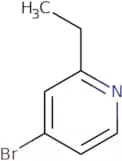
Fórmula:C10H16Cl2N2Pureza:Min. 95%Peso molecular:235.15 g/mol4-Bromo-2-(ethyl-d3)pyridine
CAS:4-Bromo-2-(ethyl-d3)pyridine is a pyridine compound that contains a bromine atom in the 2 position and an ethyl group in the 3 position. The chemical formula is C6H5BrN2, with a molecular mass of 169.07 g/mol. This compound has a melting point of 61 °C and boiling point of 143 °C. 4-Bromo-2-(ethyl-d3)pyridine is used as an intermediate to synthesize other compounds. It can also be used as a solvent for dyes, paints, lacquers, and other organic materials.
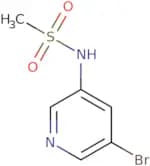
Fórmula:C7H5D3BrNPureza:Min. 95%Peso molecular:189.07 g/molN-(5-bromopyridin-3-yl)methanesulfonamide
CAS:Versatile small molecule scaffold
Fórmula:C6H7BrN2O2SPureza:Min. 95%Peso molecular:251.1 g/mol(2E)-3-(6-Nitro-1,3-dioxaindan-5-yl)prop-2-enoic acid
CAS:(2E)-3-(6-Nitro-1,3-dioxaindan-5-yl)prop-2-enoic acid is a high yield modification of the natural product taxol. It has been shown to enhance the anticancer activity of taxol in vitro and in vivo with modifications to the drug structure. This compound inhibits proliferation by binding to cell cycle regulators, such as cyclin D1 and CDK4, which are required for cell growth. (2E)-3-(6-Nitro-1,3-dioxaindan-5-yl)prop-2-enoic acid also inhibits the production of phenylpropanoid compounds and enhances the production of taxanes, two classes of plant cell growth regulators that have been shown to induce plant cell growth.
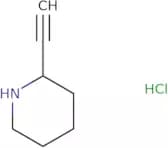
Fórmula:C10H7NO6Pureza:Min. 95%Peso molecular:237.17 g/mol2-Ethynylpiperidine hydrochloride
CAS:Versatile small molecule scaffold
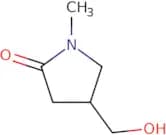
Fórmula:C7H12ClNPureza:Min. 95%Peso molecular:145.63 g/mol4-(Hydroxymethyl)-1-methylpyrrolidin-2-one
CAS:Versatile small molecule scaffold
Fórmula:C6H11NO2Pureza:Min. 95%Peso molecular:129.16 g/molMethyl 2,2,2-trifluoroethyl carbonate
CAS:Methyl 2,2,2-trifluoroethyl carbonate is a chemical substance that has a constant boiling point. It has the ability to stabilize organic substances by forming coordination complexes with them. Methyl 2,2,2-trifluoroethyl carbonate also has an optical rotation of +10° to +20° and can be used as a supplement in ethylene glycol. This chemical compound can be synthesized by using the following steps: (1) adding 1,1-difluoroethane and methyl bromide to form methyl trifluoromethyl carbonate; (2) adding methanol and sodium methoxide to form methyl 2,2,2-trifluoroethyl carbonate; and (3) reacting methyl 2,2,2-trifluoroethyl carbonate with water to form methyl 2,2-difluoroethyl carbonate.
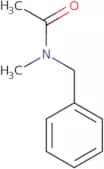
Fórmula:C4H5F3O3Pureza:Min. 95%Cor e Forma:Clear LiquidPeso molecular:158.08 g/molN-Benzyl-N-methylacetamide
CAS:N-Benzyl-N-methylacetamide is a cardiac stimulant and thermogenic that has been shown to increase the rate of metabolism in mammals. It is an electrophile that can be converted to a reactive form by perchlorates and other oxidizing agents. The resulting n-oxide reacts with amino acids, yielding iminium ions that react with amide bonds in proteins, altering their structure and function. N-Benzyl-N-methylacetamide has also been shown to have antioxidant properties in vivo studies on mice. It may also have carcinogenic effects due to its ability to induce oxidative stress and DNA damage.
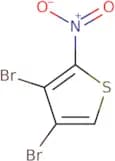
Fórmula:C10H13NOPureza:Min. 95%Peso molecular:163.22 g/mol3,4-Dibromo-2-nitrothiophene
CAS:Versatile small molecule scaffold
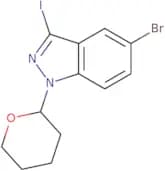
Fórmula:C4HBr2NO2SPureza:Min. 95%Peso molecular:286.93 g/mol5-Bromo-3-iodo-1-(tetrahydro-2H-pyran-2-yl)-1H-indazole
CAS:Versatile small molecule scaffoldFórmula:C12H12BrIN2OPureza:Min. 95%Peso molecular:407.04 g/mol




![2-({[(9H-Fluoren-9-yl)methoxy]carbonyl}amino)-3,3-dimethylbutanoic acid](/_next/image/?url=https%3A%2Fstatic.cymitquimica.com%2Fproducts%2F3D%2Fthumb-webp%2FLHA32021.webp&w=3840&q=75)

amine dihydrochloride](/_next/image/?url=https%3A%2Fstatic.cymitquimica.com%2Fproducts%2F3D%2Fthumb-webp%2FIAC63961.webp&w=3840&q=75)