Building Blocks
Subcategorias de "Building Blocks"
- Ácidos Borónicos e Derivados de Ácido Borónico(5.783 produtos)
- Building Blocks Quirais(1.242 produtos)
- Building Blocks Hidrocarbonetos(6.105 produtos)
- Building Blocks orgânicos(61.055 produtos)
Foram encontrados 205383 produtos de "Building Blocks"
2-(2-Hydroxy-5-methoxyphenyl)-2-oxoacetic acid
CAS:Versatile small molecule scaffoldFórmula:C9H8O5Pureza:Min. 95%Peso molecular:196.2 g/mol2-(1-Chloroethyl)-5-(4-chlorophenyl)-1,3-oxazole
CAS:Versatile small molecule scaffoldFórmula:C11H9Cl2NOPureza:Min. 95%Peso molecular:242.1 g/mol1-(azidomethyl)-4-methoxybenzene
CAS:1-(Azidomethyl)-4-methoxybenzene (1-AMMB) is a copper complex that can be used to induce the irreversible oxidation of organic molecules. 1-AMMB has been shown to be cytotoxic in vitro against MDA-MB-231 cells and MCF-7 cells. It was also shown to have anticancer activity in vivo, inhibiting tumor growth and tumor cell proliferation in mice implanted with human breast cancer cells. The anti-cancer properties of 1-AMMB are attributed to its ability to activate the copper(II) ion, which causes DNA damage by forming covalent bonds with guanine bases. This leads to the inhibition of DNA replication and transcription, which eventually kills the cell.
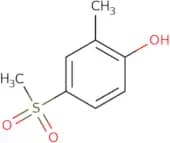
Fórmula:C8H9N3OPureza:Min. 95%Peso molecular:163.18 g/mol4-Methanesulfonyl-2-methylphenol
CAS:Versatile small molecule scaffold
Fórmula:C8H10O3SPureza:Min. 95%Peso molecular:186.23 g/mol1-Methyl-3,4-dihydroquinoxalin-2(1H)-one
CAS:1-Methyl-3,4-dihydroquinoxalin-2(1H)-one (1MQ) is a stereoisomer of the azomethine compound. It is a cycloaddition product of 1,3-dipolar cycloadditions that can be used as a precursor for other compounds. It has been shown to react with aldehydes and form couplings or multicomponent coupling products. 1MQ has been shown to have oxidized properties and exhibit x-ray crystal analysis. This molecule was synthesized in the course of research on stereochemical properties of 2,5-disubstituted quinoxalines.
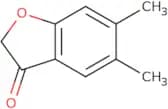
Fórmula:C9H10N2OPureza:Min. 95%Peso molecular:162.19 g/mol5,6-Dimethyl-2,3-dihydro-1-benzofuran-3-one
CAS:Versatile small molecule scaffold
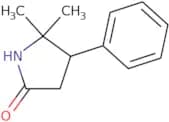
Fórmula:C10H10O2Pureza:Min. 95%Peso molecular:162.18 g/mol5,5-Dimethyl-4-phenylpyrrolidin-2-one
CAS:Versatile small molecule scaffoldFórmula:C12H15NOPureza:Min. 95%Peso molecular:189.25 g/mol1-Cyclopropyl-2,2-dimethylpropan-1-one
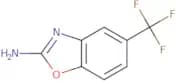
CAS:Versatile small molecule scaffoldFórmula:C8H14OPureza:Min. 95%Peso molecular:126.2 g/mol5-(Trifluoromethyl)-1,3-benzoxazol-2-amine
CAS:Versatile small molecule scaffold
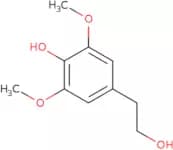
Fórmula:C8H5F3N2OPureza:Min. 95%Peso molecular:202.13 g/mol4-(2-Hydroxyethyl)-2,6-dimethoxyphenol
CAS:Produto Controlado4-(2-Hydroxyethyl)-2,6-dimethoxyphenol is a phenolic compound that can be extracted from the bark of the Indian tree Terminalia arjuna. The extract has been used in traditional medicine for centuries to treat diabetes and cancer. In vitro studies have shown that this extract inhibits the activity of viruses, including HIV, with a mechanism of action similar to that of indinavir. 4-(2-Hydroxyethyl)-2,6-dimethoxyphenol also has an antioxidant effect and stimulates the production of glutathione reductase and superoxide dismutase by cells in culture. 4-(2-Hydroxyethyl)-2,6-dimethoxyphenol is used as an herbal drug in India and research has found it to be hepatoprotective when administered orally to rats.
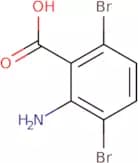
Fórmula:C10H14O4Pureza:Min. 95%Cor e Forma:PowderPeso molecular:198.22 g/mol2-Amino-3,6-dibromobenzoic acid
CAS:Versatile small molecule scaffold
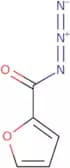
Fórmula:C7H5Br2NO2Pureza:Min. 95%Peso molecular:294.93 g/molFuran-2-carbonyl azide
CAS:Furan-2-carbonyl azide is an azide with a hydroxyl group that is synthesized by the reaction of ethylene diamine and methyl ethyl carbonyl chloride. Furan-2-carbonyl azide has been shown to be a potent immunosuppressant in rats, inhibiting the proliferation of T cells and B cells in vitro. It also causes cardiac arrhythmia in mice. Furan-2-carbonyl azide can be used for the synthesis of other compounds through cross-coupling reactions or as a reagent for phosphite formation.
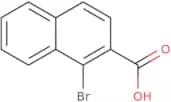
Fórmula:C5H3N3O2Pureza:Min. 95%Peso molecular:137.1 g/mol1-Bromo-2-naphthoic acid
CAS:1-Bromo-2-naphthoic acid is a tetronic acid with an antiproliferative effect. It has been shown to inhibit the enzyme IDO1, which is involved in the production of interferon gamma and other cytokines. 1-Bromo-2-naphthoic acid is also a potent inhibitor of cancer cells and leukemia cells, and has been shown to be cytotoxic at low concentrations. This drug inhibits the growth of tumor cells in vivo by preventing the division of cancer cells.
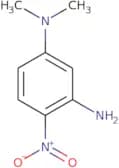
Fórmula:C11H7BrO2Pureza:Min. 95%Peso molecular:251.08 g/mol3-Amino-N,N-dimethyl-4-nitroaniline
CAS:Versatile small molecule scaffold
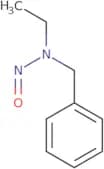
Fórmula:C8H11N3O2Pureza:Min. 95%Peso molecular:181.19 g/molBenzyl(ethyl)nitrosoamine
CAS:Benzyl(ethyl)nitrosoamine is a nitrosamine that is classified as a Group 2A carcinogen. It has been shown to cause liver damage in mice, which may be due to its ability to metabolize into hepatotoxic metabolites. Benzyl(ethyl)nitrosoamine has phototoxic effects and will produce reactive oxygen species (ROS) when exposed to light. This reaction is enhanced by the presence of nitrogen dioxide (NO2), nitrous acid (HNO2), or nitric acid (HNO3). The compound produces photochemical reactions with biomolecules such as proteins, nucleic acids, lipids, carbohydrates, and other organic substances. Nitrosamines are also known to have mutagenic effects on DNA and RNA synthesis.
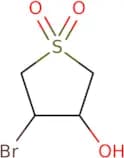
Fórmula:C9H12N2OPureza:Min. 95%Peso molecular:164.2 g/mol(3R,4S)-rel-4-Bromotetrahydro-thiophene-3-ol 1,1-dioxide
CAS:Versatile small molecule scaffoldFórmula:C4H7BrO3SPureza:Min. 95%Peso molecular:215.07 g/molAureusimine A
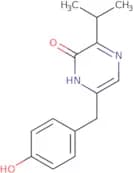
CAS:Aureusimine A is a natural product that has been identified as a potential biomarker for Staphylococcus aureus. This molecule is produced by the bacterial species Aureobasidium pullulans and has been shown to have antibacterial, antifungal, and antiparasitic properties. The molecule also inhibits protease activity in Staphylococcus strains and prevents the growth of bacteria. It is also a potential therapeutic agent for the treatment of staphylococcal infections.
Fórmula:C14H16N2O2Pureza:Min. 95%Peso molecular:244.29 g/mol4-(2-Phenoxyethoxy)piperidine hydrochloride
CAS:Versatile small molecule scaffoldFórmula:C13H20ClNO2Pureza:Min. 95%Peso molecular:257.75 g/mol3-(2-Fluoroethyl)piperidine
CAS:Versatile small molecule scaffold
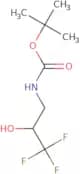
Fórmula:C7H14FNPureza:Min. 95%Peso molecular:131.19 g/mol3-(Boc-amino)-1,1,1-trifluoro-2-propanol
CAS:Versatile small molecule scaffoldFórmula:C8H14F3NO3Pureza:Min. 95%Peso molecular:229.2 g/mol