


Building Blocks
Subcategorias de "Building Blocks"
- Ácidos Borónicos e Derivados de Ácido Borónico(5.780 produtos)
- Building Blocks Quirais(1.239 produtos)
- Building Blocks Hidrocarbonetos(6.100 produtos)
- Building Blocks orgânicos(61.005 produtos)
Foram encontrados 205234 produtos de "Building Blocks"
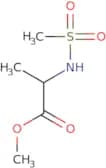
Methyl (2S)-2-methanesulfonamidopropanoate
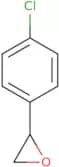
CAS:Versatile small molecule scaffoldFórmula:C5H11NO4SPureza:Min. 95%Peso molecular:181.21 g/mol(2S)-2-(4-Chlorophenyl)oxirane
CAS:(2S)-2-(4-Chlorophenyl)oxirane is an enantiopure epoxide that is used as a building block in organic synthesis. It is prepared by reacting styrene with peracetic acid, yielding the desired product in good isolated yield. The compound has been shown to inhibit the enzyme epoxide hydrolase and may be useful for the treatment of bacterial infections. (2S)-2-(4-Chlorophenyl)oxirane also has been shown to have anti-inflammatory activity, which may be due to its ability to induce apoptosis.
Fórmula:C8H7ClOPureza:Min. 95%Peso molecular:154.59 g/molN-Ethyl-2-(ethylamino)acetamide
CAS:Versatile small molecule scaffold
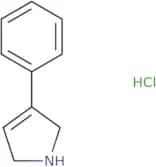
Fórmula:C6H14N2OPureza:Min. 95%Peso molecular:130.19 g/mol3-Phenyl-2,5-dihydro-1H-pyrrole hydrochloride
CAS:Versatile small molecule scaffold
Fórmula:C10H12ClNPureza:Min. 95%Peso molecular:181.66 g/molRef: 3D-XDA38292
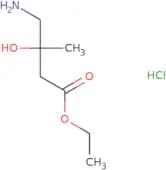
Produto descontinuadoEthyl 4-amino-3-hydroxy-3-methylbutanoate hydrochloride
CAS:Versatile small molecule scaffold
Fórmula:C7H16ClNO3Pureza:Min. 95%Peso molecular:197.66 g/molRef: 3D-XDA37483
Produto descontinuadoEthyl 2-[4-(2-chloroethoxy)phenoxy]acetate
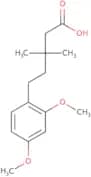
CAS:Versatile small molecule scaffoldFórmula:C12H15ClO4Pureza:Min. 95%Peso molecular:258.7 g/mol5-(2,4-Dimethoxyphenyl)-3,3-dimethylpentanoic acid
CAS:Versatile small molecule scaffold
Fórmula:C15H22O4Pureza:Min. 95%Peso molecular:266.33 g/mol3,9-Diazabicyclo[3.3.2]decan-10-one
CAS:Versatile small molecule scaffold
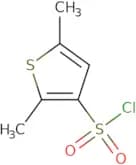
Fórmula:C8H14N2OPureza:Min. 95%Peso molecular:154.21 g/mol2,5-Dimethylthiophene-3-sulfonyl chloride
CAS:2,5-Dimethylthiophene-3-sulfonyl chloride is a versatile research chemical that is known for its modular and stable properties. It is commonly used in various scientific studies and experiments. This compound offers researchers the ability to explore different reactions and synthesis pathways due to its stability. With its modular structure, it can be easily incorporated into different chemical frameworks to create new compounds with unique properties. Whether you are conducting academic research or working on industrial applications, 2,5-Dimethylthiophene-3-sulfonyl chloride is a reliable choice that can help advance your scientific endeavors.
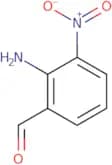
Fórmula:C6H7ClO2S2Pureza:Min. 95%Peso molecular:210.7 g/mol2-Amino-3-nitrobenzaldehyde
CAS:2-Amino-3-nitrobenzaldehyde is an organic compound that contains a quinoline ring. It is the product of the oxidative coupling of 2-amino-3-nitrobenzoic acid and hydrogen peroxide. The reaction mechanism begins with epoxidation of the quinoline ring, followed by a nitration to form 7-nitroindole. The 8-nitroquinoline is formed from an oxidation of the 7-nitroindole, which then undergoes hydrogenation to form 2-amino-3-nitrobenzaldehyde. This reaction can be used in elucidating the molecular structure of 8-nitroquinoline.
Fórmula:C7H6N2O3Pureza:Min. 95%Peso molecular:166.14 g/mol2-Cyclohexylbenzoic Acid
CAS:2-Cyclohexylbenzoic acid is a chiral compound that belongs to the class of pharmaceutical preparations. It is used as an inhibitor of enzymes such as hydroxylase, which is involved in the production of prostaglandins and leukotrienes, and has been shown to be effective in treating bowel disease. 2-Cyclohexylbenzoic acid may also be effective in the treatment of chronic bronchitis and autoimmune diseases.
2-Cyclohexylbenzoic acid binds to the active site on certain enzymes, thereby inhibiting their function. This drug also has a strong inhibitory effect on inflammation and oxidative stress, which may be due to its ability to inhibit phospholipase A2 (PLA2), an enzyme that triggers inflammatory reactions by catalyzing the release of arachidonic acid from membrane phospholipids. The light exposure can cause photochemical damage to the skin by inducing oxidation or peroxFórmula:C13H16O2Pureza:Min. 95%Peso molecular:204.26 g/mol2-Bromo-4,5-difluorobenzyl bromide
CAS:Versatile small molecule scaffold
Fórmula:C7H4Br2F2Pureza:Min. 95%Peso molecular:285.91 g/molMethyl 2-bromo-3-fluorobenzoate
CAS:Versatile small molecule scaffold
Fórmula:C8H6BrFO2Pureza:Min. 95%Peso molecular:233.03 g/mol1-Acetylpiperidine-3-carbonitrile
CAS:Versatile small molecule scaffold
Fórmula:C8H12N2OPureza:Min. 95%Peso molecular:152.19 g/mol(5-Methylpyridin-2-yl)methanol
CAS:5-Methylpyridin-2-yl)methanol is a heterocyclic compound that can be synthesized by the reaction of sodium ethoxide with hydrogen. This reaction produces the intermediate product 2-(5-methylpyridin-2-yl)ethanol, which can be reacted with potassium to produce (5-methylpyridin-2-yl)methanol. The synthesis of 5-methylpyridin-2-yl)methanol can also be achieved by reacting sodium hydride with 5-(chloromethyl)-2-(4,4,5,5,-tetramethyl-[1,3,2]dioxaborolan-2yl)pyridine. 5-(chloromethyl)-2-(4,4,5,5,-tetramethyl-[1,3,2]dioxaborolan-2yl)pyridine is reacted with methyl iodide
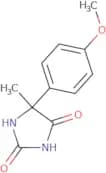
Fórmula:C7H9NOPureza:Min. 95%Peso molecular:123.15 g/mol5-(4-Methoxyphenyl)-5-methylimidazolidine-2,4-dione
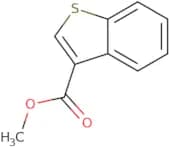
CAS:Versatile small molecule scaffoldFórmula:C11H12N2O3Pureza:Min. 95%Peso molecular:220.22 g/molMethyl benzothiophene-3-carboxylate
CAS:Versatile small molecule scaffold
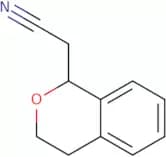
Fórmula:C10H8O2SPureza:Min. 95%Peso molecular:192.23 g/mol2-(3,4-Dihydro-1H-2-benzopyran-1-yl)acetonitrile
CAS:Versatile small molecule scaffoldFórmula:C11H11NOPureza:Min. 95%Peso molecular:173.21 g/mol(1S,4S)-4-(Propan-2-yl)cyclohexan-1-ol
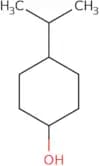
CAS:(1S,4S)-4-(Propan-2-yl)cyclohexan-1-ol is a synthetic compound that has been used in skin care products. It is more potent than cyclohexanol and it has been shown to be stereoselective. In addition, it is hydrolyzed by alcohol dehydrogenases to form hydrochloric acid, which can activate chloride ions. (1S,4S)-4-(Propan-2-yl)cyclohexan-1-ol has also been shown to react with the skin protein ankyrin, leading to a change in the kinetic parameters of the reaction.
Fórmula:C9H18OPureza:Min. 95%Peso molecular:142.24 g/molRef: 3D-XAA90008
Produto descontinuado2-[(p-chlorobenzyl)amino]-pyridine
CAS:2-[(p-chlorobenzyl)amino]-pyridine is a chemical compound that belongs to the group of aliphatic alcohols. It can be prepared by reacting 2-aminopyridine with sodium borohydride and an inorganic acid. This reaction yields a mixture of 2-[(p-chlorobenzyl)amino]-pyridine, hydroxylamine hydrochloride, and sodium chloride. Hydroxylamine hydrochloride can be removed from the mixture by azeotropic distillation. The product is used as a reducing agent for reductive amination reactions or as a catalyst for aliphatic hydrocarbon reductions.
Fórmula:C12H11ClN2Pureza:Min. 95%Peso molecular:218.68 g/mol


![Ethyl 2-[4-(2-chloroethoxy)phenoxy]acetate](/_next/image/?url=https%3A%2Fstatic.cymitquimica.com%2Fproducts%2F3D%2Fthumb-webp%2FXDA31540.webp&w=3840&q=75)
![3,9-Diazabicyclo[3.3.2]decan-10-one](/_next/image/?url=https%3A%2Fstatic.cymitquimica.com%2Fproducts%2F3D%2Fthumb-webp%2FXDA27842.webp&w=3840&q=75)


![2-[(p-chlorobenzyl)amino]-pyridine](/_next/image/?url=https%3A%2Fstatic.cymitquimica.com%2Fproducts%2F3D%2Fthumb-webp%2FXAA88133.webp&w=3840&q=75)