Building Blocks
Subcategorias de "Building Blocks"
- Ácidos Borónicos e Derivados de Ácido Borónico(5.780 produtos)
- Building Blocks Quirais(1.241 produtos)
- Building Blocks Hidrocarbonetos(6.100 produtos)
- Building Blocks orgânicos(61.023 produtos)
Foram encontrados 205289 produtos de "Building Blocks"
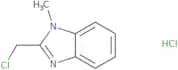
2-(Chloromethyl)-1-methyl-1H-1,3-benzodiazole hydrochloride
CAS:Produto ControladoVersatile small molecule scaffold
Fórmula:C9H10Cl2N2Pureza:Min. 95%Peso molecular:217.09 g/mol3-Iodo-pyrazolo[1,5-a]pyridine
CAS:3-Iodo-pyrazolo[1,5-a]pyridine is a boronic acid that has been optimized for medicinal use. It is chemically synthesized by coupling with a boronic ester. 3-Iodo-pyrazolo[1,5-a]pyridine has shown potent anti-inflammatory properties in mice models.
Fórmula:C7H5IN2Pureza:Min. 95%Peso molecular:244.03 g/mol2-[(Pyridin-2-yl)carbamoyl]benzoic acid
CAS:2-[(Pyridin-2-yl)carbamoyl]benzoic acid is an organic compound that contains a benzamide and amide functional group. It is paramagnetic, which means that it has the ability to be attracted by a magnetic field. It also has intramolecular nucleophilic attack properties. 2-[(Pyridin-2-yl)carbamoyl]benzoic acid can be used in elemental analyses and as a catalyst for chemical reactions, such as the conversion of thiocyanate to cyanide. 2-[(Pyridin-2-yl)carbamoyl]benzoic acid is used in the production of dyes and pharmaceuticals, including antihistamines and analgesics.
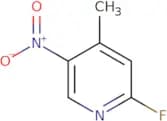
Fórmula:C13H10N2O3Pureza:Min. 95%Peso molecular:242.23 g/mol2-Fluoro-4-Methyl-5-Nitropyridine
CAS:Versatile small molecule scaffold
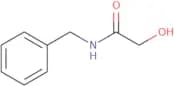
Fórmula:C6H5FN2O2Pureza:Min. 95%Peso molecular:156.11 g/molN-Benzyl-2-hydroxyacetamide
CAS:N-Benzyl-2-hydroxyacetamide is a synthetic molecule that is used in the synthesis of other molecules. It is synthesized by reacting benzaldehyde with 2-aminoethanol in the presence of hydrochloric acid and sodium hydroxide. The yields are typically high, as the reaction proceeds under relatively mild conditions with few side reactions. The mechanism of this reaction is nucleophilic addition of the amino group to the carbonyl carbon atom, followed by elimination of water. N-Benzyl-2-hydroxyacetamide can be converted to various other compounds through intramolecular reactions or substitutions on its molecular structure.
Fórmula:C9H11NO2Pureza:Min. 95%Peso molecular:165.19 g/molBenzo[b]thiophen-5-ol
CAS:Benzo[b]thiophen-5-ol is a chiral molecule that has been synthesized to be homochiral. It has an active site and selective epoxide hydration activity, which is the rate-limiting step of epoxide ring opening reactions. The mechanism of this reaction is the cleavage of a C–C bond in an epoxide substrate by an O–H or S–H bond in benzo[b]thiophen-5-ol. The nature of this mechanistic bond cleavage reaction is unknown, but it may be due to catalysis by a benzyl group.
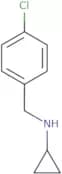
Fórmula:C8H6OSPureza:Min. 95%Peso molecular:150.2 g/molN-(4-Chlorobenzyl)-N-cyclopropylamine
CAS:Versatile small molecule scaffold
Fórmula:C10H12ClNPureza:Min. 95%Peso molecular:181.66 g/molDibenzo[b,d]furan-4-ol
CAS:Dibenzo[b,d]furan-4-ol is a biodegradable compound that can be synthesized in a stepwise manner. The compound can be assayed by using different methods including mass spectrometric and hplc analyses to determine the number of carbon atoms and functional groups present in the molecule. Dibenzo[b,d]furan-4-ol is used as a carbon source for many microorganisms. The compound has been shown to hydroxylate under aerobic conditions and also reacts with nitro groups to form nitroso derivatives. Magnetic resonance spectroscopy has been used to study the molecular structure of dibenzo[b,d]furan-4-ol, which has revealed that it is monosubstituted with two methyl groups. This compound is naturally found in filamentous fungi found in tropical regions.
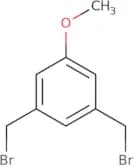
Fórmula:C12H8O2Pureza:Min. 95%Peso molecular:184.19 g/mol1,3-Bis(bromomethyl)-5-methoxybenzene
CAS:Versatile small molecule scaffold
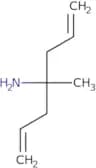
Fórmula:C9H10Br2OPureza:Min. 95%Peso molecular:293.98 g/mol1-Allyl-1-methyl-but-3-enylamine
CAS:Versatile small molecule scaffold
Fórmula:C8H15NPureza:Min. 95%Peso molecular:125.21 g/mol1-Ethyl-3-isothiocyanatobenzene
CAS:Versatile small molecule scaffold
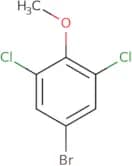
Fórmula:C9H9NSPureza:Min. 95%Peso molecular:163.24 g/mol4-Bromo-2,6-dichloroanisole
CAS:4-Bromo-2,6-dichloroanisole (4BDCA) is a polychlorinated biphenyl congeners. It is used as a chemical intermediate in the synthesis of boronic acids and their derivatives. 4BDCA has high selectivity for human plasma over other tissues and can be used to study the metabolism of this compound in humans. The high selectivity of this compound may be due to its ability to form hydroxylated metabolites that are less toxic than the parent compound, which may be due to its ability to form hydroxy anisoles.
Fórmula:C7H5BrCl2OPureza:Min. 95%Peso molecular:255.92 g/molN-Boc-3-aminothiophene
CAS:Versatile small molecule scaffold
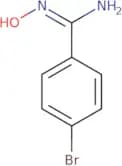
Fórmula:C9H13NO2SPureza:Min. 95%Peso molecular:199.27 g/mol(E)-4-Bromo-N'-hydroxybenzimidamide
CAS:(E)-4-Bromo-N'-hydroxybenzimidamide is a synthetic antifungal agent that is resistant to many microorganisms. It is a potent inhibitor of the uptake of β-amyloid peptide in rat cortical neurons and also inhibits the modification of β-amyloid. This drug has been shown to have pharmacological effects on bacterial cells, including inhibition of protein synthesis and DNA synthesis. The molecular basis for these interactions is not known, but it has been suggested that (E)-4-Bromo-N'-hydroxybenzimidamide interacts with the pharmacophore site on bacteria and binds to nitrogen atoms that are important for binding. These interactions are bioisosteric with oxadiazole derivatives such as clotrimazole, which have been shown to inhibit protein synthesis in fungi. The drug has also been used as a radiotracer to study the uptake of β-amyloid peptides by neurons
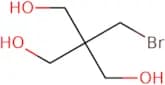
Fórmula:C7H7BrN2OPureza:Min. 95%Peso molecular:215.05 g/mol2-(Bromomethyl)-2-(hydroxymethyl)-1,3-propanediol
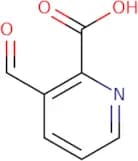
CAS:2-(Bromomethyl)-2-(hydroxymethyl)-1,3-propanediol is a synthetic compound that is used as a stabilizer in polymers. It has magnetic properties and crystallizes in an orthorhombic system. This substance also has an aryl group and a chlorine substituent. 2-(Bromomethyl)-2-(hydroxymethyl)-1,3-propanediol reacts with the phosphite trialkyl to form polyvalent phosphorus compounds, which are residues of the trialkyl. The insecticidal properties of this compound may be due to its ability to inhibit the growth of insects by affecting the metabolism of arthropods. The hydrocarbon residue may be due to its synthesis from bromoethane and methanol.Fórmula:C5H11BrO3Pureza:Min. 95%Peso molecular:199.04 g/mol3-formylpyridine-2-carboxylic acid
CAS:3-formylpyridine-2-carboxylic acid is a phenylhydrazine derivative, which is a white crystalline solid. It is soluble in solvents such as chloroform and methanol, but insoluble in water. 3-Formylpyridine-2-carboxylic acid can be prepared by the chlorination of pyridine or by alkaline hydrolysis of its esters with sodium hydroxide. It can also be synthesized from the reaction of phenylhydrazine with formaldehyde in organic solvents. 3-Formylpyridine-2-carboxylic acid has been shown to react with carbonyl compounds to form a conjugated system through an addition reaction and to form esters that are soluble in organic solvents. The yield of this reaction depends on the solvent used and the temperature at which it is carried out.
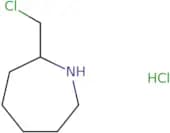
Fórmula:C7H5NO3Pureza:Min. 95%Peso molecular:151.1 g/mol2-(Chloromethyl)azepane hydrochloride
CAS:Versatile small molecule scaffold
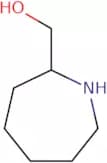
Fórmula:C7H15Cl2NPureza:Min. 95%Peso molecular:184.1 g/mol(Azepan-2-yl)methanol
CAS:Versatile small molecule scaffold
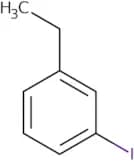
Fórmula:C7H15NOPureza:Min. 95%Peso molecular:129.2 g/mol1-Ethyl-3-iodobenzene
CAS:Versatile small molecule scaffold
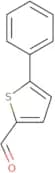
Fórmula:C8H9IPureza:Min. 95%Peso molecular:232.06 g/mol5-Phenylthiophene-2-carboxaldehyde
CAS:5-Phenylthiophene-2-carboxaldehyde is a molecule that inhibits the activity of tyrosinase, an enzyme involved in melanin biosynthesis. It reacts with the formyl group of tyrosinase to produce a reactive intermediate that undergoes a series of reactions with methyl ketones to inhibit the reaction mechanism. The inhibition of tyrosinase by 5-phenylthiophene-2-carboxaldehyde has been shown to be reversible and competitive. This molecule has also shown antibacterial activities against Gram positive and Gram negative bacteria. 5-Phenylthiophene-2-carboxaldehyde may also have potential for use as a ferroelectric material due to its ability to crystallize in the orthorhombic system. This molecule also exhibits optical properties such as fluorescence, phosphorescence and photoluminescence.
Fórmula:C11H8OSPureza:Min. 95%Peso molecular:188.24 g/mol

![3-Iodo-pyrazolo[1,5-a]pyridine](/_next/image/?url=https%3A%2Fstatic.cymitquimica.com%2Fproducts%2F3D%2Fthumb-webp%2FUAA36399.webp&w=3840&q=75)
![2-[(Pyridin-2-yl)carbamoyl]benzoic acid](/_next/image/?url=https%3A%2Fstatic.cymitquimica.com%2Fproducts%2F3D%2Fthumb-webp%2FUAA35710.webp&w=3840&q=75)
![Benzo[b]thiophen-5-ol](/_next/image/?url=https%3A%2Fstatic.cymitquimica.com%2Fproducts%2F3D%2Fthumb-webp%2FUAA30135.webp&w=3840&q=75)
![Dibenzo[b,d]furan-4-ol](/_next/image/?url=https%3A%2Fstatic.cymitquimica.com%2Fproducts%2F3D%2Fthumb-webp%2FUAA26106.webp&w=3840&q=75)