


Building Blocks
Esta seção contém produtos fundamentais para a síntese de compostos orgânicos e biológicos. Building blocks são os materiais de partida essenciais usados para construir moléculas complexas através de várias reações químicas. Eles desempenham um papel crítico na descoberta de medicamentos, ciência dos materiais e pesquisa química. Na CymitQuimica, oferecemos uma ampla gama de building blocks de alta qualidade para apoiar suas pesquisas inovadoras e projetos industriais, garantindo que você tenha os componentes essenciais para uma síntese bem-sucedida.
Subcategorias de "Building Blocks"
- Ácidos Borónicos e Derivados de Ácido Borónico(5.778 produtos)
- Building Blocks Quirais(1.242 produtos)
- Building Blocks Hidrocarbonetos(6.098 produtos)
- Building Blocks orgânicos(61.034 produtos)
Foram encontrados 199601 produtos de "Building Blocks"
Ordenar por
Pureza (%)
0
100
|
0
|
50
|
90
|
95
|
100
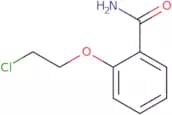
2-(2-Chloroethoxy)benzamide
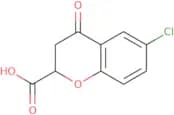
CAS:<p>Versatile small molecule scaffold</p>Fórmula:C9H10ClNO2Pureza:Min. 95%Peso molecular:199.63 g/mol6-Chloro-4-oxo-3,4-dihydro-2H-1-benzopyran-2-carboxylic acid
CAS:<p>Versatile small molecule scaffold</p>Fórmula:C10H7ClO4Pureza:Min. 95%Peso molecular:226.61 g/molRef: 3D-CCA01176
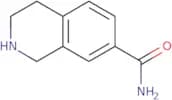
Produto descontinuado1,2,3,4-Tetrahydroisoquinoline-7-carboxamide
CAS:<p>Versatile small molecule scaffold</p>Fórmula:C10H12N2OPureza:Min. 95%Peso molecular:176.21 g/mol1-Benzyl-4-(pyrrolidin-2-yl)piperidine
CAS:<p>Versatile small molecule scaffold</p>Fórmula:C16H24N2Pureza:Min. 95%Peso molecular:244.37 g/molRef: 3D-ZVA67428
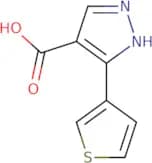
Produto descontinuado3-(Thiophen-3-yl)-1H-pyrazole-4-carboxylic acid
CAS:<p>Versatile small molecule scaffold</p>Fórmula:C8H6N2O2SPureza:Min. 95%Peso molecular:194.21 g/mol4-Amino-5-(oxolan-3-yl)-4H-1,2,4-triazole-3-thiol
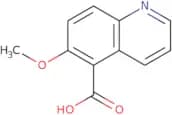
CAS:<p>Versatile small molecule scaffold</p>Fórmula:C6H10N4OSPureza:Min. 95%Peso molecular:186.24 g/mol6-Methoxyquinoline-5-carboxylic acid
CAS:<p>Versatile small molecule scaffold</p>Fórmula:C11H9NO3Pureza:Min. 95%Peso molecular:203.19 g/mol3-bromo-6-methylpyrazolo[1,5-a]pyrimidine
CAS:<p>Versatile small molecule scaffold</p>Fórmula:C7H6BrN3Pureza:Min. 95%Peso molecular:212.05 g/molMethyl 6-cyano-5-fluoropyridine-2-carboxylate
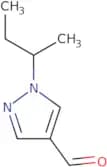
CAS:<p>Versatile small molecule scaffold</p>Fórmula:C8H5FN2O2Pureza:Min. 95%Peso molecular:180.14 g/mol1-(Butan-2-yl)-1H-pyrazole-4-carbaldehyde
CAS:<p>Versatile small molecule scaffold</p>Fórmula:C8H12N2OPureza:Min. 95%Peso molecular:152.19 g/moltert-Butyl 4-methyl-4-(prop-2-en-1-yloxy)piperidine-1-carboxylate
CAS:<p>Versatile small molecule scaffold</p>Fórmula:C14H25NO3Pureza:Min. 95%Peso molecular:255.4 g/molRef: 3D-BMC89648
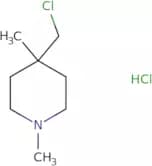
Produto descontinuado4-(Chloromethyl)-1,4-dimethylpiperidine hydrochloride
CAS:<p>Versatile small molecule scaffold</p>Fórmula:C8H17Cl2NPureza:Min. 95%Peso molecular:198.13 g/molRef: 3D-DXC58362
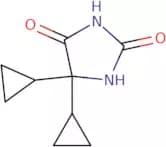
Produto descontinuado5,5-Dicyclopropylimidazolidine-2,4-dione
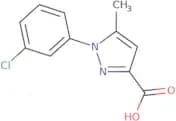
CAS:<p>5,5-Dicyclopropylimidazolidine-2,4-dione is an ammonium salt that has a strong antispasmodic effect. It is used to treat muscle spasms and other types of spasticity. 5,5-Dicyclopropylimidazolidine-2,4-dione also has an alkali metal (e.g., sodium) or alkali earth metal (e.g., magnesium) salt form that can be used for the treatment of cystitis, pyelonephritis, and other urinary tract infections. This compound is converted to the corresponding hydantoin derivative in vivo by hydrolysis of the ethoxide group. Hydantoins are related to the hydantoin class of nonsteroidal anti-inflammatory drugs (NSAIDs).</p>Fórmula:C9H12N2O2Pureza:Min. 95%Peso molecular:180.2 g/mol1-(3-Chlorophenyl)-5-methyl-1H-pyrazole-3-carboxylic acid
CAS:<p>Versatile small molecule scaffold</p>Fórmula:C11H9ClN2O2Pureza:Min. 95%Peso molecular:236.65 g/mol6-Bromo-8-methoxy-1,2,3,4-tetrahydroquinoline
CAS:<p>Versatile small molecule scaffold</p>Fórmula:C10H12BrNOPureza:Min. 95%Peso molecular:242.11 g/molThieno[2,3-b]pyridine-5-carbonitrile
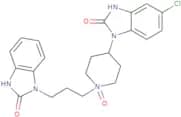
CAS:<p>Thienopyridine analogs are a class of chemical compounds that function as agonists of the receptor α. These compounds have been shown to inhibit fatty acid oxidation and ATP production in rat liver cells, which may be due to their ability to activate AMP-activated protein kinase (AMPK). Thienopyridine analogs are being investigated for use as anti-inflammatory agents and cancer treatments.</p>Fórmula:C8H4N2SPureza:Min. 95%Peso molecular:160.2 g/molDomperidone N-oxide
CAS:<p>Please enquire for more information about Domperidone N-oxide including the price, delivery time and more detailed product information at the technical inquiry form on this page</p>Fórmula:C22H24ClN5O3Pureza:Min. 95%Peso molecular:441.91 g/molRef: 3D-FD183841
Produto descontinuado2-Bromo-3,3,3-trifluoro-1-propene
CAS:Produto Controlado<p>2-Bromo-3,3,3-trifluoro-1-propene is a chemical compound that has been synthesized in an asymmetric reaction. The reactant is bromopropane and the product is 2,2,2-trifluoropropene. The methylene group on the propene molecule is activated by the nucleophilic attack of a fluoride ion from hydrogen fluoride to form a cavity with a highly strained bond. The kinetic study of this reaction revealed that the activation energy for the reaction is 42 kJ/mol. Palladium-catalyzed coupling reactions are catalyzed by palladium and require nonpolar solvents such as toluene or dichloromethane. This type of reaction has been shown to be exothermic with an isolated yield of 1%.</p>Fórmula:C3H2BrF3Pureza:Min. 95%Cor e Forma:Colorless PowderPeso molecular:174.95 g/mol3-(Methoxycarbonyl)pyridine-4-carboxylic acid
CAS:<p>Versatile small molecule scaffold</p>Fórmula:C8H7NO4Pureza:Min. 95%Peso molecular:181.15 g/mol3-Methylbenzo[b]thiophene-2-carboxylic acid
CAS:<p>3-Methylbenzo[b]thiophene-2-carboxylic acid (MBTCA) is a heterocyclic compound that is an intermediate in the synthesis of 3-methylthiophene-2-carboxylic acid, a precursor to other drugs. MBTCA is an aerobic, nonpolar compound that has shown antimicrobial activity against some bacteria and fungi. It also has been shown to have practicality as a biomolecular probe for methyl groups in organic solvents. MBTCA can be synthesized by nitration of benzene in the presence of sulfur and sulfoxides. This reaction produces nitrobenzene, which can then be oxidized by potassium permanganate or hydrogen peroxide to produce MBTCA. The most common isomer of MBTCA is 2-(3,5-dimethoxybenzylidene)tetrahydrofuran, with three methyl groups on the</p>Fórmula:C10H8O2SPureza:Min. 95%Peso molecular:192.23 g/mol


![3-bromo-6-methylpyrazolo[1,5-a]pyrimidine](/_next/image/?url=https%3A%2Fstatic.cymitquimica.com%2Fproducts%2F3D%2Fthumb-webp%2FNAC06064.webp&w=3840&q=75)


![Thieno[2,3-b]pyridine-5-carbonitrile](/_next/image/?url=https%3A%2Fstatic.cymitquimica.com%2Fproducts%2F3D%2Fthumb-webp%2FWAA34431.webp&w=3840&q=75)


![3-Methylbenzo[b]thiophene-2-carboxylic acid](/_next/image/?url=https%3A%2Fstatic.cymitquimica.com%2Fproducts%2F3D%2Fthumb-webp%2FDAA13378.webp&w=3840&q=75)