Building Blocks
Esta seção contém produtos fundamentais para a síntese de compostos orgânicos e biológicos. Building blocks são os materiais de partida essenciais usados para construir moléculas complexas através de várias reações químicas. Eles desempenham um papel crítico na descoberta de medicamentos, ciência dos materiais e pesquisa química. Na CymitQuimica, oferecemos uma ampla gama de building blocks de alta qualidade para apoiar suas pesquisas inovadoras e projetos industriais, garantindo que você tenha os componentes essenciais para uma síntese bem-sucedida.
Subcategorias de "Building Blocks"
- Ácidos Borónicos e Derivados de Ácido Borónico(5.778 produtos)
- Building Blocks Quirais(1.243 produtos)
- Building Blocks Hidrocarbonetos(6.097 produtos)
- Building Blocks orgânicos(61.045 produtos)
Foram encontrados 203842 produtos de "Building Blocks"
Ordenar por
Pureza (%)
0
100
|
0
|
50
|
90
|
95
|
100
3-Ethoxypropionic acid
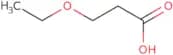
CAS:3-Ethoxypropionic acid is a glycidic compound that is used as a pharmaceutical intermediate. It is a hydroxyl group with a cinnamic acid derivative. 3-Ethoxypropionic acid has been shown to be effective in the treatment of autoimmune diseases and inflammatory diseases. The chemical stability of this compound makes it an excellent candidate for use in pharmaceutical preparations. 3-Ethoxypropionic acid was isolated with an isolated yield of 73%. The chirality of this compound was determined by NMR spectroscopy, which showed that the molecule is unsymmetrical, containing both left-handed and right-handed configurations. This immiscible solvents can be synthesized using a chiral catalyst at the ph optimum of 10.5Fórmula:C5H10O3Pureza:Min. 95%Cor e Forma:Clear LiquidPeso molecular:118.13 g/mol3-[(2-Aminophenyl)sulfanyl]propanenitrile
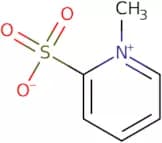
CAS:Versatile small molecule scaffoldFórmula:C9H10N2SPureza:Min. 95%Peso molecular:178.26 g/mol1-Methylpyridin-1-ium-2-sulfonate
CAS:Versatile small molecule scaffoldFórmula:C6H7NO3SPureza:Min. 95%Peso molecular:173.19 g/mol{[(2-Chloroethyl)sulfanyl]methyl}benzene
CAS:<p>2-Chloroethylbenzene is an alkylating agent that reacts with a nucleophile to form a new carbon-carbon bond. It is used as a synthetic intermediate for the production of 2-chloroethyl sulfide and episulfide. 2-Chloroethylbenzene can be synthesized by the reaction of benzyl chloride with ethylene, amines, or other alkylating agents in the presence of sodium hydroxide. 2-Chloroethylbenzene can also be synthesized by the debenzylation of 2-chloroethenylbenzene with hydrochloric acid and potassium hydroxide.<br>Fluorination of 2-chloroethylbenzene will yield 2-chloroethyl fluoroformate, which is an important precursor to pesticides.</p>Fórmula:C9H11ClSPureza:Min. 95%Peso molecular:186.7 g/mol3-(2H-1,2,3-Triazol-2-yl)propan-1-amine hydrochloride
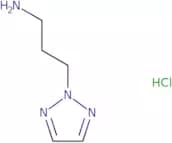
CAS:Versatile small molecule scaffoldFórmula:C5H11ClN4Pureza:Min. 95%Peso molecular:162.62 g/mol1-Benzyl-6-oxo-1,6-dihydro-3-pyridinecarboxylic acid
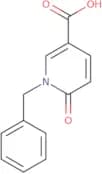
CAS:<p>Versatile small molecule scaffold</p>Fórmula:C13H11NO3Pureza:Min. 95%Peso molecular:229.24 g/mol2-(2-Imino-1,3-thiazolidin-3-yl)-1-phenylethanone hydrobromide
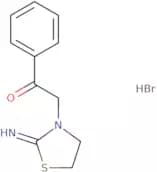
CAS:<p>Versatile small molecule scaffold</p>Fórmula:C11H13BrN2OSPureza:Min. 95%Peso molecular:301.2 g/mol7-Chloro-2,3-dihydro-1,2-benzothiazol-3-one
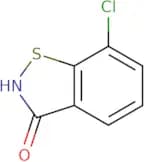
CAS:Versatile small molecule scaffoldFórmula:C7H4ClNOSPureza:Min. 95%Peso molecular:185.63 g/mol2H,3H-[1,2]Thiazolo[5,4-b]pyridin-3-one
CAS:<p>Versatile small molecule scaffold</p>Fórmula:C6H4N2OSPureza:Min. 95%Peso molecular:152.18 g/mol{Tricyclo[2.2.1.0,2,6]heptan-3-yl}methanol
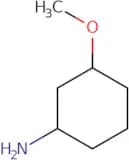
CAS:Versatile small molecule scaffoldFórmula:C8H12OPureza:Min. 95%Peso molecular:124.18 g/mol3-Methoxy-cyclohexylamine
CAS:Versatile small molecule scaffoldFórmula:C7H15NOPureza:Min. 95%Peso molecular:129.2 g/mol4-Propoxycyclohexan-1-amines
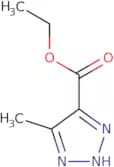
CAS:Versatile small molecule scaffoldFórmula:C9H19NOPureza:Min. 95%Peso molecular:157.3 g/molEthyl 5-methyl-1H-1,2,3-triazole-4-carboxylate
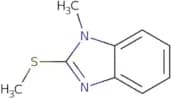
CAS:Versatile small molecule scaffoldFórmula:C6H9N3O2Pureza:Min. 95%Peso molecular:155.15 g/mol1-Methyl-2-(methylsulfanyl)-1H-1,3-benzodiazole
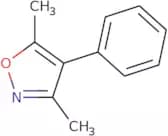
CAS:1-Methyl-2-(methylsulfanyl)-1H-1,3-benzodiazole is an alkylating agent that undergoes a regiospecific reaction with N-methylmorpholine and dimethylformamide to produce the desired 1-(methylsulfanyl)benzene. This process can be carried out in the presence of activated carbon to remove any byproducts. The kinetics of the reaction are dependent on temperature, which can be adjusted by using different solvents. The product is then purified through techniques such as recrystallization or distillation.Fórmula:C9H10N2SPureza:Min. 95%Peso molecular:178.26 g/mol3,5-Dimethyl-4-phenyl-1,2-oxazole
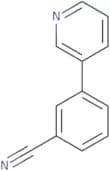
CAS:Versatile small molecule scaffoldFórmula:C11H11NOPureza:Min. 95%Peso molecular:173.21 g/mol3-(Pyridin-3-yl)benzonitrile
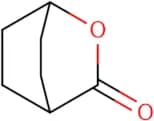
CAS:Versatile small molecule scaffoldFórmula:C12H8N2Pureza:Min. 95%Peso molecular:180.2 g/mol4-Hydroxy-1-cyclohexanecarboxylic Acid '-Lactone
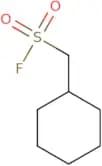
CAS:<p>4-Hydroxy-1-cyclohexanecarboxylic acid ´-lactone is a lactone that is used as an initiator in the production of polyesters. It has also been used as a reactant for synthesizing organolithium compounds. It has been shown that 4-hydroxy-1-cyclohexanecarboxylic acid ´-lactone can be polymerized with styrene and toluene to form a copolymer. This copolymer has been studied by spectroscopy and calorimetry. The enthalpy of this reaction was determined to be -2,979 kJ/mol. The structure of 4-hydroxy-1-cyclohexanecarboxylic acid ´-lactone has been confirmed using crystallography.</p>Fórmula:C7H10O2Pureza:Min. 95%Peso molecular:126.16 g/molCyclohexylmethanesulfonyl fluoride
CAS:<p>Versatile small molecule scaffold</p>Fórmula:C7H13FO2SPureza:Min. 95%Peso molecular:180.24 g/molCyclohexylmethanesulfonamide
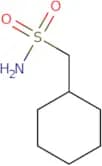
CAS:Cyclohexylmethanesulfonamide is a quinoline derivative that has been shown to have affinity for the CB1 receptor. It has been used in animal studies as an anti-inflammatory agent and may also have cancer chemopreventive properties. The compound has also been shown to inhibit the activity of the NS5B polymerase, which is involved in viral RNA synthesis. Cyclohexylmethanesulfonamide binds to the C1-C6 alkyl group and alkylsulfonyl group on the enzyme, inhibiting its ability to replicate viral RNA. It has been suggested that this drug may be useful in treating psychotic disorders because it can cross the blood brain barrier.Fórmula:C7H15NO2SPureza:Min. 95%Peso molecular:177.27 g/mol2-Cyclohexyl-2-hydroxyacetonitrile
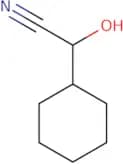
CAS:<p>2-Cyclohexyl-2-hydroxyacetonitrile is a reaction mixture that can be used to synthesize an amide, dialkyl, or carbonate. It is a high yield reaction with hydrogen chloride and carbonate as reagents. The reactants are cyanohydrin and alkoxide or halide. The product of this reaction is an anhydride. 2-Cyclohexyl-2-hydroxyacetonitrile can also be used to make phosgene by reacting with phosgene gas in the presence of metallic chloride or other halides.</p>Fórmula:C8H13NOPureza:Min. 95%Peso molecular:139.19 g/mol

![3-[(2-Aminophenyl)sulfanyl]propanenitrile](/_next/image/?url=https%3A%2Fstatic.cymitquimica.com%2Fproducts%2F3D%2Fthumb-webp%2FEAA32752.webp&w=3840&q=75)
![{[(2-Chloroethyl)sulfanyl]methyl}benzene](/_next/image/?url=https%3A%2Fstatic.cymitquimica.com%2Fproducts%2F3D%2Fthumb-webp%2FEAA33251.webp&w=3840&q=75)
![2H,3H-[1,2]Thiazolo[5,4-b]pyridin-3-one](/_next/image/?url=https%3A%2Fstatic.cymitquimica.com%2Fproducts%2F3D%2Fthumb-webp%2FEAA33760.webp&w=3840&q=75)
![{Tricyclo[2.2.1.0,2,6]heptan-3-yl}methanol](/_next/image/?url=https%3A%2Fstatic.cymitquimica.com%2Fproducts%2F3D%2Fthumb-webp%2FEAA33795.webp&w=3840&q=75)