


Building Blocks
Esta seção contém produtos fundamentais para a síntese de compostos orgânicos e biológicos. Building blocks são os materiais de partida essenciais usados para construir moléculas complexas através de várias reações químicas. Eles desempenham um papel crítico na descoberta de medicamentos, ciência dos materiais e pesquisa química. Na CymitQuimica, oferecemos uma ampla gama de building blocks de alta qualidade para apoiar suas pesquisas inovadoras e projetos industriais, garantindo que você tenha os componentes essenciais para uma síntese bem-sucedida.
Subcategorias de "Building Blocks"
- Ácidos Borónicos e Derivados de Ácido Borónico(5.756 produtos)
- Building Blocks Quirais(1.242 produtos)
- Building Blocks Hidrocarbonetos(6.095 produtos)
- Building Blocks orgânicos(61.055 produtos)
Foram encontrados 199650 produtos de "Building Blocks"
Ordenar por
Pureza (%)
0
100
|
0
|
50
|
90
|
95
|
100
3-Morpholin-4-ylmethyl-2,3-dihydro-1H-indole
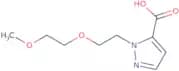
CAS:<p>Versatile small molecule scaffold</p>Fórmula:C13H18N2OPureza:Min. 95%Peso molecular:218.29 g/mol1-(2-(2-Methoxyethoxy)ethyl)-1H-pyrazole-5-carboxylic acid
CAS:<p>Versatile small molecule scaffold</p>Fórmula:C9H14N2O4Pureza:Min. 95%Peso molecular:214.22 g/molRef: 3D-UDC29241
Produto descontinuado1-(4H,6H,7H-Pyrano[4,3-d][1,3]thiazol-2-yl)ethan-1-ol
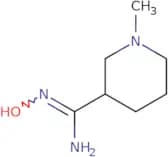
CAS:<p>Versatile small molecule scaffold</p>Fórmula:C8H11NO2SPureza:Min. 95%Peso molecular:185.25 g/molN'-Hydroxy-1-methylpiperidine-3-carboximidamide
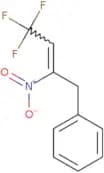
CAS:<p>Versatile small molecule scaffold</p>Fórmula:C7H15N3OPureza:Min. 95%Peso molecular:157.21 g/mol(4,4,4-Trifluoro-2-nitrobut-2-en-1-yl)benzene
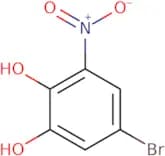
CAS:<p>Versatile small molecule scaffold</p>Fórmula:C10H8F3NO2Pureza:Min. 95%Peso molecular:231.17 g/mol5-bromo-3-nitrobenzene-1,2-diol
CAS:<p>Versatile small molecule scaffold</p>Fórmula:C6H4BrNO4Pureza:Min. 95%Peso molecular:234.01 g/mol[6-(Pyridin-2-yl)pyridin-3-yl]methanol
CAS:<p>Versatile small molecule scaffold</p>Fórmula:C11H10N2OPureza:Min. 95%Peso molecular:186.21 g/mol[1-(1H-Pyrazole-4-sulfonyl)piperidin-3-yl]methanamine
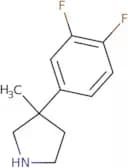
CAS:<p>Versatile small molecule scaffold</p>Fórmula:C9H16N4O2SPureza:Min. 95%Peso molecular:244.32 g/mol3-(3,4-Difluorophenyl)-3-methylpyrrolidine
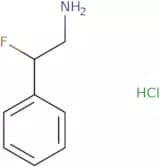
CAS:<p>Versatile small molecule scaffold</p>Fórmula:C11H13F2NPureza:Min. 95%Peso molecular:197.22 g/mol(2S)-2-Fluoro-2-phenylethan-1-amine hydrochloride
CAS:<p>Versatile small molecule scaffold</p>Fórmula:C8H11ClFNPureza:Min. 95%Peso molecular:175.63 g/mol1-(1-{[(9H-Fluoren-9-yl)methoxy]carbonyl}-1,2,3,6-tetrahydropyridin-4-yl)cyclobutane-1-carboxylic acid
CAS:<p>Versatile small molecule scaffold</p>Fórmula:C25H25NO4Pureza:Min. 95%Peso molecular:403.5 g/molRef: 3D-RPD12850
Produto descontinuado3-[(2-Methyl-2-propen-1-yl)thio]-5H-1,2,4-triazino[5,6-b]indole
CAS:<p>3-[(2-Methyl-2-propen-1-yl)thio]-5H-1,2,4-triazino[5,6-b]indole is a recombinant protein that binds to the ribosomal protein L11. It has been shown to inhibit the biosynthesis of the bacterial cell wall and therefore inhibit replication of the bacterial genome. 3-[(2-Methyl-2-propen-1-yl)thio]-5H-1,2,4-triazino[5,6-b]indole also inhibits the synthesis of proteins essential for cell division. This compound has been shown to bind to ribosomes in both prokaryotic and eukaryotic cells. It may have potential as an inhibitor of cancerous cells because it inhibits protein synthesis in mammalian cells.</p>Fórmula:C13H12N4SPureza:Min. 95%Peso molecular:256.33 g/molRef: 3D-DNA02311
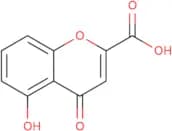
Produto descontinuado5-Hydroxy-4-oxo-4H-chromene-2-carboxylic acid
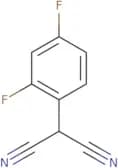
CAS:<p>Versatile small molecule scaffold</p>Fórmula:C10H6O5Pureza:Min. 95%Peso molecular:206.15 g/mol2-(2,4-Difluorophenyl)propanedinitrile
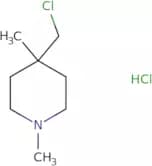
CAS:<p>Versatile small molecule scaffold</p>Fórmula:C9H4F2N2Pureza:Min. 95%Peso molecular:178.14 g/mol4-(Chloromethyl)-1,4-dimethylpiperidine hydrochloride
CAS:<p>Versatile small molecule scaffold</p>Fórmula:C8H17Cl2NPureza:Min. 95%Peso molecular:198.13 g/molRef: 3D-DXC58362
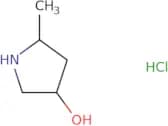
Produto descontinuado5-Methylpyrrolidin-3-ol hydrochloride
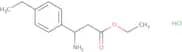
CAS:<p>Versatile small molecule scaffold</p>Fórmula:C5H12ClNOPureza:Min. 95%Peso molecular:137.61 g/molEthyl 3-Amino-3-(4-ethylphenyl)propanoate Hydrochloride
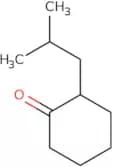
CAS:<p>Versatile small molecule scaffold</p>Fórmula:C13H19NO2·HClPureza:Min. 95%Peso molecular:221.3 g/mol2-(2-Methylpropyl)cyclohexan-1-one
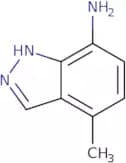
CAS:<p>2-(2-Methylpropyl)cyclohexan-1-one is a heterobicyclic compound with a hydroxyl group and two cyclohexane rings. It has a nitrogen atom with three substituents, one of which is a trifluoromethyl group. This molecule is used as a polymerization initiator for polyester and polycarbonate production. It also can be used in the production of liquid crystal compositions, aliphatic hydrocarbons, and organic solvents. 2-(2-Methylpropyl)cyclohexan-1-one is an organic solvent that can be used in the preparation of monomers such as carbonyl groups or cyanates.</p>Fórmula:C10H18OPureza:Min. 95%Peso molecular:154.25 g/mol4-Methyl-1H-indazol-7-amine
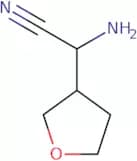
CAS:<p>Versatile small molecule scaffold</p>Fórmula:C8H9N3Pureza:Min. 95%Peso molecular:147.18 g/mol2-Amino-2-(oxolan-3-yl)acetonitrile
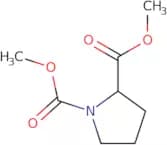
CAS:<p>Versatile small molecule scaffold</p>Fórmula:C6H10N2OPureza:Min. 95%Peso molecular:126.16 g/mol1,2-Dimethyl pyrrolidine-1,2-dicarboxylate
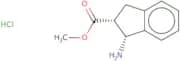
CAS:<p>Versatile small molecule scaffold</p>Fórmula:C8H13NO4Pureza:Min. 95%Peso molecular:187.19 g/molrac-Methyl (1R,2R)-1-amino-2,3-dihydro-1H-indene-2-carboxylate hydrochloride
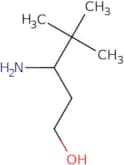
CAS:<p>Versatile small molecule scaffold</p>Fórmula:C11H14ClNO2Pureza:Min. 95%Peso molecular:227.7 g/mol3-Amino-4,4-dimethylpentan-1-ol
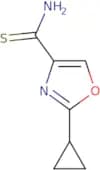
CAS:<p>Versatile small molecule scaffold</p>Fórmula:C7H17NOPureza:Min. 95%Peso molecular:131.22 g/mol2-Cyclopropyl-1,3-oxazole-4-carbothioamide
CAS:<p>Versatile small molecule scaffold</p>Fórmula:C7H8N2OSPureza:Min. 95%Peso molecular:168.22 g/molRef: 3D-BKD17844
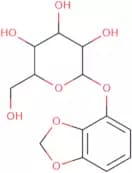
Produto descontinuado(2S,3R,4S,5S,6R)-2-(1,3-Dioxaindan-4-yloxy)-6-(hydroxymethyl)oxane-3,4,5-triol
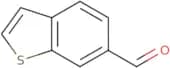
CAS:<p>Versatile small molecule scaffold</p>Fórmula:C13H16O8Pureza:Min. 95%Peso molecular:300.26 g/mol1-Benzothiophene-6-carboxaldehyde
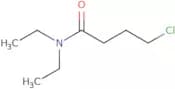
CAS:<p>1-Benzothiophene-6-carboxaldehyde (BTA) is a heterocyclic compound that contains sulfur. It is a colorless liquid with a sweet odor. BTA is used in the manufacture of pesticides, pharmaceuticals, and other organic chemicals. It is also used as a building block in the synthesis of other compounds and has been shown to have anti-inflammatory properties.</p>Fórmula:C9H6OSPureza:Min. 95%Peso molecular:162.21 g/mol4-Chloro-N,N-diethyl-butyramide
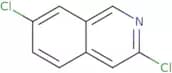
CAS:<p>Versatile small molecule scaffold</p>Fórmula:C8H16ClNOPureza:Min. 95%Peso molecular:177.67 g/mol3,7-Dichloroisoquinoline
CAS:<p>Versatile small molecule scaffold</p>Fórmula:C9H5Cl2NPureza:Min. 95%Peso molecular:198.05 g/mol2-{[3-(Dimethylamino)propyl]sulfanyl}aniline
CAS:<p>Versatile small molecule scaffold</p>Fórmula:C11H18N2SPureza:Min. 95%Peso molecular:210.34 g/molMethyl 2-[4-(2-aminoethyl)phenoxy]acetate hydrochloride
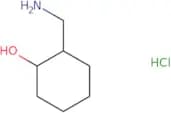
CAS:<p>Versatile small molecule scaffold</p>Fórmula:C11H16ClNO3Pureza:Min. 95%Peso molecular:245.7 g/mol(1R,2S)-2-(Aminomethyl)cyclohexan-1-ol hydrochloride
CAS:<p>Versatile small molecule scaffold</p>Fórmula:C7H16ClNOPureza:Min. 95%Peso molecular:165.66 g/molRef: 3D-AQA81919
Produto descontinuado4-Chloro-2-methyl-5-nitroaniline
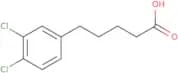
CAS:<p>4-Chloro-2-methyl-5-nitroaniline is an organic compound with the chemical formula C6H4ClNO2. It is a nitro derivative of aniline. 4-Chloro-2-methyl-5-nitroaniline is a white solid that is soluble in water, alcohols, and ethers. It has a melting point around 206 °C and decomposes at temperatures over 350 °C. This compound can be obtained by reacting hydroxylamine with nitrous acid and chlorinating 2,5-dimethylaniline. The sequence of reactions can be summarized as follows: hydroxy group to nitro group, nitro group to methyl group, methyl group to acetyl or acetylamino, acetyl or acetylamino to acetylation or methylation, transformation from hydroxyl group to amino group and esterification from acid hydrazide to acid group.</p>Fórmula:C7H7ClN2O2Pureza:Min. 95%Peso molecular:186.59 g/mol5-(3,4-Dichlorophenyl)pentanoic acid
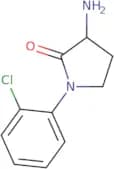
CAS:<p>Versatile small molecule scaffold</p>Fórmula:C11H12Cl2O2Pureza:Min. 95%Peso molecular:247.11 g/mol3-Amino-1-(2-chlorophenyl)pyrrolidin-2-one
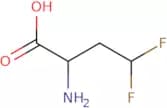
CAS:<p>Versatile small molecule scaffold</p>Fórmula:C10H11ClN2OPureza:Min. 95%Peso molecular:210.66 g/mol(2R)-2-Amino-4,4-difluorobutanoic acid
CAS:<p>Versatile small molecule scaffold</p>Fórmula:C4H7F2NO2Pureza:Min. 95%Peso molecular:139.1 g/mol4-[2-(Trifluoromethyl)phenoxy]aniline
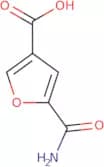
CAS:<p>Versatile small molecule scaffold</p>Fórmula:C13H10F3NOPureza:Min. 95%Peso molecular:253.22 g/mol5-Carbamoylfuran-3-carboxylic acid
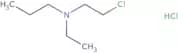
CAS:<p>Versatile small molecule scaffold</p>Fórmula:C6H5NO4Pureza:Min. 95%Peso molecular:155.11 g/molN-(2-Chloroethyl)-N-ethylpropan-1-amine hydrochloride
CAS:Produto Controlado<p>Versatile small molecule scaffold</p>Fórmula:C7H17Cl2NPureza:Min. 95%Peso molecular:186.12 g/mol5-Chloro-2-(1H-pyrrol-1-yl)aniline
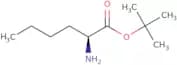
CAS:<p>Versatile small molecule scaffold</p>Fórmula:C10H9ClN2Pureza:Min. 95%Peso molecular:192.64 g/moltert-butyl (2S)-2-aminohexanoate
CAS:<p>Tert-butyl (2S)-2-aminohexanoate is an intermediate that is used in the synthesis of glycine by the reaction of benzyl bromide and tert-butyl amine. The stereospecifically incorporated tert-butyl group has a high degree of enantioselectivity, which makes this intermediate useful in the synthesis of glycine. Tert-butyl (2S)-2-aminohexanoate can be synthesized using lithium diisopropylamide and a tertiary amine as an alkylating agent.</p>Fórmula:C10H21NO2Pureza:Min. 95%Peso molecular:187.3 g/mol3-[(4-Chlorophenyl)amino]propanenitrile
CAS:<p>Versatile small molecule scaffold</p>Fórmula:C9H9ClN2Pureza:Min. 95%Peso molecular:180.63 g/molPyrazolo[1,5-a]pyridin-4-ol
CAS:<p>Pyrazolo[1,5-a]pyridin-4-ol is a heteroaromatic compound that acts as an inhibitor of phosphodiesterase (PDE). It prevents the breakdown of cyclic nucleotides and thus leads to increased levels of cAMP and cGMP. Pyrazolo[1,5-a]pyridin-4-ol has been shown to have bronchodilatory activity in animal models. The drug also inhibits the production of inflammatory mediators such as prostaglandins by inhibiting cyclooxygenases. In addition, pyrazolo[1,5-a]pyridin-4-ol has been shown to be a potential PDE inhibitor replacement for the more commonly used PDE inhibitors such as sildenafil and tadalafil. However, due to its lack of stereochemistry and its bicyclic chemical structure, pyrazolo[1,5-a]</p>Fórmula:C7H6N2OPureza:Min. 95%Peso molecular:134.14 g/mol4-Bromo-1-cyclohexyl-1H-pyrazole
CAS:<p>Versatile small molecule scaffold</p>Fórmula:C9H13BrN2Pureza:Min. 95%Peso molecular:229.12 g/mol4-{4-[(2S)-2,3-Dihydroxypropyl]piperazin-1-yl}benzoic acid
CAS:<p>Versatile small molecule scaffold</p>Fórmula:C14H20N2O4Pureza:Min. 95%Peso molecular:280.3 g/molRef: 3D-RPD10760
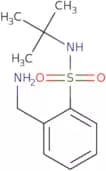
Produto descontinuado2-(Aminomethyl)-N-tert-butylbenzene-1-sulfonamide
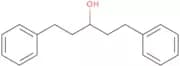
CAS:<p>Versatile small molecule scaffold</p>Fórmula:C11H18N2O2SPureza:Min. 95%Peso molecular:242.34 g/mol1,5-Diphenylpentan-3-ol
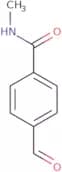
CAS:<p>Flindersia laevicarpa is a small tree native to Australia. The leaves of the tree are used for medicinal purposes and contain 1,5-diphenylpentan-3-ol. Flindersia laevicarpa has been shown to have anti-inflammatory and antioxidant properties, as well as an ability to inhibit platelet aggregation.</p>Fórmula:C17H20OPureza:Min. 95%Peso molecular:240.34 g/mol4-Formyl-N-methyl-benzamide
CAS:<p>Versatile small molecule scaffold</p>Fórmula:C9H9NO2Pureza:Min. 95%Peso molecular:163.18 g/mol4-Methylpyridine-2-thiol
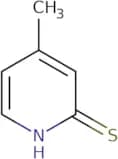
CAS:<p>4-Methylpyridine-2-thiol is a ligand that binds to metal ions. It has been shown to be an effective photoelectron scavenger for mercury and lead, as well as a wide variety of other metals. 4-Methylpyridine-2-thiol is also an important monomer in the preparation of polymers and resins. This ligand has been used in the synthesis of compounds with cyclic structures and hydrochloric acid, as well as being crystallized with x-ray crystallography. The properties of this ligand have been studied by voltammetry, spectroscopies, and crystallography. 4-Methylpyridine-2-thiol interacts with chloride ions in acetonitrile to form a salt called methylpyridinium chloride.</p>Fórmula:C6H7NSPureza:Min. 95%Peso molecular:125.19 g/mol3-Boc-3-azabicyclo[3.2.1]octan-8-amine
CAS:<p>Versatile small molecule scaffold</p>Fórmula:C12H22N2O2Pureza:Min. 95%Peso molecular:226.32 g/mol2-Bromo-3,3,3-trifluoro-1-propene
CAS:Produto Controlado<p>2-Bromo-3,3,3-trifluoro-1-propene is a chemical compound that has been synthesized in an asymmetric reaction. The reactant is bromopropane and the product is 2,2,2-trifluoropropene. The methylene group on the propene molecule is activated by the nucleophilic attack of a fluoride ion from hydrogen fluoride to form a cavity with a highly strained bond. The kinetic study of this reaction revealed that the activation energy for the reaction is 42 kJ/mol. Palladium-catalyzed coupling reactions are catalyzed by palladium and require nonpolar solvents such as toluene or dichloromethane. This type of reaction has been shown to be exothermic with an isolated yield of 1%.</p>Fórmula:C3H2BrF3Pureza:Min. 95%Cor e Forma:Colorless PowderPeso molecular:174.95 g/mol


![1-(4H,6H,7H-Pyrano[4,3-d][1,3]thiazol-2-yl)ethan-1-ol](/_next/image/?url=https%3A%2Fstatic.cymitquimica.com%2Fproducts%2F3D%2Fthumb-webp%2FUDC36735.webp&w=3840&q=75)
![[6-(Pyridin-2-yl)pyridin-3-yl]methanol](/_next/image/?url=https%3A%2Fstatic.cymitquimica.com%2Fproducts%2F3D%2Fthumb-webp%2FWFA58187.webp&w=3840&q=75)
![[1-(1H-Pyrazole-4-sulfonyl)piperidin-3-yl]methanamine](/_next/image/?url=https%3A%2Fstatic.cymitquimica.com%2Fproducts%2F3D%2Fthumb-webp%2FXZB14507.webp&w=3840&q=75)
![1-(1-{[(9H-Fluoren-9-yl)methoxy]carbonyl}-1,2,3,6-tetrahydropyridin-4-yl)cyclobutane-1-carboxylic …](/_next/image/?url=https%3A%2Fstatic.cymitquimica.com%2Fproducts%2F3D%2Fthumb-webp%2FRPD12850.webp&w=3840&q=75)
![3-[(2-Methyl-2-propen-1-yl)thio]-5H-1,2,4-triazino[5,6-b]indole](/_next/image/?url=https%3A%2Fstatic.cymitquimica.com%2Fproducts%2F3D%2Fthumb-webp%2FDNA02311.webp&w=3840&q=75)
![2-{[3-(Dimethylamino)propyl]sulfanyl}aniline](/_next/image/?url=https%3A%2Fstatic.cymitquimica.com%2Fproducts%2F3D%2Fthumb-webp%2FBAA13477.webp&w=3840&q=75)
![Methyl 2-[4-(2-aminoethyl)phenoxy]acetate hydrochloride](/_next/image/?url=https%3A%2Fstatic.cymitquimica.com%2Fproducts%2F3D%2Fthumb-webp%2FHFA22482.webp&w=3840&q=75)

![4-[2-(Trifluoromethyl)phenoxy]aniline](/_next/image/?url=https%3A%2Fstatic.cymitquimica.com%2Fproducts%2F3D%2Fthumb-webp%2FLCA94684.webp&w=3840&q=75)

![3-[(4-Chlorophenyl)amino]propanenitrile](/_next/image/?url=https%3A%2Fstatic.cymitquimica.com%2Fproducts%2F3D%2Fthumb-webp%2FRBA83357.webp&w=3840&q=75)
![Pyrazolo[1,5-a]pyridin-4-ol](/_next/image/?url=https%3A%2Fstatic.cymitquimica.com%2Fproducts%2F3D%2Fthumb-webp%2FRFA03272.webp&w=3840&q=75)

![4-{4-[(2S)-2,3-Dihydroxypropyl]piperazin-1-yl}benzoic acid](/_next/image/?url=https%3A%2Fstatic.cymitquimica.com%2Fproducts%2F3D%2Fthumb-webp%2FRPD10760.webp&w=3840&q=75)
![3-Boc-3-azabicyclo[3.2.1]octan-8-amine](/_next/image/?url=https%3A%2Fstatic.cymitquimica.com%2Fproducts%2F3D%2Fthumb-webp%2FFDC76351.webp&w=3840&q=75)
