


Building Blocks
Esta seção contém produtos fundamentais para a síntese de compostos orgânicos e biológicos. Building blocks são os materiais de partida essenciais usados para construir moléculas complexas através de várias reações químicas. Eles desempenham um papel crítico na descoberta de medicamentos, ciência dos materiais e pesquisa química. Na CymitQuimica, oferecemos uma ampla gama de building blocks de alta qualidade para apoiar suas pesquisas inovadoras e projetos industriais, garantindo que você tenha os componentes essenciais para uma síntese bem-sucedida.
Subcategorias de "Building Blocks"
- Ácidos Borónicos e Derivados de Ácido Borónico(5.756 produtos)
- Building Blocks Quirais(1.242 produtos)
- Building Blocks Hidrocarbonetos(6.095 produtos)
- Building Blocks orgânicos(61.055 produtos)
Foram encontrados 199650 produtos de "Building Blocks"
Ordenar por
Pureza (%)
0
100
|
0
|
50
|
90
|
95
|
100
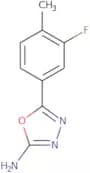
5-(3-Fluoro-4-methylphenyl)-1,3,4-oxadiazol-2-amine
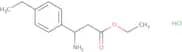
CAS:<p>Versatile small molecule scaffold</p>Fórmula:C9H8FN3OPureza:Min. 95%Peso molecular:193.18 g/molEthyl 3-Amino-3-(4-ethylphenyl)propanoate Hydrochloride
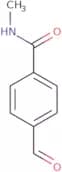
CAS:<p>Versatile small molecule scaffold</p>Fórmula:C13H19NO2·HClPureza:Min. 95%Peso molecular:221.3 g/mol4-Formyl-N-methyl-benzamide
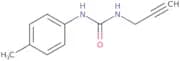
CAS:<p>Versatile small molecule scaffold</p>Fórmula:C9H9NO2Pureza:Min. 95%Peso molecular:163.18 g/mol1-(4-Methylphenyl)-3-(prop-2-yn-1-yl)urea
CAS:<p>1-(4-Methylphenyl)-3-(prop-2-yn-1-yl)urea is a fluorescent derivative that can be detected with certain techniques. It has been used to detect phosphatases in cervical cancer cells and tumor cells. This compound is a ligand for the surface antigen of placental alkaline phosphatase (PLAP). It can also bind to other organic ligands, such as recombinant human erythropoietin (EPO), which may be useful for redirecting the action of this protein. 1-(4-Methylphenyl)-3-(prop-2-yn-1-yl)urea is an organic bispecific molecule that binds to two receptors, one on tumor cells and one on normal cells. This binding leads to cell death by apoptosis through the release of cytochrome c from mitochondria.</p>Fórmula:C11H12N2OPureza:Min. 95%Peso molecular:188.23 g/molrac-(1R,4R)-4-{[(2-Fluorophenyl)methyl]amino}cyclohexan-1-ol hydrochloride
CAS:<p>Versatile small molecule scaffold</p>Fórmula:C13H19ClFNOPureza:Min. 95%Peso molecular:259.7 g/molPB-22 3-carboxyindole metabolite solution
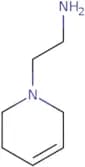
CAS:Produto Controlado<p>PB-22 is a synthetic cannabinoid, which can be classified as a CB1 receptor agonist. It is one of the many cannabinoids that have been created in an attempt to circumvent drug laws by creating compounds that are similar to those found in cannabis but have different chemical structures. PB-22 has shown to increase locomotor activity and stimulate the cb1 receptor in mice. Magnetic resonance spectroscopy (MRS) and assays were used to determine the binding affinity of PB-22 for the CB1 receptor. The MRS data showed that PB-22 bound with high affinity to the CB1 receptor and had a lower affinity for CB2 receptors. This suggests that PB-22 may be more potent than other synthetic cannabinoids, such as JWH-018 and CP 55,940, which bind better with CB2 receptors than CB1 receptors.<br>PB-22 is an analog of JWH-073 and has been shown to have a stronger effect on locomotor activity than JWH</p>Fórmula:C14H17NO2Pureza:Min. 95%Peso molecular:231.29 g/mol2-(1,2,3,6-Tetrahydropyridin-1-yl)ethan-1-amine
CAS:<p>Versatile small molecule scaffold</p>Fórmula:C7H14N2Pureza:Min. 95%Peso molecular:126.2 g/molRef: 3D-CBA57863
Produto descontinuado(2R,5R)-5-Phenylpyrrolidine-2-carboxamide hydrochloride
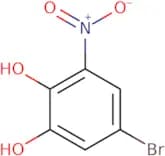
CAS:<p>Versatile small molecule scaffold</p>Fórmula:C11H15ClN2OPureza:Min. 95%Peso molecular:226.7 g/mol5-bromo-3-nitrobenzene-1,2-diol
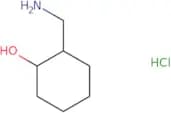
CAS:<p>Versatile small molecule scaffold</p>Fórmula:C6H4BrNO4Pureza:Min. 95%Peso molecular:234.01 g/mol(1R,2S)-2-(Aminomethyl)cyclohexan-1-ol hydrochloride
CAS:<p>Versatile small molecule scaffold</p>Fórmula:C7H16ClNOPureza:Min. 95%Peso molecular:165.66 g/molRef: 3D-AQA81919
Produto descontinuado(2-Bromo-5-chlorophenyl)methanesulfonyl chloride
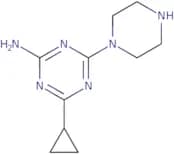
CAS:<p>Versatile small molecule scaffold</p>Fórmula:C7H5BrCl2O2SPureza:Min. 95%Peso molecular:303.99 g/mol4-Cyclopropyl-6-(piperazin-1-yl)-1,3,5-triazin-2-amine
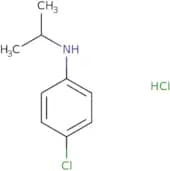
CAS:<p>Versatile small molecule scaffold</p>Fórmula:C10H16N6Pureza:Min. 95%Peso molecular:220.27 g/mol4-Chloro-N-(propan-2-yl)aniline hydrochloride
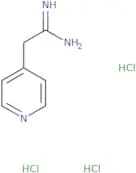
CAS:<p>Versatile small molecule scaffold</p>Fórmula:C9H13Cl2NPureza:Min. 95%Peso molecular:206.11 g/mol2-(Pyridin-4-yl)ethanimidamide trihydrochloride
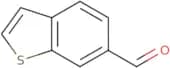
CAS:<p>Versatile small molecule scaffold</p>Fórmula:C7H12Cl3N3Pureza:Min. 95%Peso molecular:244.5 g/mol1-Benzothiophene-6-carboxaldehyde
CAS:<p>1-Benzothiophene-6-carboxaldehyde (BTA) is a heterocyclic compound that contains sulfur. It is a colorless liquid with a sweet odor. BTA is used in the manufacture of pesticides, pharmaceuticals, and other organic chemicals. It is also used as a building block in the synthesis of other compounds and has been shown to have anti-inflammatory properties.</p>Fórmula:C9H6OSPureza:Min. 95%Peso molecular:162.21 g/mol2-[(4-Chloro-3,5-dimethyl-1H-pyrazol-1-yl)methanesulfonyl]acetic acid
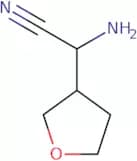
CAS:<p>Versatile small molecule scaffold</p>Fórmula:C8H11ClN2O4SPureza:Min. 95%Peso molecular:266.7 g/mol2-Amino-2-(oxolan-3-yl)acetonitrile
CAS:<p>Versatile small molecule scaffold</p>Fórmula:C6H10N2OPureza:Min. 95%Peso molecular:126.16 g/mol6-(Difluoromethyl)pyrimidine-2,4(1H,3H)-dione
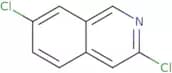
CAS:<p>Versatile small molecule scaffold</p>Fórmula:C5H4F2N2O2Pureza:Min. 95%Peso molecular:162.09 g/mol3,7-Dichloroisoquinoline
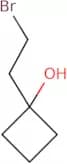
CAS:<p>Versatile small molecule scaffold</p>Fórmula:C9H5Cl2NPureza:Min. 95%Peso molecular:198.05 g/mol1-(2-Bromoethyl)cyclobutan-1-ol
CAS:<p>Versatile small molecule scaffold</p>Fórmula:C6H11BrOPureza:Min. 95%Peso molecular:179.05 g/molQuinoline-5-carbonitrile
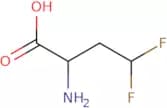
CAS:<p>Quinoline-5-carbonitrile is a cyanide compound that can be used in the synthesis of heterocyclic compounds. The reaction between quinoline and 5-cyanovaleric acid produces 6-nitroquinoline, which is then converted to dimethyl sulfoxide by alcoholysis. This reaction product can then be used to synthesize an amide or nucleophile. Quinoline-5-carbonitrile reacts with potassium in the presence of bifunctional hydrazide to produce a cyanide ion, which can be hydrolyzed by an acid to release hydrogen cyanide gas. This experiment has been shown as a model for reactions involving cyano compounds.</p>Fórmula:C10H6N2Pureza:Min. 95%Peso molecular:154.17 g/mol(2R)-2-Amino-4,4-difluorobutanoic acid
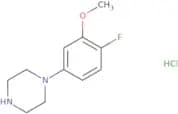
CAS:<p>Versatile small molecule scaffold</p>Fórmula:C4H7F2NO2Pureza:Min. 95%Peso molecular:139.1 g/mol1-(4-Fluoro-3-methoxyphenyl)piperazine hydrochloride
CAS:Produto Controlado<p>Versatile small molecule scaffold</p>Fórmula:C11H16ClFN2OPureza:Min. 95%Peso molecular:246.71 g/molRef: 3D-DXC56724
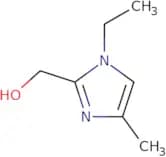
Produto descontinuado(1-Ethyl-4-methyl-1H-imidazol-2-yl)-methanol
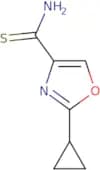
CAS:<p>Versatile small molecule scaffold</p>Fórmula:C7H12N2OPureza:Min. 95%Peso molecular:140.18 g/mol2-Cyclopropyl-1,3-oxazole-4-carbothioamide
CAS:<p>Versatile small molecule scaffold</p>Fórmula:C7H8N2OSPureza:Min. 95%Peso molecular:168.22 g/molRef: 3D-BKD17844
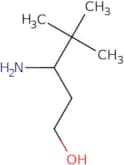
Produto descontinuado3-Amino-4,4-dimethylpentan-1-ol
CAS:<p>Versatile small molecule scaffold</p>Fórmula:C7H17NOPureza:Min. 95%Peso molecular:131.22 g/mol1-[4-(Methylsulfanyl)phenyl]ethan-1-amine hydrochloride
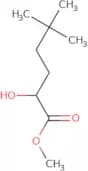
CAS:<p>Versatile small molecule scaffold</p>Fórmula:C9H14ClNSPureza:Min. 95%Peso molecular:203.73 g/molMethyl 2-hydroxy-5,5-dimethylhexanoate
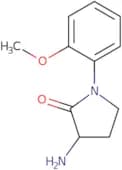
CAS:<p>Versatile small molecule scaffold</p>Fórmula:C9H18O3Pureza:Min. 95%Peso molecular:174.24 g/mol3-Amino-1-(2-methoxyphenyl)pyrrolidin-2-one
CAS:<p>Versatile small molecule scaffold</p>Fórmula:C11H14N2O2Pureza:Min. 95%Peso molecular:206.24 g/mol4-(1-Naphthyl)piperidine hydrochloride
CAS:<p>Versatile small molecule scaffold</p>Fórmula:C15H18ClNPureza:Min. 95%Peso molecular:247.76 g/molOctahydro-pyrazino[2,1-c][1,4]thiazine 2,2-dioxide hydrochloride
CAS:<p>Versatile small molecule scaffold</p>Fórmula:C7H16Cl2N2O2SPureza:Min. 95%Peso molecular:263.18 g/mol2-[3-(Difluoromethoxy)-4-methoxyphenyl]ethan-1-amine
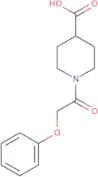
CAS:Produto Controlado<p>Versatile small molecule scaffold</p>Fórmula:C10H13F2NO2Pureza:Min. 95%Peso molecular:217.21 g/mol1-(Phenoxyacetyl)piperidine-4-carboxylic acid
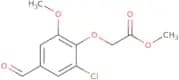
CAS:<p>Versatile small molecule scaffold</p>Fórmula:C14H17NO4Pureza:Min. 95%Peso molecular:263.29 g/molMethyl (2-chloro-4-formyl-6-methoxyphenoxy)acetate
CAS:<p>Versatile small molecule scaffold</p>Fórmula:C11H11ClO5Pureza:Min. 95%Peso molecular:258.65 g/mol5-(Iodomethyl)-6-azaspiro[3.4]octan-7-one
CAS:Versatile small molecule scaffoldFórmula:C8H12INOPureza:Min. 95%Peso molecular:265.1 g/molRef: 3D-TLD44509
Produto descontinuado7-Hydroxy-3,4-dimethyl-2,3-dihydro-1H-inden-1-one
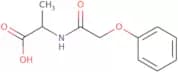
CAS:<p>Versatile small molecule scaffold</p>Fórmula:C11H12O2Pureza:Min. 95%Peso molecular:176.21 g/mol2-(2-Phenoxyacetamido)propanoic acid
CAS:<p>Versatile small molecule scaffold</p>Fórmula:C11H13NO4Pureza:Min. 95%Peso molecular:223.22 g/mol[6-(Pyridin-2-yl)pyridin-3-yl]methanol
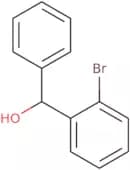
CAS:<p>Versatile small molecule scaffold</p>Fórmula:C11H10N2OPureza:Min. 95%Peso molecular:186.21 g/mol(2-Bromophenyl)(phenyl)methanol
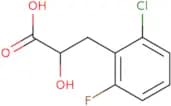
CAS:<p>The synthesis of (2-bromophenyl)(phenyl)methanol is accomplished by the reaction of an aldehyde with bromine followed by an alkylation with magnesium. The product is obtained as a racemic mixture of enantiomers with a chiral center, which can be resolved by fractional crystallization or other separation methods. This method has been shown to be efficient for the synthesis of alcohols and carbinols, and stereogenic reactions.</p>Fórmula:C13H11OBrPureza:Min. 95%Peso molecular:263.12 g/mol3-(2-Chloro-6-fluorophenyl)-2-hydroxypropanoic acid
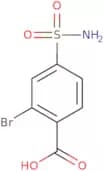
CAS:<p>Versatile small molecule scaffold</p>Fórmula:C9H8ClFO3Pureza:Min. 95%Peso molecular:218.61 g/mol2-Bromo-4-sulfamoylbenzoic acid
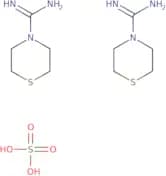
CAS:<p>Versatile small molecule scaffold</p>Fórmula:C7H6BrNO4SPureza:Min. 95%Peso molecular:280.1 g/molBis(thiomorpholine-4-carboximidamide) sulfate
CAS:<p>Versatile small molecule scaffold</p>Fórmula:C10H24N6O4S3Pureza:Min. 95%Peso molecular:388.5 g/molN-[(5-Methyl-2-thienyl)methyl]cyclopropanamine hydrochloride
CAS:<p>Versatile small molecule scaffold</p>Fórmula:C9H14ClNSPureza:Min. 95%Peso molecular:203.73 g/molMethyl 2-formyl-4,5-dimethoxybenzoate
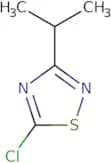
CAS:<p>Versatile small molecule scaffold</p>Fórmula:C11H12O5Pureza:Min. 95%Peso molecular:224.21 g/mol5-Chloro-3-(propan-2-yl)-1,2,4-thiadiazole
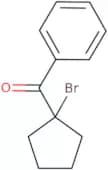
CAS:<p>Versatile small molecule scaffold</p>Fórmula:C5H7ClN2SPureza:Min. 95%Peso molecular:162.64 g/mol(1-Bromocyclopentyl)(phenyl)methanone
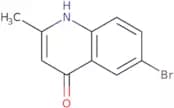
CAS:<p>Versatile small molecule scaffold</p>Fórmula:C12H13BrOPureza:Min. 95%Peso molecular:253.13 g/mol6-Bromo-2-methylquinolin-4-ol
CAS:<p>Versatile small molecule scaffold</p>Fórmula:C10H8BrNOPureza:Min. 95%Peso molecular:238.08 g/mol3-Morpholin-4-ylmethyl-2,3-dihydro-1H-indole
CAS:<p>Versatile small molecule scaffold</p>Fórmula:C13H18N2OPureza:Min. 95%Peso molecular:218.29 g/mol2-Bromo-3,3,3-trifluoro-1-propene
CAS:Produto Controlado<p>2-Bromo-3,3,3-trifluoro-1-propene is a chemical compound that has been synthesized in an asymmetric reaction. The reactant is bromopropane and the product is 2,2,2-trifluoropropene. The methylene group on the propene molecule is activated by the nucleophilic attack of a fluoride ion from hydrogen fluoride to form a cavity with a highly strained bond. The kinetic study of this reaction revealed that the activation energy for the reaction is 42 kJ/mol. Palladium-catalyzed coupling reactions are catalyzed by palladium and require nonpolar solvents such as toluene or dichloromethane. This type of reaction has been shown to be exothermic with an isolated yield of 1%.</p>Fórmula:C3H2BrF3Pureza:Min. 95%Cor e Forma:Colorless PowderPeso molecular:174.95 g/mol3-Boc-3-azabicyclo[3.2.1]octan-8-amine
CAS:<p>Versatile small molecule scaffold</p>Fórmula:C12H22N2O2Pureza:Min. 95%Peso molecular:226.32 g/mol

![rac-(1R,4R)-4-{[(2-Fluorophenyl)methyl]amino}cyclohexan-1-ol hydrochloride](/_next/image/?url=https%3A%2Fstatic.cymitquimica.com%2Fproducts%2F3D%2Fthumb-webp%2FTMD05176.webp&w=3840&q=75)


![2-[(4-Chloro-3,5-dimethyl-1H-pyrazol-1-yl)methanesulfonyl]acetic acid](/_next/image/?url=https%3A%2Fstatic.cymitquimica.com%2Fproducts%2F3D%2Fthumb-webp%2FGQB31932.webp&w=3840&q=75)

![1-[4-(Methylsulfanyl)phenyl]ethan-1-amine hydrochloride](/_next/image/?url=https%3A%2Fstatic.cymitquimica.com%2Fproducts%2F3D%2Fthumb-webp%2FFIA93777.webp&w=3840&q=75)

![Octahydro-pyrazino[2,1-c][1,4]thiazine 2,2-dioxide hydrochloride](/_next/image/?url=https%3A%2Fstatic.cymitquimica.com%2Fproducts%2F3D%2Fthumb-webp%2FDXC60335.webp&w=3840&q=75)
![2-[3-(Difluoromethoxy)-4-methoxyphenyl]ethan-1-amine](/_next/image/?url=https%3A%2Fstatic.cymitquimica.com%2Fproducts%2F3D%2Fthumb-webp%2FYHB23469.webp&w=3840&q=75)
![5-(Iodomethyl)-6-azaspiro[3.4]octan-7-one](/_next/image/?url=https%3A%2Fstatic.cymitquimica.com%2Fproducts%2F3D%2Fthumb-webp%2FTLD44509.webp&w=3840&q=75)

![[6-(Pyridin-2-yl)pyridin-3-yl]methanol](/_next/image/?url=https%3A%2Fstatic.cymitquimica.com%2Fproducts%2F3D%2Fthumb-webp%2FWFA58187.webp&w=3840&q=75)
![N-[(5-Methyl-2-thienyl)methyl]cyclopropanamine hydrochloride](/_next/image/?url=https%3A%2Fstatic.cymitquimica.com%2Fproducts%2F3D%2Fthumb-webp%2FASB21404.webp&w=3840&q=75)



![3-Boc-3-azabicyclo[3.2.1]octan-8-amine](/_next/image/?url=https%3A%2Fstatic.cymitquimica.com%2Fproducts%2F3D%2Fthumb-webp%2FFDC76351.webp&w=3840&q=75)