Building Blocks
Subcategorias de "Building Blocks"
- Ácidos Borónicos e Derivados de Ácido Borónico(5.778 produtos)
- Building Blocks Quirais(1.243 produtos)
- Building Blocks Hidrocarbonetos(6.098 produtos)
- Building Blocks orgânicos(61.036 produtos)
Foram encontrados 205240 produtos de "Building Blocks"
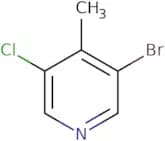
3-Bromo-5-chloro-4-methylpyridine
CAS:Versatile small molecule scaffold
Fórmula:C6H5BrClNPureza:Min. 95%Peso molecular:206.47 g/mol2-Methoxy-3-methylbutane-1-sulfonyl chloride
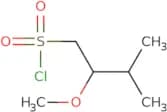
CAS:Versatile small molecule scaffold
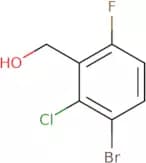
Fórmula:C6H13ClO3SPureza:Min. 95%Peso molecular:200.68 g/mol3-Bromo-2-chloro-6-fluorobenzyl alcohol
CAS:Versatile small molecule scaffold
Fórmula:C7H5BrClFOPureza:Min. 95%Peso molecular:239.47 g/molRef: 3D-JWC62856
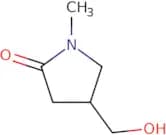
Produto descontinuado4-(Hydroxymethyl)-1-methylpyrrolidin-2-one
CAS:Versatile small molecule scaffold
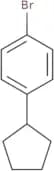
Fórmula:C6H11NO2Pureza:Min. 95%Peso molecular:129.16 g/mol1-Bromo-4-cyclopentylbenzene
CAS:1-Bromo-4-cyclopentylbenzene (1-BCPB) is a chlorinated aromatic compound that can be synthesized by reacting 1-bromo-4-chlorobenzene and cyclopentylmagnesium bromide. The reaction sequence begins with the addition of hydrochloric acid to the first reactant, followed by magnesium chloride and ether. The mixture is heated to produce a liquid solution of ethylhexyloxy pyridine, which reacts with the second reactant in a sequence that leads to the desired product. 1-BCPB is used as an intermediate in organic synthesis. It has been shown to have moderate interaction with paraldehyde and pyridinium salts at room temperature, but it does not react with cycloalkyls or pyridinium salts at elevated temperatures.
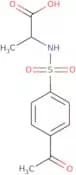
Fórmula:C11H13BrPureza:Min. 95%Peso molecular:225.13 g/mol2-(4-Acetylbenzenesulfonamido)propanoic acid
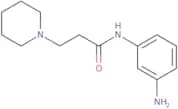
CAS:Versatile small molecule scaffoldFórmula:C11H13NO5SPureza:Min. 95%Peso molecular:271.29 g/molN-(3-Aminophenyl)-3-(piperidin-1-yl)propanamide
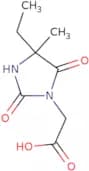
CAS:Versatile small molecule scaffoldFórmula:C14H21N3OPureza:Min. 95%Peso molecular:247.34 g/mol(4-Ethyl-4-methyl-2,5-dioxo-imidazolidin-1-yl)-acetic acid
CAS:Versatile small molecule scaffold
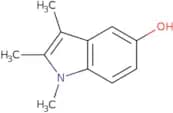
Fórmula:C8H12N2O4Pureza:Min. 95%Peso molecular:200.2 g/mol1,2,3-Trimethyl-1H-indol-5-ol
CAS:Versatile small molecule scaffold
Fórmula:C11H13NOPureza:Min. 95%Peso molecular:175.23 g/molRef: 3D-IJB19354
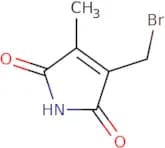
Produto descontinuado3-(Bromomethyl)-4-methyl-2,5-dihydro-1H-pyrrole-2,5-dione
CAS:Versatile small molecule scaffold
Fórmula:C6H6BrNO2Pureza:Min. 95%Peso molecular:204.02 g/molRef: 3D-IIA33370
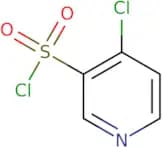
Produto descontinuado4-chloropyridine-3-sulfonyl chloride
CAS:4-Chloropyridine-3-sulfonyl chloride is a thrombin inhibitor that has been discovered through the use of in vitro screening methods. It is a small molecule with lipophilic properties and oral bioavailability. This compound inhibits thrombin by binding to the active site of the enzyme, which prevents the formation of an enzyme-thrombin complex. The discovery was made using a pharmacophore-based approach and further modifications were made to improve its potency and increase its lipophilicity. This compound also exhibits an acceptable level of bioavailability in vivo, which may be due to its high solubility in water.Fórmula:C5H3Cl2NO2SPureza:Min. 95%Peso molecular:212.1 g/mol2-Chloropyridine-4-sulfonamide
CAS:Versatile small molecule scaffold
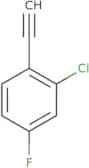
Fórmula:C5H5ClN2O2SPureza:Min. 95%Peso molecular:192.62 g/mol2-Chloro-1-ethynyl-4-fluorobenzene
CAS:Versatile small molecule scaffoldFórmula:C8H4ClFPureza:Min. 95%Peso molecular:154.57 g/molRef: 3D-HSB67002
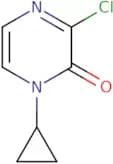
Produto descontinuado3-Chloro-1-cyclopropyl-1,2-dihydropyrazin-2-one
CAS:Versatile small molecule scaffold
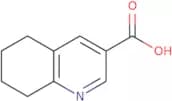
Fórmula:C7H7ClN2OPureza:Min. 95%Peso molecular:170.59 g/mol5,6,7,8-Tetrahydroquinoline-3-carboxylic acid
CAS:5,6,7,8-Tetrahydroquinoline-3-carboxylic acid is a quinoline derivative that has been shown to have bacteriostatic activity against Staphylococcus aureus. It binds to the hydroxyl groups of the bacterial cell membrane and inhibits the production of enzymes necessary for protein synthesis. The interaction between the 5,6,7,8-tetrahydroquinoline-3-carboxylic acid and the hydroxyl group is reversible. 5,6,7,8-Tetrahydroquinoline-3-carboxylic acid also has bacteriostatic activity against other bacteria such as Mycobacterium tuberculosis and Mycobacterium avium complex.Fórmula:C10H11NO2Pureza:Min. 95%Peso molecular:177.2 g/mol3-Amino-7-oxa-1λ⁶-thiaspiro[3.5]nonane-1,1-dione hydrochloride
CAS:Versatile small molecule scaffoldFórmula:C7H14ClNO3SPureza:Min. 95%Peso molecular:227.7 g/mol1-(2-Methylphenyl)propan-2-amine
CAS:Produto Controlado1-(2-Methylphenyl)propan-2-amine is a fatty acid ester that is used as an excipient in pharmaceutical dosage forms. It is used to increase the viscosity of drug solutions and suspensions, and to provide a protective coating for tablets. 1-(2-Methylphenyl)propan-2-amine is insoluble in water, but soluble in organic solvents such as alcohols and acetone. It can be prepared by reacting a primary amine with a fatty acid chloride or anhydride. The compound has been shown to have high affinity for 5HT2A receptors in vitro, which may account for its psychoactive effects.
Fórmula:C10H15NPureza:Min. 95%Peso molecular:149.23 g/mol5-Benzo[1,3]dioxol-5-yl-2H-pyrazole-3-carboxylic acid methyl ester
CAS:Versatile small molecule scaffoldFórmula:C12H10N2O4Pureza:Min. 95%Peso molecular:246.22 g/molrac-(2R,3S)-1-{[(9H-Fluoren-9-yl)methoxy]carbonyl}-3-phenylpyrrolidine-2-carboxylic acid
CAS:Rac-1-{[(9H-fluoren-9-yl)methoxy]carbonyl}-3-phenylpyrrolidine-2-carboxylic acid is a chiral, stereospecific, cyclic sulfate that is synthetized by the reaction of glycol with lactam. It has been found to be effective against various types of cancer cells. Rac-1-{[(9H-fluoren-9-yl)methoxy]carbonyl}-3-phenylpyrrolidine 2 carboxylic acid is an enantiopure compound that can be used as an intermediate in the synthesis of antiinflammatory drugs such as kainic acid.
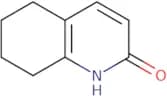
Fórmula:C26H23NO4Pureza:Min. 95%Peso molecular:413.5 g/mol5,6,7,8-Tetrahydroquinolin-2(1H)-one
CAS:Tetrahydroquinolin-2(1H)-one is a hydrobromide that has been found in the environment as an environmental pollutant. Tetrahydroquinolin-2(1H)-one is used to synthesize amides and has been studied by single-crystal x-ray diffraction. The molecule is centrosymmetric, with a molecular weight of 244.06 g/mol. Tetrahydroquinolin-2(1H)-one can be used as a ligand for metals such as chlorine and magnesium. It does not dissolve in water but does dissolve in organic solvents such as ethers, chloroform, or benzene.
Fórmula:C9H11NOPureza:Min. 95%Peso molecular:149.19 g/mol7-Oxa-1-azaspiro[3.5]nonan-2-one
CAS:Versatile small molecule scaffold
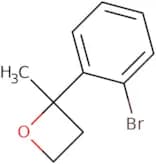
Fórmula:C7H11NO2Pureza:Min. 95%Peso molecular:141.17 g/mol2-(2-Bromophenyl)-2-methyloxetane
CAS:Versatile small molecule scaffold
Fórmula:C10H11BrOPureza:Min. 95%Peso molecular:227.1 g/molRef: 3D-CGC24401
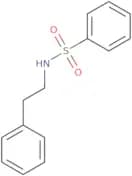
Produto descontinuadoN-(2-Phenylethyl)benzenesulfonamide
CAS:N-(2-Phenylethyl)benzenesulfonamide is a biodegradable and aerobic catalyst that is used in the production of nitrates. It can be recycled and has a high solubility, which allows for efficient extraction from wastewater effluents. The reactor system can be operated at an aerobic or anaerobic conditions. N-(2-Phenylethyl)benzenesulfonamide is soluble in water and can be hydrolyzed by acids or bases to release ammonia gas. The process can also be sustainable due to the use of renewable energy sources such as solar, wind, tidal, or biomass power.
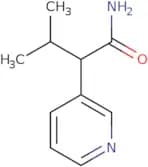
Fórmula:C14H15NO2SPureza:Min. 95%Peso molecular:261.34 g/mol3-Methyl-2-(pyridin-3-yl)butanamide
CAS:Versatile small molecule scaffold
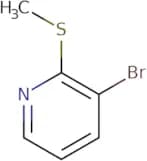
Fórmula:C10H14N2OPureza:Min. 95%Peso molecular:178.23 g/mol3-Bromo-2-(methylthio)pyridine
CAS:Versatile small molecule scaffold
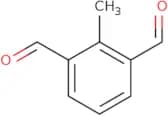
Fórmula:C6H6BrNSPureza:Min. 95%Peso molecular:204.09 g/mol2-Methylbenzene-1,3-dicarbaldehyde
CAS:2-Methylbenzene-1,3-dicarbaldehyde is a divalent hydrocarbon that has an oxidation catalyst. This compound is used as an intermediate in the production of drugs and pharmaceuticals. It has been shown to have cardiovascular disorders, such as vasodilatation and hypotension. The mechanism of action is not fully understood but may be related to its ability to act as a nitrovasodilator by increasing nitric oxide (NO) release. 2-Methylbenzene-1,3-dicarbaldehyde also produces psychotic disorders when long term exposure occurs. This compound has been shown to have neurotoxic effects in animal models with long term exposure.
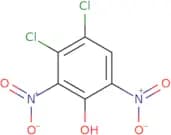
Fórmula:C9H8O2Pureza:Min. 95%Peso molecular:148.16 g/mol3,4-Dichloro-2,6-dinitrophenol
CAS:Versatile small molecule scaffold
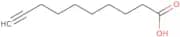
Fórmula:C6H2Cl2N2O5Pureza:Min. 95%Peso molecular:252.99 g/molDec-9-ynoic acid
CAS:Dec-9-ynoic acid is a synthetic fatty acid that is a precursor to several biologically important substances. It is labile and easily oxidized by air, light, or heat. Dec-9-ynoic acid has been shown to be a central metabolic intermediate for the biosynthesis of polyunsaturated fatty acids. It can also be converted into linolenic acid, which is an essential fatty acid that cannot be synthesized by humans. Dec-9-ynoic acid exists in two geometric isomers: cis and trans. The cis form exhibits kinetic properties that are different from the trans form. Dec-9-ynoic acid has been studied as a potential treatment for human diseases such as diabetes mellitus type 2, Parkinson's disease, Alzheimer's disease, schizophrenia, and depression.
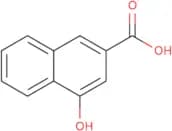
Fórmula:C10H16O2Pureza:Min. 95%Peso molecular:168.23 g/mol4-Hydroxy-2-naphthoic acid
CAS:4-Hydroxy-2-naphthoic acid is a hydrocarbon with a carboxylic acid group. It can act as an antagonist to the hydrocarbon receptor (HCR). 4-Hydroxy-2-naphthoic acid has been shown to be effective in treating colon cancer cells in vitro, and has been shown to inhibit the growth of cancer cells in vivo. This compound is also effective at inhibiting the proliferation of human colon cancer cells (Caco2) that have been exposed to benzo(a)pyrene, an aromatic hydrocarbon found in cigarette smoke. The mechanism by which this drug inhibits cell proliferation is not fully understood but may involve inhibition of cytochrome P450 1A1 (CYP1A1), which metabolizes benzo(a)pyrene into carcinogenic intermediates. 4-Hydroxy-2-naphthoic acid has also been shown to be anisotropic and microreactor, meaning
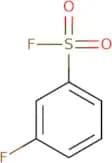
Fórmula:C11H8O3Pureza:Min. 95%Peso molecular:188.17 g/mol3-Fluorobenzene-1-sulfonyl fluoride
CAS:3-Fluorobenzene-1-sulfonyl fluoride is a chemical compound that can be used as a catalyst to synthesize organic compounds. It is a colorless liquid, which is soluble in water and organic solvents. This catalyst has been shown to be more efficient than the traditional catalysts, such as tetraphenylphosphonium chloride, potassium fluoride or sodium borohydride. 3-Fluorobenzene-1-sulfonyl fluoride also reacts with nitro groups to produce dinitro compounds, which are valuable synthetic intermediates for the production of dyes and pharmaceuticals. The synthesis of this compound can be carried out in high yields with stoichiometric amounts of reactants.
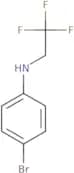
Fórmula:C6H4F2O2SPureza:Min. 95%Peso molecular:178.16 g/mol4-bromo-N-(2,2,2-trifluoroethyl)aniline
CAS:Versatile small molecule scaffold
Fórmula:C8H7BrF3NPureza:Min. 95%Peso molecular:254 g/mol[2-(2-Ethoxyethoxy)ethyl](methyl)amine
CAS:Versatile small molecule scaffold
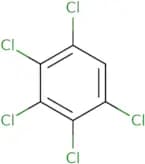
Fórmula:C7H17NO2Pureza:Min. 95%Peso molecular:147.22 g/mol1,2,3,4,5-Pentachlorobenzene
CAS:1,2,3,4,5-Pentachlorobenzene is a chlorinated hydrocarbon that is used in the production of pesticides and herbicides. It is an ingredient in the manufacturing of pentachlorophenol and pentachloronitrobenzene. 1,2,3,4,5-Pentachlorobenzene has been used as a chemical intermediate or solvent for the production of other chemicals. The emissions from this chemical can be harmful to humans and animals because it has been shown to affect enzyme activities at sublethal doses. It also affects rat liver microsomes and causes DNA damage that can lead to cancer.
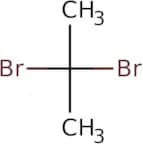
Fórmula:C6HCl5Pureza:Min. 95%Peso molecular:250.34 g/mol2,2-Dibromopropane
CAS:2,2-Dibromopropane is a synthetic chemical that has been used as a precursor in the production of nylon. It is an activator that can be used to form covalent bonds with reactive groups on other molecules. The activation energy for the reaction with piperazine is between 104 and 106 kJ/mol. 2,2-Dibromopropane undergoes acylation reactions under certain conditions, forming reaction products such as 2,2-dibromoethyl acetate and 2,2-dibromoethanol. The molecular weight of 2,2-dibromopropane is 192.19 g/mol and its structural formula is CHBrCHBrCHBrCHBrC≡C≡C≡C≡C≡C≡CC(O)OH.
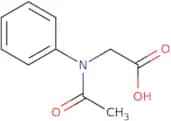
Fórmula:C3H6Br2Pureza:Min. 95%Peso molecular:201.89 g/mol2-(N-Phenylacetamido)acetic acid
CAS:2-(N-Phenylacetamido)acetic acid is an alkyl ester that is synthesized by the reaction of acetyl chloride with toluene. This compound can be used as a pharmaceutical intermediate and a synthetic sweetener. The hydrogenation of 2-(N-phenylacetamido)acetic acid produces 2-(N-phenylacetamido)ethanoic acid, which has been shown to have antihypertensive effects. The p-toluenesulfonic acid is an acid catalyst that facilitates this reaction.
The acetylation of 2-(N-phenylacetamido)acetic acid produces 2-(N-phenylacetamido)propionic acid, which has been used in the synthesis of rhodium. The reaction also results in a number of diastereoisomeric salts; these are stereoisomers that differ from each other because they are not mirror images of one another.Fórmula:C10H11NO3Pureza:Min. 95%Peso molecular:193.2 g/mol4-Chloro-2-hydroxy-6-methylphenylboronic acid
CAS:Versatile small molecule scaffoldFórmula:C7H8BClO3Pureza:Min. 95%Peso molecular:186.4 g/mol3-Hydroxy-5-methylpyridine
CAS:3-Hydroxy-5-methylpyridine (3HMP) is a chemical substance that has been classified as an amine. It is a product of the metabolism of purines, which are nitrogenous bases found in DNA and RNA. 3HMP is produced by aerogenic bacteria (such as Enterobacter), and can be used to estimate the number of these bacteria present in water samples. 3HMP has been shown to have antiviral properties against influenza virus, and can be used as a biomarker for the presence of other viruses in animals. 3HMP also has mineralization properties, which have been studied extensively, particularly with regards to pancreatic disease.
Fórmula:C6H7NOPureza:Min. 95%Cor e Forma:PowderPeso molecular:109.13 g/molRef: 3D-FH16174
Produto descontinuado2-Bromo-3,3,3-trifluoro-1-propene
CAS:Produto Controlado2-Bromo-3,3,3-trifluoro-1-propene is a chemical compound that has been synthesized in an asymmetric reaction. The reactant is bromopropane and the product is 2,2,2-trifluoropropene. The methylene group on the propene molecule is activated by the nucleophilic attack of a fluoride ion from hydrogen fluoride to form a cavity with a highly strained bond. The kinetic study of this reaction revealed that the activation energy for the reaction is 42 kJ/mol. Palladium-catalyzed coupling reactions are catalyzed by palladium and require nonpolar solvents such as toluene or dichloromethane. This type of reaction has been shown to be exothermic with an isolated yield of 1%.
Fórmula:C3H2BrF3Pureza:Min. 95%Cor e Forma:Colorless PowderPeso molecular:174.95 g/mol4,5-Dihydroxy-2,3-Pentanedione
CAS:4,5-Dihydroxy-2,3-pentanedione is a carbonyl compound that is the product of the oxidation of ascorbic acid. It is used in wastewater treatment and has antimicrobial properties against infectious diseases. This compound has been shown to inhibit protein synthesis by binding to the ribosome and preventing the formation of peptide bonds between amino acids. 4,5-Dihydroxy-2,3-pentanedione has also been shown to bind to plasma proteins, which may be due to its acyl chain structure. 4,5-Dihydroxy-2,3-pentanedione can be synthesized in a catalytic mechanism that involves dehydroascorbic acid and molecular oxygen.
Fórmula:C5H8O4Pureza:Min. 95%Cor e Forma:PowderPeso molecular:132.11 g/molRef: 3D-FD180770
Produto descontinuadoPiperyline
CAS:Piperyline is an alkanoic acid that has shown to be effective against skin cancer. It also has antimicrobial properties, which may be due to its ability to bind metal ions and form polymeric compounds. Piperyline inhibits microbial growth by inhibiting the synthesis of proteins and nucleic acids. The antimicrobial activity is related to its cationic polymerization with hydroxyl groups, which forms a structure that can inhibit microbial enzymes and disrupt microbial cell membranes. This compound also interacts with the skin's natural lipids, making it difficult for microorganisms to attach and grow on the skin. Piperyline is synthesized in organic chemistry laboratories as an amide precursor of other pharmaceuticals such as penicillin.
Fórmula:C16H17NO3Pureza:Min. 95%Peso molecular:271.31 g/mol


![3-Amino-7-oxa-1λ⁶-thiaspiro[3.5]nonane-1,1-dione hydrochloride](/_next/image/?url=https%3A%2Fstatic.cymitquimica.com%2Fproducts%2F3D%2Fthumb-webp%2FFPD79892.webp&w=3840&q=75)

![5-Benzo[1,3]dioxol-5-yl-2H-pyrazole-3-carboxylic acid methyl ester](/_next/image/?url=https%3A%2Fstatic.cymitquimica.com%2Fproducts%2F3D%2Fthumb-webp%2FERB10454.webp&w=3840&q=75)
![rac-(2R,3S)-1-{[(9H-Fluoren-9-yl)methoxy]carbonyl}-3-phenylpyrrolidine-2-carboxylic acid](/_next/image/?url=https%3A%2Fstatic.cymitquimica.com%2Fproducts%2F3D%2Fthumb-webp%2FENC98387.webp&w=3840&q=75)
![7-Oxa-1-azaspiro[3.5]nonan-2-one](/_next/image/?url=https%3A%2Fstatic.cymitquimica.com%2Fproducts%2F3D%2Fthumb-webp%2FDHA24292.webp&w=3840&q=75)
amine](/_next/image/?url=https%3A%2Fstatic.cymitquimica.com%2Fproducts%2F3D%2Fthumb-webp%2FAAC06291.webp&w=3840&q=75)