Building Blocks
Subcategorias de "Building Blocks"
- Ácidos Borónicos e Derivados de Ácido Borónico(5.778 produtos)
- Building Blocks Quirais(1.243 produtos)
- Building Blocks Hidrocarbonetos(6.098 produtos)
- Building Blocks orgânicos(61.042 produtos)
Foram encontrados 204339 produtos de "Building Blocks"
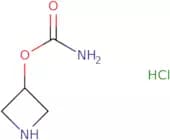
Azetidin-3-yl carbamate hydrochloride
CAS:Versatile small molecule scaffold
Fórmula:C4H9ClN2O2Pureza:Min. 95%Peso molecular:152.58 g/molRef: 3D-KMB66838
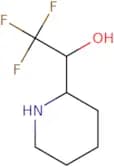
Produto descontinuado2,2,2-Trifluoro-1-(piperidin-2-yl)ethan-1-ol
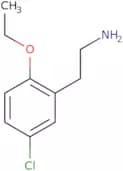
CAS:Versatile small molecule scaffoldFórmula:C7H12F3NOPureza:Min. 95%Peso molecular:183.17 g/mol2-(5-Chloro-2-ethoxyphenyl)ethan-1-amine
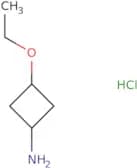
CAS:Produto ControladoVersatile small molecule scaffoldFórmula:C10H14ClNOPureza:Min. 95%Peso molecular:199.68 g/molrac-(1R,3R)-3-Ethoxycyclobutan-1-amine hydrochloride
CAS:Versatile small molecule scaffoldFórmula:C6H14ClNOPureza:Min. 95%Peso molecular:151.63 g/mol[2-(3-Methoxyphenyl)ethyl][(trimethyl-1H-pyrazol-4-yl)methyl]amine
CAS:Versatile small molecule scaffold
Fórmula:C16H23N3OPureza:Min. 95%Peso molecular:273.37 g/mol5-[(2,4-Difluorophenyl)methyl]-4-methyl-1,3-thiazol-2-amine hydrobromide
CAS:Versatile small molecule scaffold
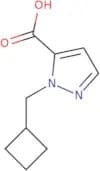
Fórmula:C11H11BrF2N2SPureza:Min. 95%Peso molecular:321.19 g/mol1-(Cyclobutylmethyl)-1H-pyrazole-5-carboxylic acid
CAS:Versatile small molecule scaffoldFórmula:C9H12N2O2Pureza:Min. 95%Peso molecular:180.2 g/molRef: 3D-WJC58413
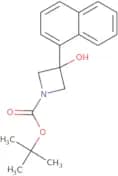
Produto descontinuadotert-Butyl 3-hydroxy-3-(naphthalen-1-yl)azetidine-1-carboxylate
CAS:Versatile small molecule scaffold
Fórmula:C18H21NO3Pureza:Min. 95%Peso molecular:299.4 g/mol2-{4-[2-(Pyrrolidin-1-yl)ethoxy]phenyl}ethan-1-amine dihydrochloride
CAS:Versatile small molecule scaffold
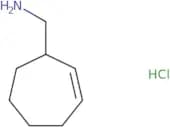
Fórmula:C14H24Cl2N2OPureza:Min. 95%Peso molecular:307.3 g/mol(Cyclohept-2-en-1-yl)methanamine hydrochloride
CAS:Versatile small molecule scaffold
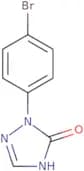
Fórmula:C8H16ClNPureza:Min. 95%Peso molecular:161.7 g/mol1-(4-Bromophenyl)-4,5-dihydro-1H-1,2,4-triazol-5-one
CAS:Versatile small molecule scaffoldFórmula:C8H6BrN3OPureza:Min. 95%Peso molecular:240.06 g/mol4-{4-[3-(Trifluoromethyl)phenyl]piperazin-1-yl}butan-1-ol hydrochloride
CAS:Versatile small molecule scaffold
Fórmula:C15H22ClF3N2OPureza:Min. 95%Peso molecular:338.79 g/mol4-Methyl-1,1,3-trioxothieno[3,2-d][1,2]thiazole-5-carboxylic acid
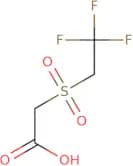
CAS:Versatile small molecule scaffoldFórmula:C7H5NO5S2Pureza:Min. 95%Peso molecular:247.3 g/mol2-(2,2,2-Trifluoroethanesulfonyl)acetic acid
CAS:Trifloxacin is a broad-spectrum antibacterial drug that belongs to the class of formyloxy compounds and the cephalosporin family. It has been shown to be active against both Gram-positive and Gram-negative bacteria, with activity against strains resistant to penicillin, ampicillin, erythromycin, and chloramphenicol. Trifloxacin binds to the bacterial ribosome by displacement of a pyridyl group in the ribosomal RNA, inhibiting protein synthesis. This binding inhibits cell growth by preventing the production of proteins that are vital for cell division.
br>
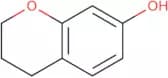
Trifloxacin has also been found to inhibit DNA gyrase and topoisomerase IV in vitro. Trifloxacin's mechanism of action is similar to that of other quinolones such as norfloxacin and ciprofloxacin.Fórmula:C4H5F3O4SPureza:Min. 95%Peso molecular:206.14 g/mol3,4-dihydro-2H-1-benzopyran-7-ol
CAS:3,4-Dihydro-2H-1-benzopyran-7-ol is a monomer that is used to synthesize medicines. It has the formula CH3COCH=CH(OH)CH3 and belongs to the group of flavonoids. 3,4-Dihydro-2H-1-benzopyran-7-ol has acidic properties, which are due to its isoflavones. It can be used as an acid catalyst in organic synthesis reactions and is a reaction product of chloropropane. 3,4-Dihydro-2H-1-benzopyran-7-ol also has high yield and can act as a bioisostere for other compounds such as chromene.
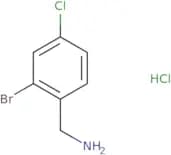
Fórmula:C9H10O2Pureza:Min. 95%Peso molecular:150.18 g/mol(2-Bromo-4-chlorophenyl)methanamine hydrochloride
CAS:Versatile small molecule scaffold
Fórmula:C7H8BrCl2NPureza:Min. 95%Peso molecular:256.95 g/mol3-[(Pyridin-4-yl)methyl]-1,2,4-oxadiazol-5-amine
CAS:Versatile small molecule scaffold
Fórmula:C8H8N4OPureza:Min. 95%Peso molecular:176.18 g/mol4-oxo-2-spiro(N-Boc-piperidine-4-yl)-benzopyran
CAS:Versatile small molecule scaffold
Fórmula:C18H23NO4Pureza:Min. 95%Peso molecular:317.39 g/molN-[3-(Dimethylamino)propyl]-2-hydroxybenzamide
CAS:Versatile small molecule scaffoldFórmula:C12H18N2O2Pureza:Min. 95%Peso molecular:222.28 g/mol2-(1-Chloroethyl)pyrimidin-4-amine
CAS:Versatile small molecule scaffold
Fórmula:C6H8ClN3Pureza:Min. 95%Peso molecular:157.6 g/mol3-[(3-Methoxypropyl)carbamoyl]propanoic acid
CAS:Versatile small molecule scaffold
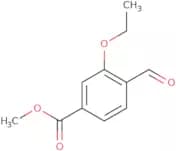
Fórmula:C8H15NO4Pureza:Min. 95%Peso molecular:189.21 g/mol3-ethoxy-4-formyl-benzoic acid methyl ester
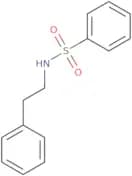
CAS:Versatile small molecule scaffoldFórmula:C11H12O4Pureza:Min. 95%Peso molecular:208.21 g/molN-(2-Phenylethyl)benzenesulfonamide
CAS:N-(2-Phenylethyl)benzenesulfonamide is a biodegradable and aerobic catalyst that is used in the production of nitrates. It can be recycled and has a high solubility, which allows for efficient extraction from wastewater effluents. The reactor system can be operated at an aerobic or anaerobic conditions. N-(2-Phenylethyl)benzenesulfonamide is soluble in water and can be hydrolyzed by acids or bases to release ammonia gas. The process can also be sustainable due to the use of renewable energy sources such as solar, wind, tidal, or biomass power.
Fórmula:C14H15NO2SPureza:Min. 95%Peso molecular:261.34 g/mol2-Methylsulfonylthiophene
CAS:2-Methylsulfonylthiophene is a modulating agent that can inhibit the activity of carbonic anhydrase, adenosine receptors and 5-membered heteroaryl. It has been shown to have affinity for CB1 receptor antagonists and is used to treat cardiovascular diseases. 2-Methylsulfonylthiophene also inhibits the enzymatic activity of anhydrase in the eye, which leads to suppression of intraocular pressure (IOP). The drug also has anti-glaucoma effects by reducing the production of aqueous humour. 2-Methylsulfonylthiophene is used as a dyestuff intermediate and as an organic solvent.
Fórmula:C5H6O2S2Pureza:Min. 95%Peso molecular:162.23 g/molPyrrolo[1,2-b]pyridazin-4(1H)-one
CAS:Versatile small molecule scaffold
Fórmula:C7H6N2OPureza:Min. 95%Peso molecular:134.14 g/molCyclopropyl(3,4-dimethylphenyl)methanone
CAS:Cyclopropyl(3,4-dimethylphenyl)methanone (CPM) is a synthetic cannabinoid that has been shown to have similar effects to the natural cannabinoids found in cannabis. CPM binds to and activates the CB2 receptor, which is found on cells of the immune system, brain, and other organs. It has been studied for its ability to reduce glioma tumor growth in mice by inhibiting glutamate release. The molecular modeling study showed that CPM binds to the receptor with a geometry similar to other CB2 agonists like JWH-133. In addition, CPM inhibits locomotor activity in rats and has been shown to produce some symptoms of anxiety in mice. A receptor knockout study with mice showed that CPM can bind to CB2 receptors without activating them. X-ray diffraction data indicated that CPM is an achiral molecule with an idealized molecular geometry of "s".
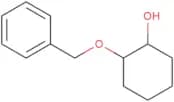
Fórmula:C12H14OPureza:Min. 95%Peso molecular:174.24 g/molrac-(1R,2R)-2-(Benzyloxy)cyclohexan-1-ol
CAS:Versatile small molecule scaffold
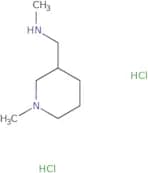
Fórmula:C13H18O2Pureza:Min. 95%Peso molecular:206.28 g/molN-Methyl-1-(1-methylpiperidin-3-yl)methanamine
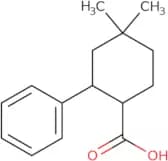
CAS:Versatile small molecule scaffoldFórmula:C8H18N2Pureza:Min. 95%Peso molecular:142.25 g/mol4,4-Dimethyl-2-phenylcyclohexane-1-carboxylic acid
CAS:Versatile small molecule scaffold
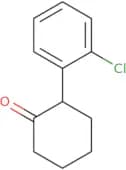
Fórmula:C15H20O2Pureza:Min. 95%Peso molecular:232.32 g/mol2-(2-Chlorophenyl)cyclohexan-1-one
CAS:Versatile small molecule scaffold
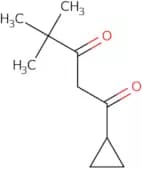
Fórmula:C12H13ClOPureza:Min. 95%Peso molecular:208.68 g/mol1-Cyclopropyl-4,4-dimethylpentane-1,3-dione
CAS:Versatile small molecule scaffold
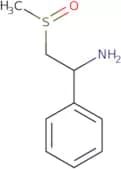
Fórmula:C10H16O2Pureza:Min. 95%Peso molecular:168.23 g/mol2-Methanesulfinyl-1-phenylethan-1-amine
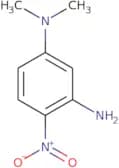
CAS:Versatile small molecule scaffoldFórmula:C9H13NOSPureza:Min. 95%Peso molecular:183.27 g/mol3-Amino-N,N-dimethyl-4-nitroaniline
CAS:Versatile small molecule scaffold
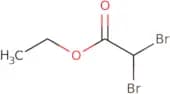
Fórmula:C8H11N3O2Pureza:Min. 95%Peso molecular:181.19 g/molAcetic acid, dibromo-, ethyl ester
CAS:Acetic acid, dibromo-, ethyl ester is a reactive molecule that can be used as a nucleophilic substituent. It has hydroxyl group and ruthenium complex. It is a particle that can be used in the production of monoclonal antibodies. Acetic acid, dibromo-, ethyl ester also has viscosity and polycarboxylic acid. This chemical reacts with β-unsaturated ketones to form polymerization initiator. Acetic acid, dibromo-, ethyl ester also has carbonyl group and monoclonal antibodies. Acetic acid, dibromo-, ethyl ester can be conjugated with ethyl bromoacetate to produce conjugates.
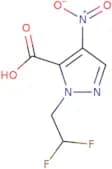
Fórmula:C4H6Br2O2Pureza:Min. 95%Peso molecular:245.9 g/mol1-(2,2-Difluoroethyl)-4-nitro-1H-pyrazole-5-carboxylic acid
CAS:Versatile small molecule scaffoldFórmula:C6H5F2N3O4Pureza:Min. 95%Peso molecular:221.12 g/mol3-(4-Ethylphenyl)butanoic acid
CAS:Versatile small molecule scaffold
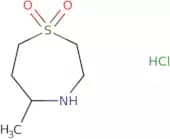
Fórmula:C12H16O2Pureza:Min. 95%Peso molecular:192.25 g/mol5-Methyl-1,4-thiazepane-1,1-dione hydrochloride
CAS:Versatile small molecule scaffold
Fórmula:C6H14ClNO2SPureza:Min. 95%Peso molecular:199.7 g/mol2-Bromo-3,3,3-trifluoro-1-propene
CAS:Produto Controlado2-Bromo-3,3,3-trifluoro-1-propene is a chemical compound that has been synthesized in an asymmetric reaction. The reactant is bromopropane and the product is 2,2,2-trifluoropropene. The methylene group on the propene molecule is activated by the nucleophilic attack of a fluoride ion from hydrogen fluoride to form a cavity with a highly strained bond. The kinetic study of this reaction revealed that the activation energy for the reaction is 42 kJ/mol. Palladium-catalyzed coupling reactions are catalyzed by palladium and require nonpolar solvents such as toluene or dichloromethane. This type of reaction has been shown to be exothermic with an isolated yield of 1%.
Fórmula:C3H2BrF3Pureza:Min. 95%Cor e Forma:Colorless PowderPeso molecular:174.95 g/molPiperyline
CAS:Piperyline is an alkanoic acid that has shown to be effective against skin cancer. It also has antimicrobial properties, which may be due to its ability to bind metal ions and form polymeric compounds. Piperyline inhibits microbial growth by inhibiting the synthesis of proteins and nucleic acids. The antimicrobial activity is related to its cationic polymerization with hydroxyl groups, which forms a structure that can inhibit microbial enzymes and disrupt microbial cell membranes. This compound also interacts with the skin's natural lipids, making it difficult for microorganisms to attach and grow on the skin. Piperyline is synthesized in organic chemistry laboratories as an amide precursor of other pharmaceuticals such as penicillin.
Fórmula:C16H17NO3Pureza:Min. 95%Peso molecular:271.31 g/mol

![[2-(3-Methoxyphenyl)ethyl][(trimethyl-1H-pyrazol-4-yl)methyl]amine](/_next/image/?url=https%3A%2Fstatic.cymitquimica.com%2Fproducts%2F3D%2Fthumb-webp%2FVWB92946.webp&w=3840&q=75)
![5-[(2,4-Difluorophenyl)methyl]-4-methyl-1,3-thiazol-2-amine hydrobromide](/_next/image/?url=https%3A%2Fstatic.cymitquimica.com%2Fproducts%2F3D%2Fthumb-webp%2FVWC49324.webp&w=3840&q=75)
![2-{4-[2-(Pyrrolidin-1-yl)ethoxy]phenyl}ethan-1-amine dihydrochloride](/_next/image/?url=https%3A%2Fstatic.cymitquimica.com%2Fproducts%2F3D%2Fthumb-webp%2FHHC68177.webp&w=3840&q=75)
![4-{4-[3-(Trifluoromethyl)phenyl]piperazin-1-yl}butan-1-ol hydrochloride](/_next/image/?url=https%3A%2Fstatic.cymitquimica.com%2Fproducts%2F3D%2Fthumb-webp%2FYGC73137.webp&w=3840&q=75)
![4-Methyl-1,1,3-trioxothieno[3,2-d][1,2]thiazole-5-carboxylic acid](/_next/image/?url=https%3A%2Fstatic.cymitquimica.com%2Fproducts%2F3D%2Fthumb-webp%2FGEB80217.webp&w=3840&q=75)
![3-[(Pyridin-4-yl)methyl]-1,2,4-oxadiazol-5-amine](/_next/image/?url=https%3A%2Fstatic.cymitquimica.com%2Fproducts%2F3D%2Fthumb-webp%2FYZB21426.webp&w=3840&q=75)
![N-[3-(Dimethylamino)propyl]-2-hydroxybenzamide](/_next/image/?url=https%3A%2Fstatic.cymitquimica.com%2Fproducts%2F3D%2Fthumb-webp%2FNBA39443.webp&w=3840&q=75)

![3-[(3-Methoxypropyl)carbamoyl]propanoic acid](/_next/image/?url=https%3A%2Fstatic.cymitquimica.com%2Fproducts%2F3D%2Fthumb-webp%2FLGA78591.webp&w=3840&q=75)

![Pyrrolo[1,2-b]pyridazin-4(1H)-one](/_next/image/?url=https%3A%2Fstatic.cymitquimica.com%2Fproducts%2F3D%2Fthumb-webp%2FNKB72026.webp&w=3840&q=75)