


Building Blocks
Subcategorias de "Building Blocks"
- Ácidos Borónicos e Derivados de Ácido Borónico(5.778 produtos)
- Building Blocks Quirais(1.243 produtos)
- Building Blocks Hidrocarbonetos(6.098 produtos)
- Building Blocks orgânicos(61.036 produtos)
Foram encontrados 205240 produtos de "Building Blocks"
4-(3-Cyclopropyl-1H-1,2,4-triazol-5-yl)aniline
CAS:Versatile small molecule scaffold
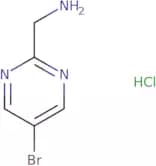
Fórmula:C11H12N4Pureza:Min. 95%Peso molecular:200.24 g/mol(5-bromopyrimidin-2-yl)methanamine hcl
CAS:Versatile small molecule scaffold
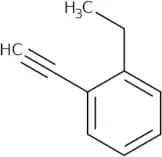
Fórmula:C5H7BrClN3Pureza:Min. 95%Peso molecular:224.49 g/mol1-Ethyl-2-ethynylbenzene
CAS:1-Ethyl-2-ethynylbenzene is an indene that can be synthesized by the reaction of 1-ethylbenzene with ethynylmagnesium bromide and trifluoroacetyl chloride. 1-Ethyl-2-ethynylbenzene reacts as a nucleophile with electrophiles, such as phenylsulfonyl and acetylene compounds, to form sulfones and acetylenes. It can also react with tetrafluoroborates to form indenes.
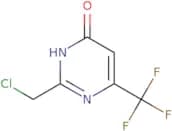
Fórmula:C10H10Pureza:Min. 95%Peso molecular:130.19 g/mol2-(Chloromethyl)-6-(trifluoromethyl)pyrimidin-4-ol
CAS:Versatile small molecule scaffold
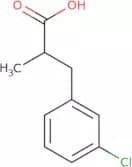
Fórmula:C6H4ClF3N2OPureza:Min. 95%Peso molecular:212.56 g/mol3-(3-Chlorophenyl)-2-methylpropanoic acid
CAS:Versatile small molecule scaffoldFórmula:C10H11ClO2Pureza:Min. 95%Peso molecular:198.64 g/mol1,3-Diazaspiro[4.4]nonane-2,4-dione
CAS:1,3-Diazaspiro[4.4]nonane-2,4-dione (1) is a new fungicide that was shown to have fungicidal activity in vitro against the grapevine pathogens Plasmopara viticola and Plasmopara obducens. This compound has been isolated from the plant Express erythroxylum coca (Erythroxylum coca). The compound belongs to the class of diaza spiro compounds and is a member of a family of diaza spiro compounds with antifungal activity. One possible mode of action for 1 is that it inhibits the synthesis of DNA by binding to bacterial DNA gyrase.
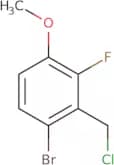
Fórmula:C7H10N2O2Pureza:Min. 95%Peso molecular:154.17 g/mol1-Bromo-2-(chloromethyl)-3-fluoro-4-methoxybenzene
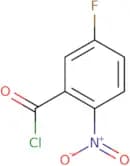
CAS:Versatile small molecule scaffoldFórmula:C8H7BrClFOPureza:Min. 95%Peso molecular:253.5 g/mol5-Fluoro-2-nitrobenzoyl chloride
CAS:5-Fluoro-2-nitrobenzoyl chloride is a conformationally locked macrocyclic compound that has been synthesized by solid phase synthesis. It is found in two conformational states and can be made to switch between these two states by applying a force to the molecule. This conformation can be controlled by changing the side chain of 5-fluoro-2-nitrobenzoyl chloride, which can be done experimentally. The conformational behavior of this macrocycle was studied using molecular dynamics simulations and it was found that there are four possible conformations for the molecule. The conformations with different side chains were found to have different energies, which could be used as a measure of their relative stability.
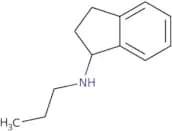
Fórmula:C7H3ClFNO3Pureza:Min. 95%Peso molecular:203.55 g/molN-Propyl-2,3-dihydro-1H-inden-1-amine
CAS:Produto ControladoVersatile small molecule scaffoldFórmula:C12H17NPureza:Min. 95%Peso molecular:175.27 g/molN-(3-Methoxyphenyl)prop-2-enamide
CAS:Versatile small molecule scaffold
Fórmula:C10H11NO2Pureza:Min. 95%Peso molecular:177.2 g/mol2-Chloro-3,4-dihydronaphthalen-1(2H)-one
CAS:2-Chloro-3,4-dihydronaphthalen-1(2H)-one is a sulfoxide with significant antifungal activity. It has been shown to be effective against Candida albicans and other fungi, including Aspergillus niger and Mucor racemosus. It is commonly used as an electrolyte in electroluminescent devices, such as light emitting diodes (LEDs). The reaction time for the formation of 2-chloro-3,4-dihydronaphthalen-1(2H)-one from potassium sulfate is dependent on the acid catalyst used. Organic chemists have shown that the use of 2-chloro-3,4-dihydronaphthalen-1(2H)-one can inhibit leukotriene synthesis.
Fórmula:C10H9OClPureza:Min. 95%Peso molecular:180.63 g/mol4-(chloromethyl)-1-methyl-1H-imidazole hydrochloride
CAS:Produto ControladoVersatile small molecule scaffold
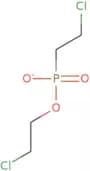
Fórmula:C5H8Cl2N2Pureza:Min. 95%Peso molecular:167.03 g/mol(2-Chloroethoxy)(2-chloroethyl)phosphinic acid
CAS:Versatile small molecule scaffold
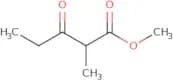
Fórmula:C4H8Cl2O3PPureza:Min. 95%Peso molecular:205.98 g/mol2-Methyl-3-oxo-pentanoicacid methyl ester
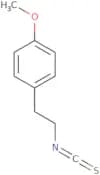
CAS:The synthesis of 2-methyl-3-oxo-pentanoic acid methyl ester is accomplished by a three step process. The first step is the intramolecular condensation of 2,2-dimethylpropionic acid with acetone to form a 1:1 mixture of 3,4-dihydroxybutyl and 4,4-dihydroxybutyl esters. The second step is the selective transesterification of the 3,4-dihydroxybutyl ester with benzaldehyde. This reaction provides an optically pure 2-methyl-3-oxo-pentanoic acid methyl ester as the major product. The third step is an aldol condensation between the ketone from the second step and acetone to produce another optically pure 2,2 dimethylpropionic acid methyl ester.Fórmula:C7H12O3Pureza:Min. 95%Peso molecular:144.17 g/mol1-(2-Isothiocyanatoethyl)-4-methoxybenzene
CAS:Versatile small molecule scaffold
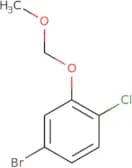
Fórmula:C10H11NOSPureza:Min. 95%Peso molecular:193.27 g/mol4-Bromo-1-chloro-2-(methoxymethoxy)benzene
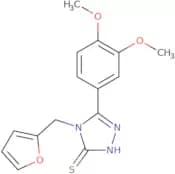
CAS:Versatile small molecule scaffoldFórmula:C8H8BrClO2Pureza:Min. 95%Peso molecular:251.5 g/mol5-(3,4-Dimethoxyphenyl)-4-(furan-2-ylmethyl)-4H-1,2,4-triazole-3-thiol
CAS:Versatile small molecule scaffold
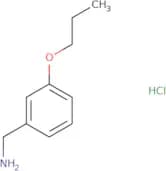
Fórmula:C15H15N3O3SPureza:Min. 95%Peso molecular:317.4 g/mol(3-Propoxyphenyl)methanamine hydrochloride
CAS:Versatile small molecule scaffold
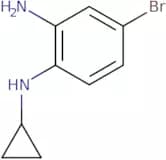
Fórmula:C10H16ClNOPureza:Min. 95%Peso molecular:201.69 g/mol4-Bromo-1-N-cyclopropylbenzene-1,2-diamine
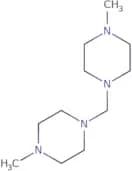
CAS:Versatile small molecule scaffoldFórmula:C9H11BrN2Pureza:Min. 95%Peso molecular:227.1 g/molBis(4-methylpiperazin-1-yl)methane
CAS:Versatile small molecule scaffold
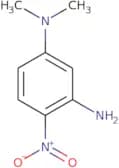
Fórmula:C11H24N4Pureza:Min. 95%Peso molecular:212.34 g/mol3-Amino-N,N-dimethyl-4-nitroaniline
CAS:Versatile small molecule scaffold
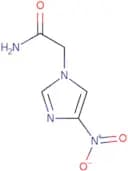
Fórmula:C8H11N3O2Pureza:Min. 95%Peso molecular:181.19 g/mol2-(4-Nitro-1H-imidazol-1-yl)acetamide
CAS:Versatile small molecule scaffold
Fórmula:C5H6N4O3Pureza:Min. 95%Peso molecular:170.13 g/mol4,5-Dibromo-3-methoxythiophene-2-carboxylic acid
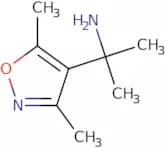
CAS:Versatile small molecule scaffoldFórmula:C6H4Br2O3SPureza:Min. 95%Peso molecular:315.97 g/mol2-(Dimethyl-1,2-oxazol-4-yl)propan-2-amine
CAS:Versatile small molecule scaffold
Fórmula:C8H14N2OPureza:Min. 95%Peso molecular:154.21 g/molRef: 3D-VKC10832
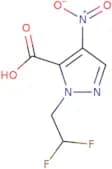
Produto descontinuado1-(2,2-Difluoroethyl)-4-nitro-1H-pyrazole-5-carboxylic acid
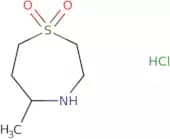
CAS:Versatile small molecule scaffoldFórmula:C6H5F2N3O4Pureza:Min. 95%Peso molecular:221.12 g/mol5-Methyl-1,4-thiazepane-1,1-dione hydrochloride
CAS:Versatile small molecule scaffold
Fórmula:C6H14ClNO2SPureza:Min. 95%Peso molecular:199.7 g/mol5-[(2,4-Difluorophenyl)methyl]-4-methyl-1,3-thiazol-2-amine hydrobromide
CAS:Versatile small molecule scaffold
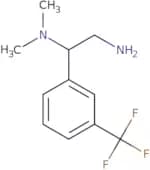
Fórmula:C11H11BrF2N2SPureza:Min. 95%Peso molecular:321.19 g/molN*1*,N*1*-Dimethyl-1-(3-trifluoromethyl-phenyl)-ethane-1,2-diamine
CAS:Versatile small molecule scaffoldFórmula:C11H15F3N2Pureza:Min. 95%Peso molecular:232.25 g/mol2-(5-Phenyl-2H-1,2,3,4-tetrazol-2-yl)propanoic acid
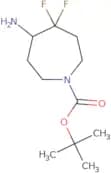
CAS:Versatile small molecule scaffoldFórmula:C10H10N4O2Pureza:Min. 95%Peso molecular:218.21 g/moltert-Butyl 5-amino-4,4-difluoroazepane-1-carboxylate
CAS:Versatile small molecule scaffold
Fórmula:C11H20F2N2O2Pureza:Min. 95%Peso molecular:250.29 g/molMethyl 3-tert-butyl-1,2,3,4-tetrahydroquinoline-6-carboxylate hydrochloride
CAS:Versatile small molecule scaffoldFórmula:C15H22ClNO2Pureza:Min. 95%Peso molecular:283.8 g/molRef: 3D-XLD59631
Produto descontinuado3-([(tert-Butoxy)carbonyl]amino)-2-(cyclopentylmethyl)propanoic acid
CAS:Versatile small molecule scaffold
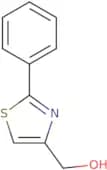
Fórmula:C14H25NO4Pureza:Min. 95%Peso molecular:271.35 g/mol4-(Hydroxymethyl)-2-phenyl-1,3-thiazole
CAS:4-(Hydroxymethyl)-2-phenyl-1,3-thiazole is a versatile compound that has various applications in research and chemical synthesis. It is commonly used as a building block for the synthesis of organic compounds, including antibodies and research chemicals. This compound has been found to exhibit potent antiangiogenic properties, making it valuable in the field of cancer research. Additionally, 4-(Hydroxymethyl)-2-phenyl-1,3-thiazole can be used as a precursor in the synthesis of important pharmaceuticals such as cephalosporins and taxol. Its unique structure allows for diverse chemical reactions, making it an essential tool for chemists and researchers alike. Whether you're working on developing new drugs or exploring novel chemical reactions, 4-(Hydroxymethyl)-2-phenyl-1,3-thiazole is an indispensable compound that will help drive your scientific endeavors forward.
Fórmula:C10H9NOSPureza:Min. 95%Peso molecular:191.25 g/mol4-Chloro-2-iodo-5-methylaniline
CAS:Versatile small molecule scaffold
Fórmula:C7H7ClINPureza:Min. 95%Peso molecular:267.49 g/mol1-{[1-(Bromomethyl)cyclopropyl]methoxy}-3-(methoxymethyl)benzene
CAS:Versatile small molecule scaffold
Fórmula:C13H17BrO2Pureza:Min. 95%Peso molecular:285.18 g/molRef: 3D-YGC03501
Produto descontinuado2-Bromo-3,3,3-trifluoro-1-propene
CAS:Produto Controlado2-Bromo-3,3,3-trifluoro-1-propene is a chemical compound that has been synthesized in an asymmetric reaction. The reactant is bromopropane and the product is 2,2,2-trifluoropropene. The methylene group on the propene molecule is activated by the nucleophilic attack of a fluoride ion from hydrogen fluoride to form a cavity with a highly strained bond. The kinetic study of this reaction revealed that the activation energy for the reaction is 42 kJ/mol. Palladium-catalyzed coupling reactions are catalyzed by palladium and require nonpolar solvents such as toluene or dichloromethane. This type of reaction has been shown to be exothermic with an isolated yield of 1%.
Fórmula:C3H2BrF3Pureza:Min. 95%Cor e Forma:Colorless PowderPeso molecular:174.95 g/mol4-Chloro-2-hydroxy-6-methylphenylboronic acid
CAS:Versatile small molecule scaffoldFórmula:C7H8BClO3Pureza:Min. 95%Peso molecular:186.4 g/mol3-Hydroxy-5-methylpyridine
CAS:3-Hydroxy-5-methylpyridine (3HMP) is a chemical substance that has been classified as an amine. It is a product of the metabolism of purines, which are nitrogenous bases found in DNA and RNA. 3HMP is produced by aerogenic bacteria (such as Enterobacter), and can be used to estimate the number of these bacteria present in water samples. 3HMP has been shown to have antiviral properties against influenza virus, and can be used as a biomarker for the presence of other viruses in animals. 3HMP also has mineralization properties, which have been studied extensively, particularly with regards to pancreatic disease.
Fórmula:C6H7NOPureza:Min. 95%Cor e Forma:PowderPeso molecular:109.13 g/molRef: 3D-FH16174
Produto descontinuado4,5-Dihydroxy-2,3-Pentanedione
CAS:4,5-Dihydroxy-2,3-pentanedione is a carbonyl compound that is the product of the oxidation of ascorbic acid. It is used in wastewater treatment and has antimicrobial properties against infectious diseases. This compound has been shown to inhibit protein synthesis by binding to the ribosome and preventing the formation of peptide bonds between amino acids. 4,5-Dihydroxy-2,3-pentanedione has also been shown to bind to plasma proteins, which may be due to its acyl chain structure. 4,5-Dihydroxy-2,3-pentanedione can be synthesized in a catalytic mechanism that involves dehydroascorbic acid and molecular oxygen.
Fórmula:C5H8O4Pureza:Min. 95%Cor e Forma:PowderPeso molecular:132.11 g/molRef: 3D-FD180770
Produto descontinuadoPiperyline
CAS:Piperyline is an alkanoic acid that has shown to be effective against skin cancer. It also has antimicrobial properties, which may be due to its ability to bind metal ions and form polymeric compounds. Piperyline inhibits microbial growth by inhibiting the synthesis of proteins and nucleic acids. The antimicrobial activity is related to its cationic polymerization with hydroxyl groups, which forms a structure that can inhibit microbial enzymes and disrupt microbial cell membranes. This compound also interacts with the skin's natural lipids, making it difficult for microorganisms to attach and grow on the skin. Piperyline is synthesized in organic chemistry laboratories as an amide precursor of other pharmaceuticals such as penicillin.
Fórmula:C16H17NO3Pureza:Min. 95%Peso molecular:271.31 g/mol


![1,3-Diazaspiro[4.4]nonane-2,4-dione](/_next/image/?url=https%3A%2Fstatic.cymitquimica.com%2Fproducts%2F3D%2Fthumb-webp%2FAAA69951.webp&w=3840&q=75)



![5-[(2,4-Difluorophenyl)methyl]-4-methyl-1,3-thiazol-2-amine hydrobromide](/_next/image/?url=https%3A%2Fstatic.cymitquimica.com%2Fproducts%2F3D%2Fthumb-webp%2FVWC49324.webp&w=3840&q=75)


![3-([(tert-Butoxy)carbonyl]amino)-2-(cyclopentylmethyl)propanoic acid](/_next/image/?url=https%3A%2Fstatic.cymitquimica.com%2Fproducts%2F3D%2Fthumb-webp%2FXXC61525.webp&w=3840&q=75)
![1-{[1-(Bromomethyl)cyclopropyl]methoxy}-3-(methoxymethyl)benzene](/_next/image/?url=https%3A%2Fstatic.cymitquimica.com%2Fproducts%2F3D%2Fthumb-webp%2FYGC03501.webp&w=3840&q=75)




