Building Blocks
Esta seção contém produtos fundamentais para a síntese de compostos orgânicos e biológicos. Building blocks são os materiais de partida essenciais usados para construir moléculas complexas através de várias reações químicas. Eles desempenham um papel crítico na descoberta de medicamentos, ciência dos materiais e pesquisa química. Na CymitQuimica, oferecemos uma ampla gama de building blocks de alta qualidade para apoiar suas pesquisas inovadoras e projetos industriais, garantindo que você tenha os componentes essenciais para uma síntese bem-sucedida.
Subcategorias de "Building Blocks"
- Ácidos Borónicos e Derivados de Ácido Borónico(5.756 produtos)
- Building Blocks Quirais(1.242 produtos)
- Building Blocks Hidrocarbonetos(6.095 produtos)
- Building Blocks orgânicos(61.037 produtos)
Foram encontrados 196139 produtos de "Building Blocks"
Ordenar por
Pureza (%)
0
100
|
0
|
50
|
90
|
95
|
100
Ethyl (1R,3S,4S)-2-azabicyclo[2.2.1]heptane-3-carboxylate hydrochloride
CAS:<p>Versatile small molecule scaffold</p>Fórmula:C9H15NO2·ClHPureza:Min. 95%Peso molecular:205.68 g/mol1H-1,3-Benzodiazole-4-carboxamide
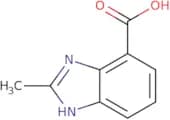
CAS:<p>1H-1,3-Benzodiazole-4-carboxamide is a monosubstituted, trifluoroacetic acid, trisubstituted benzodiazepine. This compound is a potent inhibitor of the cellular enzyme DNA topoisomerase II and has been shown to inhibit the growth of tumor cells in vitro and in vivo. 1H-1,3-Benzodiazole-4-carboxamide has also been found to be synergistic with radiation therapy and is able to sensitize tumor cells to radiation by inhibiting viral replication. 1H-1,3-Benzodiazole-4-carboxamide can also bind to response elements on DNA that regulate the expression of genes that control cell division, including interferon regulatory factor (IRF) genes.</p>Fórmula:C8H7N3OPureza:90%MinPeso molecular:161.16 g/mol2-Methyl-1H-1,3-benzodiazole-4-carboxylic acid
CAS:<p>Versatile small molecule scaffold</p>Fórmula:C9H8N2O2Pureza:Min. 95%Peso molecular:176.17 g/mol5-(Bromomethyl)-1,3-dihydro-2-benzofuran
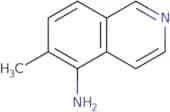
CAS:<p>Versatile small molecule scaffold</p>Fórmula:C9H9BrOPureza:Min. 95%Peso molecular:213.07 g/mol6-Methylisoquinolin-5-amine
CAS:<p>Versatile small molecule scaffold</p>Fórmula:C10H10N2Pureza:Min. 95%Peso molecular:158.2 g/mol6-Methyl-5-nitroisoquinoline
CAS:<p>6-Methyl-5-nitroisoquinoline is an organic compound with the formula C8H7N3O. It is a nitro derivative of isoquinoline and has been shown to have high selectivity for cyclopropanation reactions. The discovery of this compound was preceded by optimization of the reaction conditions, which led to the development of a scalable, efficient, and economical synthesis.</p>Fórmula:C10H8N2O2Pureza:Min. 95%Peso molecular:188.19 g/molN-[1-(4-Chloro-phenyl)-ethyl]-formamide
CAS:<p>Versatile small molecule scaffold</p>Fórmula:C9H10ClNOPureza:Min. 95%Peso molecular:183.63 g/moltert-Butyl methyl(piperidin-4-yl)carbamate hydrochloride
CAS:<p>Versatile small molecule scaffold</p>Fórmula:C11H23ClN2O2Pureza:Min. 95%Peso molecular:250.76 g/mol2-(4-Bromobutoxy)-1,3-dimethoxybenzene
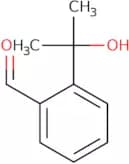
CAS:<p>Versatile small molecule scaffold</p>Fórmula:C12H17BrO3Pureza:Min. 95%Peso molecular:289.16 g/mol2-(2-Hydroxypropan-2-yl)benzaldehyde
CAS:<p>Versatile small molecule scaffold</p>Fórmula:C10H12O2Pureza:Min. 95%Peso molecular:164.2 g/molMBP146-78
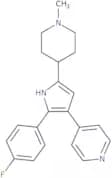
CAS:<p>MBP146-78 is a recombinant protein that acts as an immunomodulator. It is expressed in the form of a fusion protein with MBP, which is a bacterial antigen that is recognized by the immune system. MBP146-78 is designed to target parasitic protozoa such as tenella and leishmania. It has been shown to be effective against intracellular parasites such as toxoplasma and cgmp-dependent proteins. MBP146-78 has also been shown to have pharmacokinetic properties that are favorable for use in humans.</p>Fórmula:C21H22FN3Pureza:Min. 95%Peso molecular:335.4 g/mol3-[(2R)-Pyrrolidin-2-yl]propanoic acid hydrochloride
CAS:<p>Versatile small molecule scaffold</p>Fórmula:C7H14ClNO2Pureza:Min. 95%Peso molecular:179.64 g/mol[4-(2-Methoxyethyl)phenyl]boronic acid
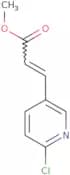
CAS:<p>Versatile small molecule scaffold</p>Fórmula:C9H13BO3Pureza:Min. 95%Peso molecular:180.01 g/molMethyl (2E)-3-(6-chloropyridin-3-yl)prop-2-enoate
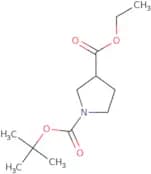
CAS:<p>Versatile small molecule scaffold</p>Fórmula:C9H8ClNO2Pureza:Min. 95%Peso molecular:197.62 g/mol1-tert-Butyl 3-ethyl 4,5-dihydro-1H-pyrrole-1,3-dicarboxylate
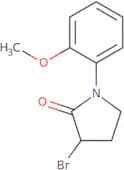
CAS:<p>Versatile small molecule scaffold</p>Fórmula:C12H21NO4Pureza:Min. 95%Peso molecular:243.3 g/mol3-Bromo-1-(2-methoxyphenyl)pyrrolidin-2-one
CAS:<p>Versatile small molecule scaffold</p>Fórmula:C11H12BrNO2Pureza:Min. 95%Peso molecular:270.12 g/mol3-Bromo-1-[(4-methoxyphenyl)methyl]pyrrolidin-2-one
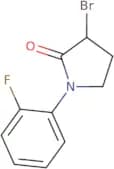
CAS:<p>Versatile small molecule scaffold</p>Fórmula:C12H14BrNO2Pureza:Min. 95%Peso molecular:284.15 g/mol3-Bromo-1-(2-fluorophenyl)pyrrolidin-2-one
CAS:<p>Versatile small molecule scaffold</p>Fórmula:C10H9BrFNOPureza:Min. 95%Peso molecular:258.09 g/mol(2E)-3-[3-(Propan-2-yloxy)phenyl]prop-2-enoic acid
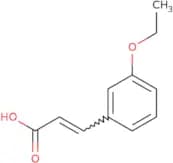
CAS:<p>Versatile small molecule scaffold</p>Fórmula:C12H14O3Pureza:Min. 95%Peso molecular:206.24 g/molTrans-3-ethoxycinnamic acid
CAS:<p>Trans-3-ethoxycinnamic acid is a colorless liquid with a strong, pleasant odor. It is used in alkaline solutions as a dyeing and staining agent, as well as an insecticide. Trans-3-ethoxycinnamic acid can inhibit the growth of bacteria by disrupting the cell membrane and denaturing proteins. It can also be used to remove stains from clothing or dishware. This compound has been shown to be soluble in water and oil, but insoluble in benzene and diethyl ether. Trans-3-ethoxycinnamic acid reacts with ultraviolet light to produce fluorescent compounds that are used for staining DNA.</p>Fórmula:C11H12O3Pureza:Min. 95%Peso molecular:192.21 g/molEthyl[2-(2-methoxyethoxy)ethyl]amine
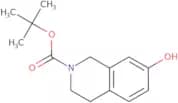
CAS:<p>Versatile small molecule scaffold</p>Fórmula:C7H17NO2Pureza:Min. 95%Peso molecular:147.22 g/moltert-Butyl 7-Hydroxy-3,4-dihydroisoquinoline-2(1h)-carboxylate
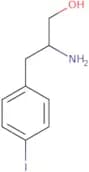
CAS:<p>Versatile small molecule scaffold</p>Fórmula:C14H19NO3Pureza:Min. 95%Peso molecular:249.3 g/mol2-amino-3-(4-iodophenyl)propan-1-ol
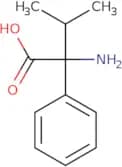
CAS:<p>Versatile small molecule scaffold</p>Fórmula:C9H12INOPureza:Min. 95%Peso molecular:277.1 g/mol2-Amino-3-methyl-2-phenylbutanoic acid
CAS:<p>2-Amino-3-methyl-2-phenylbutanoic acid (AMPB) is a copper catalyst that has been shown to be an efficient terminal oxidant in the catalytic oxidation of nitriles, alcohols, and alkenyls. It is also a highly selective filtration catalyst. The reaction rate of AMPB is much higher than that of other copper catalysts, such as CuCl and CuI. This high selectivity for nitriles makes it possible to carry out aerobic oxidation reactions in a single step. AMPB can be used as a scalable catalyst system for the production of nitriles with high purity.</p>Fórmula:C11H15NO2Pureza:Min. 95%Peso molecular:193.24 g/mol[1-(Benzylamino)cyclohexyl]methanol
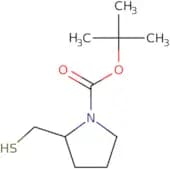
CAS:<p>Versatile small molecule scaffold</p>Fórmula:C14H21NOPureza:Min. 95%Peso molecular:219.32 g/moltert-Butyl (2S)-2-(sulfanylmethyl)pyrrolidine-1-carboxylate
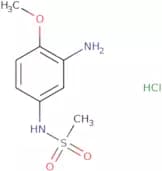
CAS:<p>Versatile small molecule scaffold</p>Fórmula:C10H19NO2SPureza:Min. 95%Peso molecular:217.33 g/molN-(3-Amino-4-methoxyphenyl)methanesulfonamide hydrochloride
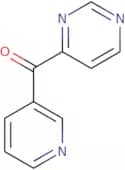
CAS:<p>Versatile small molecule scaffold</p>Fórmula:C8H13ClN2O3SPureza:Min. 95%Peso molecular:252.72 g/mol4-(Pyridine-3-carbonyl)pyrimidine
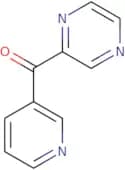
CAS:<p>Versatile small molecule scaffold</p>Fórmula:C10H7N3OPureza:Min. 95%Peso molecular:185.18 g/molPyrazin-2-yl(pyridin-3-yl)methanone
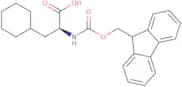
CAS:<p>Versatile small molecule scaffold</p>Fórmula:C10H7N3OPureza:Min. 95%Peso molecular:185.18 g/molFMOC-DL-CHA-OH
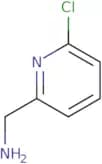
CAS:<p>Versatile small molecule scaffold</p>Fórmula:C24H27NO4Pureza:Min. 95%Peso molecular:393.5 g/mol(6-Chloropyridin-2-yl)methanamine dihydrochloride
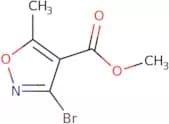
CAS:<p>Versatile small molecule scaffold</p>Fórmula:C6H9Cl3N2Pureza:Min. 95%Peso molecular:215.51 g/molMethyl 3-bromo-5-methyl-1,2-oxazole-4-carboxylate
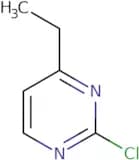
CAS:<p>Methyl 3-bromo-5-methyl-1,2-oxazole-4-carboxylate is an excitatory agent that is used in the synthesis of other compounds. It has been shown to be a potent inhibitor of propionic acid metabolism and also inhibits the activity of hydrobromide.</p>Fórmula:C6H6BrNO3Pureza:Min. 95%Peso molecular:220.02 g/mol2-Chloro-4-ethylpyrimidine
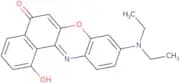
CAS:<p>2-Chloro-4-ethylpyrimidine is a chemical compound that is used in the synthesis of carboxylic acids, acylation reactions, and other organic reactions. 2-Chloro-4-ethylpyrimidine is also used as a catalyst for these reactions. It has been shown to catalyze the reaction of carboxylic acids with alcohols in the presence of potassium hydroxide. This product can be used as a catalyst in aliphatic acylation reactions. The product can also be used to synthesize pyrimidines and biomolecules.</p>Fórmula:C6H7ClN2Pureza:Min. 95%Peso molecular:142.59 g/mol8-(Diethylamino)-3-hydroxy-12H-10-oxa-5-azatetraphen-12-one
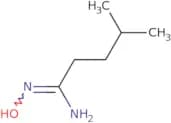
CAS:<p>Versatile small molecule scaffold</p>Fórmula:C20H18N2O3Pureza:Min. 95%Peso molecular:334.4 g/molN'-Hydroxy-4-methylpentanimidamide
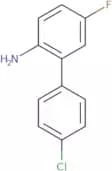
CAS:<p>Versatile small molecule scaffold</p>Fórmula:C6H14N2OPureza:Min. 95%Peso molecular:130.19 g/mol4'-Chloro-5-fluoro-1,1'-biphenyl-2-amine
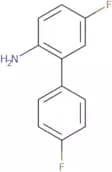
CAS:<p>Versatile small molecule scaffold</p>Fórmula:C12H9ClFNPureza:Min. 95%Peso molecular:221.66 g/mol4-Fluoro-2-(4-fluorophenyl)aniline
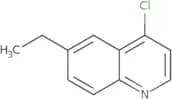
CAS:<p>Versatile small molecule scaffold</p>Fórmula:C12H9F2NPureza:Min. 95%Peso molecular:205.2 g/mol4-Chloro-6-ethylquinoline
CAS:<p>4-Chloro-6-ethylquinoline is a potential anticancer drug that inhibits the function of lysosomal enzymes and causes tumor cells to undergo necrosis. This drug has been shown to inhibit the growth of tumor cells in cell cultures, as well as in hypoxic tumor models. 4-Chloro-6-ethylquinoline inhibits the activity of lysosomal enzymes, which are necessary for the degradation and recycling of macromolecules and other substances within cells. It also binds to proteins on the surface of tumor cells, which prevents these proteins from functioning properly. The uptake of this drug is greater in extravascular tumor tissues than in blood vessels or normal tissue. In addition, it is taken up by tumor cells more readily than by normal cells. 4-Chloro-6-ethylquinoline binds with cytotoxins, causing them to become more cytotoxic and effective against cancerous cells. This compound has been shown to have medicinal</p>Fórmula:C11H10ClNPureza:Min. 95%Peso molecular:191.65 g/mol4-Amino-N-[2-(dimethylamino)ethyl]-benzamide
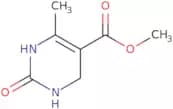
CAS:<p>Versatile small molecule scaffold</p>Fórmula:C11H17N3OPureza:Min. 95%Peso molecular:207.27 g/molMethyl 6-methyl-2-oxo-1,2,3,4-tetrahydropyrimidine-5-carboxylate
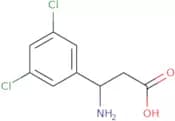
CAS:<p>Versatile small molecule scaffold</p>Fórmula:C7H10N2O3Pureza:Min. 95%Peso molecular:170.17 g/mol3-Amino-3-(3,5-dichlorophenyl)propanoic acid
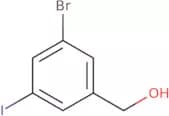
CAS:<p>Versatile small molecule scaffold</p>Fórmula:C9H9Cl2NO2Pureza:Min. 95%Peso molecular:234.08 g/mol(3-bromo-5-iodophenyl)methanol
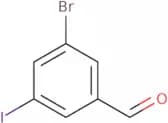
CAS:<p>Versatile small molecule scaffold</p>Fórmula:C7H6BrIOPureza:Min. 95%Peso molecular:312.9 g/mol3-Bromo-5-iodobenzaldehyde
CAS:<p>Versatile small molecule scaffold</p>Fórmula:C7H4BrIOPureza:Min. 95%Peso molecular:310.91 g/mol3-(3,5-Dichlorophenyl)-3-({[(9H-fluoren-9-yl)methoxy]carbonyl}amino)propanoic acid
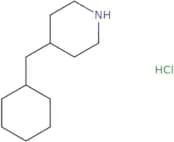
CAS:<p>Versatile small molecule scaffold</p>Fórmula:C24H19Cl2NO4Pureza:Min. 95%Peso molecular:456.3 g/mol4-(Cyclohexylmethyl)piperidine hydrochloride
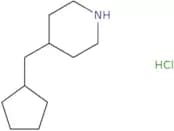
CAS:<p>Versatile small molecule scaffold</p>Fórmula:C12H24ClNPureza:Min. 95%Peso molecular:217.78 g/mol4-(Cyclopentylmethyl)piperidine hydrochloride
CAS:<p>Versatile small molecule scaffold</p>Fórmula:C11H22ClNPureza:Min. 95%Peso molecular:203.75 g/mol4-[(Methoxycarbonyl)amino]butanoic acid
CAS:<p>Versatile small molecule scaffold</p>Fórmula:C6H11NO4Pureza:Min. 95%Peso molecular:161.16 g/mol1-[Ethyl(propan-2-yl)carbamoyl]piperidine-4-carboxylic acid
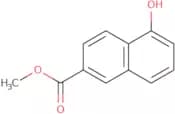
CAS:<p>Versatile small molecule scaffold</p>Fórmula:C12H22N2O3Pureza:Min. 95%Peso molecular:242.31 g/molMethyl 5-hydroxynaphthalene-2-carboxylate
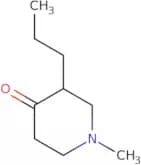
CAS:<p>Versatile small molecule scaffold</p>Fórmula:C12H10O3Pureza:Min. 95%Peso molecular:202.21 g/mol1-Methyl-3-propylpiperidin-4-one
CAS:<p>Versatile small molecule scaffold</p>Fórmula:C9H17NOPureza:Min. 95%Peso molecular:155.24 g/mol
![Ethyl (1R,3S,4S)-2-azabicyclo[2.2.1]heptane-3-carboxylate hydrochloride](/_next/image/?url=https%3A%2Fstatic.cymitquimica.com%2Fproducts%2F3D%2Fthumb-webp%2FNHA05741.webp&w=3840&q=75)




![N-[1-(4-Chloro-phenyl)-ethyl]-formamide](/_next/image/?url=https%3A%2Fstatic.cymitquimica.com%2Fproducts%2F3D%2Fthumb-webp%2FNHA12552.webp&w=3840&q=75)


![3-[(2R)-Pyrrolidin-2-yl]propanoic acid hydrochloride](/_next/image/?url=https%3A%2Fstatic.cymitquimica.com%2Fproducts%2F3D%2Fthumb-webp%2FNHA41535.webp&w=3840&q=75)
![[4-(2-Methoxyethyl)phenyl]boronic acid](/_next/image/?url=https%3A%2Fstatic.cymitquimica.com%2Fproducts%2F3D%2Fthumb-webp%2FNHA47923.webp&w=3840&q=75)
![3-Bromo-1-[(4-methoxyphenyl)methyl]pyrrolidin-2-one](/_next/image/?url=https%3A%2Fstatic.cymitquimica.com%2Fproducts%2F3D%2Fthumb-webp%2FNHA53304.webp&w=3840&q=75)
![(2E)-3-[3-(Propan-2-yloxy)phenyl]prop-2-enoic acid](/_next/image/?url=https%3A%2Fstatic.cymitquimica.com%2Fproducts%2F3D%2Fthumb-webp%2FNHA54514.webp&w=3840&q=75)
![Ethyl[2-(2-methoxyethoxy)ethyl]amine](/_next/image/?url=https%3A%2Fstatic.cymitquimica.com%2Fproducts%2F3D%2Fthumb-webp%2FNHA57578.webp&w=3840&q=75)
![[1-(Benzylamino)cyclohexyl]methanol](/_next/image/?url=https%3A%2Fstatic.cymitquimica.com%2Fproducts%2F3D%2Fthumb-webp%2FNHA59396.webp&w=3840&q=75)
![4-Amino-N-[2-(dimethylamino)ethyl]-benzamide](/_next/image/?url=https%3A%2Fstatic.cymitquimica.com%2Fproducts%2F3D%2Fthumb-webp%2FNHA75893.webp&w=3840&q=75)
![3-(3,5-Dichlorophenyl)-3-({[(9H-fluoren-9-yl)methoxy]carbonyl}amino)propanoic acid](/_next/image/?url=https%3A%2Fstatic.cymitquimica.com%2Fproducts%2F3D%2Fthumb-webp%2FNHA81426.webp&w=3840&q=75)
![4-[(Methoxycarbonyl)amino]butanoic acid](/_next/image/?url=https%3A%2Fstatic.cymitquimica.com%2Fproducts%2F3D%2Fthumb-webp%2FNHA84507.webp&w=3840&q=75)
![1-[Ethyl(propan-2-yl)carbamoyl]piperidine-4-carboxylic acid](/_next/image/?url=https%3A%2Fstatic.cymitquimica.com%2Fproducts%2F3D%2Fthumb-webp%2FNHA85452.webp&w=3840&q=75)