Building Blocks
Esta seção contém produtos fundamentais para a síntese de compostos orgânicos e biológicos. Building blocks são os materiais de partida essenciais usados para construir moléculas complexas através de várias reações químicas. Eles desempenham um papel crítico na descoberta de medicamentos, ciência dos materiais e pesquisa química. Na CymitQuimica, oferecemos uma ampla gama de building blocks de alta qualidade para apoiar suas pesquisas inovadoras e projetos industriais, garantindo que você tenha os componentes essenciais para uma síntese bem-sucedida.
Subcategorias de "Building Blocks"
- Ácidos Borónicos e Derivados de Ácido Borónico(5.756 produtos)
- Building Blocks Quirais(1.242 produtos)
- Building Blocks Hidrocarbonetos(6.095 produtos)
- Building Blocks orgânicos(61.051 produtos)
Foram encontrados 199813 produtos de "Building Blocks"
Ordenar por
Pureza (%)
0
100
|
0
|
50
|
90
|
95
|
100
4-(Methylsulfonyl)pyridine
CAS:<p>4-(Methylsulfonyl)pyridine is a pyridine compound that is a receptor antagonist. It has neuropeptide activity, and it can be used in biological research. 4-(Methylsulfonyl)pyridine has been shown to have inhibitory activity on the release of acetylcholine from rat cerebral cortex slices, as well as on the release of norepinephrine from rat brain synaptosomes. The inhibition was reversible and the potency was similar to that of atropine and scopolamine. 4-(Methylsulfonyl)pyridine also inhibited the binding of [3H]quinuclidinyl benzilate (QNB) to muscarinic receptors in rat ileum membranes with an IC50 value of 1 microM.</p>Fórmula:C6H7NO2SPureza:Min. 95%Peso molecular:157.19 g/mol4-(4-Nitrophenoxy)benzonitrile
CAS:Versatile small molecule scaffoldFórmula:C13H8N2O3Pureza:Min. 95%Peso molecular:240.21 g/mol4-(4-Aminophenoxy)benzonitrile
CAS:<p>4-(4-Aminophenoxy)benzonitrile is a cell death inhibitor that inhibits the activity of kinases by binding to ATP. It has been shown to inhibit the transcription factor FOXO1, which regulates the expression of genes involved in apoptosis and cell growth. 4-(4-Aminophenoxy)benzonitrile has been shown to inhibit human cancer cells, including those with mutated p53 and Rb proteins. This drug also modulates other drugs, such as sorafenib, which is an inhibitor of angiogenesis.</p>Fórmula:C13H10N2OPureza:Min. 95%Peso molecular:210.23 g/mol1-(Propylthio)propan-2-one
CAS:<p>Versatile small molecule scaffold</p>Fórmula:C6H12OSPureza:Min. 95%Peso molecular:132.23 g/molTetrakis(dimethylsilyloxy)silane
CAS:Tetrakis(dimethylsilyloxy)silane is a reactive molecule that is used in surface science as a monomer. It has been shown to be an effective catalyst for ring-opening polymerization of phenyl groups and other functional groups, with the production of polymers with high molecular weight. Tetrakis(dimethylsilyloxy)silane has also been shown to have chemical stability and good surface properties. This molecule is used for detection sensitivity in electrochemical impedance spectroscopy, which allows it to be used as a probe molecule. It can also be used for microscopy techniques such as electron microscopy and scanning electron microscopy. Tetrakis(dimethylsilyloxy)silane does not react with acids or bases, so it can be used for equilibration reactions and gel permeation chromatography.Fórmula:C8H28O4Si5Pureza:Min. 95%Peso molecular:328.73 g/mol2-(2-Fluoro-phenoxy)-propionic acid
CAS:<p>Versatile small molecule scaffold</p>Fórmula:C9H9FO3Pureza:Min. 95%Peso molecular:184.16 g/molN-(2-Methylphenyl)prop-2-enamide
CAS:<p>Versatile small molecule scaffold</p>Fórmula:C10H11NOPureza:Min. 95%Peso molecular:161.2 g/mol3-(Prop-2-enamido)benzoic acid
CAS:<p>Versatile small molecule scaffold</p>Fórmula:C10H9NO3Pureza:Min. 95%Peso molecular:191.18 g/molMethyl 2-methyl-3-oxobutanoate
CAS:<p>Methyl 2-methyl-3-oxobutanoate (MMOB) is a chemical compound that is the ester of methyl butanoate and methanol. MMOB can be prepared by allylation of molybdenum, forming a Grignard reagent. This reaction produces an enolate, which reacts with the diastereomer to form the product. The stereochemical sequence for this reaction is anti. The optical rotation for MMOB can be either dextrorotatory or levorotatory, depending on the configuration of the product's chiral center.<br>Methyl 2-methyl-3-oxobutanoate has been used as an attractant in insect studies and as a precursor to nonactin, a herbicide that inhibits plant growth by interfering with photosynthesis.</p>Fórmula:C6H10O3Pureza:Min. 95%Peso molecular:130.14 g/mol2-Trifluoromethanesulfonylaniline
CAS:<p>Versatile small molecule scaffold</p>Fórmula:C7H6F3NO2SPureza:Min. 95%Peso molecular:225.19 g/mol3-Ethoxy-3-oxo-2-phenylpropanoic acid
CAS:3-Ethoxy-3-oxo-2-phenylpropanoic acid is a ligand that has been used to study the protonation of acidic molecules. It binds to an anion and forms a cyclic structure. 3-Ethoxy-3-oxo-2-phenylpropanoic acid is metabolized by the liver, and excreted in urine. The reaction mechanism for 3-ethoxy-3-oxo-2-phenylpropanoic acid is currently unknown, but it may be similar to that of atropine or other quaternary ammonium salts.Fórmula:C11H12O4Pureza:Min. 95%Peso molecular:208.21 g/mol(4-Bromo-2,6-dimethylphenyl)methanol
CAS:<p>Versatile small molecule scaffold</p>Fórmula:C9H11BrOPureza:Min. 95%Peso molecular:215.09 g/molMethyl (2S)-2-[(furan-2-yl)formamido]propanoate
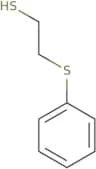
CAS:Versatile small molecule scaffoldFórmula:C9H11NO4Pureza:Min. 95%Peso molecular:197.19 g/mol2-(Phenylsulfanyl)ethane-1-thiol
CAS:<p>Versatile small molecule scaffold</p>Fórmula:C8H10S2Pureza:Min. 95%Peso molecular:170.3 g/mol5-Hydroxy-2-methyl-naphtho[1,2-b]furan-3-carboxylic acid
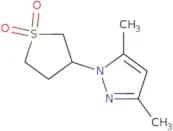
CAS:<p>Versatile small molecule scaffold</p>Fórmula:C14H10O4Pureza:Min. 95%Peso molecular:242.23 g/mol3-(3,5-Dimethyl-1H-pyrazol-1-yl)tetrahydro-1H-thiophene-1,1-dione
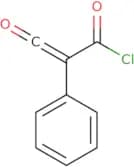
CAS:<p>Versatile small molecule scaffold</p>Fórmula:C9H14N2O2SPureza:Min. 95%Peso molecular:214.29 g/mol3-Oxo-2-phenylprop-2-enoyl chloride
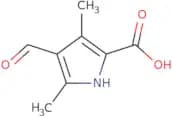
CAS:<p>The molecule 3-oxo-2-phenylprop-2-enoyl chloride is a diazirine, which is an organic compound that consists of two fused rings. It has two possible isomers, the cis and trans forms. The cis form has a molecular ion with a m/z of 170 while the trans form has a molecular ion with a m/z of 172. These molecules are synthesized by reacting phenyl groups with magnesium oxide in dimethyl acetylenedicarboxylate. The cis form can be synthesized using UV irradiation while the trans form cannot.</p>Fórmula:C9H5ClO2Pureza:Min. 95%Peso molecular:180.59 g/mol4-Formyl-3,5-dimethyl-1H-pyrrole-2-carboxylic acid
CAS:<p>Versatile small molecule scaffold</p>Fórmula:C8H9NO3Pureza:Min. 95%Peso molecular:167.16 g/mol4-{[(2E)-2-(Hydroxyimino)ethanoyl]amino}benzoic acid
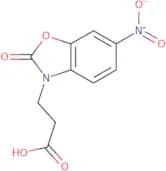
CAS:<p>Versatile small molecule scaffold</p>Fórmula:C9H8N2O4Pureza:Min. 95%Peso molecular:208.17 g/mol3-(6-Nitro-2-oxo-2,3-dihydro-1,3-benzoxazol-3-yl)propanoic acid
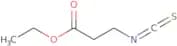
CAS:<p>Versatile small molecule scaffold</p>Fórmula:C10H8N2O6Pureza:Min. 95%Peso molecular:252.18 g/molEthyl 3-isothiocyanatopropionate
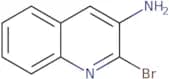
CAS:<p>The chemical structure of ethyl 3-isothiocyanatopropionate is cyclic, linear, pentapeptide, proteolytically, deacylation, chain, residue, peptidic. It is metabolically a non-competitive inhibitor of the enzyme histone deacetylase and an inhibitor of the enzymes that catalyze the formation of protein crosslinks. Ethyl 3-isothiocyanatopropionate is stable in human plasma and has permeable properties. It inhibits the activity of histone deacetylases at high concentrations by binding to a hydrophobic pocket on their surface. Ethyl 3-isothiocyanatopropionate is not metabolized but can be cleaved from its target by proteases or acid treatment.</p>Fórmula:C6H9NO2SPureza:Min. 95%Peso molecular:159.2 g/mol2-Bromoquinolin-3-amine
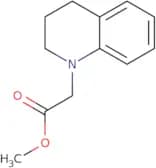
CAS:<p>2-Bromoquinolin-3-amine is a quinazoline alkaloid that has been modified to produce synthetic analogs. It was first synthesized in 1957 by chemical modification of the natural product quinazoline, and is used as a lead compound for the synthesis of other compounds. 2-Bromoquinolin-3-amine has shown biological activity, such as inhibition of protein synthesis in bacteria and fungi, and inhibition of DNA synthesis in human cells. It also has some antimalarial properties.</p>Fórmula:C9H7BrN2Pureza:Min. 95%Peso molecular:223.07 g/molMethyl 2-(3,4-dihydroquinolin-1(2H)-yl)acetate
CAS:<p>Versatile small molecule scaffold</p>Fórmula:C12H15NO2Pureza:Min. 95%Peso molecular:205.25 g/mol3-(Nitromethyl)-1λ⁶-thiolane-1,1-dione
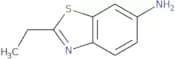
CAS:<p>Versatile small molecule scaffold</p>Fórmula:C5H9NO4SPureza:Min. 95%Peso molecular:179.2 g/mol2-Ethyl-6-benzothiazolamine
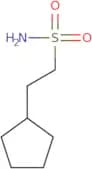
CAS:<p>2-Ethyl-6-benzothiazolamine is a quaternary ammonium salt that is synthesized from 2-ethyl-6-nitrobenzothiazole by reaction with methyl methacrylate. It has a number of photochromic properties, including the ability to undergo reversible color changes in response to light irradiation. This compound can be used to synthesize methacrylic chloride copolymers, which are used in the manufacture of paints and coatings. 2-Ethyl-6-benzothiazolamine has been shown to have nitro and chloride functionalities, which may make it useful as an explosive ingredient.</p>Fórmula:C9H10N2SPureza:Min. 95%Peso molecular:178.25 g/mol2-Cyclopentylethane-1-sulfonamide
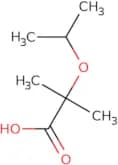
CAS:<p>Versatile small molecule scaffold</p>Fórmula:C7H15NO2SPureza:Min. 95%Peso molecular:177.27 g/mol2-Methyl-2-(propan-2-yloxy)propanoic acid
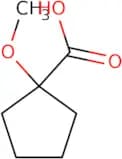
CAS:<p>Versatile small molecule scaffold</p>Fórmula:C7H14O3Pureza:Min. 95%Peso molecular:146.18 g/mol1-Methoxycyclopentane-1-carboxylic acid
CAS:Versatile small molecule scaffoldFórmula:C7H12O3Pureza:Min. 95%Peso molecular:144.17 g/mol[(1-Methoxycyclopentyl)methyl](methyl)amine
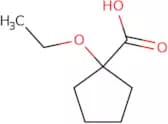
CAS:<p>Versatile small molecule scaffold</p>Fórmula:C8H17NOPureza:Min. 95%Peso molecular:143.23 g/mol1-Ethoxycyclopentane-1-carboxylic acid
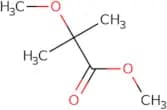
CAS:<p>Versatile small molecule scaffold</p>Fórmula:C8H14O3Pureza:Min. 95%Peso molecular:158.19 g/molMethyl 2-methoxy-2-methylpropanoate
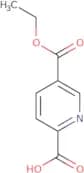
CAS:<p>Versatile small molecule scaffold</p>Fórmula:C6H12O3Pureza:Min. 95%Peso molecular:132.16 g/mol5-(Ethoxycarbonyl)pyridine-2-carboxylic acid
CAS:<p>Versatile small molecule scaffold</p>Fórmula:C9H9NO4Pureza:Min. 95%Peso molecular:195.17 g/mol5-ethynylpyridine-2-carboxylic acid
CAS:<p>5-Ethynylpyridine-2-carboxylic acid is a ligand with a pyridine ring. It binds to the pyridyl subunit of proteins, such as phosphoglycerate kinase and ATP synthase. This compound coordinates with metals to form complexes. It has been used to synthesize other compounds, including benzoate and nitrate salts, which have yielded luminescent frameworks.</p>Fórmula:C8H5NO2Pureza:Min. 95%Peso molecular:147.1 g/molMethyl 5-ethynylpyridine-2-carboxylate
CAS:<p>Methyl 5-ethynylpyridine-2-carboxylate is a ligand that binds in the active site of many enzymes. It can enhance the activity of these enzymes and also change their conformations. Methyl 5-ethynylpyridine-2-carboxylate interacts with four subunits to form a tetradentate framework, which is responsible for this molecule's ability to bind to any type of ligand. This enhancement effect is reversible, and it can be reversed by oxidizing methyl 5-ethynylpyridine-2-carboxylate with nitric acid. The yield of methyl 5-ethynylpyridine-2-carboxylate depends on the reaction conditions and the type of arylacetylene used. Methyl 5-ethynylpyridine-2-carboxylate has been shown to be an effective ligand with a high emission yield when using 1,3</p>Fórmula:C9H7NO2Pureza:Min. 95%Peso molecular:161.2 g/mol[(4-Methylquinolin-2-yl)sulfanyl]acetic acid
CAS:<p>[(4-Methylquinolin-2-yl)sulfanyl]acetic acid is a chemical intermediate that is used in the synthesis of other organic compounds. It can be obtained by reacting acrylonitrile with potassium permanganate in water, followed by hydrolysis of the resulting manganese dioxide to give [(4-methylquinolin-2-yl)sulfanyl]acetic acid. This intermediate can also be synthesized from chloroacetic acid and ethyl bromoacetate, which are then converted to allyl bromide by reaction with potassium. The allyl bromide is then reacted with methyl methacrylate in the presence of amide to produce [(4-methylquinolin-2-yl)sulfanyl]acetic acid.</p>Fórmula:C12H11NO2SPureza:Min. 95%Peso molecular:233.29 g/mol3-(Trimethylsilyl)benzaldehyde
CAS:<p>Versatile small molecule scaffold</p>Fórmula:C10H14OSiPureza:Min. 95%Peso molecular:178.3 g/mol2-[(4-Cyanophenyl)sulfanyl]acetic acid
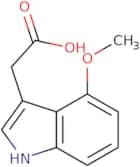
CAS:<p>Versatile small molecule scaffold</p>Fórmula:C9H7NO2SPureza:Min. 95%Peso molecular:193.22 g/mol4-Methoxyindole-3-acetic Acid
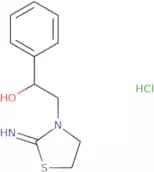
CAS:<p>Versatile small molecule scaffold</p>Fórmula:C11H11NO3Pureza:Min. 95%Peso molecular:205.21 g/mol3-Thiazolidineethanol, 2-imino-α-phenyl-, hydrochloride
CAS:<p>Versatile small molecule scaffold</p>Fórmula:C11H15ClN2OSPureza:Min. 95%Peso molecular:258.77 g/mol5-Ethyl-4,5,6,7-tetrahydro-thiazolo[5,4-c]pyridin-2-ylamine
CAS:<p>Versatile small molecule scaffold</p>Fórmula:C8H13N3SPureza:Min. 95%Peso molecular:183.27 g/mol5-Isopropyl-4,5,6,7-tetrahydro-thiazolo[5,4-c]-pyridin-2-ylamine
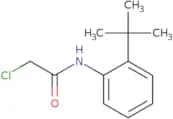
CAS:<p>Versatile small molecule scaffold</p>Fórmula:C9H15N3SPureza:Min. 95%Peso molecular:197.3 g/molN-(2-tert-Butylphenyl)-2-chloroacetamide
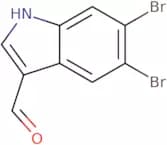
CAS:<p>Versatile small molecule scaffold</p>Fórmula:C12H16ClNOPureza:Min. 95%Peso molecular:225.71 g/mol5,6-Dibromo-1H-indole-3-carbaldehyde
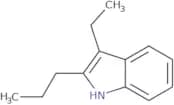
CAS:<p>Versatile small molecule scaffold</p>Fórmula:C9H5Br2NOPureza:Min. 95%Peso molecular:302.95 g/mol3-Ethyl-2-propyl-1H-indole
CAS:<p>3-Ethyl-2-propyl-1H-indole is an indole that can be used as a synthetic intermediate. It can also be used in nucleophilic substitution reactions to produce functionalized indoles. 3-Ethyl-2-propyl-1H-indole is nontoxic and does not react with most functional groups. This chemical is a good nucleophile and reacts regioselectively with electron deficient or neutral substrates to generate substituted indoles.</p>Fórmula:C13H17NPureza:Min. 95%Peso molecular:187.28 g/mol[4-(Bromomethyl)phenyl]trimethylsilane
CAS:<p>Versatile small molecule scaffold</p>Fórmula:C10H15BrSiPureza:Min. 95%Peso molecular:243.21 g/mol6,7,8,9-Tetrahydro-5H-benzo[7]annulen-5-amine
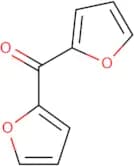
CAS:<p>Versatile small molecule scaffold</p>Fórmula:C11H15NPureza:Min. 95%Peso molecular:161.25 g/molbis(furan-2-yl)methanone
CAS:<p>Bis(furan-2-yl)methanone is a furyl compound that is activated by trifluoromethanesulfonic acid. It has been shown to be an effective dose for the treatment of bacterial infections that are resistant to erythromycin and other antibiotics. Bis(furan-2-yl)methanone is used in veterinary medicine to treat infections caused by bacteria such as Escherichia coli, Proteus mirabilis, Klebsiella pneumoniae, and Streptococcus agalactiae. This drug has been shown to be active against Gram-positive bacteria, including Bacillus cereus, Clostridium perfringens, Clostridium tetani, Staphylococcus aureus, Streptococcus pyogenes, and Streptococcus pneumoniae.</p>Fórmula:C9H6O3Pureza:Min. 95%Peso molecular:162.14 g/mol3-Methylenebicyclo[3.3.1]nonan-7-one
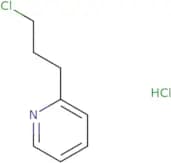
CAS:<p>3-Methylenebicyclo[3.3.1]nonan-7-one is a chiral molecule that has been synthesized as a racemic mixture of two enantiomers. This compound is an amine with a hydroxy group and an isopropyl side chain. It has been shown to have anti-inflammatory properties, which may be due to its ability to inhibit cyclooxygenase and lipoxygenase activity. 3-Methylenebicyclo[3.3.1]nonan-7-one also has antiviral properties, which are due to its inhibition of protein synthesis in viruses by blocking the activity of ribonucleotide reductase, an enzyme required for nucleic acid synthesis. The reaction mechanism involves the formation of a covalent bond between the amantadine and the active site of ribonucleotide reductase through either radical or hydrogen atom transfer mechanisms.</p>Fórmula:C10H14OPureza:Min. 95%Peso molecular:150.22 g/mol2-(3-Chloropropyl)pyridine hydrochloride
CAS:<p>Versatile small molecule scaffold</p>Fórmula:C8H11Cl2NPureza:Min. 95%Peso molecular:192.08 g/mol4-Amino-2,3,6-trimethylphenol
CAS:<p>4-Amino-2,3,6-trimethylphenol (4ATMP) is a halogenated phenol that has been used as a developer in the production of silver halide photographic emulsions. It interacts with hydrogen chloride to form a gaseous product and can be used as an indicator for the presence of chlorine gas. 4ATMP is also known to react with formaldehyde and acetaldehyde to produce formic acid and acetic acid respectively. 4ATMP is most commonly prepared by reacting phenol with diethylaminopropyl chloride in the presence of hydrogen chloride gas.</p>Fórmula:C9H13NOPureza:Min. 95%Peso molecular:151.21 g/mol




![Methyl (2S)-2-[(furan-2-yl)formamido]propanoate](/_next/image/?url=https%3A%2Fstatic.cymitquimica.com%2Fproducts%2F3D%2Fthumb-webp%2FSAA10727.webp&w=3840&q=75)
![5-Hydroxy-2-methyl-naphtho[1,2-b]furan-3-carboxylic acid](/_next/image/?url=https%3A%2Fstatic.cymitquimica.com%2Fproducts%2F3D%2Fthumb-webp%2FSAA11291.webp&w=3840&q=75)
![4-{[(2E)-2-(Hydroxyimino)ethanoyl]amino}benzoic acid](/_next/image/?url=https%3A%2Fstatic.cymitquimica.com%2Fproducts%2F3D%2Fthumb-webp%2FSAA12278.webp&w=3840&q=75)

amine](/_next/image/?url=https%3A%2Fstatic.cymitquimica.com%2Fproducts%2F3D%2Fthumb-webp%2FSAA86031.webp&w=3840&q=75)


![[(4-Methylquinolin-2-yl)sulfanyl]acetic acid](/_next/image/?url=https%3A%2Fstatic.cymitquimica.com%2Fproducts%2F3D%2Fthumb-webp%2FSAA88062.webp&w=3840&q=75)

![2-[(4-Cyanophenyl)sulfanyl]acetic acid](/_next/image/?url=https%3A%2Fstatic.cymitquimica.com%2Fproducts%2F3D%2Fthumb-webp%2FSAA89344.webp&w=3840&q=75)
![5-Ethyl-4,5,6,7-tetrahydro-thiazolo[5,4-c]pyridin-2-ylamine](/_next/image/?url=https%3A%2Fstatic.cymitquimica.com%2Fproducts%2F3D%2Fthumb-webp%2FSAA89949.webp&w=3840&q=75)
![5-Isopropyl-4,5,6,7-tetrahydro-thiazolo[5,4-c]-pyridin-2-ylamine](/_next/image/?url=https%3A%2Fstatic.cymitquimica.com%2Fproducts%2F3D%2Fthumb-webp%2FSAA89951.webp&w=3840&q=75)
![[4-(Bromomethyl)phenyl]trimethylsilane](/_next/image/?url=https%3A%2Fstatic.cymitquimica.com%2Fproducts%2F3D%2Fthumb-webp%2FSAA90342.webp&w=3840&q=75)
![6,7,8,9-Tetrahydro-5H-benzo[7]annulen-5-amine](/_next/image/?url=https%3A%2Fstatic.cymitquimica.com%2Fproducts%2F3D%2Fthumb-webp%2FSAA91026.webp&w=3840&q=75)
![3-Methylenebicyclo[3.3.1]nonan-7-one](/_next/image/?url=https%3A%2Fstatic.cymitquimica.com%2Fproducts%2F3D%2Fthumb-webp%2FSAA93329.webp&w=3840&q=75)