Building Blocks
Subcategorias de "Building Blocks"
- Ácidos Borónicos e Derivados de Ácido Borónico(5.774 produtos)
- Building Blocks Quirais(1.237 produtos)
- Building Blocks Hidrocarbonetos(6.098 produtos)
- Building Blocks orgânicos(60.980 produtos)
Foram encontrados 205158 produtos de "Building Blocks"
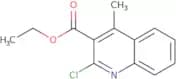
Ethyl 2-chloro-4-methylquinoline-3-carboxylate
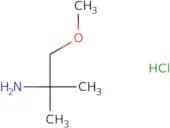
CAS:Versatile small molecule scaffoldFórmula:C13H12ClNO2Pureza:Min. 95%Peso molecular:249.69 g/mol1-Methoxy-2-methylpropan-2-amine hydrochloride
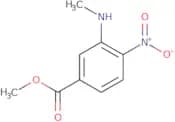
CAS:Versatile small molecule scaffoldFórmula:C5H14ClNOPureza:Min. 95%Peso molecular:139.62 g/molMethyl 3-(methylamino)-4-nitrobenzoate
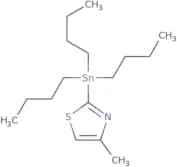
CAS:Versatile small molecule scaffoldFórmula:C9H10N2O4Pureza:Min. 95%Peso molecular:210.19 g/mol4-methyl-2-(tributylstannyl)-1,3-thiazole
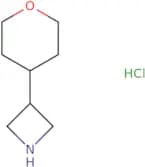
CAS:Produto ControladoVersatile small molecule scaffoldFórmula:C16H31NSSnPureza:Min. 95%Peso molecular:388.2 g/mol3-(Oxan-4-yl)azetidine hydrochloride
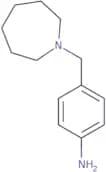
CAS:Versatile small molecule scaffoldFórmula:C8H16ClNOPureza:Min. 95%Peso molecular:177.67 g/mol4-Azepan-1-ylmethyl-phenylamine
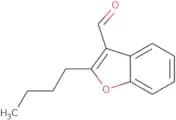
CAS:Versatile small molecule scaffoldFórmula:C13H20N2Pureza:Min. 95%Peso molecular:204.32 g/mol2-Butyl-1-benzofuran-3-carbaldehyde
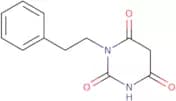
CAS:Versatile small molecule scaffoldFórmula:C13H14O2Pureza:Min. 95%Peso molecular:202.25 g/mol1-(2-Phenylethyl)pyrimidine-2,4,6(1H,3H,5H)-trione
CAS:1-(2-Phenylethyl)pyrimidine-2,4,6(1H,3H,5H)-trione is a polymer that has been used as a drug delivery system. The polymer can be cross-linked with a variety of agents. It is soluble in organic solvents and swellable in water. This polymer can be used to treat high blood pressure by preventing the reabsorption of sodium ions into the body through the kidneys. The termination of this polymer is acid molecules and it can be used for surface treatments on metals or ceramics. Low energy is required for this polymer to dissolve. 1-(2-Phenylethyl)pyrimidine-2,4,6(1H,3H,5H)-trione is also known as polymeric acid anhydride and its analytical method is silicon. It has been used as a conditioning agent for silicon wafers and as an analytical method for determining the concentrationFórmula:C12H12N2O3Pureza:Min. 95%Peso molecular:232.23 g/mol2-Azaspiro[4.5]decane-4-carboxylic acid hydrochloride
CAS:Versatile small molecule scaffold
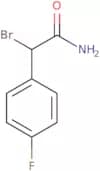
Fórmula:C10H18ClNO2Pureza:Min. 95%Peso molecular:219.71 g/mol2-Bromo-2-(4-fluorophenyl)acetamide
CAS:Versatile small molecule scaffold
Fórmula:C8H7BrFNOPureza:Min. 95%Peso molecular:232.05 g/mol2-{[(2-Bromophenyl)methyl]amino}ethan-1-ol
CAS:Versatile small molecule scaffoldFórmula:C9H12BrNOPureza:Min. 95%Peso molecular:230.1 g/molN-Boc-[(1S)-1-(aminomethyl)propyl]amine
CAS:Versatile small molecule scaffoldFórmula:C9H20N2O2Pureza:Min. 95%Peso molecular:188.27 g/molrac-(1R,4R,6S)-6-Phenyl-2-azabicyclo[2.2.1]heptane, exo
CAS:Versatile small molecule scaffoldFórmula:C12H15NPureza:Min. 95%Peso molecular:173.3 g/mol2-Hydroxy-3-(trifluoromethyl)benzoic acid
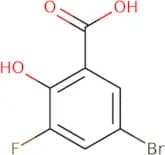
CAS:Versatile small molecule scaffoldFórmula:C8H5F3O3Pureza:Min. 95%Peso molecular:206.12 g/mol5-Bromo-3-fluoro-2-hydroxybenzoic acid
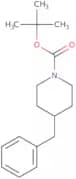
CAS:Versatile small molecule scaffoldFórmula:C7H4BrFO3Pureza:Min. 95%Peso molecular:235.01 g/moltert-Butyl 4-benzylpiperidine-1-carboxylate
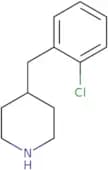
CAS:Versatile small molecule scaffoldFórmula:C17H25NO2Pureza:Min. 95%Peso molecular:275.4 g/mol4-(2-Chlorobenzyl)piperidine
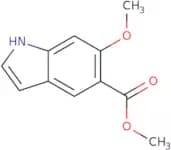
CAS:Versatile small molecule scaffoldFórmula:C12H16ClNPureza:Min. 95%Peso molecular:209.71 g/molMethyl 6-methoxy-1H-indole-5-carboxylate
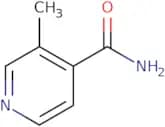
CAS:Versatile small molecule scaffoldFórmula:C11H11NO3Pureza:Min. 95%Peso molecular:205.21 g/mol3-Methylisonicotinamide
CAS:3-Methylisonicotinamide is an immune-related drug that belongs to the class of heterocyclic compounds. It is an innovative therapeutic agent for inflammatory diseases and cancer. 3-Methylisonicotinamide has been shown to inhibit the production of inflammatory cytokines, chemokines, and prostaglandins. This compound also blocks the production of reactive oxygen species by inhibiting the activation of NADPH oxidase in neutrophils and macrophages. The inhibition of reactive oxygen species prevents cytotoxicity and cell death in vitro. 3-Methylisonicotinamide binds to nuclear receptor subtypes (e.g., PPARγ) that are involved in inflammation, cancer, and neuropathic pain with high affinity. These receptors are located on the surface of cells where they regulate cellular functions such as proliferation, differentiation, and apoptosis.
Fórmula:C7H8N2OPureza:Min. 95%Peso molecular:136.15 g/mol2-Chloro-N-[4-(pyrrolidin-1-yl)phenyl]propanamide
CAS:Versatile small molecule scaffoldFórmula:C13H17ClN2OPureza:Min. 95%Peso molecular:252.74 g/mol2-Chloro-N-[4-(1-pyrrolidinyl)phenyl]acetamide
CAS:Versatile small molecule scaffold
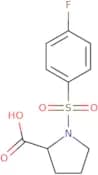
Fórmula:C12H15ClN2OPureza:Min. 95%Peso molecular:238.72 g/mol1-(4-Fluoro-benzenesulfonyl)-pyrrolidine-2-carboxylic acid
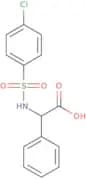
CAS:Versatile small molecule scaffoldFórmula:C11H12FNO4SPureza:Min. 95%Peso molecular:273.28 g/mol2-(4-Chlorobenzenesulfonamido)-2-phenylacetic acid
CAS:Versatile small molecule scaffoldFórmula:C14H12ClNO4SPureza:Min. 95%Peso molecular:325.8 g/molMethyl 3-{3-amino-4-[cyclohexyl(2-methylpropyl)amino]phenyl}butanoate
CAS:Versatile small molecule scaffoldFórmula:C21H34N2O2Pureza:Min. 95%Peso molecular:346.5 g/mol5-Bromo-7-fluoro-8-methylquinoline
CAS:Versatile small molecule scaffold
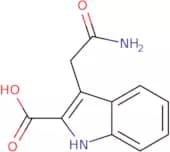
Fórmula:C10H7BrFNPureza:Min. 95%Peso molecular:240.07 g/mol3-(Carbamoylmethyl)-1H-indole-2-carboxylic acid
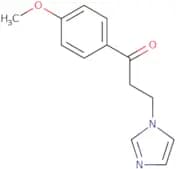
CAS:Versatile small molecule scaffoldFórmula:C11H10N2O3Pureza:Min. 95%Peso molecular:218.21 g/mol3-(1H-Imidazol-1-yl)-1-(4-methoxyphenyl)propan-1-one
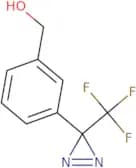
CAS:3-(1H-Imidazol-1-yl)-1-(4-methoxyphenyl)propan-1-one is a drug that belongs to the class of imidazole derivatives and is used as an antihistamine. It has a stabilizing effect on the molecule by forming hydrogen bonds with the carbonyl group and the hydroxyl group, which prevents it from reacting with other molecules. 3-(1H-Imidazol-1-yl)-1-(4-methoxyphenyl)propan-1-one also has strong antiallergic properties.Fórmula:C13H14N2O2Pureza:Min. 95%Peso molecular:230.26 g/mol(3-(3-(Trifluoromethyl)-3H-diazirin-3-yl)phenyl)methanol
CAS:Versatile small molecule scaffold
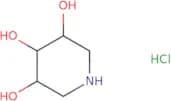
Fórmula:C9H7F3N2OPureza:Min. 95%Peso molecular:216.16 g/molrac-(3R,4S,5S)-Piperidine-3,4,5-triol hydrochloride
CAS:Versatile small molecule scaffoldFórmula:C5H12ClNO3Pureza:Min. 95%Peso molecular:169.61 g/mol2-[(5-Phenyl-1,2-oxazol-3-yl)formamido]acetic acid
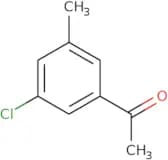
CAS:Versatile small molecule scaffoldFórmula:C12H10N2O4Pureza:Min. 95%Peso molecular:246.22 g/mol1-(3-Chloro-5-methylphenyl)ethan-1-one
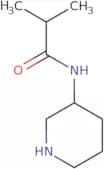
CAS:Versatile small molecule scaffoldFórmula:C9H9ClOPureza:Min. 95%Peso molecular:168.62 g/mol2-Methyl-N-(piperidin-3-yl)propanamide
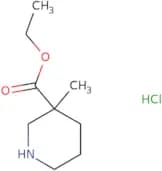
CAS:Versatile small molecule scaffoldFórmula:C9H18N2OPureza:Min. 95%Peso molecular:170.25 g/molEthyl 3-methylpiperidine-3-carboxylate hydrochloride
CAS:Versatile small molecule scaffold
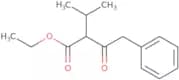
Fórmula:C9H18ClNO2Pureza:Min. 95%Peso molecular:207.7 g/molEthyl 3-oxo-4-phenyl-2-(propan-2-yl)butanoate
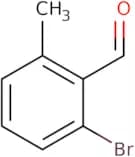
CAS:Versatile small molecule scaffoldFórmula:C15H20O3Pureza:Min. 95%Peso molecular:248.32 g/mol2-Bromo-6-methylbenzaldehyde
CAS:Versatile small molecule scaffoldFórmula:C8H7BrOPureza:Min. 95%Peso molecular:199.04 g/mol7-(Trimethylsilyl)hept-6-yn-2-ol
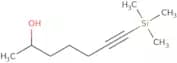
CAS:Versatile small molecule scaffold
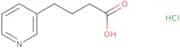
Fórmula:C10H20OSiPureza:Min. 95%Peso molecular:184.35 g/mol4-(Pyridin-3-yl)butanoic acid hydrochloride
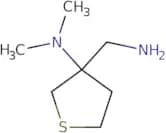
CAS:Versatile small molecule scaffoldFórmula:C9H12ClNO2Pureza:Min. 95%Peso molecular:201.65 g/mol3-(Aminomethyl)-N,N-dimethylthiolan-3-amine
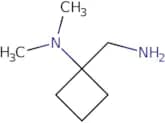
CAS:Versatile small molecule scaffoldFórmula:C7H16N2SPureza:Min. 95%Peso molecular:160.28 g/mol1-(Aminomethyl)-N,N-dimethylcyclobutan-1-amine
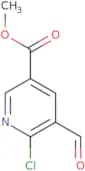
CAS:Versatile small molecule scaffoldFórmula:C7H16N2Pureza:Min. 95%Peso molecular:128.22 g/molMethyl 6-chloro-5-formylpyridine-3-carboxylate
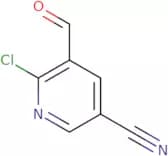
CAS:Versatile small molecule scaffoldFórmula:C8H6ClNO3Pureza:Min. 95%Peso molecular:199.59 g/mol6-Chloro-5-formylpyridine-3-carbonitrile
CAS:Versatile small molecule scaffoldFórmula:C7H3ClN2OPureza:Min. 95%Peso molecular:166.56 g/molMethyl 2-chloro-5-formylpyridine-3-carboxylate
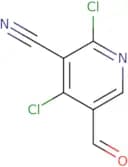
CAS:Versatile small molecule scaffoldFórmula:C8H6ClNO3Pureza:Min. 95%Peso molecular:199.59 g/mol2,4-Dichloro-5-formylpyridine-3-carbonitrile
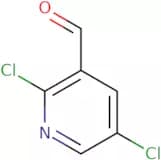
CAS:Versatile small molecule scaffoldFórmula:C7H2Cl2N2OPureza:Min. 95%Peso molecular:201.01 g/mol2,5-Dichloronicotinaldehyde
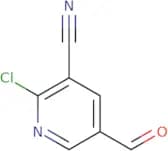
CAS:Versatile small molecule scaffoldFórmula:C6H3Cl2NOPureza:Min. 95%Peso molecular:176 g/mol2-chloro-5-formylpyridine-3-carbonitrile
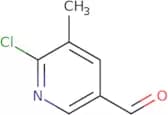
CAS:Versatile small molecule scaffoldFórmula:C7H3ClN2OPureza:Min. 95%Peso molecular:166.6 g/mol6-Chloro-5-methylnicotinaldehyde
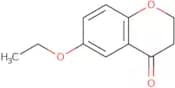
CAS:Versatile small molecule scaffoldFórmula:C7H6ClNOPureza:Min. 95%Peso molecular:155.58 g/mol6-Ethoxy-3,4-dihydro-2H-1-benzopyran-4-one
CAS:Versatile small molecule scaffoldFórmula:C11H12O3Pureza:Min. 95%Peso molecular:192.21 g/mol3-(3-(Trifluoromethyl)-3H-diazirin-3-yl)benzoic acid
CAS:Versatile small molecule scaffold
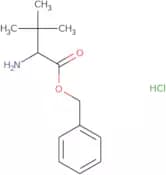
Fórmula:C9H5F3N2O2Pureza:Min. 95%Peso molecular:230.14 g/molBenzyl (2S)-2-amino-3,3-dimethylbutanoate hydrochloride
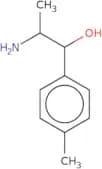
CAS:Benzyl (2S)-2-amino-3,3-dimethylbutanoate hydrochloride is an inhibitor that can be used in the synthesis of amides. It is a racemic mixture of two enantiomers: erythro and threo. This product is also useful as an intermediate for organic synthesis. The product is stable to hydrolysis by acid or base at room temperature and pressure. The yield is not affected by the stereogenic center, but it does decrease when coupling reactions are involved. Benzyl 2S-2-amino-3,3-dimethylbutanoate hydrochloride reacts with amines to form amides, which are intermediates in organic synthesis. This compound also inhibits matrix metalloproteases and matrix metalloprotease activity.Fórmula:C13H20ClNO2Pureza:Min. 95%Peso molecular:257.75 g/mol2-Amino-1-(4-methylphenyl)propan-1-ol
CAS:Produto ControladoVersatile small molecule scaffoldFórmula:C10H15NOPureza:Min. 95%Peso molecular:165.2 g/mol

![2-Azaspiro[4.5]decane-4-carboxylic acid hydrochloride](/_next/image/?url=https%3A%2Fstatic.cymitquimica.com%2Fproducts%2F3D%2Fthumb-webp%2FBKA46168.webp&w=3840&q=75)
![2-{[(2-Bromophenyl)methyl]amino}ethan-1-ol](/_next/image/?url=https%3A%2Fstatic.cymitquimica.com%2Fproducts%2F3D%2Fthumb-webp%2FBKA32632.webp&w=3840&q=75)
![N-Boc-[(1S)-1-(aminomethyl)propyl]amine](/_next/image/?url=https%3A%2Fstatic.cymitquimica.com%2Fproducts%2F3D%2Fthumb-webp%2FBKA32589.webp&w=3840&q=75)
![rac-(1R,4R,6S)-6-Phenyl-2-azabicyclo[2.2.1]heptane, exo](/_next/image/?url=https%3A%2Fstatic.cymitquimica.com%2Fproducts%2F3D%2Fthumb-webp%2FBKA32175.webp&w=3840&q=75)
![2-Chloro-N-[4-(pyrrolidin-1-yl)phenyl]propanamide](/_next/image/?url=https%3A%2Fstatic.cymitquimica.com%2Fproducts%2F3D%2Fthumb-webp%2FBKA09732.webp&w=3840&q=75)
![2-Chloro-N-[4-(1-pyrrolidinyl)phenyl]acetamide](/_next/image/?url=https%3A%2Fstatic.cymitquimica.com%2Fproducts%2F3D%2Fthumb-webp%2FBKA09715.webp&w=3840&q=75)
![Methyl 3-{3-amino-4-[cyclohexyl(2-methylpropyl)amino]phenyl}butanoate](/_next/image/?url=https%3A%2Fstatic.cymitquimica.com%2Fproducts%2F3D%2Fthumb-webp%2FBJD98756.webp&w=3840&q=75)
![2-[(5-Phenyl-1,2-oxazol-3-yl)formamido]acetic acid](/_next/image/?url=https%3A%2Fstatic.cymitquimica.com%2Fproducts%2F3D%2Fthumb-webp%2FBHA59399.webp&w=3840&q=75)