Building Blocks
Esta seção contém produtos fundamentais para a síntese de compostos orgânicos e biológicos. Building blocks são os materiais de partida essenciais usados para construir moléculas complexas através de várias reações químicas. Eles desempenham um papel crítico na descoberta de medicamentos, ciência dos materiais e pesquisa química. Na CymitQuimica, oferecemos uma ampla gama de building blocks de alta qualidade para apoiar suas pesquisas inovadoras e projetos industriais, garantindo que você tenha os componentes essenciais para uma síntese bem-sucedida.
Subcategorias de "Building Blocks"
- Ácidos Borónicos e Derivados de Ácido Borónico(5.778 produtos)
- Building Blocks Quirais(1.243 produtos)
- Building Blocks Hidrocarbonetos(6.098 produtos)
- Building Blocks orgânicos(61.057 produtos)
Foram encontrados 200710 produtos de "Building Blocks"
Ordenar por
Pureza (%)
0
100
|
0
|
50
|
90
|
95
|
100
Ethyl 2-(N-methylformamido)acetate
CAS:<p>Versatile small molecule scaffold</p>Fórmula:C6H11NO3Pureza:Min. 95%Peso molecular:145.16 g/mol1-(2-Methylpropyl)-1H-1,2,4-triazole
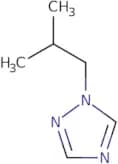
CAS:Versatile small molecule scaffoldFórmula:C6H11N3Pureza:Min. 95%Peso molecular:125.17 g/mol1H-Pyrrole-2-acetamide
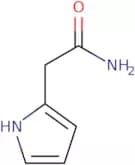
CAS:<p>1H-Pyrrole-2-acetamide (1HPA) is a pyrrole derivative that inhibits the synthesis of viral proteins by binding to the amino acid derivatives that are used for this purpose. It has been shown to have a significant effect on HIV replication in cells from patients with AIDS, but not on healthy cells. 1HPA also has an inhibitory effect on the electron transport system and can lead to nerve damage, which may be due to its ability to bind to and inhibit enzymes in the nervous system. 1HPA does not have any effect on human immunodeficiency virus type 2 (HIV-2).</p>Fórmula:C6H8N2OPureza:Min. 95%Peso molecular:124.14 g/mol(6-Methoxypyridazin-3-yl)methanol
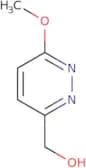
CAS:<p>Versatile small molecule scaffold</p>Fórmula:C6H8N2O2Pureza:Min. 95%Peso molecular:140.14 g/mol2-[(4-Methyl-1,3-thiazol-2-yl)amino]acetic acid
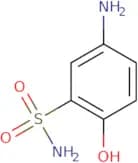
CAS:Versatile small molecule scaffoldFórmula:C6H8N2O2SPureza:Min. 95%Peso molecular:172.21 g/mol5-Amino-2-hydroxybenzene-1-sulfonamide
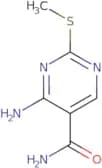
CAS:<p>Versatile small molecule scaffold</p>Fórmula:C6H8N2O3SPureza:Min. 95%Peso molecular:188.21 g/mol4-Amino-2-(methylthio)pyrimidine-5-carboxamide
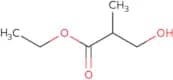
CAS:<p>Versatile small molecule scaffold</p>Fórmula:C6H8N4OSPureza:Min. 95%Peso molecular:184.22 g/molEthyl 3-hydroxy-2-methylpropanoate
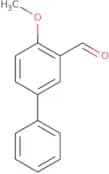
CAS:<p>Ethyl 3-hydroxy-2-methylpropanoate is an enantioselective chemical compound. It is a liquid at room temperature, with a molecular weight of 128.14 g/mol and a density of 0.879. Ethyl 3-hydroxy-2-methylpropanoate has been shown to undergo olefination reactions in the presence of acid catalysts. Reaction rates increase with increasing temperatures, reaching maximum rates at 100°C to 120°C.</p>Fórmula:C6H12O3Pureza:Min. 95%Peso molecular:132.16 g/mol4-Methoxy-biphenyl-3-carbaldehyde
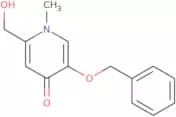
CAS:4-Methoxy-biphenyl-3-carbaldehyde is a flavonoid compound that is derived from 4-methoxybenzene and the hydroxyl group of cinnamic acid. It is an alkali that can be used as a flavoring agent in Japan. When combined with bromides, benzene, or cyclized compounds, this molecule undergoes a condensation reaction to produce chalcones. This molecule also has antioxidant properties due to its ability to scavenge free radicals. When combined with other flavonoids such as chalcones and flavones, this molecule produces flavonoid compounds such as flavones or flavanones.Fórmula:C14H12O2Pureza:Min. 95%Peso molecular:212.24 g/mol5-(Benzyloxy)-2-(hydroxymethyl)-1-methyl-1,4-dihydropyridin-4-one
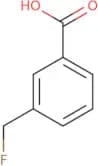
CAS:<p>Versatile small molecule scaffold</p>Fórmula:C14H15NO3Pureza:Min. 95%Peso molecular:245.27 g/mol3-(Fluoromethyl)benzoic acid
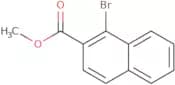
CAS:<p>Versatile small molecule scaffold</p>Fórmula:C8H7FO2Pureza:Min. 95%Peso molecular:154.14 g/mol2-Naphthalenecarboxylic acid, 1-bromo-, methyl ester
CAS:<p>2-Naphthalenecarboxylic acid, 1-bromo-, methyl ester is a chiral molecule with two enantiomers. It can be synthesized from naphthalene and bromoacetic acid derivatives by an asymmetric synthesis. The diacid can be obtained through the cross-coupling of the corresponding organometallic reagent with a suitable halide. The 2-naphthacarboxylic acid, 1-bromo-, methyl ester has been used to synthesize various ligands with interesting properties. It has also been used in osmium chemistry and in enantioselective hydrogenation reactions.</p>Fórmula:C12H9BrO2Pureza:Min. 95%Peso molecular:265.1 g/moltert-Butyl N-(1-benzothiophen-3-yl)carbamate
CAS:<p>Versatile small molecule scaffold</p>Fórmula:C13H15NO2SPureza:Min. 95%Peso molecular:249.33 g/mol5-(Chloromethyl)-8-thia-4,6-diazatricyclo[7.4.0.0,2,7]trideca-1(9),2(7),5-trien-3-one
CAS:5-(Chloromethyl)-8-thia-4,6-diazatricyclo[7.4.0.0,2,7]trideca-1(9),2(7),5-trien-3-one is a molecule with the potential to outperform current devices and techniques for environmental monitoring. It has been shown to have optimal performance when used in a variety of different modules and techniques for research purposes. This compound is also being researched as an option for optimizing frequency and transferring data between modules. These optimizations will be made using parameters that are optimized to optimize the device's performance while minimizing power consumption.Fórmula:C11H11ClN2OSPureza:Min. 95%Peso molecular:254.74 g/mol2-(Chloromethyl)-5,6-dimethyl-3H,4H-thieno[2,3-d]pyrimidin-4-one
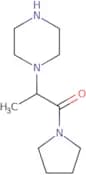
CAS:<p>Versatile small molecule scaffold</p>Fórmula:C9H9ClN2OSPureza:Min. 95%Peso molecular:228.7 g/mol2-(Piperazin-1-yl)-1-(pyrrolidin-1-yl)propan-1-one
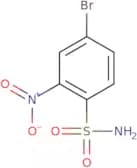
CAS:Produto Controlado<p>Versatile small molecule scaffold</p>Fórmula:C11H21N3OPureza:Min. 95%Peso molecular:211.3 g/mol4-Bromo-2-nitrobenzenesulfonamide
CAS:<p>Versatile small molecule scaffold</p>Fórmula:C6H5BrN2O4SPureza:Min. 95%Peso molecular:281.09 g/mol6-Bromo-5-methyl-[1,2,4]triazolo[1,5-a]pyrimidine
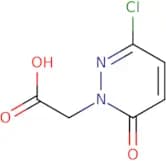
CAS:Versatile small molecule scaffoldFórmula:C6H5BrN4Pureza:Min. 95%Peso molecular:213.03 g/mol(3-Chloro-6-oxopyridazin-1(6H)-yl)acetic acid
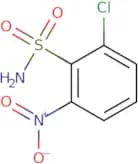
CAS:<p>Versatile small molecule scaffold</p>Fórmula:C6H5ClN2O3Pureza:Min. 95%Peso molecular:188.57 g/mol2-Chloro-6-nitrobenzene-1-sulfonamide
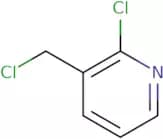
CAS:Versatile small molecule scaffoldFórmula:C6H5ClN2O4SPureza:Min. 95%Peso molecular:236.63 g/mol2-Chloro-3-chloromethyl-pyridine
CAS:<p>2-Chloro-3-chloromethyl-pyridine is an alkali with a high yield and enantioselectivity. It has been used as an intermediate in the synthesis of pesticides, such as 2,4 dichlorophenoxyacetic acid (2,4 D). The compound is also used to produce sodium hypochlorite in the laboratory. In addition, 2-chloro-3-chloromethyl-pyridine is a useful reagent for the hydrolysis of esters and oxidation of alcohols. This compound can be synthesized using enantioselective reactions or by hydrolyzing an asymmetric precursor.</p>Fórmula:C6H5Cl2NPureza:Min. 95%Peso molecular:162.02 g/mol4-(2-Chloroethyl)thiomorpholine hydrochloride
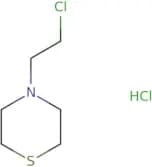
CAS:<p>Versatile small molecule scaffold</p>Fórmula:C6H13Cl2NSPureza:Min. 95%Peso molecular:202.14 g/molN-Ethyl-3-hydroxybutanamide
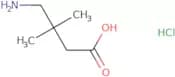
CAS:<p>Versatile small molecule scaffold</p>Fórmula:C6H13NO2Pureza:Min. 95%Peso molecular:131.17 g/molButanoic acid, 4-amino-3,3-dimethyl-, hydrochloride
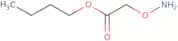
CAS:<p>Versatile small molecule scaffold</p>Fórmula:C6H14ClNO2Pureza:Min. 95%Peso molecular:167.63 g/molButyl 2-(aminooxy)acetate
CAS:<p>Versatile small molecule scaffold</p>Fórmula:C6H13NO3Pureza:Min. 95%Peso molecular:147.17 g/mol3-[(2-Hydroxyethyl)amino]butanoic acid
CAS:<p>Versatile small molecule scaffold</p>Fórmula:C6H13NO3Pureza:Min. 95%Peso molecular:147.17 g/molEthyl 2-(aminooxy)-2-methylpropanoate hydrochloride
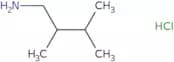
CAS:<p>Versatile small molecule scaffold</p>Fórmula:C6H14ClNO3Pureza:Min. 95%Peso molecular:183.6 g/mol2,3-Dimethylbutan-1-amine hydrochloride
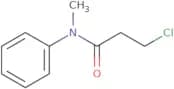
CAS:<p>Versatile small molecule scaffold</p>Fórmula:C6H16ClNPureza:Min. 95%Peso molecular:137.65 g/mol3-Chloro-N-methyl-N-phenylpropanamide
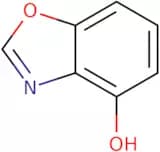
CAS:Versatile small molecule scaffoldFórmula:C10H12ClNOPureza:Min. 95%Peso molecular:197.66 g/molBenzooxazol-4-ol
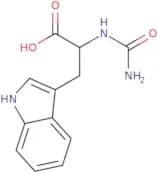
CAS:<p>Benzooxazol-4-ol is a ligand that binds to nitrogen atoms. It has coordination chemistry properties, including the ability to stabilize metal ions. This ligand is also able to form a stable carbonyl group, which is important for nucleophilic attacks on carbonyls and dioxetanes. Benzooxazol-4-ol has been shown to inhibit the formation of cell apoptosis by binding to neutrophils and stabilizing them in their active forms. It also inhibits liver disease by preventing trimethylsiloxy from forming and preventing the accumulation of mononuclear cells in the liver.</p>Fórmula:C7H5NO2Pureza:Min. 95%Peso molecular:135.12 g/mol(2S)-2-(Carbamoylamino)-3-(1H-indol-3-yl)propanoic acid
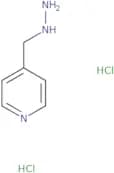
CAS:<p>(2S)-2-(Carbamoylamino)-3-(1H-indol-3-yl)propanoic acid is a synthetic drug that is used as an in vitro tool to study the mechanism of action of the bacterial enzyme desoxycholate. It is an enantiomer, which means it has two forms that are mirror images of each other. The (2S) form is also known as S-(+)-2-(carbamoylamino)-3-(1H-indol-3-yl)propanoic acid and the (2R) form is also known as R-(-)-2-(carbamoylamino)-3-(1H-indol-3-yl)propanoic acid. The (+) and (-) refer to the orientation of the hydrogen atoms on either side of the central carbon atom in each molecule. This antibiotic binds to Mn2+ ions and inhibits bacterial growth by inhibiting enzymes such as en</p>Fórmula:C12H13N3O3Pureza:Min. 95%Peso molecular:247.25 g/mol(4-Pyridylmethyl)hydrazine dihydrochloride
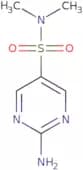
CAS:<p>Versatile small molecule scaffold</p>Fórmula:C6H11Cl2N3Pureza:Min. 95%Peso molecular:196.08 g/mol2-Amino-N,N-dimethylpyrimidine-5-sulfonamide
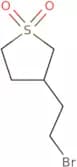
CAS:<p>Versatile small molecule scaffold</p>Fórmula:C6H10N4O2SPureza:Min. 95%Peso molecular:202.24 g/mol3-(2-Bromoethyl)tetrahydro-thiophene 1,1-dioxide
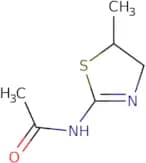
CAS:<p>Versatile small molecule scaffold</p>Fórmula:C6H11BrO2SPureza:Min. 95%Peso molecular:227.12 g/molN-(5-Methyl-4,5-dihydro-1,3-thiazol-2-yl)acetamide
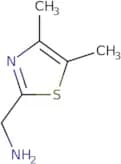
CAS:<p>Versatile small molecule scaffold</p>Fórmula:C6H10N2OSPureza:Min. 95%Peso molecular:158.22 g/mol(Dimethyl-1,3-thiazol-2-yl)methanamine
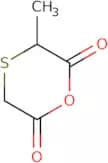
CAS:<p>Versatile small molecule scaffold</p>Fórmula:C6H10N2SPureza:Min. 95%Peso molecular:142.22 g/mol3-Methyl-1,4-oxathiane-2,6-dione
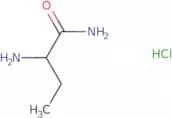
CAS:<p>Versatile small molecule scaffold</p>Fórmula:C5H6O3SPureza:Min. 95%Peso molecular:146.17 g/mol2-Aminobutanamide hydrochloride
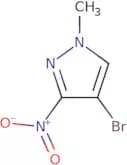
CAS:<p>2-Aminobutanamide hydrochloride (2AB) is a chemical compound that is used in the production of l-tartaric acid. It is industrially produced by dissolving 2-aminobutanoic acid in a solution of sodium hydroxide and then adding it to an aqueous solution of potassium chloride. The product precipitates as a salt, which can be purified by liquid chromatography. 2AB is unstable at high temperatures, so it must be stored under refrigeration. 2AB has virulent properties, which are attributed to its acidic nature and the fact that it reacts with chlorine to form hydrogen chloride gas.<br>!--END--></p>Fórmula:C4H11ClN2OPureza:Min. 95%Peso molecular:138.59 g/mol4-Bromo-1-methyl-3-nitro-1H-pyrazole
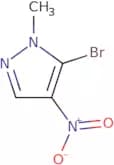
CAS:<p>4-Bromo-1-methyl-3-nitro-1H-pyrazole is a chemical compound that contains the amination functional group. It is used as a catalyst for copper in organic synthesis, and is also used in the manufacture of dyes, pharmaceuticals, and agricultural chemicals.</p>Fórmula:C4H4BrN3O2Pureza:Min. 95%Peso molecular:206 g/mol5-Bromo-1-methyl-4-nitro-1H-pyrazole
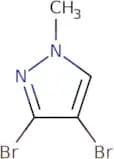
CAS:<p>5-Bromo-1-methyl-4-nitro-1H-pyrazole is a copper catalyst that can be used for amination. It is an important reagent in organic synthesis, with uses including the production of pharmaceuticals and pesticides. 5-Bromo-1-methyl-4-nitro-1H-pyrazole has been shown to be a selective catalyst for the amination of aromatic compounds. It is also an efficient catalyst for the preparation of ethylbenzene from acetophenone, nitrobenzene, and ethanolamine.</p>Fórmula:C4H4BrN3O2Pureza:Min. 95%Peso molecular:206 g/mol3,4-Dibromo-1-methyl-1H-pyrazole
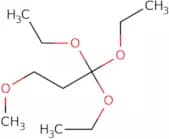
CAS:<p>Versatile small molecule scaffold</p>Fórmula:C4H4Br2N2Pureza:Min. 95%Peso molecular:239.9 g/mol1,1,1-Triethoxy-3-methoxypropane
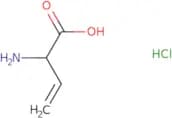
CAS:<p>Versatile small molecule scaffold</p>Fórmula:C10H22O4Pureza:Min. 95%Peso molecular:206.28 g/mol2-Aminobut-3-enoic acid hydrochloride
CAS:<p>Versatile small molecule scaffold</p>Fórmula:C4H8ClNO2Pureza:Min. 95%Peso molecular:137.56 g/mol2-Hydroxy-1-[4-(trifluoromethyl)phenyl]ethan-1-one
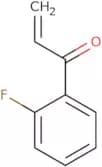
CAS:<p>Versatile small molecule scaffold</p>Fórmula:C9H7F3O2Pureza:Min. 95%Peso molecular:204.15 g/mol1-(2-Fluorophenyl)prop-2-en-1-one
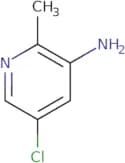
CAS:<p>Versatile small molecule scaffold</p>Fórmula:C9H7FOPureza:Min. 95%Peso molecular:150.15 g/mol3-Amino-5-chloropicoline
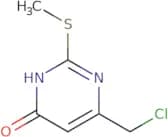
CAS:<p>Versatile small molecule scaffold</p>Fórmula:C6H7ClN2Pureza:Min. 95%Peso molecular:142.59 g/mol6-(Chloromethyl)-2-(methylsulfanyl)-3,4-dihydropyrimidin-4-one
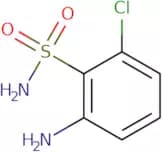
CAS:<p>Versatile small molecule scaffold</p>Fórmula:C6H7ClN2OSPureza:Min. 95%Peso molecular:190.65 g/mol2-Amino-6-chlorobenzene-1-sulfonamide
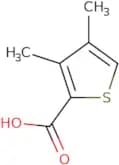
CAS:<p>2-Amino-6-chlorobenzene-1-sulfonamide is a sulfonamide that inhibits the ATP sensitive potassium channel. It is used as a muscle relaxant and to treat muscle spasms. 2-Amino-6-chlorobenzene-1-sulfonamide has been shown to have an inhibitory effect on the chlorine atom of ATP sensitive potassium channels in vitro, which may lead to vasorelaxation through the opening of potassium channels. This drug has also been shown to be more potent than other drugs with similar effects, such as heptaminol and diazoxide. In addition, this drug has a low toxicity profile.</p>Fórmula:C6H7ClN2O2SPureza:Min. 95%Peso molecular:206.65 g/mol3,4-Dimethylthiophene-2-carboxylic acid
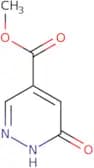
CAS:<p>3,4-Dimethylthiophene-2-carboxylic acid is an experimental compound that has been shown to be a linear molecule with a molecular weight of 144. The experimental equation for the formation of 3,4-dimethylthiophene-2-carboxylic acid from 3,4-dimethoxythiophene and acetic acid is:</p>Fórmula:C7H8O2SPureza:Min. 95%Peso molecular:156.2 g/molMethyl 6-oxo-1,6-dihydropyridazine-4-carboxylate
CAS:Versatile small molecule scaffoldFórmula:C6H6N2O3Pureza:Min. 95%Peso molecular:154.12 g/mol


![2-[(4-Methyl-1,3-thiazol-2-yl)amino]acetic acid](/_next/image/?url=https%3A%2Fstatic.cymitquimica.com%2Fproducts%2F3D%2Fthumb-webp%2FPDA53285.webp&w=3840&q=75)

![5-(Chloromethyl)-8-thia-4,6-diazatricyclo[7.4.0.0,2,7]trideca-1(9),2(7),5-trien-3-one](/_next/image/?url=https%3A%2Fstatic.cymitquimica.com%2Fproducts%2F3D%2Fthumb-webp%2FPDA56703.webp&w=3840&q=75)
![2-(Chloromethyl)-5,6-dimethyl-3H,4H-thieno[2,3-d]pyrimidin-4-one](/_next/image/?url=https%3A%2Fstatic.cymitquimica.com%2Fproducts%2F3D%2Fthumb-webp%2FPDA56705.webp&w=3840&q=75)
![6-Bromo-5-methyl-[1,2,4]triazolo[1,5-a]pyrimidine](/_next/image/?url=https%3A%2Fstatic.cymitquimica.com%2Fproducts%2F3D%2Fthumb-webp%2FPDA58142.webp&w=3840&q=75)

![3-[(2-Hydroxyethyl)amino]butanoic acid](/_next/image/?url=https%3A%2Fstatic.cymitquimica.com%2Fproducts%2F3D%2Fthumb-webp%2FPDA58445.webp&w=3840&q=75)
![2-Hydroxy-1-[4-(trifluoromethyl)phenyl]ethan-1-one](/_next/image/?url=https%3A%2Fstatic.cymitquimica.com%2Fproducts%2F3D%2Fthumb-webp%2FPDA63028.webp&w=3840&q=75)