Building Blocks
Esta seção contém produtos fundamentais para a síntese de compostos orgânicos e biológicos. Building blocks são os materiais de partida essenciais usados para construir moléculas complexas através de várias reações químicas. Eles desempenham um papel crítico na descoberta de medicamentos, ciência dos materiais e pesquisa química. Na CymitQuimica, oferecemos uma ampla gama de building blocks de alta qualidade para apoiar suas pesquisas inovadoras e projetos industriais, garantindo que você tenha os componentes essenciais para uma síntese bem-sucedida.
Subcategorias de "Building Blocks"
- Ácidos Borónicos e Derivados de Ácido Borónico(5.778 produtos)
- Building Blocks Quirais(1.243 produtos)
- Building Blocks Hidrocarbonetos(6.097 produtos)
- Building Blocks orgânicos(61.048 produtos)
Foram encontrados 203115 produtos de "Building Blocks"
Ordenar por
Pureza (%)
0
100
|
0
|
50
|
90
|
95
|
100
Methyl 2-(6-nitro-4-oxo-3,4-dihydroquinazolin-3-yl)acetate
CAS:<p>Versatile small molecule scaffold</p>Fórmula:C11H9N3O5Pureza:Min. 95%Peso molecular:263.21 g/mol1-(3,4,5-Trichlorophenyl)piperazine
CAS:Produto Controlado<p>Versatile small molecule scaffold</p>Fórmula:C10H11Cl3N2Pureza:Min. 95%Peso molecular:265.6 g/mol3,3-Dimethyl-1-phenylbutan-2-amine
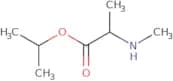
CAS:Produto ControladoVersatile small molecule scaffoldFórmula:C12H19NPureza:Min. 95%Peso molecular:177.29 g/molPropan-2-yl 2-(methylamino)propanoate
CAS:<p>Versatile small molecule scaffold</p>Fórmula:C7H15NO2Pureza:Min. 95%Peso molecular:145.2 g/molEthyl 2-(2-ethoxy-2-oxoacetamido)-4,5-dimethylthiophene-3-carboxylate
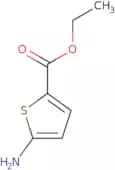
CAS:Versatile small molecule scaffoldFórmula:C13H17NO5SPureza:Min. 95%Peso molecular:299.34 g/molEthyl 5-aminothiophene-2-carboxylate
CAS:<p>Ethyl 5-aminothiophene-2-carboxylate is a hydrazine derivative that can be synthesized in two steps from ethyl 2-chloroacetate, ethyl chloroformate and sodium hydroxide. It has been shown to react with the trimethylsilyl chloride and trifluoroacetic anhydride in the presence of trifluoroacetic acid to form the corresponding 4-hydroxycoumarin derivative. The regioselective synthesis of ethyl 5-aminothiophene-2-carboxylate is achieved by using x-ray crystallography to identify the most reactive positions on the molecule for nucleophilic attack. This compound is efficient for generating 4-hydroxycoumarin derivatives, which are used as pharmaceuticals or as precursors for organic synthesis.</p>Fórmula:C7H9NO2SPureza:Min. 95%Peso molecular:171.22 g/molBenzyl N-[3-(2,5-dioxoimidazolidin-4-yl)propyl]carbamate
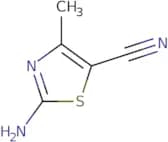
CAS:Versatile small molecule scaffoldFórmula:C14H17N3O4Pureza:Min. 95%Peso molecular:291.3 g/mol2-Amino-4-methyl-1,3-thiazole-5-carbonitrile
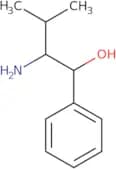
CAS:Versatile small molecule scaffoldFórmula:C5H5N3SPureza:Min. 95%Peso molecular:139.18 g/mol2-Amino-3-methyl-1-phenylbutan-1-ol
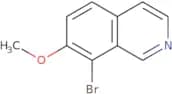
CAS:Produto ControladoVersatile small molecule scaffoldFórmula:C11H17NOPureza:Min. 95%Peso molecular:179.26 g/mol8-Bromo-7-methoxyisoquinoline
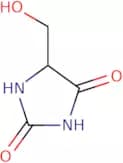
CAS:<p>Versatile small molecule scaffold</p>Fórmula:C10H8BrNOPureza:Min. 95%Peso molecular:238.08 g/mol5-(Hydroxymethyl)imidazolidine-2,4-dione
CAS:<p>5-(Hydroxymethyl)imidazolidine-2,4-dione (HMI) is a synthetic compound that has been shown to be effective for the treatment of tuberculosis. HMI is an analog of d-serine and is immobilized on activated carbon to produce filtration media. It was found to be more efficient than other immobilization methods in terms of yield, operational time, and filtration capacity. The affinity and chiral properties of HMI make it a good candidate for use as a drug delivery system.</p>Fórmula:C4H6N2O3Pureza:Min. 95%Peso molecular:130.1 g/mol1-{[(Cyclopent-3-en-1-yl)methyl]sulfanyl}ethan-1-one
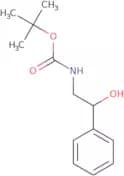
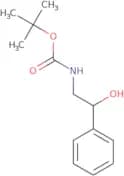
CAS:Versatile small molecule scaffoldFórmula:C8H12OSPureza:Min. 95%Peso molecular:156.2 g/molN-(tert-Butoxycarbonyl)-DL-2-phenylglycinol
CAS:Versatile small molecule scaffoldFórmula:C13H19NO3Pureza:Min. 95%Peso molecular:237.3 g/molN-Boc-2-hydroxy-2-phenylethylamine
CAS:<p>N-Boc-2-hydroxy-2-phenylethylamine is a chemical that inhibits the reuptake of serotonin, which is a monoamine neurotransmitter. It is classified as a reuptake inhibitor. N-Boc-2-hydroxy-2-phenylethylamine competitively binds to the transporter that removes serotonin from the synapse, which leads to increased concentrations of serotonin in the synapse. This drug has shown efficacy in treating depression and could be used as an antidepressant.</p>Fórmula:C13H19NO3Pureza:Min. 95%Peso molecular:237.3 g/molethyl 3-oxododecanoate
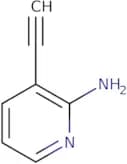
CAS:<p>Ethyl 3-oxododecanoate is a molecule that was synthesized by the bioassay-guided synthesis of flavonoids. It has antimicrobial activity against Pseudomonas aeruginosa and can be used for inhibiting bacterial growth in culture supernatant. Ethyl 3-oxododecanoate is an effective inhibitor of fatty acid biosynthesis, which makes it a potential therapeutic agent for infections caused by P. aeruginosa. This molecule has been modified to inhibit the production of lipopolysaccharide in P. aeruginosa, which inhibits its ability to stimulate immune responses and activate the complement system.</p>Fórmula:C14H26O3Pureza:Min. 95%Peso molecular:242.36 g/mol3-Ethynylpyridin-2-amine
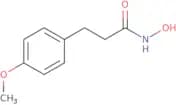
CAS:<p>3-Ethynylpyridin-2-amine is a nucleophilic amine that has been synthesized as an intermediate for the synthesis of other compounds. It is a molecule that can be scavenged by electron deficiency and introduce water molecules to optimize biomolecular reactions. 3-Ethynylpyridin-2-amine is synthesized by reacting pyrrole with trifluoroacetic acid in the presence of ammonium hydroxide. The product can be isolated by removing the solvent and drying with magnesium sulfate. 3-Ethynylpyridin-2-amine has been shown to scavenge reactive oxygen species, such as hydrogen peroxide, which are produced during oxidative stress and have been implicated in many diseases, including cancer and cardiovascular disease.</p>Pureza:Min. 95%N-Hydroxy-3-(4-methoxyphenyl)propanamide
CAS:<p>Versatile small molecule scaffold</p>Fórmula:C10H13NO3Pureza:Min. 95%Peso molecular:195.21 g/molPyrazine-2,3-dicarboxylic Acid Monoamide
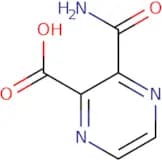
CAS:Pyrazine-2,3-dicarboxylic Acid Monoamide is a ligand that regulates the activity of metal ions. It has been shown to bind to alkali metal ions, such as potassium ion, and form coordination complexes with them. Pyrazine-2,3-dicarboxylic Acid Monoamide has also been shown to bind with other metals such as copper and zinc. The structural properties of these complexes have been determined by elemental analysis and X-ray crystallography. The coordination complexes have been found to have physicochemical properties similar to those of metal compounds.Fórmula:C6H5N3O3Pureza:Min. 95%Peso molecular:167.12 g/mol4-Methyl-2-(4-methylbenzenesulfonamido)pentanoic acid
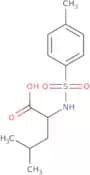
CAS:4-Methyl-2-(4-methylbenzenesulfonamido)pentanoic acid (MBSA) is a synthetic histidine molecule that exhibits specificities for the pancreas. MBSA is converted to chloromethyl ketone when subjected to photooxidation. The mechanism of action of MBSA is postulated to be related to its chemical composition and kinetic properties, which are different from other histidines. Chemical analyses have shown that it has a tryptic pattern and an amino acid composition that is different from other histidines. It has been found that MBSA inactivates spermatozoa in vitro, which may be due to the presence of chloromethylketone on its molecular structure.Fórmula:C13H19NO4SPureza:Min. 95%Peso molecular:285.36 g/mol2-Hydroxy-3-isopropylbenzaldehyde
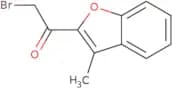
CAS:<p>2-Hydroxy-3-isopropylbenzaldehyde is an aldehyde with the chemical formula C9H10O4. It is synthesized from 2,3-dihydroxybenzaldehyde by cyanosilylation and has an enantiomeric purity of 99%. The conformation of 2-hydroxy-3-isopropylbenzaldehyde can be determined by 2D NMR techniques as well as x-ray diffraction. The x-ray structure indicates that the molecule has a chair conformation, with a dihedral angle of 60°.<br>2-Hydroxy-3-isopropylbenzaldehyde can be used in the synthesis of heteroaromatic compounds, such as indole derivatives, through catalytic hydrogenation. This compound also reacts with sodium nitrite to form salicylaldehydes and alicyclic compounds.</p>Fórmula:C10H12O2Pureza:Min. 95%Peso molecular:164.2 g/mol2-Bromo-1-(3-methyl-1-benzofuran-2-yl)ethan-1-one
CAS:Versatile small molecule scaffoldFórmula:C11H9BrO2Pureza:Min. 95%Peso molecular:253.09 g/molN-[2-(Morpholin-4-yl)ethyl]pyridin-2-amine
CAS:Versatile small molecule scaffoldFórmula:C11H17N3OPureza:Min. 95%Peso molecular:207.27 g/mol2-Hydroxy-4-[(5-methyl-1,2-oxazole-4-carbonyl)amino]benzoic acid
CAS:<p>2-Hydroxy-4-[(5-methyl-1,2-oxazole-4-carbonyl)amino]benzoic acid is an ion channel inhibitor. It is a ligand that binds to the receptor site of voltage gated potassium channels and prevents the flow of ions through the channel. This inhibits the depolarization of nerve cells and reduces pain sensation. 2HMBAA has been used as a research tool for investigating protein interactions and has been shown to be a potent inhibitor of peptide binding to antibody sites on cell membranes.</p>Fórmula:C12H10N2O5Pureza:Min. 95%Peso molecular:262.22 g/mol2-Hydroxy-5-(5-methyl-1,2-oxazole-4-amido)benzoic acid
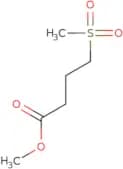
CAS:Versatile small molecule scaffoldFórmula:C12H10N2O5Pureza:Min. 95%Peso molecular:262.22 g/molMethyl 4-methanesulfonylbutanoate
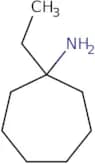
CAS:Versatile small molecule scaffoldFórmula:C6H12O4SPureza:Min. 95%Peso molecular:180.22 g/mol1-Ethylcycloheptan-1-amine
CAS:Versatile small molecule scaffoldFórmula:C9H19NPureza:Min. 95%Peso molecular:141.25 g/mol1H,2H,3H,4H-Imidazo[1,2-a][1,3,5]triazine-2,4-dione
CAS:<p>Versatile small molecule scaffold</p>Fórmula:C5H4N4O2Pureza:Min. 95%Peso molecular:152.11 g/mol5,6,7,8-Tetrahydroindolizine-1-carbonitrile
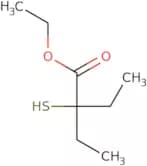
CAS:<p>Versatile small molecule scaffold</p>Fórmula:C9H10N2Pureza:Min. 95%Peso molecular:146.19 g/molEthyl 2-ethyl-2-sulfanylbutanoate
CAS:Versatile small molecule scaffoldFórmula:C8H16O2SPureza:Min. 95%Peso molecular:176.28 g/mol2-(3-Bromophenyl)-1,3-dioxane
CAS:<p>Versatile small molecule scaffold</p>Fórmula:C10H11BrO2Pureza:Min. 95%Peso molecular:243.1 g/mol2-[(Thiophen-2-yl)methoxy]benzoic acid
CAS:<p>Versatile small molecule scaffold</p>Fórmula:C12H10O3SPureza:Min. 95%Peso molecular:234.27 g/molMethyl 2-chloro-2-(4-chlorophenyl)acetate
CAS:Versatile small molecule scaffoldFórmula:C9H8Cl2O2Pureza:Min. 95%Peso molecular:219.06 g/molN,N,2-Trimethylbenzenesulfonamide
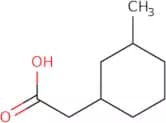
CAS:<p>Versatile small molecule scaffold</p>Fórmula:C9H13NO2SPureza:Min. 95%Peso molecular:199.27 g/mol2-(3-Methylcyclohexyl)acetic acid
CAS:<p>Versatile small molecule scaffold</p>Fórmula:C9H16O2Pureza:Min. 95%Peso molecular:156.22 g/mol1-Benzoylpiperidin-3-ol
CAS:<p>Versatile small molecule scaffold</p>Fórmula:C12H15NO2Pureza:Min. 95%Peso molecular:205.3 g/mol6-Chloro-3-methyl-[1,2,4]triazolo[3,4-a]-phthalazine
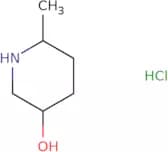
CAS:<p>Versatile small molecule scaffold</p>Fórmula:C10H7ClN4Pureza:Min. 95%Peso molecular:218.65 g/molcis-6-Methylpiperidin-3-ol hydrochloride
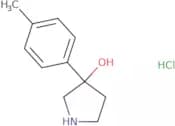
CAS:Versatile small molecule scaffoldFórmula:C6H14ClNOPureza:Min. 95%Peso molecular:151.63 g/mol3-p-Tolyl-pyrrolidin-3-ol hydrochloride
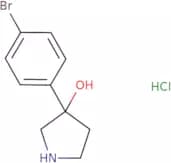
CAS:Versatile small molecule scaffoldFórmula:C11H16ClNOPureza:Min. 95%Peso molecular:213.71 g/mol3-(4-Bromophenyl)pyrrolidin-3-ol hydrochloride
CAS:Versatile small molecule scaffoldFórmula:C10H13BrClNOPureza:Min. 95%Peso molecular:278.57 g/mol3-[(4-Chlorophenyl)methyl]pyrrolidin-3-ol hydrochloride
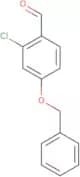
CAS:Versatile small molecule scaffoldFórmula:C11H15Cl2NOPureza:Min. 95%Peso molecular:248.15 g/mol4-(Benzyloxy)-2-chlorobenzaldehyde
CAS:<p>4-(Benzyloxy)-2-chlorobenzaldehyde is an aldehyde that can be used for the synthesis of organic compounds. It is made from 2-chloro-4-hydroxybenzaldehyde, which is synthesized from hydroxybenzaldehyde, oxime, and benzyl alcohol. The product has been shown to react with riboflavin and a second reagent in the presence of palladium to form a chromatographic column. 4-(Benzyloxy)-2-chlorobenzaldehyde reacts with 6-chlorouracil to form an oxirane ring. This reaction can also be used to synthesize tulobuterol, which is a β2-agonist. 4-(Benzyloxy)-2-chlorobenzaldehyde reacts with ribose in the presence of hydroxy to produce glucose and 2-(6'-hydroxypurinomethyl)riboflavin as a byproduct.</p>Fórmula:C14H11ClO2Pureza:Min. 95%Peso molecular:246.69 g/molMethyl 6-carbamoylnicotinate
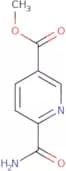
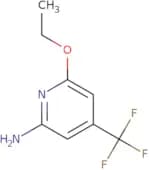
CAS:Versatile small molecule scaffoldFórmula:C8H8N2O3Pureza:Min. 95%Peso molecular:180.16 g/mol6-Ethoxy-4-(trifluoromethyl)pyridin-2-amine
CAS:Versatile small molecule scaffoldFórmula:C8H9F3N2OPureza:Min. 95%Peso molecular:206.16 g/mol7-Amino-1,3-dimethyl-1H,2H,3H,4H,5H,8H-pyrido[2,3-d]pyrimidine-2,4,5-trione
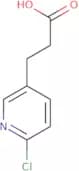
CAS:<p>Versatile small molecule scaffold</p>Fórmula:C9H10N4O3Pureza:Min. 95%Peso molecular:222.2 g/mol3-(6-Chloropyridin-3-yl)propanoic acid
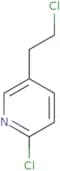
CAS:Versatile small molecule scaffoldFórmula:C8H8ClNO2Pureza:Min. 95%Peso molecular:185.61 g/mol2-Chloro-5-(2-chloroethyl)-pyridine
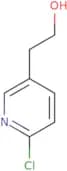
CAS:Versatile small molecule scaffoldFórmula:C7H7Cl2NPureza:Min. 95%Peso molecular:176.04 g/mol2-(6-Chloropyridin-3-yl)ethanol
CAS:<p>Versatile small molecule scaffold</p>Fórmula:C7H8ClNOPureza:Min. 95%Peso molecular:157.6 g/molMethyl furo[3,2-c]pyridine-3-carboxylate
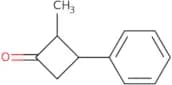
CAS:Versatile small molecule scaffoldFórmula:C9H7NO3Pureza:Min. 95%Peso molecular:177.16 g/mol2-Methyl-3-phenylcyclobutan-1-one
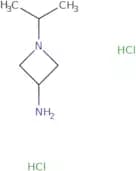
CAS:<p>Versatile small molecule scaffold</p>Fórmula:C11H12OPureza:Min. 95%Peso molecular:160.21 g/mol1-(1-Methylethyl)-3-azetidinamine, hydrochloride (1:2)
CAS:1-(1-Methylethyl)-3-azetidinamine, hydrochloride (1:2) is a synthetic compound that has been shown to be a potent and selective γ-secretase modulator. It is a triol with an alcohol group at C-3 and two hydroxyl groups at C-4 and C-5. This compound has been shown to inhibit the production of cycloartenol from soybean oil in vitro, which may be due to its inhibition of γ-secretase activity. 1-(1-Methylethyl)-3-azetidinamine, hydrochloride (1:2) also has the potential for use as a target compound for research purposes.Fórmula:C6H16Cl2N2Pureza:Min. 95%Peso molecular:187.11 g/mol



![Benzyl N-[3-(2,5-dioxoimidazolidin-4-yl)propyl]carbamate](/_next/image/?url=https%3A%2Fstatic.cymitquimica.com%2Fproducts%2F3D%2Fthumb-webp%2FSCA32077.webp&w=3840&q=75)
![1-{[(Cyclopent-3-en-1-yl)methyl]sulfanyl}ethan-1-one](/_next/image/?url=https%3A%2Fstatic.cymitquimica.com%2Fproducts%2F3D%2Fthumb-webp%2FSCA33831.webp&w=3840&q=75)


![N-[2-(Morpholin-4-yl)ethyl]pyridin-2-amine](/_next/image/?url=https%3A%2Fstatic.cymitquimica.com%2Fproducts%2F3D%2Fthumb-webp%2FSCA38533.webp&w=3840&q=75)
![2-Hydroxy-4-[(5-methyl-1,2-oxazole-4-carbonyl)amino]benzoic acid](/_next/image/?url=https%3A%2Fstatic.cymitquimica.com%2Fproducts%2F3D%2Fthumb-webp%2FSCA38753.webp&w=3840&q=75)

![1H,2H,3H,4H-Imidazo[1,2-a][1,3,5]triazine-2,4-dione](/_next/image/?url=https%3A%2Fstatic.cymitquimica.com%2Fproducts%2F3D%2Fthumb-webp%2FSCA41057.webp&w=3840&q=75)


![2-[(Thiophen-2-yl)methoxy]benzoic acid](/_next/image/?url=https%3A%2Fstatic.cymitquimica.com%2Fproducts%2F3D%2Fthumb-webp%2FSCA44352.webp&w=3840&q=75)



![6-Chloro-3-methyl-[1,2,4]triazolo[3,4-a]-phthalazine](/_next/image/?url=https%3A%2Fstatic.cymitquimica.com%2Fproducts%2F3D%2Fthumb-webp%2FSCA45838.webp&w=3840&q=75)
![3-[(4-Chlorophenyl)methyl]pyrrolidin-3-ol hydrochloride](/_next/image/?url=https%3A%2Fstatic.cymitquimica.com%2Fproducts%2F3D%2Fthumb-webp%2FSCA46633.webp&w=3840&q=75)
![7-Amino-1,3-dimethyl-1H,2H,3H,4H,5H,8H-pyrido[2,3-d]pyrimidine-2,4,5-trione](/_next/image/?url=https%3A%2Fstatic.cymitquimica.com%2Fproducts%2F3D%2Fthumb-webp%2FSEA52595.webp&w=3840&q=75)
![Methyl furo[3,2-c]pyridine-3-carboxylate](/_next/image/?url=https%3A%2Fstatic.cymitquimica.com%2Fproducts%2F3D%2Fthumb-webp%2FSEA53512.webp&w=3840&q=75)