


Building Blocks
Esta seção contém produtos fundamentais para a síntese de compostos orgânicos e biológicos. Building blocks são os materiais de partida essenciais usados para construir moléculas complexas através de várias reações químicas. Eles desempenham um papel crítico na descoberta de medicamentos, ciência dos materiais e pesquisa química. Na CymitQuimica, oferecemos uma ampla gama de building blocks de alta qualidade para apoiar suas pesquisas inovadoras e projetos industriais, garantindo que você tenha os componentes essenciais para uma síntese bem-sucedida.
Subcategorias de "Building Blocks"
- Ácidos Borónicos e Derivados de Ácido Borónico(5.780 produtos)
- Building Blocks Quirais(1.241 produtos)
- Building Blocks Hidrocarbonetos(6.100 produtos)
- Building Blocks orgânicos(61.023 produtos)
Foram encontrados 205289 produtos de "Building Blocks"
Ordenar por
Pureza (%)
0
100
|
0
|
50
|
90
|
95
|
100
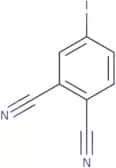
4-Iodophthalonitrile
CAS:4-Iodophthalonitrile is an unsymmetrical molecule with a low detection limit. This compound is soluble in organic solvents and has optical properties that are sensitive to the polarity of the solvent. 4-Iodophthalonitrile can be used as a precursor to other compounds, such as phenylacetic acid derivatives, which have potential applications in cancer treatment.Fórmula:C8H3IN2Pureza:Min. 95%Peso molecular:254.03 g/molEthyl 2-aminofuro[3,2-b]pyridine-3-carboxylate
CAS:Versatile small molecule scaffold
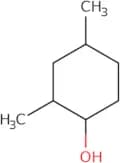
Fórmula:C10H10N2O3Pureza:Min. 95%Peso molecular:206.2 g/mol2,4-Dimethylcyclohexan-1-ol
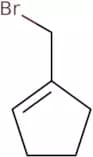
CAS:Versatile small molecule scaffoldFórmula:C8H16OPureza:Min. 95%Peso molecular:128.21 g/mol1-(bromomethyl)cyclopentene
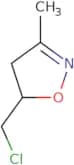
CAS:1-(bromomethyl)cyclopentene is an organocatalyst that can be used in tandem with a metal salt to form a zirconocene. It reacts with alkynes to form conjugated dienes, which are useful for the production of polymers. 1-(bromomethyl)cyclopentene is also commonly used as a monomer in the synthesis of polymers containing nonconjugated vinyl groups.Fórmula:C6H9BrPureza:Min. 95%Peso molecular:161.04 g/mol5-(Chloromethyl)-3-methyl-4,5-dihydro-1,2-oxazole
CAS:Versatile small molecule scaffoldFórmula:C5H8ClNOPureza:Min. 95%Peso molecular:133.57 g/mol2-Oxo-2,3-dihydro-1H-imidazole-4,5-dicarboxylic acid
CAS:Versatile small molecule scaffoldFórmula:C5H4N2O5Pureza:Min. 95%Peso molecular:172.1 g/mol2H,3H,5H-Indeno[1,2-c]pyridazin-3-one
CAS:Versatile small molecule scaffold
Fórmula:C11H8N2OPureza:Min. 95%Peso molecular:184.19 g/mol3-Chloro-5H-indeno[1,2-c]pyridazine
CAS:Versatile small molecule scaffoldFórmula:C11H7ClN2Pureza:Min. 95%Peso molecular:202.64 g/molTricyclo[7.1.1.0,2,7]undeca-2,4,6-trien-8-one
CAS:Versatile small molecule scaffoldFórmula:C11H10OPureza:Min. 95%Peso molecular:158.2 g/mol2-Pentyl-1,3-thiazolidine-4-carboxylic acid
CAS:Versatile small molecule scaffoldFórmula:C9H17NO2SPureza:Min. 95%Peso molecular:203.3 g/mol6-Chloro-N-phenyl-4-pyrimidinamine
CAS:Versatile small molecule scaffold
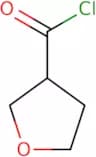
Fórmula:C10H8ClN3Pureza:Min. 95%Peso molecular:205.65 g/molTetrahydrofuran-3-carbonyl chloride
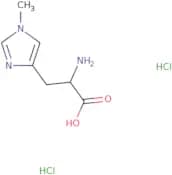
CAS:Tetrahydrofuran-3-carbonyl chloride is a chiral, stereoselective, and sustainable chemical. It is used in the synthesis of various chiral compounds with high stereospecificity. Tetrahydrofuran-3-carbonyl chloride is an imine that reacts with an amine to produce an unsymmetrical ketone. The reaction mechanism involves the formation of a mixed anhydride as the first step by reacting the amine with chlorine or bromine. In this step, the carbonyl group of the reactant becomes attached to one carbon atom of the double bond in the mixed anhydride. This reaction can be used to synthesize staudinger and stereoselectively substituted tetrahydrofurans with high selectivity.Fórmula:C5H7ClO2Pureza:Min. 95%Peso molecular:134.56 g/mol1-Methyl-L-histidine dihydrochloride
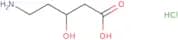
CAS:Versatile small molecule scaffoldFórmula:C7H13Cl2N3O2Pureza:Min. 95%Peso molecular:242.1 g/mol5-Amino-3-hydroxypentanoic acid hydrochloride
CAS:Versatile small molecule scaffoldFórmula:C5H12ClNO3Pureza:Min. 95%Peso molecular:169.61 g/molEthyl 5-{[(tert-butoxy)carbonyl]amino}-3-oxopentanoate
CAS:Versatile small molecule scaffoldFórmula:C12H21NO5Pureza:Min. 95%Peso molecular:259.3 g/mol2-Iodo-1-benzofuran
CAS:2-Iodo-1-benzofuran is a polymerase chain inhibitor that can bind to the d2 dopamine receptor. This drug has been shown to have potential use in the treatment of diseases such as autoimmune diseases, Parkinson’s disease, and cancer. 2-Iodo-1-benzofuran is a potent inhibitor of HIV replication in vitro and has been shown to be active against other retroviruses. 2-Iodo-1-benzofuran also binds with high affinity and specificity to rat striatal D2 dopamine receptors. The binding of this drug to the receptor leads to a decrease in the levels of dopamine in the brain and an increase in blood pressure.Fórmula:C8H5IOPureza:Min. 95%Peso molecular:244.03 g/mol3-Cyclopropylimidazolidine-2,4-dione
CAS:Versatile small molecule scaffoldFórmula:C6H8N2O2Pureza:Min. 95%Peso molecular:140.14 g/molPhenyl morpholine-4-carboxylate
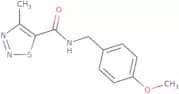
CAS:Versatile small molecule scaffoldFórmula:C11H13NO3Pureza:Min. 95%Peso molecular:207.23 g/molN-(4-Methoxybenzyl)-4-methyl-1,2,3-thiadiazole-5-carboxamide
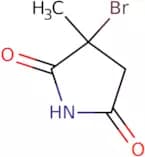
CAS:Versatile small molecule scaffoldFórmula:C12H13N3O2SPureza:Min. 95%Peso molecular:263.32 g/mol3-Bromo-3-methylpyrrolidine-2,5-dione
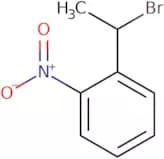
CAS:Versatile small molecule scaffoldFórmula:C5H6BrNO2Pureza:Min. 95%Peso molecular:192.01 g/mol1-(1-Bromoethyl)-2-nitrobenzene
CAS:Versatile small molecule scaffoldFórmula:C8H8BrNO2Pureza:Min. 95%Peso molecular:230.06 g/molPentacyclo[6.3.0.0(2,7).0(4,11).0(5,9)]undecan-3-one
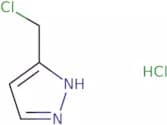
CAS:Pentacyclo[6.3.0.0(2,7).0(4,11).0(5,9)]undecan-3-one is a polycyclic compound that has been postulated to be a thione derived from the desulfurization of pentacyclo[6.3.0.0(2,7).0(4,11).0(5,9)]undecane with dimethoxycarbene and toluene as reagents in the presence of a catalyst (Scheme 1). The stereoselective desulfurization of the lactams leads to the formation of either (1S) or (1R) products depending on the conditions used for the reaction. This reaction is thermally driven and occurs at 130°C under vacuum with a pressure of 10-2 Torr. The desulfurized product can then be converted into various esters by treatment with alcohols in the presence ofFórmula:C11H12OPureza:Min. 95%Peso molecular:160.21 g/mol3-(Chloromethyl)-1H-pyrazole hydrochloride
CAS:Versatile small molecule scaffoldFórmula:C4H6Cl2N2Pureza:Min. 95%Peso molecular:153.01 g/mol3-Methyl-3,6-diazabicyclo[3.2.1]octane
CAS:Versatile small molecule scaffoldFórmula:C7H14N2Pureza:Min. 95%Peso molecular:126.2 g/mol2-Hydroxy-2-methyl-1-[4-(propan-2-yl)phenyl]propan-1-one
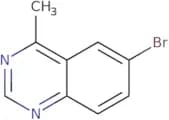
CAS:Versatile small molecule scaffoldFórmula:C13H18O2Pureza:Min. 95%Peso molecular:206.28 g/mol6-Bromo-4-methylquinazoline
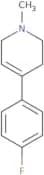
CAS:Versatile small molecule scaffoldFórmula:C9H7BrN2Pureza:Min. 95%Peso molecular:223.07 g/mol4-(4-Fluorophenyl)-1,2,3,6-tetrahydro-1-methylpyridine
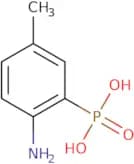
CAS:4-(4-Fluorophenyl)-1,2,3,6-tetrahydro-1-methylpyridine is a chemical substance that can be used in the preparation of samples for analysis. It is sensitive to paroxetine and has analytical properties that are suitable for use as an analytical standard. 4-(4-Fluorophenyl)-1,2,3,6-tetrahydro-1-methylpyridine has been validated using liquid chromatography coupled with tandem mass spectrometry (LC/MS/MS) and has been shown to be minimal and highly repeatable. This reagent can be used in environments where the presence of toxic substances is not desirable.Fórmula:C12H14FNPureza:Min. 95%Peso molecular:191.24 g/mol(2-Amino-5-methylphenyl)phosphonic acid
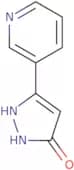
CAS:Versatile small molecule scaffoldFórmula:C7H10NO3PPureza:Min. 95%Peso molecular:187.13 g/mol3-(Pyridin-3-yl)-4,5-dihydro-1H-pyrazol-5-one
CAS:Versatile small molecule scaffoldFórmula:C8H7N3OPureza:Min. 95%Peso molecular:161.16 g/molrac-(2R,4R,6S)-2,4,6-Trimethylpiperidine hydrochloride
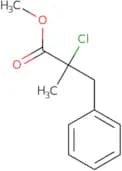
CAS:Versatile small molecule scaffoldFórmula:C8H18ClNPureza:Min. 95%Peso molecular:163.69 g/molMethyl 2-chloro-2-methyl-3-phenylpropanoate
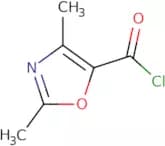
CAS:Versatile small molecule scaffoldFórmula:C11H13ClO2Pureza:Min. 95%Peso molecular:212.67 g/molDimethyl-1,3-oxazole-5-carbonyl chloride
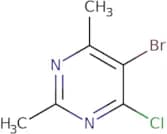
CAS:Versatile small molecule scaffoldFórmula:C6H6ClNO2Pureza:Min. 95%Peso molecular:159.57 g/mol5-bromo-4-chloro-2,6-dimethylpyrimidine
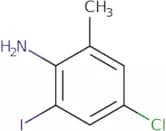
CAS:Versatile small molecule scaffoldFórmula:C6H6BrClN2Pureza:Min. 95%Peso molecular:221.5 g/mol4-Chloro-2-iodo-6-methylaniline
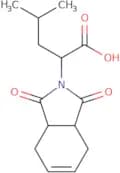
CAS:4-Chloro-2-iodo-6-methylaniline is a chemical intermediate that is used as a catalyst in the synthesis of polyurethane. It can be prepared by transmetalation of chloroacetophenone with PdCl2, followed by reaction with 3 equivalents of iodine. The resulting mixture can then be purified using column chromatography and recrystallized from hexanes. 4-Chloro-2-iodo-6-methylaniline has been shown to yield high yields in this reaction (>90%) and has been used in the synthesis of polyurethane for use in tires, insulation foam, and carpet backing. This compound can also be obtained from anilines through a multigram scale operationally scalable procedure.Fórmula:C7H7ClINPureza:Min. 95%Peso molecular:267.5 g/mol2-(1,3-Dioxo-1,3,3a,4,7,7a-hexahydro-isoindol-2-yl)-4-methyl-pentanoic acid
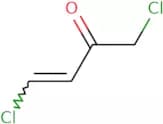
CAS:Versatile small molecule scaffoldFórmula:C14H19NO4Pureza:Min. 95%Peso molecular:265.3 g/mol(3E)-1,4-Dichlorobut-3-en-2-one
CAS:(3E)-1,4-Dichlorobut-3-en-2-one is a reactive compound that reacts with malonic acid to form esters. It can also form adducts with aluminum chloride, which are typically hydrocarbons. It has been shown to undergo cyclisation when treated with styryl chloride and hydrogen chloride, and can be converted into analogues of aromatic hydrocarbons. This compound condenses with chlorides, such as aluminum chloride, to form a stable product. (3E)-1,4-Dichlorobut-3-en-2-one is used in the production of paints and varnishes because it is an effective pigment dispersant.Fórmula:C4H4Cl2OPureza:Min. 95%Peso molecular:138.98 g/mol2-(6-Methoxy-1-benzofuran-3-yl)acetic acid
CAS:2-(6-Methoxy-1-benzofuran-3-yl)acetic acid (MBFAA) is a fluorescent probe that is used to observe the process of DNA transfer. MBFAA has been shown to be a good candidate for use in the study of nucleophilic substitution reactions and other chemical reactions because it has a high degree of stability. It is also useful as a linear regression analysis tool. The spectral properties are characterized by a red shift in the fluorescence emission spectrum and an increase in fluorescence intensity with increasing concentration.Fórmula:C11H10O4Pureza:Min. 95%Peso molecular:206.19 g/molEthyl 3-(2-aminoethyl)benzoate hydrochloride
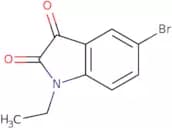
CAS:Versatile small molecule scaffoldFórmula:C11H16ClNO2Pureza:Min. 95%Peso molecular:229.7 g/mol5-Bromo-1-ethyl-2,3-dihydro-1H-indole-2,3-dione
CAS:5-Bromo-1-ethyl-2,3-dihydro-1H-indole-2,3-dione is a heterocyclic organic compound that contains both linear and cyclic structures. It has been used to study the symmetric nature of cyclic voltammetry. 5BED has also been used as an optical probe to study the potentials of carbazoles. 5BED exhibits strong photoluminescence at low temperatures, which can be attributed to its substitutions. The substitutions in 5BED can be determined by electrochemical studies.Fórmula:C10H8BrNO2Pureza:Min. 95%Peso molecular:254.08 g/mol3-{[(2-Chlorophenyl)methyl]amino}propan-1-ol
CAS:Versatile small molecule scaffoldFórmula:C10H14ClNOPureza:Min. 95%Peso molecular:199.68 g/mol7-Chloro-1,2,3,4-tetrahydronaphthalen-1-ol
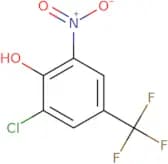
CAS:Versatile small molecule scaffoldFórmula:C10H11ClOPureza:Min. 95%Peso molecular:182.64 g/mol2-Chloro-6-nitro-4-(trifluoromethyl)phenol
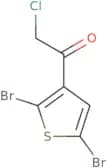
CAS:Versatile small molecule scaffoldFórmula:C7H3ClF3NO3Pureza:Min. 95%Peso molecular:241.55 g/mol2-Chloro-1-(2,5-dibromothiophen-3-yl)ethan-1-one
CAS:Versatile small molecule scaffoldFórmula:C6H3Br2ClOSPureza:Min. 95%Peso molecular:318.41 g/mol2-Methanesulfonyl-1,3-thiazole
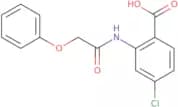
CAS:Versatile small molecule scaffoldFórmula:C4H5NO2S2Pureza:Min. 95%Peso molecular:163.2 g/mol4-Chloro-2-(2-phenoxyacetamido)benzoic acid
CAS:Versatile small molecule scaffoldFórmula:C15H12ClNO4Pureza:Min. 95%Peso molecular:305.71 g/mol2-[2-(4-Chlorophenoxy)acetamido]benzoic acid
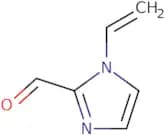
CAS:Versatile small molecule scaffoldFórmula:C15H12ClNO4Pureza:Min. 95%Peso molecular:305.71 g/mol1-Ethenyl-1H-imidazole-2-carboxaldehyde
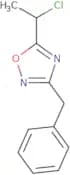
CAS:1-Ethenyl-1H-imidazole-2-carboxaldehyde is a molecule that contains a vinyl group and a hydrogen bond. It has an intramolecular interaction with the carbonyl group and interactions with the formyl group and the pyridine ring. The vinyl group is also able to interact with other vinyl groups in other molecules, creating cycles of these molecules.Fórmula:C6H6N2OPureza:Min. 95%Peso molecular:122.12 g/mol3-Benzyl-5-(1-chloroethyl)-1,2,4-oxadiazole
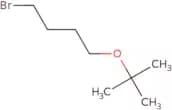
CAS:Versatile small molecule scaffoldFórmula:C11H11ClN2OPureza:Min. 95%Peso molecular:222.67 g/mol1-Bromo-4-(tert-butoxy)butane
CAS:Versatile small molecule scaffoldFórmula:C8H17BrOPureza:Min. 95%Peso molecular:209.12 g/mol[2-(2-Methylphenoxy)ethyl]hydrazine hydrochloride
CAS:Versatile small molecule scaffoldFórmula:C9H15ClN2OPureza:Min. 95%Peso molecular:202.68 g/mol

![Ethyl 2-aminofuro[3,2-b]pyridine-3-carboxylate](/_next/image/?url=https%3A%2Fstatic.cymitquimica.com%2Fproducts%2F3D%2Fthumb-webp%2FUCA53964.webp&w=3840&q=75)

![2H,3H,5H-Indeno[1,2-c]pyridazin-3-one](/_next/image/?url=https%3A%2Fstatic.cymitquimica.com%2Fproducts%2F3D%2Fthumb-webp%2FUCA58116.webp&w=3840&q=75)
![3-Chloro-5H-indeno[1,2-c]pyridazine](/_next/image/?url=https%3A%2Fstatic.cymitquimica.com%2Fproducts%2F3D%2Fthumb-webp%2FUCA58117.webp&w=3840&q=75)
![Tricyclo[7.1.1.0,2,7]undeca-2,4,6-trien-8-one](/_next/image/?url=https%3A%2Fstatic.cymitquimica.com%2Fproducts%2F3D%2Fthumb-webp%2FUCA58447.webp&w=3840&q=75)


![Ethyl 5-{[(tert-butoxy)carbonyl]amino}-3-oxopentanoate](/_next/image/?url=https%3A%2Fstatic.cymitquimica.com%2Fproducts%2F3D%2Fthumb-webp%2FUCA61921.webp&w=3840&q=75)


![Pentacyclo[6.3.0.0(2,7).0(4,11).0(5,9)]undecan-3-one](/_next/image/?url=https%3A%2Fstatic.cymitquimica.com%2Fproducts%2F3D%2Fthumb-webp%2FUCA64919.webp&w=3840&q=75)
![3-Methyl-3,6-diazabicyclo[3.2.1]octane](/_next/image/?url=https%3A%2Fstatic.cymitquimica.com%2Fproducts%2F3D%2Fthumb-webp%2FUCA66709.webp&w=3840&q=75)
![2-Hydroxy-2-methyl-1-[4-(propan-2-yl)phenyl]propan-1-one](/_next/image/?url=https%3A%2Fstatic.cymitquimica.com%2Fproducts%2F3D%2Fthumb-webp%2FUCA67385.webp&w=3840&q=75)



![3-{[(2-Chlorophenyl)methyl]amino}propan-1-ol](/_next/image/?url=https%3A%2Fstatic.cymitquimica.com%2Fproducts%2F3D%2Fthumb-webp%2FUCA73955.webp&w=3840&q=75)


![2-[2-(4-Chlorophenoxy)acetamido]benzoic acid](/_next/image/?url=https%3A%2Fstatic.cymitquimica.com%2Fproducts%2F3D%2Fthumb-webp%2FUCA76409.webp&w=3840&q=75)
![[2-(2-Methylphenoxy)ethyl]hydrazine hydrochloride](/_next/image/?url=https%3A%2Fstatic.cymitquimica.com%2Fproducts%2F3D%2Fthumb-webp%2FUCA78193.webp&w=3840&q=75)