Building Blocks
Subcategorias de "Building Blocks"
- Ácidos Borónicos e Derivados de Ácido Borónico(5.784 produtos)
- Building Blocks Quirais(1.243 produtos)
- Building Blocks Hidrocarbonetos(6.105 produtos)
- Building Blocks orgânicos(61.066 produtos)
Foram encontrados 205426 produtos de "Building Blocks"
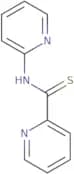
NSC 185058
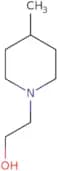
CAS:NSC 185058 is a potential cancer therapy that inhibits protein synthesis in the cell. It prevents cells from growing and dividing by inhibiting their ability to synthesize proteins. NSC 185058 also induces apoptotic cell death, which is programmed cell death that occurs as a result of genetic or environmental stress. When cells undergo apoptosis, they are able to destroy themselves without releasing harmful substances into the surrounding area. NSC 185058 has been shown to induce autophagy and autophagy-related proteins in animal models. Autophagy is a process by which cells break down dysfunctional components to recycle nutrients and energy for future use. NSC 185058 has also been shown to inhibit tumor growth in mice with malignant brain tumors when used in combination with other therapies such as radiation and chemotherapy.Fórmula:C11H9N3SPureza:Min. 95%Peso molecular:215.27 g/mol2-(4-Methylpiperidin-1-yl)ethan-1-ol
CAS:Versatile small molecule scaffoldFórmula:C8H17NOPureza:Min. 95%Peso molecular:143.23 g/mol8-Thia-1,3-diazaspiro[4.5]decane-2,4-dione
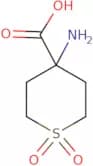
CAS:Versatile small molecule scaffoldFórmula:C7H10N2O2SPureza:Min. 95%Peso molecular:186.23 g/mol4-Aminotetrahydro-2H-thiopyran-4-carboxylic acid 1,1-dioxide
CAS:Versatile small molecule scaffoldFórmula:C6H11NO4SPureza:Min. 95%Peso molecular:193.22 g/mol2-[(1,3-Diethoxy-1,3-dioxopropan-2-yl)amino]benzoic acid
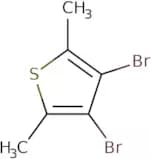
CAS:Versatile small molecule scaffoldFórmula:C14H17NO6Pureza:Min. 95%Peso molecular:295.29 g/mol3,4-dibromo-2,5-dimethylthiophene
CAS:3,4-Dibromo-2,5-dimethylthiophene is a diphosphinoethane that has been used as a catalyst for the thermal and photochemical activation of methyl groups. It has been shown to have a high reactivity with hexane and form fluorescent polymer films. 3,4-Dibromo-2,5-dimethylthiophene is structurally similar to other diphosphinoethanes that are used in phosphine devices and polymer films. The crystal structure of 3,4-dibromo-2,5-dimethylthiophene has been determined using X-ray crystallography. In this study it was found that the molecule can exist in two different structural isomers.
Fórmula:C6H6Br2SPureza:Min. 95%Peso molecular:270 g/mol1-{Thieno[3,2-b]thiophen-2-yl}ethan-1-one
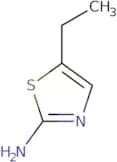
CAS:Versatile small molecule scaffoldFórmula:C8H6OS2Pureza:Min. 95%Peso molecular:182.3 g/mol5-Ethylthiazol-2-amine
CAS:5-Ethylthiazol-2-amine is a chemical that yields, on hydrolysis, a mixture of 5-ethylthiazole and 2-aminoethanol. It can be prepared by the reaction of ethyl mercaptan with carbon tetrachloride in the presence of potassium hydroxide. The spectral data for this compound are given in Table 1. The reaction time for this synthesis is about 25 minutes and it is operational at temperatures from 0 to 100°C. This compound reacts with tetracycline, an antibiotic, to yield a yellow solid. It also reacts with solvents such as acetonitrile and amines to give a white precipitate.
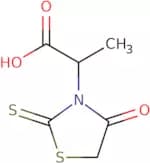
Fórmula:C5H8N2SPureza:Min. 95%Peso molecular:128.2 g/mol3-(1-Carboxyethyl)thiazolidine-4-one-2-thione
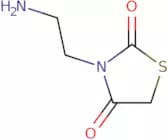
CAS:Versatile small molecule scaffoldFórmula:C6H7NO3S2Pureza:Min. 95%Peso molecular:205.26 g/mol3-(2-Aminoethyl)-1,3-thiazolidine-2,4-dione
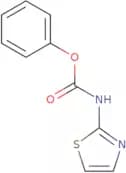
CAS:Versatile small molecule scaffoldFórmula:C5H8N2O2SPureza:Min. 95%Peso molecular:160.2 g/molPhenyl N-(1,3-thiazol-2-yl)carbamate
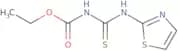
CAS:Phenyl N-(1,3-thiazol-2-yl)carbamate is a crystal structure stabilizer. It is an oriented, two-dimensional molecule that contains two phenyl rings (-C6H5) connected to each other by a single bond and one thiazole ring (-N=C=S). The orientation of the molecule in space is stabilized by a dihedral angle of 60° between the two phenyl rings. This orientation causes the phenyl rings to point in opposite directions and prevents them from rotating around their axis.Fórmula:C10H8N2O2SPureza:Min. 95%Peso molecular:220.25 g/molEthyl (1,3-thiazol-2-ylcarbamothioyl)carbamate
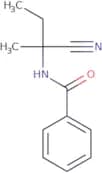
CAS:Versatile small molecule scaffoldFórmula:C7H9N3O2S2Pureza:Min. 95%Peso molecular:231.3 g/molN-(1-Cyano-1-methylpropyl)benzamide
CAS:Versatile small molecule scaffold
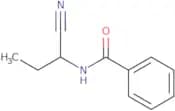
Fórmula:C12H14N2OPureza:Min. 95%Peso molecular:202.25 g/molN-(1-Cyanopropyl)benzamide
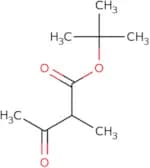
CAS:Versatile small molecule scaffoldFórmula:C11H12N2OPureza:Min. 95%Peso molecular:188.23 g/moltert-Butyl 2-methyl-3-oxobutanoate
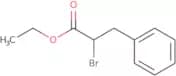
CAS:tert-Butyl 2-methyl-3-oxobutanoate is a metabolite of tert-butyl acetate, which is an organic compound that has been used for the production of synthetic rubber and other chemicals. The biosynthesis of tert-butyl 2-methyl-3-oxobutanoate is dependent on the availability of a ketoaldehyde precursor. When tert-butyl acetate is incubated with aspergillus niger, the desired product can be obtained in high yield. Tertiary butyl 2 methyl 3 oxobutanoate can also be synthesized by deuteration of tertiary butyl alcohol with deuterium gas. The product can then be purified using gas chromatography/mass spectroscopy (GC/MS) and identified using nuclear magnetic resonance (NMR) analysis.Fórmula:C9H16O3Pureza:Min. 95%Peso molecular:172.22 g/molEthyl ±-Bromo-²-phenylpropionate
CAS:Ethyl ±-Bromo-²-phenylpropionate is a thiomorpholine that is used in organic reactions. It has been found to be an effective catalyst for the epoxidation of alkenes, as well as for the acylation of alcohols and amines.Fórmula:C11H13BrO2Pureza:Min. 95%Peso molecular:257.12 g/mol2-(1-Oxo-1H-isochromen-3-yl)acetic acid
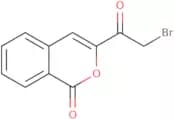
CAS:Versatile small molecule scaffoldFórmula:C11H8O4Pureza:Min. 95%Peso molecular:204.18 g/mol3-(2-Bromoacetyl)-1H-isochromen-1-one
CAS:3-(2-Bromoacetyl)-1H-isochromen-1-one is a heterocyclic compound that can be prepared using the following preparative method.Fórmula:C11H7BrO3Pureza:Min. 95%Peso molecular:267.07 g/mol9-Chloro-2-methyl-2-azatricyclo[6.3.1.0,4,12]dodeca-1(11),4(12),5,7,9-pentaen-3-one
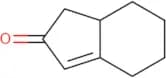
CAS:Versatile small molecule scaffoldFórmula:C12H8ClNOPureza:Min. 95%Peso molecular:217.65 g/mol1,4,5,6,7,7a-Hexahydro-inden-2-one
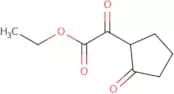
CAS:1,4,5,6,7,7a-Hexahydro-inden-2-one is a cycloaddition product of two 1,4-dihydrobenzenes. It has been shown to undergo the pauson-khand reaction with diazomethane to produce a cyclopropane ring.Fórmula:C9H12OPureza:Min. 95%Peso molecular:136.19 g/molEthyl 2-oxo-2-(2-oxocyclopentyl)acetate
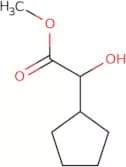
CAS:Versatile small molecule scaffoldFórmula:C9H12O4Pureza:Min. 95%Peso molecular:184.19 g/molMethyl 2-cyclopentyl-2-hydroxyacetate
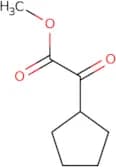
CAS:Versatile small molecule scaffoldFórmula:C8H14O3Pureza:Min. 95%Peso molecular:158.19 g/molMethyl 2-cyclopentyl-2-oxoacetate
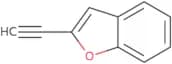
CAS:Versatile small molecule scaffoldFórmula:C8H12O3Pureza:Min. 95%Peso molecular:156.18 g/mol2-Ethynyl-1-benzofuran
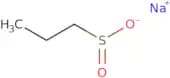
CAS:2-Ethynyl-1-benzofuran is a ligand in organic chemistry that can react with an oxidant to form terminal alkynes. It has been shown to undergo hydrofunctionalization and stereocontrol, which are two of the most commonly studied reactions in organic chemistry. This compound is also used as a precursor for benzofurans, which are important organic compounds that have been studied extensively due to their structural diversity. 2-Ethynyl-1-benzofuran is synthesized from azides and aldehydes or triazoles, which can be obtained through advances in organic chemistry.Fórmula:C10H6OPureza:Min. 95%Peso molecular:142.15 g/molSodium propane-1-sulfinate
CAS:Sodium propane-1-sulfinate is a carbonyl group that introduces an amyloid protein with a methyl ketone and hydroxyl group. The presence of the methyl ketone isomers can be explained by the cyclic structure, which consists of six carbons. This functional group has been shown to inhibit the activity of crth2, which is part of a heterocycle. Sodium propane-1-sulfinate also inhibits retinoic acid c1-6 alkylase, which is a functional group found in the human body. The introduction of this functional group may have an inhibitory effect on metabolism.Fórmula:C3H7NaO2SPureza:Min. 95%Peso molecular:130.14 g/molSodium 2-methylpropane-1-sulfinate
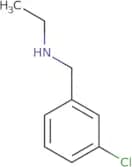
CAS:Versatile small molecule scaffoldFórmula:C4H9NaO2SPureza:Min. 95%Peso molecular:144.17 g/mol(3-Chloro-benzyl)-ethyl-amine
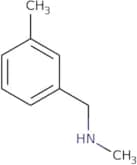
CAS:Versatile small molecule scaffoldFórmula:C9H12ClNPureza:Min. 95%Peso molecular:169.65 g/mol3-Methyl-N-methylbenzylamine
CAS:3-Methyl-N-methylbenzylamine is a nitro compound that has been shown to have antimycobacterial activity. It belongs to the class of aliphatic hydrocarbons, which are functional groups consisting of a chain of carbon atoms with hydrogen atoms attached to some of the carbons. The molecular modeling found that 3-methyl-N-methylbenzylamine binds to the active site of mycobacterial enoyl reductase and inhibits its activity. This leads to a decrease in cellular energy metabolism, which can lead to cell death. 3-Methyl-N-methylbenzylamine also has an amine group, which is an organic acid that contains nitrogen and hydrogen. These molecules are important for piperazine synthesis and may be responsible for the antimycobacterial properties of 3-methyl-N-methylbenzylamine.Fórmula:C9H13NPureza:Min. 95%Peso molecular:135.21 g/mol5-[(3-Chlorophenyl)methyl]-1,3,4-thiadiazol-2-amine
CAS:Versatile small molecule scaffoldFórmula:C9H8ClN3SPureza:Min. 95%Peso molecular:225.7 g/mol5-(2-Fluorobenzyl)[1,3,4]thiadiazol-2-ylamine
CAS:Versatile small molecule scaffoldFórmula:C9H8FN3SPureza:Min. 95%Peso molecular:209.25 g/mol5-[(3-Fluorophenyl)methyl]-1,3,4-thiadiazol-2-amine
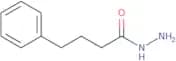
CAS:Versatile small molecule scaffoldFórmula:C9H8FN3SPureza:Min. 95%Peso molecular:209.25 g/mol4-Phenylbutanehydrazide
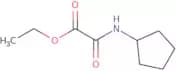
CAS:4-Phenylbutanehydrazide is a nitro, carbonyl group and hydrogen bond donor. It has an interaction with the benzyl group of 4-phenylbutanoylhydrazide through hydrogen bonds. The conformation of 4-phenylbutanehydrazide is agonistic and its secondary structure is mainly determined by the carbonyl group. The carbonyl group interacts with the hydrazide nucleus through a hydrogen bond, while its acylhomoserine residue interacts with the carbonyl group through a thiocarbamate interaction. This compound may be classified as an agonist or antagonist depending on the receptor it binds to.Fórmula:C10H14N2OPureza:Min. 95%Peso molecular:178.23 g/molethyl (cyclopentylcarbamoyl)formate
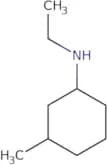
CAS:Versatile small molecule scaffoldFórmula:C9H15NO3Pureza:Min. 95%Peso molecular:185.22 g/molN-Ethyl-3-methylcyclohexan-1-amines
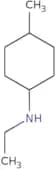
CAS:Versatile small molecule scaffoldFórmula:C9H19NPureza:Min. 95%Peso molecular:141.3 g/molN-Ethyl-4-methylcyclohexan-1-amines
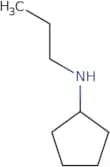
CAS:Versatile small molecule scaffoldFórmula:C9H19NPureza:Min. 95%Peso molecular:141.3 g/molN-Cyclopentyl-N-propylamine
CAS:N-Cyclopentyl-N-propylamine is a functional compound that belongs to the class of organic compounds. It is used as an intermediate in the synthesis of other drugs and pharmaceuticals. This compound has been shown to have a high reactivity, which makes it useful in polymerization and polymerization initiator applications. N-Cyclopentyl-N-propylamine has been shown to be reactive with polarizers, alkylthio groups, and trifluoromethyl groups.Fórmula:C8H17NPureza:Min. 95%Peso molecular:127.23 g/molN-(4-Methylbenzyl)propan-1-amine
CAS:Versatile small molecule scaffold
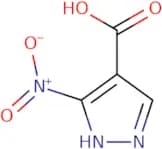
Fórmula:C11H17NPureza:Min. 95%Peso molecular:163.26 g/mol3-Nitro-1H-pyrazole-4-carboxylic acid
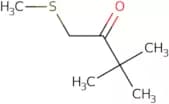
CAS:Versatile small molecule scaffoldFórmula:C4H3N3O4Pureza:Min. 95%Peso molecular:157.09 g/mol3,3-Dimethyl-1-(methylsulfanyl)butan-2-one
CAS:3,3-Dimethyl-1-(methylsulfanyl)butan-2-one is an enolate that is used as a pesticide. It is typically applied to the soil or sprayed on plants. It can be modified to increase its insecticidal activity by adding other chemicals such as carbaryl, acetonitrile, or hydroxymethylphenyl. 3,3-Dimethyl-1-(methylsulfanyl)butan-2-one is metabolized by hydrolysis and methylcarbamates are formed. The sulfide group in the molecule reacts with oxygen to form sulfoxides and carbofuran, which are toxic to mammals and birds.
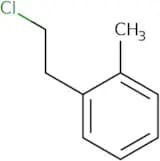
Fórmula:C7H14OSPureza:Min. 95%Peso molecular:146.25 g/mol1-(2-Chloroethyl)-2-methylbenzene
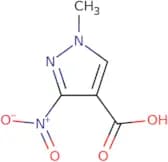
CAS:Versatile small molecule scaffoldFórmula:C9H11ClPureza:Min. 95%Peso molecular:154.63 g/mol1-Methyl-3-nitro-1H-pyrazole-4-carboxylic acid
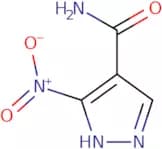
CAS:Versatile small molecule scaffoldFórmula:C5H5N3O4Pureza:Min. 95%Peso molecular:171.11 g/mol3-Nitro-1H-pyrazole-4-carboxamide
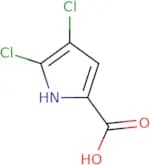
CAS:Versatile small molecule scaffoldFórmula:C4H4N4O3Pureza:Min. 95%Peso molecular:156.1 g/mol4,5-dichloro-1H-pyrrole-2-carboxylic acid
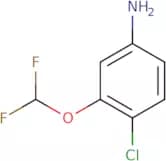
CAS:Versatile small molecule scaffoldFórmula:C5H3Cl2NO2Pureza:Min. 95%Peso molecular:179.98 g/mol4-Chloro-3-(difluoromethoxy)aniline
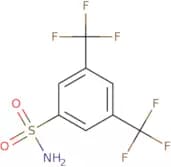
CAS:Versatile small molecule scaffoldFórmula:C7H6ClF2NOPureza:Min. 95%Peso molecular:193.58 g/mol3,5-Bis(trifluoromethyl)benzenesulfonamide
CAS:Versatile small molecule scaffoldFórmula:C8H5F6NO2SPureza:Min. 95%Peso molecular:293.19 g/mol1-Propyl-1,2,3,4-tetrahydroisoquinoline
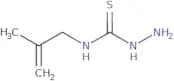
CAS:Versatile small molecule scaffoldFórmula:C12H17NPureza:Min. 95%Peso molecular:175.27 g/mol3-Amino-1-(2-methylprop-2-en-1-yl)thiourea
CAS:Versatile small molecule scaffoldFórmula:C5H11N3SPureza:Min. 95%Peso molecular:145.23 g/mol2-[(3-Methoxypropyl)amino]ethan-1-ol
CAS:Versatile small molecule scaffoldFórmula:C6H15NO2Pureza:Min. 95%Peso molecular:133.19 g/mol4-Ethylamino-1-butanol
CAS:4-Ethylamino-1-butanol is an alkanolamine that interacts with receptors in the body. It has a hydroxyl group and is a molecule that contains functionalities. It interacts with other molecules, such as corticotropin-releasing hormone (CRH). 4-Ethylamino-1-butanol binds to CRH and prevents it from binding to its receptor, which decreases the release of corticotropin. This compound has been used as a positron emission tomography (PET) radiotracer for imaging the insulin receptor in living tissue. The chemical can be systematically introduced into tissues and organs, including the brain, where it accumulates due to its hydrophilic nature. 4-Ethylamino-1-butanol also has oxygenated groups that are suitable for PET imaging using 18F radiolabeling.
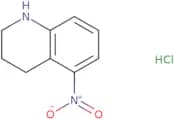
Fórmula:C6H15NOPureza:Min. 95%Peso molecular:117.19 g/mol5-Nitro-1,2,3,4-tetrahydroquinoline
CAS:5-Nitro-1,2,3,4-tetrahydroquinoline is an amine that is used in the synthesis of other chemicals. It is selective for transfer reactions because it can transfer to sulfate. The reaction selectivity is determined by the module and the reaction solution. The efficiency of the carbenium ion can be increased by adjusting the pH to make it more acidic. 5-Nitro-1,2,3,4-tetrahydroquinoline has a high yield and can be synthesized with a high degree of purity by using ammonium sulfate as a transfer agent in a neutral solution.Fórmula:C9H10N2O2Pureza:Min. 95%Peso molecular:178.19 g/mol

![8-Thia-1,3-diazaspiro[4.5]decane-2,4-dione](/_next/image/?url=https%3A%2Fstatic.cymitquimica.com%2Fproducts%2F3D%2Fthumb-webp%2FPBA12415.webp&w=3840&q=75)
![2-[(1,3-Diethoxy-1,3-dioxopropan-2-yl)amino]benzoic acid](/_next/image/?url=https%3A%2Fstatic.cymitquimica.com%2Fproducts%2F3D%2Fthumb-webp%2FPBA12620.webp&w=3840&q=75)
![1-{Thieno[3,2-b]thiophen-2-yl}ethan-1-one](/_next/image/?url=https%3A%2Fstatic.cymitquimica.com%2Fproducts%2F3D%2Fthumb-webp%2FPBA13169.webp&w=3840&q=75)
![9-Chloro-2-methyl-2-azatricyclo[6.3.1.0,4,12]dodeca-1(11),4(12),5,7,9-pentaen-3-one](/_next/image/?url=https%3A%2Fstatic.cymitquimica.com%2Fproducts%2F3D%2Fthumb-webp%2FPBA15836.webp&w=3840&q=75)

![5-[(3-Chlorophenyl)methyl]-1,3,4-thiadiazol-2-amine](/_next/image/?url=https%3A%2Fstatic.cymitquimica.com%2Fproducts%2F3D%2Fthumb-webp%2FPBA18149.webp&w=3840&q=75)
![5-(2-Fluorobenzyl)[1,3,4]thiadiazol-2-ylamine](/_next/image/?url=https%3A%2Fstatic.cymitquimica.com%2Fproducts%2F3D%2Fthumb-webp%2FPBA18153.webp&w=3840&q=75)
![5-[(3-Fluorophenyl)methyl]-1,3,4-thiadiazol-2-amine](/_next/image/?url=https%3A%2Fstatic.cymitquimica.com%2Fproducts%2F3D%2Fthumb-webp%2FPBA18154.webp&w=3840&q=75)


![2-[(3-Methoxypropyl)amino]ethan-1-ol](/_next/image/?url=https%3A%2Fstatic.cymitquimica.com%2Fproducts%2F3D%2Fthumb-webp%2FPBA21684.webp&w=3840&q=75)