Building Blocks
Subcategorias de "Building Blocks"
- Ácidos Borónicos e Derivados de Ácido Borónico(5.784 produtos)
- Building Blocks Quirais(1.243 produtos)
- Building Blocks Hidrocarbonetos(6.105 produtos)
- Building Blocks orgânicos(61.066 produtos)
Foram encontrados 205426 produtos de "Building Blocks"
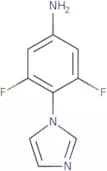
3,5-Difluoro-4-(1H-imidazol-1-yl)aniline
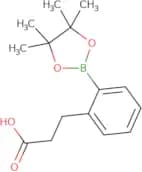
CAS:Versatile small molecule scaffoldFórmula:C9H7F2N3Pureza:Min. 95%Peso molecular:195.17 g/mol2-(2-Carboxyethyl)phenylboronic acid pinacol ester
CAS:Versatile small molecule scaffold
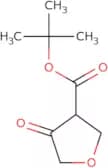
Fórmula:C15H21BO4Pureza:Min. 95%Peso molecular:276.14 g/mol4-Oxo-Tetrahydro-Furan-3-Carboxylic Acid Tert-Butyl Ester
CAS:4-Oxo-Tetrahydro-Furan-3-Carboxylic Acid Tert-Butyl Ester is a chiral compound that can be used in the synthesis of carboxylic acids. It has been shown to be an efficient, high yielding, and enantioselective method for the synthesis of carboxylic acids. This method is also applicable for the synthesis of conjugated carboxylic esters and amides.Fórmula:C9H14O4Pureza:Min. 95%Peso molecular:186.21 g/mol(2S)-2-[(3,4-Dimethoxyphenyl)methyl]pyrrolidine
CAS:Produto ControladoVersatile small molecule scaffold
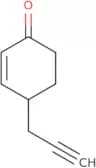
Fórmula:C13H19NO2Pureza:Min. 95%Peso molecular:221.29 g/mol4-(Prop-2-yn-1-yl)cyclohex-2-en-1-one
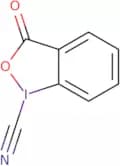
CAS:Versatile small molecule scaffoldFórmula:C9H10OPureza:Min. 95%Peso molecular:134.2 g/mol1,2-Benziodoxole-1(3H)-carbonitrile, 3-oxo-
CAS:1,2-Benziodoxole-1(3H)-carbonitrile, 3-oxo- is a chemical compound that can be used as a solvent and as a reagent in organic synthesis. It is soluble in nonpolar solvents such as benzene or toluene. It can also be used for the preparation of p-toluenesulfonic acid by reacting with boron trifluoride etherate and nitrous acid. 1,2-Benziodoxole-1(3H)-carbonitrile, 3-oxo-, is an impurity in the synthesis of 1,4-benzodioxanone and 4,4'-diphenyl ether. This compound may also be used to synthesize dinitrobenzene by reacting with ammonia under acidic conditions.Fórmula:C8H4INO2Pureza:Min. 95%Peso molecular:273.03 g/mol4-[3-(Trifluoromethyl)phenyl]-1,3-thiazol-2-amine
CAS:Versatile small molecule scaffold
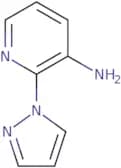
Fórmula:C10H7F3N2SPureza:Min. 95%Peso molecular:244.24 g/mol-2(1H-Pyrazol-1-Yl)Pyridin-3-Amine
CAS:Versatile small molecule scaffold
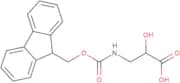
Fórmula:C8H8N4Pureza:Min. 95%Peso molecular:160.18 g/molFmoc-(S)-3-amino-2-hydroxypropionic acid
CAS:Versatile small molecule scaffoldFórmula:C18H17NO5Pureza:Min. 95%Peso molecular:327.3 g/molMethyl 2-phenylthiazole-5-carboxylate
CAS:Versatile small molecule scaffold
Fórmula:C11H9NO2SPureza:Min. 95%Peso molecular:219.26 g/mol(6-Bromo-3H-imidazo[4,5-b]pyridin-2-yl)methanol
CAS:Versatile small molecule scaffold
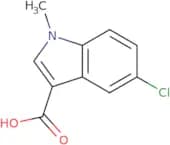
Fórmula:C7H6BrN3OPureza:Min. 95%Peso molecular:228.05 g/mol5-Chloro-1-methyl-1H-indole-3-carboxylic acid
CAS:Produto ControladoVersatile small molecule scaffoldFórmula:C10H8ClNO2Pureza:Min. 95%Peso molecular:209.63 g/molRef: 3D-XGA59662
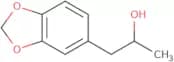
Produto descontinuado(2S)-1-(1,3-Dioxaindan-5-yl)propan-2-ol
CAS:Produto ControladoVersatile small molecule scaffold
Fórmula:C10H12O3Pureza:Min. 95%Peso molecular:180.2 g/molRef: 3D-XGA54226
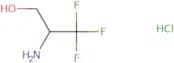
Produto descontinuado(2R)-2-Amino-3,3,3-trifluoropropan-1-ol hydrochloride
CAS:Versatile small molecule scaffoldFórmula:C3H7ClF3NOPureza:Min. 95%Peso molecular:165.54 g/mol4-Azidobutyl acetate
CAS:4-Azidobutyl acetate is a synthetically prepared compound that inhibits bacterial growth. It is a propargyl derivative of epichlorohydrin, which has been deprotected by treatment with hydrochloric acid. 4-Azidobutyl acetate has antibacterial activity against Gram-positive bacteria and is active against both methicillin resistant and sensitive strains of staphylococci. 4-Azidobutyl acetate also inhibits the growth of Mycobacterium tuberculosis and Mycobacterium avium complex. Its mechanism of action may be due to its ability to inhibit protein synthesis by inhibiting RNA synthesis through the inhibition of DNA gyrase and topoisomerase IV, which are enzymes that maintain the integrity of bacterial DNA.
Fórmula:C6H11N3O2Pureza:Min. 95%Peso molecular:157.17 g/mol5,6-Difluoro-1H-benzo[D][1,3]oxazine-2,4-dione
CAS:Versatile small molecule scaffold
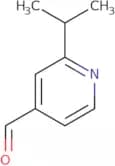
Fórmula:C8H3F2NO3Pureza:Min. 95%Peso molecular:199.11 g/mol2-(Propan-2-yl)pyridine-4-carbaldehyde
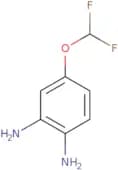
CAS:Versatile small molecule scaffoldFórmula:C9H11NOPureza:Min. 95%Peso molecular:149.19 g/mol4-(Difluoromethoxy)benzene-1,2-diamine
CAS:Versatile small molecule scaffold
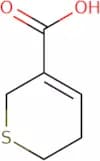
Fórmula:C7H8F2N2OPureza:Min. 95%Peso molecular:174.15 g/mol5,6-Dihydro-2H-thiopyran-3-carboxylic acid
CAS:Versatile small molecule scaffold
Fórmula:C6H8O2SPureza:Min. 95%Peso molecular:144.19 g/mol4-[(3-Methylphenyl)methoxy]benzonitrile
CAS:Versatile small molecule scaffold
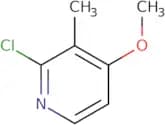
Fórmula:C15H13NOPureza:Min. 95%Peso molecular:223.27 g/mol2-Chloro-4-methoxy-3-methylpyridine
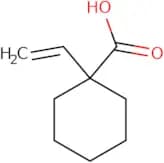
CAS:Versatile small molecule scaffoldFórmula:C7H8ClNOPureza:Min. 95%Peso molecular:157.6 g/mol1-Ethenylcyclohexane-1-carboxylic acid
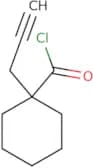
CAS:Versatile small molecule scaffoldFórmula:C9H14O2Pureza:Min. 95%Peso molecular:154.2 g/mol1-(Prop-2-yn-1-yl)cyclohexane-1-carbonyl chloride
CAS:Versatile small molecule scaffold
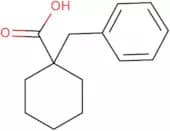
Fórmula:C10H13ClOPureza:Min. 95%Peso molecular:184.66 g/mol1-Benzyl-1-cyclohexanecarboxylic acid
CAS:Versatile small molecule scaffold
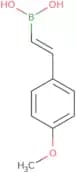
Fórmula:C14H18O2Pureza:Min. 95%Peso molecular:218.29 g/moltrans-2-(4-Methoxyphenyl)vinylboronic acid
CAS:Versatile small molecule scaffold
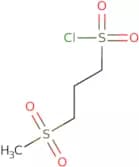
Fórmula:C9H11BO3Pureza:Min. 95%Peso molecular:177.99 g/mol3-Methanesulfonylpropane-1-sulfonyl chloride
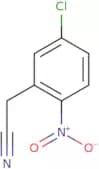
CAS:Versatile small molecule scaffoldFórmula:C4H9ClO4S2Pureza:Min. 95%Peso molecular:220.7 g/mol2-(5-Chloro-2-nitrophenyl)acetonitrile
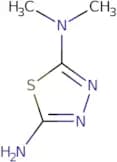
CAS:2-(5-Chloro-2-nitrophenyl)acetonitrile is a n-oxide and carbanion that has been used as a model for the study of acrylonitrile. 2-(5-Chloro-2-nitrophenyl)acetonitrile can be synthesized by nitrating aniline with nitric acid, followed by oxidation with potassium permanganate. The resulting product is then reacted with acrylonitrile in the presence of an acid to form 2-(5-chloro-2-nitrophenyl)acrylonitrile. This compound is unstable and decomposes when it is heated to 150 degrees Celsius.Fórmula:C8H5ClN2O2Pureza:Min. 95%Peso molecular:196.59 g/molN2,N2-Dimethyl-1,3,4-thiadiazole-2,5-diamine
CAS:Versatile small molecule scaffold
Fórmula:C4H8N4SPureza:Min. 95%Peso molecular:144.2 g/molN-[(4-Chlorophenyl)methyl]-4,5-dihydro-1,3-thiazol-2-amine
CAS:Versatile small molecule scaffold
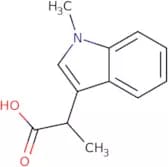
Fórmula:C10H11ClN2SPureza:Min. 95%Peso molecular:226.73 g/mol2-(1-Methyl-1H-indol-3-yl)propanoic acid
CAS:Versatile small molecule scaffold
Fórmula:C12H13NO2Pureza:Min. 95%Peso molecular:203.24 g/mol[(Propan-2-yl)sulfamoyl]amine
CAS:[(Propan-2-yl)sulfamoyl]amine is a diphenyl ether, which is a type of aromatic hydrocarbon. It has a nitro group, phenyl groups and alkyl groups. This product also has a cycloalkyl ring with benzyl groups and hydrocarbon group. This compound is used as polymerization initiator in the production of polyacrylamide and other polymers. The [(propane-2-yl)sulfamoyl]amine can react with trifluoroacetic acid to form c1-4 alkyl sulfonic acid compounds. It can also react with urea derivatives to form bifunctional compounds that are used as plasticizers in plastics.
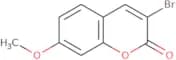
Fórmula:C3H10N2O2SPureza:Min. 95%Peso molecular:138.19 g/mol3-Bromo-7-methoxy-2H-1-benzopyran-2-one
CAS:3-Bromo-7-methoxy-2H-1-benzopyran-2-one is a coumarin derivative that has been shown to cause liver lesions in rats. The compound can also inhibit locomotor activity, as well as have a significant effect on the levels of serum prolactin. 3-Bromo-7-methoxy-2H-1-benzopyran-2-one is a ligand for the 5HT2 receptor, and it has been suggested that this may be due to its coordination geometry. In addition, 3BMOP binds to DNA with high affinity and specificity, which suggests that it could be used as an antitumor agent.
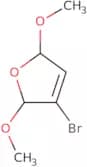
Fórmula:C10H7BrO3Pureza:Min. 95%Peso molecular:255.06 g/mol3-Bromo-2,5-dimethoxy-2,5-dihydrofuran
CAS:Versatile small molecule scaffold
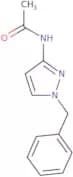
Fórmula:C6H9BrO3Pureza:Min. 95%Peso molecular:209.04 g/molN-(1-Benzyl-1H-pyrazol-3-yl)acetamide
CAS:Versatile small molecule scaffold
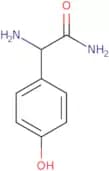
Fórmula:C12H13N3OPureza:Min. 95%Peso molecular:215.25 g/mol2-Amino-2-(4-hydroxyphenyl)acetamide hydrochloride
CAS:2-Amino-2-(4-hydroxy-phenyl)-acetamide is a research chemical that belongs to the amide family. It is commonly used in scientific studies and experiments. This compound, also known as glycinamide, has various applications in the field of chemistry and biology. Its unique structure makes it a valuable tool for researchers looking to explore new areas of study or develop innovative solutions. With its high purity and reliable quality, 2-Amino-2-(4-hydroxy-phenyl)-acetamide is an essential component for any laboratory or research facility.
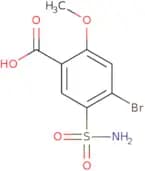
Fórmula:C8H10N2O2HClPureza:Min. 95%Peso molecular:202.64 g/mol4-Bromo-2-methoxy-5-sulfamoylbenzoic acid
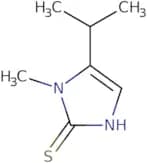
CAS:Versatile small molecule scaffoldFórmula:C8H8BrNO5SPureza:Min. 95%Peso molecular:310.12 g/mol1-Methyl-5-(propan-2-yl)-1H-imidazole-2-thiol
CAS:Versatile small molecule scaffold
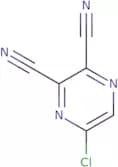
Fórmula:C7H12N2SPureza:Min. 95%Peso molecular:156.25 g/mol5-Chloropyrazine-2,3-dicarbonitrile
CAS:5-Chloropyrazine-2,3-dicarbonitrile (5CPD) is an organochlorine compound that is used as a chlorinating agent in the production of alkyl and aralkyl chlorides. 5CPD is a monofunctional reagent that can also be used for the synthesis of furyl and thionyl chloride.
Fórmula:C6HClN4Pureza:Min. 95%Peso molecular:164.55 g/mol7-oxa-2-azaspiro[4.5]decane
CAS:Versatile small molecule scaffold
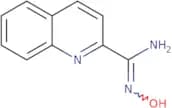
Fórmula:C8H15NOPureza:Min. 95%Peso molecular:141.2 g/molN'-Hydroxyquinoline-2-carboximidamide
CAS:N'-hydroxyquinoline-2-carboximidamide is a small molecule that was optimized for the treatment of cancer. It can bind to the DNA-dependent RNA polymerase, inhibiting transcription and replication. N'-hydroxyquinoline-2-carboximidamide selectively inhibits a hallmark signaling pathway in cancer cells, which leads to cell death. This compound has been shown to be effective in inhibiting the growth of tumor cells in various tissues including liver, lung, brain, and prostate. It also produces minimal side effects as it does not cross the blood brain barrier or enter the central nervous system.
Fórmula:C10H9N3OPureza:Min. 95%Peso molecular:187.2 g/mol3-(2-Aminoethyl)-1,1-dimethylurea
CAS:Versatile small molecule scaffold
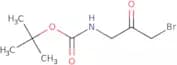
Fórmula:C5H13N3OPureza:Min. 95%Peso molecular:131.18 g/moltert-Butyl N-(3-bromo-2-oxopropyl)carbamate
CAS:Versatile small molecule scaffold
Fórmula:C8H14BrNO3Pureza:Min. 95%Peso molecular:252.11 g/molRef: 3D-XCA07203
Produto descontinuado1-(4-Bromophenyl)-2-(pyridin-2-yl)ethan-1-one
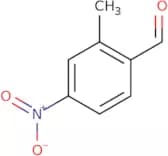
CAS:Versatile small molecule scaffoldFórmula:C13H10BrNOPureza:Min. 95%Peso molecular:276.13 g/mol2-Methyl-4-nitrobenzaldehyde
CAS:2-Methyl-4-nitrobenzaldehyde is an oxidizing agent that can be used as a phase transfer catalyst. It selectively transfers radicals from organic to inorganic systems and is used as a selective radical initiator or a transfer catalyst in high yield. 2-Methyl-4-nitrobenzaldehyde reacts with the chloride ion to produce an active radical, which will then react with the substrate to form products. It is typically used at refluxing temperatures and in the presence of a cocl2 phase transfer catalyst. 2-Methyl-4-nitrobenzoic acid is formed when 2-methyl-4-nitrobenzaldehyde is oxidized.
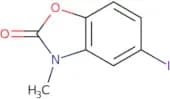
Fórmula:C8H7NO3Pureza:Min. 95%Peso molecular:165.1 g/mol5-Iodo-3-methyl-2,3-dihydro-1,3-benzoxazol-2-one
CAS:Versatile small molecule scaffold
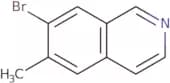
Fórmula:C8H6INO2Pureza:Min. 95%Peso molecular:275.04 g/mol7-Bromo-6-methylisoquinoline
CAS:Versatile small molecule scaffold
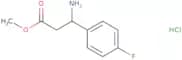
Fórmula:C10H8BrNPureza:Min. 95%Peso molecular:222.08 g/molMethyl (S)-3-amino-3-(4-fluorophenyl)propanoate hydrochloride
CAS:Versatile small molecule scaffoldFórmula:C10H13ClFNO2Pureza:Min. 95%Peso molecular:233.67 g/mol5-Amino-2-(propan-2-yloxy)benzamide
CAS:Versatile small molecule scaffold
Fórmula:C10H14N2O2Pureza:Min. 95%Peso molecular:194.23 g/mol1-Phenyl-2-(trifluoromethoxy)ethan-1-ol
CAS:Versatile small molecule scaffoldFórmula:C9H9F3O2Pureza:Min. 95%Peso molecular:206.16 g/moltert-Butyl 3-ethoxy-4-oxopiperidine-1-carboxylate
CAS:Versatile small molecule scaffold
Fórmula:C12H21NO4Pureza:Min. 95%Peso molecular:243.3 g/mol

![(2S)-2-[(3,4-Dimethoxyphenyl)methyl]pyrrolidine](/_next/image/?url=https%3A%2Fstatic.cymitquimica.com%2Fproducts%2F3D%2Fthumb-webp%2FXGA92695.webp&w=3840&q=75)
![4-[3-(Trifluoromethyl)phenyl]-1,3-thiazol-2-amine](/_next/image/?url=https%3A%2Fstatic.cymitquimica.com%2Fproducts%2F3D%2Fthumb-webp%2FXGA84841.webp&w=3840&q=75)

![(6-Bromo-3H-imidazo[4,5-b]pyridin-2-yl)methanol](/_next/image/?url=https%3A%2Fstatic.cymitquimica.com%2Fproducts%2F3D%2Fthumb-webp%2FXGA64819.webp&w=3840&q=75)

![5,6-Difluoro-1H-benzo[D][1,3]oxazine-2,4-dione](/_next/image/?url=https%3A%2Fstatic.cymitquimica.com%2Fproducts%2F3D%2Fthumb-webp%2FXGA41118.webp&w=3840&q=75)
![4-[(3-Methylphenyl)methoxy]benzonitrile](/_next/image/?url=https%3A%2Fstatic.cymitquimica.com%2Fproducts%2F3D%2Fthumb-webp%2FXGA16723.webp&w=3840&q=75)
![N-[(4-Chlorophenyl)methyl]-4,5-dihydro-1,3-thiazol-2-amine](/_next/image/?url=https%3A%2Fstatic.cymitquimica.com%2Fproducts%2F3D%2Fthumb-webp%2FXCA23929.webp&w=3840&q=75)
![[(Propan-2-yl)sulfamoyl]amine](/_next/image/?url=https%3A%2Fstatic.cymitquimica.com%2Fproducts%2F3D%2Fthumb-webp%2FXCA17985.webp&w=3840&q=75)
![7-oxa-2-azaspiro[4.5]decane](/_next/image/?url=https%3A%2Fstatic.cymitquimica.com%2Fproducts%2F3D%2Fthumb-webp%2FXCA08842.webp&w=3840&q=75)