


Building Blocks
Subcategorias de "Building Blocks"
- Ácidos Borónicos e Derivados de Ácido Borónico(5.784 produtos)
- Building Blocks Quirais(1.242 produtos)
- Building Blocks Hidrocarbonetos(6.105 produtos)
- Building Blocks orgânicos(61.065 produtos)
Foram encontrados 205418 produtos de "Building Blocks"
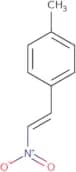
trans-4-Methyl-beta-nitrostyrene
CAS:Trans-4-methyl-beta-nitrostyrene is a quinoline derivative that is used as an intermediate in the synthesis of other compounds. It has been shown to be an efficient method for inducing gene expression and regulating cellular response in animals. Trans-4-methyl-beta-nitrostyrene induces tyrosine kinase activity and telomerase activity, which are important in cell proliferation and tumor growth. This compound also activates downstream signal transduction pathways such as those mediated by epidermal growth factor receptor (EGFR). Trans-4-methyl-beta-nitrostyrene can be used to induce gene expression and regulate cellular response in animals. The compound also activates downstream signal transduction pathways such as those mediated by epidermal growth factor receptor (EGFR).
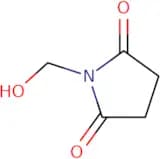
Fórmula:C9H9NO2Pureza:Min. 95%Peso molecular:163.17 g/mol1-(Hydroxymethyl)pyrrolidine-2,5-dione
CAS:1-(Hydroxymethyl)pyrrolidine-2,5-dione is an organic compound that has been shown to be a potent inhibitor of the cyclooxygenase (COX) enzyme. It is also a precursor in the synthesis of aspirin. This chemical has been shown to be an effective inhibitor of COX and other enzymes in vitro. 1-(Hydroxymethyl)pyrrolidine-2,5-dione was found to be stable in acidic conditions and can be used as a model for this type of environment. 1-(Hydroxymethyl)pyrrolidine-2,5-dione is not absorbed from the gastrointestinal tract and must be given by injection or intravenously. The pharmacokinetic profile of this drug has been studied using animal models and microscopy techniques on intestinal tissue.
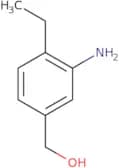
Fórmula:C5H7NO3Pureza:Min. 95%Peso molecular:129.11 g/mol(3-Amino-4-ethylphenyl)methanol
CAS:Versatile small molecule scaffold
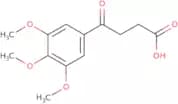
Fórmula:C9H13NOPureza:Min. 95%Peso molecular:151.21 g/mol4-Oxo-4-(3,4,5-trimethoxyphenyl)butanoic acid
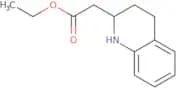
CAS:Versatile small molecule scaffoldFórmula:C13H16O6Pureza:Min. 95%Peso molecular:268.26 g/molEthyl (1,2,3,4-tetrahydroquinolin-2-yl)acetate
CAS:Versatile small molecule scaffoldFórmula:C13H17NO2Pureza:Min. 95%Peso molecular:219.28 g/molRef: 3D-FAA10058
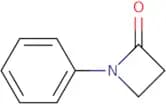
Produto descontinuado1-Phenylazetidin-2-one
CAS:1-Phenylazetidin-2-one is a diastereomer of zinc acetate. It is activated by refluxing with concentrated hydrochloric acid and then treated with carbon dioxide to form the chloride. The chloride is heated in an open vessel with a solvent such as benzene, toluene, xylene, chloroform, or dichloromethane for about three hours until it becomes a deep red color. The 1-phenylazetidin-2-one is isolated from the reaction mixture by recrystallization from methanol and water. This compound has shown anticancer activity by binding to the toll-like receptor 4 (TLR4) on tumor cells and inhibiting the production of inflammatory cytokines. Its interaction with cholesterol may be due to its ability to inhibit HMG-CoA reductase activity in rats.
Fórmula:C9H9NOPureza:Min. 95%Peso molecular:147.17 g/mol1-[1-(4-Fluorophenyl)-5-methyl-1H-pyrazol-4-yl]ethan-1-one
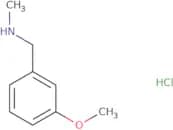
CAS:Versatile small molecule scaffoldFórmula:C12H11FN2OPureza:Min. 95%Peso molecular:218.23 g/mol(3-Methoxybenzyl)methylamine hydrochloride
CAS:Versatile small molecule scaffoldFórmula:C9H14ClNOPureza:Min. 95%Peso molecular:187.66 g/mol[(1-aminocyclohexyl)methyl]amine
CAS:[(1-aminocyclohexyl)methyl]amine is a white crystalline solid that is soluble in water, alcohol, and ether. It has a pKb of 2.5 and decomposes at 240°C. [(1-aminocyclohexyl)methyl]amine is an unsymmetrical molecule with two phenyl groups. This compound has been shown to catalyze the reaction between cyclohexanone and hydrophilic inorganic compounds, such as hydrochloric acid or potassium hydroxide, to form alkali metal cyclohexanones. [(1-aminocyclohexyl)methyl]amine also has antitumor activity by causing DNA damage and inhibiting protein synthesis in cancer cells.
[[File:https://upload.wikimedia.org/wikipedia/commons/thumb/2/2a/Chemical_Structures_of_Quinolones-5D4A8F87EFórmula:C7H16N2Pureza:Min. 95%Peso molecular:128.22 g/mol4-(2-Chlorophenoxy)butanoic acid
CAS:Produto ControladoVersatile small molecule scaffold
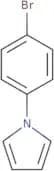
Fórmula:C10H11ClO3Pureza:Min. 95%Peso molecular:214.64 g/mol1-(4-Bromophenyl)pyrrole
CAS:1-(4-Bromophenyl)pyrrole is a primary amine that can be synthesized by cross-coupling of 1,2-dibromobenzene and pyrrole. This process involves the use of palladium as a catalyst to promote the reaction. The catalytic activity of the palladium is increased by hydrogen sulfate and chlorine, which act as promoters in this reaction. The synthesis of 1-(4-bromophenyl)pyrrole can also be accomplished by reacting with primary amines in tetrahydrofuran at high temperatures. Reaction conditions are also dependent on the presence or absence of fluorine gas, which may cause an increase in the yield and decrease in reaction time. In addition, irradiation can be used to break down pyrrole into its constituent parts for use in synthesizing 1-(4-bromophenyl)pyrrole.
Fórmula:C10H8BrNPureza:Min. 95%Peso molecular:222.08 g/mol7-Bromo-2-naphthalenecarboxylic acid
CAS:Versatile small molecule scaffold
Fórmula:C11H7BrO2Pureza:Min. 95%Peso molecular:251.08 g/mol(Phenylthio)propanone
CAS:Phenylthiopropanone (PTPA) is an organic compound that belongs to the class of sulfoxides. It can be synthesized from ethyl ester, chloroform, and phenylthiol in a three-step process using methodologies such as biotransformations or chemoenzymatic reactions. PTPA can also be obtained by reacting sodium sulfoxide with phosphorus pentachloride. PTPA has been used as a precursor for other compounds including the hydroxy group, chloride, and synthetically desulfurized phenylthioacetaldehyde. The synthesis of PTPA is usually carried out in the presence of a catalyst and kinetic control of the reaction is necessary to avoid undesired side reactions.
Fórmula:C9H10OSPureza:Min. 95%Peso molecular:166.24 g/molN2-Methylpyridine-2,3-diamine
CAS:N2-Methylpyridine-2,3-diamine is a cytotoxic agent that is hydrophobic and has been shown to be cytotoxic against human cancer cells. It has been shown to inhibit protein synthesis in cancer cells by inhibiting the translation of mRNA into proteins.
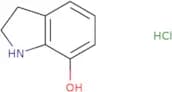
N2-Methylpyridine-2,3-diamine inhibits the activity of diazepinones and other compounds that are involved in the synthesis of fatty acids and cholesterol. This compound also inhibits acetonitrile reductase, an enzyme involved in the synthesis of acetoacetate, which leads to cell death.Fórmula:C6H9N3Pureza:Min. 95%Peso molecular:123.16 g/molIndolin-7-ol hydrochloride
CAS:Versatile small molecule scaffold
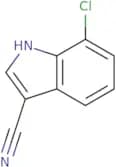
Fórmula:C8H10ClNOPureza:Min. 95%Peso molecular:171.62 g/mol7-Chloro-1H-indole-3-carbonitrile
CAS:7-Chloro-1H-indole-3-carbonitrile is a compound known for its anti-fibrotic properties. It has been studied in relation to nintedanib, a medication used to treat idiopathic pulmonary fibrosis. 7-Chloro-1H-indole-3-carbonitrile has shown potential as an antifibrotic agent by inhibiting the activation of transforming growth factor-beta 1 (TGF-β1), a key player in the development of fibrosis. This compound has also been investigated for its use in detergent compositions and collagen gel crystallization. Additionally, it is commonly used as a research chemical in various scientific studies involving adipose tissue and phosphoric compounds.
Fórmula:C9H5ClN2Pureza:Min. 95%Peso molecular:176.6 g/mol(5-Amino-1,3-benzoxazol-2-yl)methanol
CAS:Versatile small molecule scaffold
Fórmula:C8H8N2O2Pureza:Min. 95%Peso molecular:164.16 g/mol4-Methyl-2-[(piperidin-4-yl)methyl]-1,3-thiazole-5-carboxylic acid dihydrochloride
CAS:Versatile small molecule scaffoldFórmula:C11H18Cl2N2O2SPureza:Min. 95%Peso molecular:313.2 g/mol2,6-Dioxaspiro[4.5]decan-10-one
CAS:Versatile small molecule scaffold
Fórmula:C8H12O3Pureza:Min. 95%Peso molecular:156.2 g/molRef: 3D-YPD37233
Produto descontinuado(5-Benzyl-1,2-oxazol-3-yl)methanol
CAS:Versatile small molecule scaffold
Fórmula:C11H11NO2Pureza:Min. 95%Peso molecular:189.2 g/molRef: 3D-YXC33964
Produto descontinuado1-(3-Trifluoromethyl-phenoxymethyl)-1 H -pyrazole-3-carboxylic acid methyl ester
CAS:Versatile small molecule scaffoldFórmula:C13H11F3N2O3Pureza:Min. 95%Peso molecular:300.23 g/mol1-[(2-Chloro-4-nitrophenoxy)methyl]-1H-pyrazole-3-carboxylic acid
CAS:Versatile small molecule scaffold
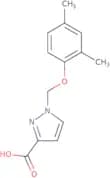
Fórmula:C11H8ClN3O5Pureza:Min. 95%Peso molecular:297.65 g/mol1-(2,4-Dimethylphenoxymethyl)-1H-pyrazole-3-carboxylic acid
CAS:Versatile small molecule scaffold
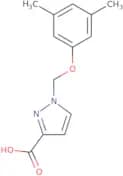
Fórmula:C13H14N2O3Pureza:Min. 95%Peso molecular:246.26 g/mol1-(3,5-Dimethylphenoxymethyl)-1H-pyrazole-3-carboxylic acid
CAS:Versatile small molecule scaffold
Fórmula:C13H14N2O3Pureza:Min. 95%Peso molecular:246.26 g/mol1-[(4-Chloro-3,5-dimethylphenoxy)methyl]-1H-pyrazole-3-carboxylic acid
CAS:Versatile small molecule scaffold
Fórmula:C13H13ClN2O3Pureza:Min. 95%Peso molecular:280.7 g/mol1-(2,6-Dichlorophenoxymethyl)-1H-pyrazole-3-carboxylic acid
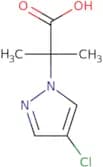
CAS:Versatile small molecule scaffoldFórmula:C11H8Cl2N2O3Pureza:Min. 95%Peso molecular:287.1 g/mol2-(4-Chloro-1H-pyrazol-1-yl)-2-methylpropanoic acid
CAS:Versatile small molecule scaffoldFórmula:C7H9ClN2O2Pureza:Min. 95%Peso molecular:188.61 g/mol1-[(4-Chloro-3,5-dimethyl-1H-pyrazol-1-yl)methyl]-1H-pyrazole-3-carboxylic acid
CAS:1-[(4-Chloro-3,5-dimethyl-1H-pyrazol-1-yl)methyl]-1H-pyrazole-3-carboxylic acid is an amide that inhibits the growth of bacteria by inhibiting the coagulation process. It has been shown to have significant anti-inflammatory activity in a rat model of thrombosis and in a mouse model of brain tumor. 1-[(4-Chloro-3,5-dimethyl-1H-pyrazol-1-yl)methyl]-1H pyrazole 3 carboxylic acid is also used as a copper chelator. This compound binds to copper ions and prevents them from catalyzing reactions that are important for bacterial cell wall synthesis.
Fórmula:C10H11ClN4O2Pureza:Min. 95%Peso molecular:254.67 g/mol4-Chloro-3-[(5-chloro-2,4-dimethoxyphenyl)sulfamoyl]benzoic acid
CAS:Versatile small molecule scaffoldFórmula:C15H13Cl2NO6SPureza:Min. 95%Peso molecular:406.2 g/mol(2E)-3-{4-[(4-Methoxyphenyl)sulfamoyl]phenyl}prop-2-enoic acid
CAS:Versatile small molecule scaffoldFórmula:C16H15NO5SPureza:Min. 95%Peso molecular:333.4 g/mol5-Amino-N-(4-bromophenyl)-2-methoxybenzene-1-sulfonamide
CAS:Versatile small molecule scaffoldFórmula:C13H13BrN2O3SPureza:Min. 95%Peso molecular:357.22 g/mol2-(2-Benzylphenoxy)acetohydrazide
CAS:Versatile small molecule scaffold
Fórmula:C15H16N2O2Pureza:Min. 95%Peso molecular:256.3 g/mol3-[Ethyl(phenyl)sulfamoyl]-4-methylbenzoic acid
CAS:Versatile small molecule scaffold
Fórmula:C16H17NO4SPureza:Min. 95%Peso molecular:319.4 g/molMethyl 4-chloro-3-[(2-methoxyphenyl)(prop-2-en-1-yl)sulfamoyl]benzoate
CAS:Versatile small molecule scaffold
Fórmula:C18H18ClNO5SPureza:Min. 95%Peso molecular:395.9 g/mol3-[4-(2-Fluorophenyl)piperazin-1-yl]-3-oxopropanenitrile
CAS:Produto ControladoVersatile small molecule scaffoldFórmula:C13H14FN3OPureza:Min. 95%Peso molecular:247.27 g/mol4-Chloro-3-[(4-iodophenyl)sulfamoyl]benzoic acid
CAS:Versatile small molecule scaffoldFórmula:C13H9ClINO4SPureza:Min. 95%Peso molecular:437.64 g/mol2-[4-(4-Cyanophenyl)phenoxy]acetohydrazide
CAS:Versatile small molecule scaffold
Fórmula:C15H13N3O2Pureza:Min. 95%Peso molecular:267.28 g/mol2-(1,3-Benzothiazol-2-yl)-3-[(2,5-dimethylphenyl)amino]-3-sulfanylprop-2-enenitrile
CAS:Versatile small molecule scaffold
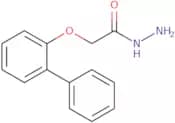
Fórmula:C18H15N3S2Pureza:Min. 95%Peso molecular:337.5 g/mol2-(2-Phenylphenoxy)acetohydrazide
CAS:Versatile small molecule scaffold
Fórmula:C14H14N2O2Pureza:Min. 95%Peso molecular:242.27 g/mol2-Chloro-N-[2-(morpholin-4-yl)-5-(trifluoromethyl)phenyl]acetamide
CAS:Versatile small molecule scaffoldFórmula:C13H14ClF3N2O2Pureza:Min. 95%Peso molecular:322.71 g/molN-[3-(Azepane-1-sulfonyl)-4-methylphenyl]-2-chloroacetamide
CAS:Versatile small molecule scaffold
Fórmula:C15H21ClN2O3SPureza:Min. 95%Peso molecular:344.9 g/mol2-Chloro-N-[4-(piperidin-1-yl)phenyl]acetamide
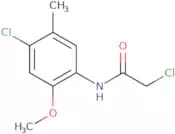
CAS:Versatile small molecule scaffoldFórmula:C13H17ClN2OPureza:Min. 95%Peso molecular:252.74 g/mol2-Chloro-N-(4-chloro-2-methoxy-5-methylphenyl)acetamide
CAS:Versatile small molecule scaffoldFórmula:C10H11Cl2NO2Pureza:Min. 95%Peso molecular:248.11 g/molN-[2-(Hydrazinecarbonyl)phenyl]thiophene-2-sulfonamide
CAS:Versatile small molecule scaffoldFórmula:C11H11N3O3S2Pureza:Min. 95%Peso molecular:297.4 g/mol2-Chloro-N-[2-chloro-6-(trifluoromethyl)phenyl]acetamide
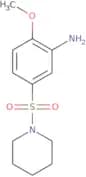
CAS:Versatile small molecule scaffoldFórmula:C9H6Cl2F3NOPureza:Min. 95%Peso molecular:272.05 g/mol2-Methoxy-5-(piperidine-1-sulfonyl)aniline
CAS:2-Methoxy-5-(piperidine-1-sulfonyl)aniline is a chemotherapeutic agent that inhibits the proliferation of human cancer cells. It binds to the bromodomain, a protein domain of about 250 amino acids, which is found in many proteins and regulates gene expression. The affinity of 2-methoxy-5-(piperidine-1-sulfonyl)aniline for the bromodomain is much higher than other antiproliferative agents such as taxol or vinca alkaloids. This compound has synergistic effects with other chemotherapeutic drugs such as paclitaxel, vinblastine, or docetaxel.
Fórmula:C12H18N2O3SPureza:Min. 95%Peso molecular:270.35 g/mol4-({3-Oxo-2-azatricyclo[6.3.1.0,4,12]dodeca-1(11),4(12),5,7,9-pentaen-2-yl}methyl)benzohydrazide
CAS:Versatile small molecule scaffoldFórmula:C19H15N3O2Pureza:Min. 95%Peso molecular:317.3 g/mol4-[(1H-1,3-Benzodiazol-2-ylsulfanyl)methyl]benzohydrazide
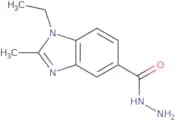
CAS:Versatile small molecule scaffoldFórmula:C15H14N4OSPureza:Min. 95%Peso molecular:298.4 g/mol1-Ethyl-2-methyl-1H-1,3-benzodiazole-5-carbohydrazide
CAS:Produto ControladoVersatile small molecule scaffold
Fórmula:C11H14N4OPureza:Min. 95%Peso molecular:218.26 g/mol[(2-Nitro-4-phenylphenyl)sulfanyl]formonitrile
CAS:Versatile small molecule scaffold
Fórmula:C13H8N2O2SPureza:Min. 95%Peso molecular:256.28 g/mol

![1-[1-(4-Fluorophenyl)-5-methyl-1H-pyrazol-4-yl]ethan-1-one](/_next/image/?url=https%3A%2Fstatic.cymitquimica.com%2Fproducts%2F3D%2Fthumb-webp%2FFAA07858.webp&w=3840&q=75)
![[(1-aminocyclohexyl)methyl]amine](/_next/image/?url=https%3A%2Fstatic.cymitquimica.com%2Fproducts%2F3D%2Fthumb-webp%2FFAA06267.webp&w=3840&q=75)


![4-Methyl-2-[(piperidin-4-yl)methyl]-1,3-thiazole-5-carboxylic acid dihydrochloride](/_next/image/?url=https%3A%2Fstatic.cymitquimica.com%2Fproducts%2F3D%2Fthumb-webp%2FYPD34523.webp&w=3840&q=75)
![2,6-Dioxaspiro[4.5]decan-10-one](/_next/image/?url=https%3A%2Fstatic.cymitquimica.com%2Fproducts%2F3D%2Fthumb-webp%2FYPD37233.webp&w=3840&q=75)

![1-[(2-Chloro-4-nitrophenoxy)methyl]-1H-pyrazole-3-carboxylic acid](/_next/image/?url=https%3A%2Fstatic.cymitquimica.com%2Fproducts%2F3D%2Fthumb-webp%2FEQB19330.webp&w=3840&q=75)
![1-[(4-Chloro-3,5-dimethylphenoxy)methyl]-1H-pyrazole-3-carboxylic acid](/_next/image/?url=https%3A%2Fstatic.cymitquimica.com%2Fproducts%2F3D%2Fthumb-webp%2FEQB19306.webp&w=3840&q=75)

![1-[(4-Chloro-3,5-dimethyl-1H-pyrazol-1-yl)methyl]-1H-pyrazole-3-carboxylic acid](/_next/image/?url=https%3A%2Fstatic.cymitquimica.com%2Fproducts%2F3D%2Fthumb-webp%2FEQB19290.webp&w=3840&q=75)
![4-Chloro-3-[(5-chloro-2,4-dimethoxyphenyl)sulfamoyl]benzoic acid](/_next/image/?url=https%3A%2Fstatic.cymitquimica.com%2Fproducts%2F3D%2Fthumb-webp%2FEQA72979.webp&w=3840&q=75)
![(2E)-3-{4-[(4-Methoxyphenyl)sulfamoyl]phenyl}prop-2-enoic acid](/_next/image/?url=https%3A%2Fstatic.cymitquimica.com%2Fproducts%2F3D%2Fthumb-webp%2FEQA72941.webp&w=3840&q=75)


![3-[Ethyl(phenyl)sulfamoyl]-4-methylbenzoic acid](/_next/image/?url=https%3A%2Fstatic.cymitquimica.com%2Fproducts%2F3D%2Fthumb-webp%2FEQA72652.webp&w=3840&q=75)
![Methyl 4-chloro-3-[(2-methoxyphenyl)(prop-2-en-1-yl)sulfamoyl]benzoate](/_next/image/?url=https%3A%2Fstatic.cymitquimica.com%2Fproducts%2F3D%2Fthumb-webp%2FEQA72651.webp&w=3840&q=75)
![3-[4-(2-Fluorophenyl)piperazin-1-yl]-3-oxopropanenitrile](/_next/image/?url=https%3A%2Fstatic.cymitquimica.com%2Fproducts%2F3D%2Fthumb-webp%2FEQA72607.webp&w=3840&q=75)
![4-Chloro-3-[(4-iodophenyl)sulfamoyl]benzoic acid](/_next/image/?url=https%3A%2Fstatic.cymitquimica.com%2Fproducts%2F3D%2Fthumb-webp%2FEQA72542.webp&w=3840&q=75)
![2-[4-(4-Cyanophenyl)phenoxy]acetohydrazide](/_next/image/?url=https%3A%2Fstatic.cymitquimica.com%2Fproducts%2F3D%2Fthumb-webp%2FEQA25577.webp&w=3840&q=75)
![2-(1,3-Benzothiazol-2-yl)-3-[(2,5-dimethylphenyl)amino]-3-sulfanylprop-2-enenitrile](/_next/image/?url=https%3A%2Fstatic.cymitquimica.com%2Fproducts%2F3D%2Fthumb-webp%2FEQA25562.webp&w=3840&q=75)
![2-Chloro-N-[2-(morpholin-4-yl)-5-(trifluoromethyl)phenyl]acetamide](/_next/image/?url=https%3A%2Fstatic.cymitquimica.com%2Fproducts%2F3D%2Fthumb-webp%2FEQA25535.webp&w=3840&q=75)
![N-[3-(Azepane-1-sulfonyl)-4-methylphenyl]-2-chloroacetamide](/_next/image/?url=https%3A%2Fstatic.cymitquimica.com%2Fproducts%2F3D%2Fthumb-webp%2FEQA25523.webp&w=3840&q=75)
![2-Chloro-N-[4-(piperidin-1-yl)phenyl]acetamide](/_next/image/?url=https%3A%2Fstatic.cymitquimica.com%2Fproducts%2F3D%2Fthumb-webp%2FEQA25522.webp&w=3840&q=75)
![N-[2-(Hydrazinecarbonyl)phenyl]thiophene-2-sulfonamide](/_next/image/?url=https%3A%2Fstatic.cymitquimica.com%2Fproducts%2F3D%2Fthumb-webp%2FEQA25518.webp&w=3840&q=75)
![2-Chloro-N-[2-chloro-6-(trifluoromethyl)phenyl]acetamide](/_next/image/?url=https%3A%2Fstatic.cymitquimica.com%2Fproducts%2F3D%2Fthumb-webp%2FEQA25517.webp&w=3840&q=75)
![4-({3-Oxo-2-azatricyclo[6.3.1.0,4,12]dodeca-1(11),4(12),5,7,9-pentaen-2-yl}methyl)benzohydrazide](/_next/image/?url=https%3A%2Fstatic.cymitquimica.com%2Fproducts%2F3D%2Fthumb-webp%2FEQA25451.webp&w=3840&q=75)
![4-[(1H-1,3-Benzodiazol-2-ylsulfanyl)methyl]benzohydrazide](/_next/image/?url=https%3A%2Fstatic.cymitquimica.com%2Fproducts%2F3D%2Fthumb-webp%2FEQA25435.webp&w=3840&q=75)
![[(2-Nitro-4-phenylphenyl)sulfanyl]formonitrile](/_next/image/?url=https%3A%2Fstatic.cymitquimica.com%2Fproducts%2F3D%2Fthumb-webp%2FEQA25419.webp&w=3840&q=75)