


Building Blocks
Subcategorias de "Building Blocks"
- Ácidos Borónicos e Derivados de Ácido Borónico(5.783 produtos)
- Building Blocks Quirais(1.242 produtos)
- Building Blocks Hidrocarbonetos(6.105 produtos)
- Building Blocks orgânicos(61.055 produtos)
Foram encontrados 205383 produtos de "Building Blocks"
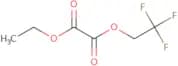
Ethyl 2,2,2-trifluoroethyl oxalate
CAS:Versatile small molecule scaffold
Fórmula:C6H7F3O4Pureza:Min. 95%Peso molecular:200.11 g/mol3-{[2-Amino-4-(trifluoromethyl)phenyl]sulfanyl}propanenitrile
CAS:Versatile small molecule scaffold
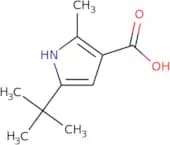
Fórmula:C10H9F3N2SPureza:Min. 95%Peso molecular:246.25 g/mol5-tert-Butyl-2-methyl-1-pyrrole-3-carboxylic acid
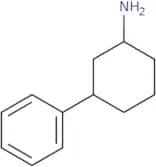
CAS:Versatile small molecule scaffoldFórmula:C10H15NO2Pureza:Min. 95%Peso molecular:181.23 g/mol3-Phenylcyclohexan-1-amine
CAS:Versatile small molecule scaffold
Fórmula:C12H17NPureza:Min. 95%Peso molecular:175.27 g/moltert-Butyl 3-hydroxyphenylcarbamate
CAS:Versatile small molecule scaffold
Fórmula:C11H15NO3Pureza:Min. 95%Peso molecular:209.24 g/mol4-(1H-Pyrazol-4-yl)pyridine
CAS:4-(1H-Pyrazol-4-yl)pyridine is a supramolecular compound that has been shown to be metastable. It can be used as a selective adsorbent for the uptake of metal ions from solutions. 4-(1H-Pyrazol-4-yl)pyridine can also be used to remove xylene from water and other liquids, producing nonporous crystals that are stable and easy to handle. The molecular structure of 4-(1H-pyrazol-4-yl)pyridine has been studied by X-ray diffraction, which revealed its high degree of order and stability.
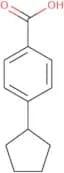
Fórmula:C8H7N3Pureza:Min. 95%Peso molecular:145.16 g/mol4-Cyclopentylbenzoic acid
CAS:Versatile small molecule scaffold
Fórmula:C12H14O2Pureza:Min. 95%Peso molecular:190.24 g/molRef: 3D-UAA93622
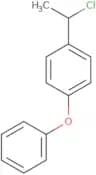
Produto descontinuado1-(1-Chloroethyl)-4-phenoxybenzene
CAS:Versatile small molecule scaffold
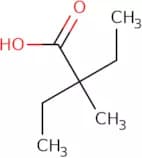
Fórmula:C14H13ClOPureza:Min. 95%Peso molecular:232.7 g/mol2-Ethyl-2-methylbutanoic acid
CAS:2-Ethyl-2-methylbutanoic acid is a molecule that can be used to produce trimethylacetic acid, which is an intermediate in the production of biodegradable plastic. The trimerization of 2-ethyl-2-methylbutanoic acid to form trimethylacetic acid can be achieved by reacting with trimethylacetate and ethylene. 2-Ethyl-2-methylbutanoic acid can also be converted into formic acid and butyric acid by carbonylation. Zeolites are often used as catalysts during this reaction. 2-Ethyl-2-methylbutanoic acid has the ability to react with alcohols, such as methanol, ethanol, or propanol, and form esters. These reactions occur through a process called esterification.
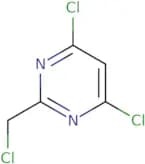
Fórmula:C7H14O2Pureza:Min. 95%Peso molecular:130.2 g/mol4,6-Dichloro-2-(chloromethyl)pyrimidine
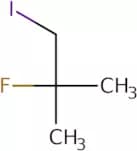
CAS:Versatile small molecule scaffoldFórmula:C5H3Cl3N2Pureza:Min. 95%Peso molecular:197.45 g/mol2-Fluoro-1-iodo-2-methylpropane
CAS:Versatile small molecule scaffold
Fórmula:C4H8FIPureza:Min. 95%Peso molecular:202.01 g/molRef: 3D-UAA86979
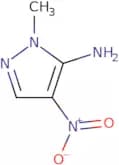
Produto descontinuado1-Methyl-4-nitro-1H-pyrazol-5-amine
CAS:Versatile small molecule scaffold
Fórmula:C4H6N4O2Pureza:Min. 95%Peso molecular:142.12 g/molRef: 3D-UAA86885
Produto descontinuado2,4-Dichloro-5-nitrobenzoic acid
CAS:2,4-Dichloro-5-nitrobenzoic acid is an organic compound with the chemical formula CHNO2. It has a molecular weight of 180.069 g/mol and is soluble in water. This product has been shown to have powder diffraction data from x-ray powder diffraction (XRPD) experiments with parameters of d=1.814 nm and a=11.076° 2θ±0.004° 2θ for the monoclinic crystal system, as well as x-ray diffraction (XRD) data with a peak at θ=31.00° 2θ±0.01° 2θ for the monoclinic crystal system.
Fórmula:C7H3Cl2NO4Pureza:Min. 95%Peso molecular:236.01 g/mol5,7-Dichloro-6-methylquinoxaline
CAS:5,7-Dichloro-6-methylquinoxaline is an intermediate in the synthesis of quinoxalines. It can be synthesized by reacting alkali with 5,7-dichloroquinoxaline. This reaction produces 2 chloromethylquinoxalines and dichloromethylquinoxaline as well as the desired product 5,7-dichloro-6-methylquinoxaline. The yields for this reaction are about 50%. The major product of this reaction is 5,7-dichloro-6-methylquinoxaline due to its greater stability.
Fórmula:C9H6Cl2N2Pureza:Min. 95%Peso molecular:213.06 g/mol2-Phenylbenzyl Bromide
CAS:2-Phenylbenzyl Bromide is a compound that is used as an analytical reagent to measure the amount of fatty acids and carboxylic acids in water. It is a good indicator for measuring the degree of pollution in wastewater treatment plants. The fluorescence properties of 2-Phenylbenzyl Bromide are also used for analytical purposes, such as monitoring the reactions between sodium hydroxide solution and ester hydrochlorides. This product has been shown to be active against inflammatory diseases such as arthritis and asthma, as well as cervical cancer. 2-Phenylbenzyl Bromide has also been shown to activate AMPK activators and may be beneficial for the treatment of obesity and diabetes.
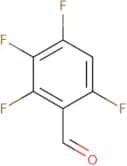
Fórmula:C13H11BrPureza:Min. 95%Peso molecular:247.13 g/mol2,3,4,6-Tetrafluorobenzaldehyde
CAS:Versatile small molecule scaffold
Fórmula:C7H2F4OPureza:Min. 95%Peso molecular:178.08 g/mol1-(Adamantan-1-yl)propan-2-one
CAS:1-(Adamantan-1-yl)propan-2-one is an enolate reagent that is used in the synthesis of organic compounds. It reacts with chloride to form a chloroformate and can be used for the preparation of ketones, nitro compounds, and nitroalkanes. The 1-(Adamantan-1-yl)propan-2-one is also an enolate anion that has been shown to react with ethylmercury, nitroethane, and piperidine.
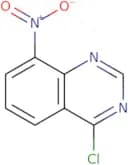
Fórmula:C13H20OPureza:Min. 95%Peso molecular:192.3 g/mol4-Chloro-8-nitroquinazoline
CAS:4-Chloro-8-nitroquinazoline is a potent antiproliferative agent that binds to the FGFR3 receptor and inhibits the proliferation of bladder cancer cells. It also has potent activity against bladder cancer cells in culture and inhibits cell growth by binding to submicromolar concentrations of this protein. 4-Chloro-8-nitroquinazoline may be useful for the treatment of bladder cancer, which is a disease characterized by uncontrolled cell division. This drug can inhibit proliferation of bladder cancer cells by interfering with their ability to signal through FGFR3 receptors, thereby inhibiting the activation of downstream signaling pathways that regulate cell cycle progression.
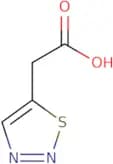
Fórmula:C8H4ClN3O2Pureza:Min. 95%Peso molecular:209.59 g/mol2-(1,2,3-Thiadiazol-5-yl)acetic acid
CAS:Versatile small molecule scaffold
Fórmula:C4H4N2O2SPureza:Min. 95%Peso molecular:144.15 g/molRef: 3D-UAA81328
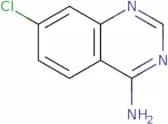
Produto descontinuado7-Chloroquinazolin-4-amine
CAS:Versatile small molecule scaffold
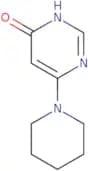
Fórmula:C8H6ClN3Pureza:Min. 95%Peso molecular:179.6 g/mol6-(Piperidin-1-yl)-3,4-dihydropyrimidin-4-one
CAS:Versatile small molecule scaffold
Fórmula:C9H13N3OPureza:Min. 95%Peso molecular:179.22 g/mol7-Oxabicyclo[2.2.1]heptane-2-carboxylic acid
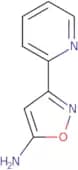
CAS:Versatile small molecule scaffoldFórmula:C7H10O3Pureza:Min. 95%Peso molecular:142.15 g/mol3-Pyridin-2-yl-isoxazol-5-ylamine
CAS:Versatile small molecule scaffold
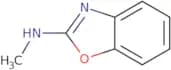
Fórmula:C8H7N3OPureza:Min. 95%Peso molecular:161.16 g/molN-Methyl-1,3-benzoxazol-2-amine
CAS:N-Methyl-1,3-benzoxazol-2-amine is a linker molecule that has been used in the synthesis of chlorides, molecular ions, trifluoroacetic acid, bromoacetone, yields and benzyne. It is also a precursor to the synthesis of benzoxazoles and alkylhalides. This compound reacts with cyclization reactions such as imino and benzoxazole. N-Methyl-1,3-benzoxazol-2-amine is also used in the gas phase to synthesize phenacyls.
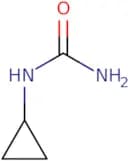
Fórmula:C8H8N2OPureza:Min. 95%Peso molecular:148.16 g/mol1-Cyclopropylurea
CAS:1-Cyclopropylurea is a synthetic anticancer drug that was originally developed as an antihypertensive agent. It has been shown to have inhibitory effects on cancer cells and inflammatory diseases, including cyclic nucleotide phosphodiesterase (cNPD) and b-raf. 1-Cyclopropylurea also inhibits the synthesis of epoxyeicosatrienoic acids (EETs) in vitro, suggesting that it may be useful for the treatment of cardiovascular diseases such as hypertension.
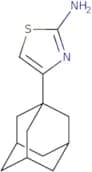
1-Cyclopropylurea has been shown to inhibit cell proliferation in culture by causing G2/M phase arrest and apoptosis. The mechanism of action of 1-cyclopropylurea is not well understood, but it has been suggested that the drug prevents the phosphorylation of b-raf, which prevents the activation of mitogen activated protein kinases (MAPKs).Pureza:Min. 95%4-(1-adamantyl)2-aminothiazole
CAS:Versatile small molecule scaffold
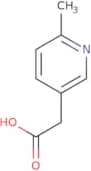
Fórmula:C13H18N2SPureza:Min. 95%Peso molecular:234.36 g/mol(6-Methylpyridin-3-yl)acetic acid
CAS:Versatile small molecule scaffold
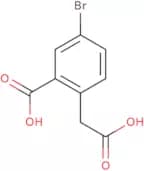
Fórmula:C8H9NO2Pureza:Min. 95%Peso molecular:151.17 g/mol5-Bromo-2-(carboxymethyl)benzoic acid
CAS:Versatile small molecule scaffold
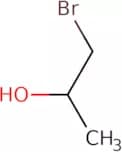
Fórmula:C9H7BrO4Pureza:Min. 95%Peso molecular:259.05 g/mol1-Bromo-2-propanol
CAS:Silver trifluoromethanesulfonate is a chemical that is used in the manufacture of 1-bromo-2-propanol. When it reacts with hydroxyl groups, it forms an anhydrous sodium salt that can be used to inhibit population growth. Silver trifluoromethanesulfonate has been shown to have an inhibitory effect on human serum and postharvest populations of bacteria by reacting with the hydroxyl group in the enzyme population growth. Chemical ionization mass spectrometry (CI-MS) has been used to identify the aromatic hydrocarbon produced during this reaction. The mechanism for this reaction is thought to be due to hydrogen bonding between silver trifluoromethanesulfonate and the hydroxyl group.
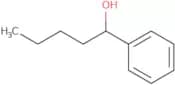
Fórmula:C3H7BrOPureza:Min. 95%Peso molecular:138.99 g/mol(1R)-1-Phenylpentan-1-ol
CAS:Versatile small molecule scaffold
Fórmula:C11H16OPureza:Min. 95%Peso molecular:164.24 g/molMethyl 2-[(2-methylpropyl)amino]acetate
CAS:Versatile small molecule scaffold
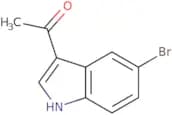
Fórmula:C7H15NO2Pureza:Min. 95%Peso molecular:145.2 g/mol1-(5-Bromo-1H-indol-3-yl)ethanone
CAS:Produto ControladoVersatile small molecule scaffold
Fórmula:C10H8BrNOPureza:Min. 95%Peso molecular:238.08 g/mol2,7-Dichloro-[1,3]thiazolo[5,4-d]pyrimidine
CAS:Versatile small molecule scaffold
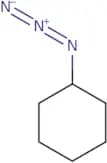
Fórmula:C5HCl2N3SPureza:Min. 95%Peso molecular:206.05 g/molAzidocyclohexane
CAS:Azidocyclohexane is an unsymmetrical azide that is used in pharmaceutical preparations. It is a non-selective cation, which means it can bind to both positive and negative ions. Azidocyclohexane has been shown to have a chemokine receptor activity, which may be related to its immunosuppressive effects on autoimmune diseases. Azidocyclohexane also has been found to inhibit the binding of adenosine receptors in cancer cells, which may lead to cancer cell death. In addition, azidocyclohexane may also be effective in treating inflammatory bowel disease due to its anti-inflammatory properties.
Fórmula:C6H11N3Pureza:Min. 95%Peso molecular:125.17 g/molN,N'-Bis(2-hydroxyphenyl)ethanediamide
CAS:Versatile small molecule scaffold
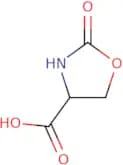
Fórmula:C14H12N2O4Pureza:Min. 95%Peso molecular:272.26 g/mol(4S)-2-Oxo-1,3-oxazolidine-4-carboxylic acid
CAS:Versatile small molecule scaffold
Fórmula:C4H5NO4Pureza:Min. 95%Peso molecular:131.09 g/mol2-Ethoxy-1-naphthaldehyde
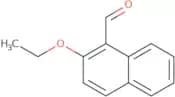
CAS:2-Ethoxy-1-naphthaldehyde is a synthetic compound that is an intermediate in the synthesis of nafcillin sodium. It is also used as an intermediate for the production of acetonitrile, which can be used as a solvent. 2-Ethoxy-1-naphthaldehyde has been shown to have optical properties similar to those of anthracene and dihedral angles similar to those of peroxide. It undergoes dehydrating reactions with hydrogen peroxide, forming acetic acid, water, and hydrogen dioxide. This compound also has a strong tendency to form hydrogen bonds with other molecules.
Fórmula:C13H12O2Pureza:Min. 95%Peso molecular:200.23 g/mol4-(5-Methylfuran-2-yl)butan-2-amine
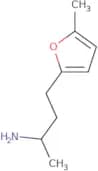
CAS:Versatile small molecule scaffold
Fórmula:C9H15NOPureza:Min. 95%Peso molecular:153.22 g/mol7-Methoxy-1,2,3,4-tetrahydroquinoline
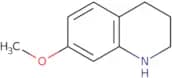
CAS:Versatile small molecule scaffold
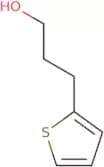
Fórmula:C10H13NOPureza:Min. 95%Peso molecular:163.22 g/mol3-(thiophen-2-yl)propan-1-ol
CAS:3-(thiophen-2-yl)propan-1-ol is a chiral synthon. It is used as a building block in the synthesis of organic compounds, such as esters and amides. 3-(Thiophen-2-yl)propan-1-ol has been used to synthesize enantiomerically pure methylene compounds. This synthon can be prepared by the catalysis of vinyl acetate with thiophene, which forms a chain reaction that leads to the formation of 3-(thiophen-2-yl)propan-1-ol. The stereogenic center of this synthon is also chiral.
Fórmula:C7H10OSPureza:Min. 95%Peso molecular:142.22 g/mol2-Bromo-4-isopropylphenol
CAS:Versatile small molecule scaffold
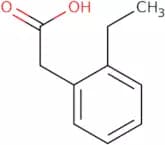
Fórmula:C9H11BrOPureza:Min. 95%Peso molecular:215.1 g/mol2-(2-Ethylphenyl)acetic acid
CAS:2-(2-Ethylphenyl)acetic acid is a compound that is used to synthesize antihistamines. It has been shown to have potent antihistaminic activity in both the ileum and the stomach, which is stereoselective for the S(+) enantiomer. The 2-ethylphenyl group of this compound can be susceptible to alkylation by organometallic reagents such as piperidine, which can lead to side reactions with other groups on the molecule or other molecules in the reaction mixture. The 2-ethylphenyl group is also chiral, meaning that it has two different forms, or configurations.
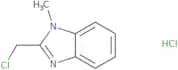
Fórmula:C10H12O2Pureza:Min. 95%Peso molecular:164.2 g/mol2-(Chloromethyl)-1-methyl-1H-1,3-benzodiazole hydrochloride
CAS:Produto ControladoVersatile small molecule scaffold
Fórmula:C9H10Cl2N2Pureza:Min. 95%Peso molecular:217.09 g/mol3-Iodo-pyrazolo[1,5-a]pyridine
CAS:3-Iodo-pyrazolo[1,5-a]pyridine is a boronic acid that has been optimized for medicinal use. It is chemically synthesized by coupling with a boronic ester. 3-Iodo-pyrazolo[1,5-a]pyridine has shown potent anti-inflammatory properties in mice models.
Fórmula:C7H5IN2Pureza:Min. 95%Peso molecular:244.03 g/mol2-[(Pyridin-2-yl)carbamoyl]benzoic acid
CAS:2-[(Pyridin-2-yl)carbamoyl]benzoic acid is an organic compound that contains a benzamide and amide functional group. It is paramagnetic, which means that it has the ability to be attracted by a magnetic field. It also has intramolecular nucleophilic attack properties. 2-[(Pyridin-2-yl)carbamoyl]benzoic acid can be used in elemental analyses and as a catalyst for chemical reactions, such as the conversion of thiocyanate to cyanide. 2-[(Pyridin-2-yl)carbamoyl]benzoic acid is used in the production of dyes and pharmaceuticals, including antihistamines and analgesics.
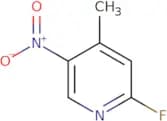
Fórmula:C13H10N2O3Pureza:Min. 95%Peso molecular:242.23 g/mol2-Fluoro-4-Methyl-5-Nitropyridine
CAS:Versatile small molecule scaffold
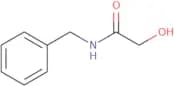
Fórmula:C6H5FN2O2Pureza:Min. 95%Peso molecular:156.11 g/molN-Benzyl-2-hydroxyacetamide
CAS:N-Benzyl-2-hydroxyacetamide is a synthetic molecule that is used in the synthesis of other molecules. It is synthesized by reacting benzaldehyde with 2-aminoethanol in the presence of hydrochloric acid and sodium hydroxide. The yields are typically high, as the reaction proceeds under relatively mild conditions with few side reactions. The mechanism of this reaction is nucleophilic addition of the amino group to the carbonyl carbon atom, followed by elimination of water. N-Benzyl-2-hydroxyacetamide can be converted to various other compounds through intramolecular reactions or substitutions on its molecular structure.
Fórmula:C9H11NO2Pureza:Min. 95%Peso molecular:165.19 g/molBenzo[b]thiophen-5-ol
CAS:Benzo[b]thiophen-5-ol is a chiral molecule that has been synthesized to be homochiral. It has an active site and selective epoxide hydration activity, which is the rate-limiting step of epoxide ring opening reactions. The mechanism of this reaction is the cleavage of a C–C bond in an epoxide substrate by an O–H or S–H bond in benzo[b]thiophen-5-ol. The nature of this mechanistic bond cleavage reaction is unknown, but it may be due to catalysis by a benzyl group.
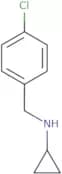
Fórmula:C8H6OSPureza:Min. 95%Peso molecular:150.2 g/molN-(4-Chlorobenzyl)-N-cyclopropylamine
CAS:Versatile small molecule scaffold
Fórmula:C10H12ClNPureza:Min. 95%Peso molecular:181.66 g/molDibenzo[b,d]furan-4-ol
CAS:Dibenzo[b,d]furan-4-ol is a biodegradable compound that can be synthesized in a stepwise manner. The compound can be assayed by using different methods including mass spectrometric and hplc analyses to determine the number of carbon atoms and functional groups present in the molecule. Dibenzo[b,d]furan-4-ol is used as a carbon source for many microorganisms. The compound has been shown to hydroxylate under aerobic conditions and also reacts with nitro groups to form nitroso derivatives. Magnetic resonance spectroscopy has been used to study the molecular structure of dibenzo[b,d]furan-4-ol, which has revealed that it is monosubstituted with two methyl groups. This compound is naturally found in filamentous fungi found in tropical regions.
Fórmula:C12H8O2Pureza:Min. 95%Peso molecular:184.19 g/mol

![3-{[2-Amino-4-(trifluoromethyl)phenyl]sulfanyl}propanenitrile](/_next/image/?url=https%3A%2Fstatic.cymitquimica.com%2Fproducts%2F3D%2Fthumb-webp%2FUAC15123.webp&w=3840&q=75)





![7-Oxabicyclo[2.2.1]heptane-2-carboxylic acid](/_next/image/?url=https%3A%2Fstatic.cymitquimica.com%2Fproducts%2F3D%2Fthumb-webp%2FUAA80001.webp&w=3840&q=75)
![Methyl 2-[(2-methylpropyl)amino]acetate](/_next/image/?url=https%3A%2Fstatic.cymitquimica.com%2Fproducts%2F3D%2Fthumb-webp%2FUAA62856.webp&w=3840&q=75)
![2,7-Dichloro-[1,3]thiazolo[5,4-d]pyrimidine](/_next/image/?url=https%3A%2Fstatic.cymitquimica.com%2Fproducts%2F3D%2Fthumb-webp%2FUAA60261.webp&w=3840&q=75)


![3-Iodo-pyrazolo[1,5-a]pyridine](/_next/image/?url=https%3A%2Fstatic.cymitquimica.com%2Fproducts%2F3D%2Fthumb-webp%2FUAA36399.webp&w=3840&q=75)
![2-[(Pyridin-2-yl)carbamoyl]benzoic acid](/_next/image/?url=https%3A%2Fstatic.cymitquimica.com%2Fproducts%2F3D%2Fthumb-webp%2FUAA35710.webp&w=3840&q=75)
![Benzo[b]thiophen-5-ol](/_next/image/?url=https%3A%2Fstatic.cymitquimica.com%2Fproducts%2F3D%2Fthumb-webp%2FUAA30135.webp&w=3840&q=75)
![Dibenzo[b,d]furan-4-ol](/_next/image/?url=https%3A%2Fstatic.cymitquimica.com%2Fproducts%2F3D%2Fthumb-webp%2FUAA26106.webp&w=3840&q=75)