Building Blocks
Subcategorias de "Building Blocks"
- Ácidos Borónicos e Derivados de Ácido Borónico(5.778 produtos)
- Building Blocks Quirais(1.243 produtos)
- Building Blocks Hidrocarbonetos(6.099 produtos)
- Building Blocks orgânicos(61.038 produtos)
Foram encontrados 205376 produtos de "Building Blocks"
Ethyl({1-[4-(trifluoromethyl)phenyl]propan-2-yl})amine hydrochloride
CAS:Produto ControladoVersatile small molecule scaffold
Fórmula:C12H17ClF3NPureza:Min. 95%Peso molecular:267.72 g/mol3H-Spiro[2-benzofuran-1,3'-piperidine]
CAS:Versatile small molecule scaffold
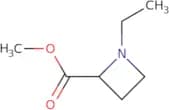
Fórmula:C12H15NOPureza:Min. 95%Peso molecular:189.25 g/molMethyl 1-ethylazetidine-2-carboxylate
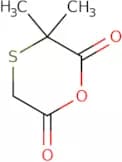
CAS:Versatile small molecule scaffoldFórmula:C7H13NO2Pureza:Min. 95%Peso molecular:143.18 g/mol3,3-Dimethyl-1,4-oxathiane-2,6-dione
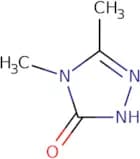
CAS:Versatile small molecule scaffoldFórmula:C6H8O3SPureza:Min. 95%Peso molecular:160.19 g/mol3,4-Dimethyl-4,5-dihydro-1H-1,2,4-triazol-5-one
CAS:Versatile small molecule scaffoldFórmula:C4H7N3OPureza:Min. 95%Peso molecular:113.12 g/mol5H,6H,7H,8H-[1,2,4]Triazolo[4,3-b]pyridazine
CAS:Versatile small molecule scaffold
Fórmula:C5H8N4Pureza:Min. 95%Peso molecular:124.14 g/mol5H,6H,7H,8H-Imidazo[1,2-b]pyridazine
CAS:Versatile small molecule scaffold
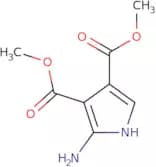
Fórmula:C6H9N3Pureza:Min. 95%Peso molecular:123.16 g/mol3,4-Dimethyl 2-amino-1H-pyrrole-3,4-dicarboxylate
CAS:Versatile small molecule scaffold
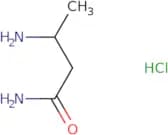
Fórmula:C8H10N2O4Pureza:Min. 95%Peso molecular:198.18 g/mol3-Aminobutanamide hydrochloride
CAS:Versatile small molecule scaffold
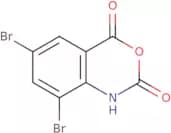
Fórmula:C4H11ClN2OPureza:Min. 95%Peso molecular:138.59 g/mol6,8-Dibromo-2,4-dihydro-1H-3,1-benzoxazine-2,4-dione
CAS:Versatile small molecule scaffold
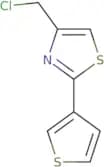
Fórmula:C8H3Br2NO3Pureza:Min. 95%Peso molecular:320.92 g/mol4-(Chloromethyl)-2-(thiophen-3-yl)-1,3-thiazole
CAS:Versatile small molecule scaffoldFórmula:C8H6ClNS2Pureza:Min. 95%Peso molecular:215.7 g/mol2-{8-Oxa-3-azabicyclo[3.2.1]octan-3-yl}ethan-1-amine
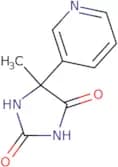
CAS:Versatile small molecule scaffoldFórmula:C8H16N2OPureza:Min. 95%Peso molecular:156.23 g/mol5-Methyl-5-(pyridin-3-yl)imidazolidine-2,4-dione
CAS:Versatile small molecule scaffoldFórmula:C9H9N3O2Pureza:Min. 95%Peso molecular:191.19 g/mol1-Methyl-1H,4H,7H-pyrazolo[3,4-b]pyridin-4-one
CAS:Versatile small molecule scaffoldFórmula:C7H7N3OPureza:Min. 95%Peso molecular:149.15 g/mol1-(4-Methylphenyl)-1H,4H,5H-pyrazolo[3,4-d]pyrimidin-4-one
CAS:Versatile small molecule scaffold
Fórmula:C12H10N4OPureza:Min. 95%Peso molecular:226.23 g/mol3-Bromo-1-methyl-1H,4H,5H-pyrazolo[3,4-d]pyrimidin-4-one
CAS:Versatile small molecule scaffoldFórmula:C6H5BrN4OPureza:Min. 95%Peso molecular:229.03 g/mol3-Amino-1,5-dihydro-1-methyl-4H-pyrazolo[3,4-d]pyrimidin-4-one
CAS:Versatile small molecule scaffold
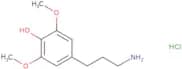
Fórmula:C6H7N5OPureza:Min. 95%Peso molecular:165.15 g/mol4-(3-Aminopropyl)-2,6-dimethoxyphenol hydrochloride
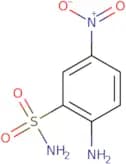
CAS:Versatile small molecule scaffoldFórmula:C11H18ClNO3Pureza:Min. 95%Peso molecular:247.72 g/mol2-Amino-5-nitrobenzenesulfonamide
CAS:2-Amino-5-nitrobenzenesulfonamide is a synthetic compound that is an inhibitor of the NS5B polymerase enzyme, which is part of the hepatitis C virus (HCV). It has been shown to be active against genotype 1 HCV. The chemical structure of 2-amino-5-nitrobenzenesulfonamide is similar to that of other unsymmetrical dialkyl sulfonamides, and it is classified as a class I NS5B polymerase inhibitor. 2-Amino-5-nitrobenzenesulfonamide can inhibit viral replication in vitro by inhibiting the activity of the HCV NS5B polymerase enzyme. It has also been shown to be effective against genotype 4 HCV in mice. In addition, this drug inhibits alkane biosynthesis in bacteria through competitive inhibition with a natural substrate (2-aminobenzothiazole) and analogs have been
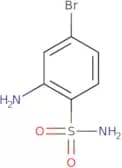
Fórmula:C6H7N3O4SPureza:Min. 95%Peso molecular:217.2 g/mol2-Amino-4-bromobenzene-1-sulfonamide
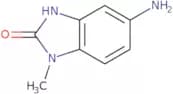
CAS:Versatile small molecule scaffoldFórmula:C6H7BrN2O2SPureza:Min. 95%Peso molecular:251.1 g/mol5-Amino-1-methyl-2,3-dihydro-1H-1,3-benzodiazol-2-one
CAS:Versatile small molecule scaffold
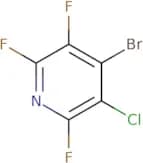
Fórmula:C8H9N3OPureza:Min. 95%Peso molecular:163.18 g/mol4-Bromo-3-chloro-2,5,6-trifluoropyridine
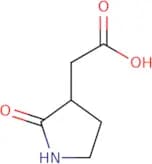
CAS:Versatile small molecule scaffoldFórmula:C5BrClF3NPureza:Min. 95%Peso molecular:246.41 g/mol2-(2-Oxopyrrolidin-3-yl)acetic acid
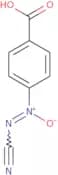
CAS:Versatile small molecule scaffoldFórmula:C6H9NO3Pureza:Min. 95%Peso molecular:143.14 g/mol4-Carboxy-N-(cyanoimino)benzen-1-imine oxide
CAS:4-Carboxy-N-(cyanoimino)benzen-1-imine oxide (4CNIO) is a chemical compound that inhibits the activity of methyltransferases, which are enzymes that regulate the addition of methyl groups to proteins. It has been shown to inhibit growth factor production in k562 cells. 4CNIO also has antimicrobial activity against sarcoma cell and cryptococcus neoformans. The mechanism by which 4CNIO inhibits protein synthesis in rat liver microsomes is through its ability to react with amino groups on proteins. Its second order rate constant and amido group make it an effective inhibitor of protein synthesis.Fórmula:C8H5N3O3Pureza:Min. 95%Peso molecular:191.14 g/mol2-(Aminooxy)-4-methylpentanoic acid hydrochloride
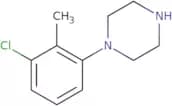
CAS:Versatile small molecule scaffoldFórmula:C6H14ClNO3Pureza:Min. 95%Peso molecular:183.6 g/mol1-(3-Chloro-2-methylphenyl)piperazine
CAS:Produto ControladoVersatile small molecule scaffoldFórmula:C11H15ClN2Pureza:Min. 95%Peso molecular:210.7 g/mol7-(Diethylamino)-2-oxo-2H-chromene-4-carbaldehyde
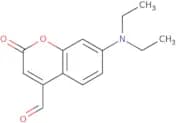
CAS:7-(Diethylamino)-2-oxo-2H-chromene-4-carbaldehyde (DEA) is a fluorescent probe that has been shown to be a chemosensor for HClO. It reacts with HClO to produce an increase in fluorescence intensity and the generation of formyl radicals. DEA has also been shown to react with peroxide, hypochlorous acid, and zinc ions. The ethyl group on DEA can be used as a linker for the attachment of other molecules, such as proteins or drugs, for bioconjugation.
Fórmula:C14H15NO3Pureza:Min. 95%Peso molecular:245.27 g/molN-Phenyl-1H-imidazol-2-amine
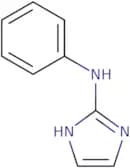
CAS:N-Phenyl-1H-imidazol-2-amine is an antiinflammatory drug that belongs to the group of imidazole derivatives. It has been shown to be effective in treating inflammation and joint pain. This compound is a psychostimulant that acts as an antagonist of the dopamine D1 receptor. It also has a role in suppressing the synthesis of prostaglandin E2, which inhibits inflammatory responses. N-Phenyl-1H-imidazol-2-amine has been shown to inhibit the production of nitric oxide and leukotrienes, which are mediators involved in inflammatory responses.Fórmula:C9H9N3Pureza:Min. 95%Peso molecular:159.19 g/mol1-(2-Aminophenyl)-1H-pyrazole
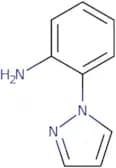
CAS:1-(2-Aminophenyl)-1H-pyrazole is a chemical compound that is used in the synthesis of other compounds. It can be produced by various reactions from benzyl chloride and ammonia. The reactivity of 1-(2-aminophenyl)-1H-pyrazole has been studied using single crystal X-ray diffraction. This technique was used to determine the structure and reaction pathway of this molecule as well as to study its catalytic properties. 1-(2-Aminophenyl)-1H-pyrazole is a ligand that binds to metal ions, such as aluminium, in order to form complexes with different functional groups.
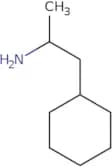
Fórmula:C9H9N3Pureza:Min. 95%Peso molecular:159.19 g/mol1-Cyclohexylpropan-2-amine
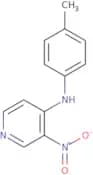
CAS:Versatile small molecule scaffoldFórmula:C9H19NPureza:Min. 95%Peso molecular:141.25 g/molN-(4-Methylphenyl)-3-nitropyridin-4-amine
CAS:Versatile small molecule scaffoldFórmula:C12H11N3O2Pureza:Min. 95%Peso molecular:229.23 g/mol2-tert-Butyl-1,3-benzoxazole
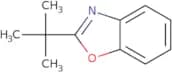
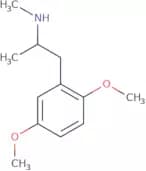
CAS:2-tert-Butyl-1,3-benzoxazole is an organic compound that belongs to the group of benzoxazoles. It can be synthesized by a variety of methods, including oxidative coupling of 2-tert-butylbenzothiazole with benzene or 1,2-dibromobenzene, or by the intramolecular cross-coupling reaction between 2-(2'-hydroxyphenyl)benzothiazole and methyl iodide. The compound has been shown to be an excellent ligand for palladium(II). This ligand can be used in asymmetric synthesis strategies to generate optimal yields of benzoxazoles from simple starting materials.Fórmula:C11H13NOPureza:Min. 95%Peso molecular:175.23 g/molMethyl-DMA
CAS:Produto ControladoVersatile small molecule scaffold
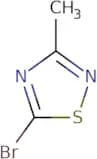
Fórmula:C12H19NO2Pureza:Min. 95%Peso molecular:209.28 g/mol5-Bromo-3-methyl-1,2,4-thiadiazole
CAS:Versatile small molecule scaffold
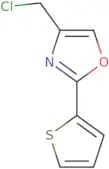
Fórmula:C3H3BrN2SPureza:Min. 95%Peso molecular:179.04 g/mol4-(Chloromethyl)-2-(thiophen-2-yl)-1,3-oxazole
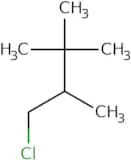
CAS:Versatile small molecule scaffoldFórmula:C8H6ClNOSPureza:Min. 95%Peso molecular:199.66 g/mol1-Chloro-2,3,3-trimethylbutane
CAS:Versatile small molecule scaffold
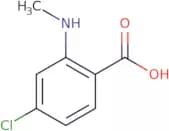
Fórmula:C7H15ClPureza:Min. 95%Peso molecular:134.65 g/mol4-Chloro-2-(methylamino)benzoic acid
CAS:Versatile small molecule scaffold
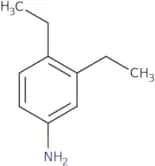
Fórmula:C8H8ClNO2Pureza:Min. 95%Peso molecular:185.61 g/mol3,4-Diethylaniline
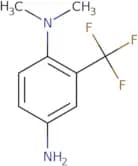
CAS:Versatile small molecule scaffoldFórmula:C10H15NPureza:Min. 95%Peso molecular:149.23 g/molN-1,N-1-Dimethyl-2-(trifluoromethyl)-1,4-benzenediamine
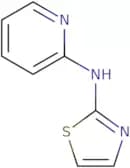
CAS:Versatile small molecule scaffoldFórmula:C9H11F3N2Pureza:Min. 95%Peso molecular:204.19 g/molN-(1,3-Thiazol-2-yl)pyridin-2-amine
CAS:N-(1,3-Thiazol-2-yl)pyridin-2-amine is a tyrosine kinase inhibitor that can be used to treat cancer. It was found to inhibit the growth of tumor cells by interfering with their ability to make new proteins. The drug also has a low molecular weight and a high solubility in water, which makes it suitable for intravenous administration. N-(1,3-Thiazol-2-yl)pyridin-2-amine inhibits protein kinases through competitive binding to the ATP binding site on the enzyme's active site. It has an analog profile that includes low molecular weight and high solubility in water, making it suitable for intravenous administration. Additionally, it has been shown that this drug is selective for receptor tyrosine kinases over other types of protein kinases (e.g., serine/threonine), while still exhibiting cross covalent coupling with piperazine
Fórmula:C8H7N3SPureza:Min. 95%Peso molecular:177.23 g/mol2-(Tributylstannyl)thiophene
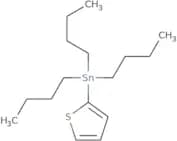
CAS:Produto Controlado2-Tributylstannylthiophene is a molecule that is used in organic synthesis. It is synthesized by the cross-coupling of 2-bromothiophene and tributyltin chloride. This molecule has been shown to be thermochromic, meaning that it changes color with a change in temperature. The color changes from yellow at lower temperatures to red at higher temperatures. 2-Tributylstannylthiophene has been shown to have optical properties, such as fluorescence and absorption, which are dependent on its molecular structure. It also has chemical properties, such as acidity, which can be altered by substituents on the carbon atoms of the molecule. 2-Tributylstannylthiophene can be used as a monomer for an organic material with constant optical properties because it does not undergo any reactions when exposed to inorganic acids or bases.Fórmula:C16H30SSnPureza:Min. 95%Peso molecular:373.18 g/mol1-Methyl-4-phosphorinanone 1-oxide
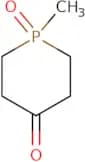
CAS:Versatile small molecule scaffoldFórmula:C6H11O2PPureza:Min. 95%Peso molecular:146.12 g/mol3,4,5,6-Tetrahydro-2H-azepin-7-amine hydrochloride
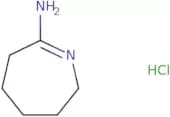
CAS:Versatile small molecule scaffoldFórmula:C6H13ClN2Pureza:Min. 95%Peso molecular:148.63 g/mol5-Aminopyrimidine-4,6-dithiol
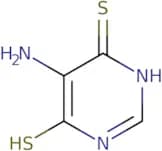
CAS:Versatile small molecule scaffold
Fórmula:C4H5N3S2Pureza:Min. 95%Peso molecular:159.2 g/mol4-(6-Chloro-5-nitropyrimidin-4-yl)morpholine
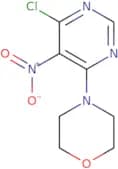
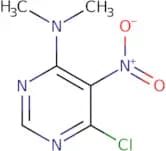
CAS:Versatile small molecule scaffoldFórmula:C8H9ClN4O3Pureza:Min. 95%Peso molecular:244.63 g/mol6-Chloro-N,N-dimethyl-5-nitropyrimidin-4-amine
CAS:Versatile small molecule scaffoldFórmula:C6H7ClN4O2Pureza:Min. 95%Peso molecular:202.6 g/mol2-(Pyrrolidin-1-yl)pyridine
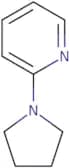
CAS:2-(Pyrrolidin-1-yl)pyridine is a chiral compound that belongs to the group of nucleophilic compounds. It can be synthesized in two different configurations, as either the erythro or threo isomer. The synthesis of 2-(pyrrolidin-1-yl)pyridine requires an asymmetric synthesis and involves the reaction of an acyl chloride with 2,6-dichloropyrimidine. The erythro isomer has been shown to have receptor activity at cb2 receptors and has been shown to reduce inflammation in animal models. The threo isomer has been shown to have reduced activity at cb2 receptors and does not show anti-inflammatory properties.
Fórmula:C9H12N2Pureza:Min. 95%Peso molecular:148.2 g/mol1-(4-Methoxyphenyl)pyrrolidine
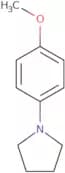
CAS:1-(4-Methoxyphenyl)pyrrolidine is an amide that is structurally related to buspirone and diazepam. It has been shown to have a high affinity for serotonin receptors. 1-(4-Methoxyphenyl)pyrrolidine has been found to be an antagonist of diazepam in the brain, and it also inhibits the binding of lidocaine to the sodium channel. In addition, 1-(4-Methoxyphenyl)pyrrolidine has pharmacological properties similar to those of procaine and lidocaine, which are used as local anesthetics. This drug was found to be acutely toxic in rats, but not at levels that would be harmful for humans.
Fórmula:C11H15NOPureza:Min. 95%Peso molecular:177.24 g/molMethyl 2-methylazulene-1-carboxylate
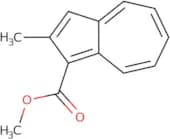
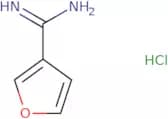
CAS:Methyl 2-methylazulene-1-carboxylate is a natural product that is found in the leaves of the "Mentha" species. It has shown anti-inflammatory, analgesic and antipyretic properties. Methyl 2-methylazulene-1-carboxylate is a cost effective analog of azulene and is used in medicinal preparations. It can be obtained by thermolysis of an ether or vinyl ether with a lactone. This compound has been shown to have optical (light) activity when cycloaddition reactions occur at the double bonds of the molecule. Tropolones are related compounds that also show this optical property.Fórmula:C13H12O2Pureza:Min. 95%Peso molecular:200.23 g/molFuran-3-carboxamidine hydrochloride
CAS:Versatile small molecule scaffold
Fórmula:C5H6N2O·HClPureza:Min. 95%Peso molecular:146.58 g/mol
![Ethyl({1-[4-(trifluoromethyl)phenyl]propan-2-yl})amine hydrochloride](/_next/image/?url=https%3A%2Fstatic.cymitquimica.com%2Fproducts%2F3D%2Fthumb-webp%2FECA77955.webp&w=3840&q=75)

![3H-Spiro[2-benzofuran-1,3'-piperidine]](/_next/image/?url=https%3A%2Fstatic.cymitquimica.com%2Fproducts%2F3D%2Fthumb-webp%2FECA77503.webp&w=3840&q=75)
![5H,6H,7H,8H-[1,2,4]Triazolo[4,3-b]pyridazine](/_next/image/?url=https%3A%2Fstatic.cymitquimica.com%2Fproducts%2F3D%2Fthumb-webp%2FECA76048.webp&w=3840&q=75)
![5H,6H,7H,8H-Imidazo[1,2-b]pyridazine](/_next/image/?url=https%3A%2Fstatic.cymitquimica.com%2Fproducts%2F3D%2Fthumb-webp%2FECA76047.webp&w=3840&q=75)
![2-{8-Oxa-3-azabicyclo[3.2.1]octan-3-yl}ethan-1-amine](/_next/image/?url=https%3A%2Fstatic.cymitquimica.com%2Fproducts%2F3D%2Fthumb-webp%2FECA74629.webp&w=3840&q=75)
![1-Methyl-1H,4H,7H-pyrazolo[3,4-b]pyridin-4-one](/_next/image/?url=https%3A%2Fstatic.cymitquimica.com%2Fproducts%2F3D%2Fthumb-webp%2FECA73876.webp&w=3840&q=75)
![1-(4-Methylphenyl)-1H,4H,5H-pyrazolo[3,4-d]pyrimidin-4-one](/_next/image/?url=https%3A%2Fstatic.cymitquimica.com%2Fproducts%2F3D%2Fthumb-webp%2FECA73875.webp&w=3840&q=75)
![3-Bromo-1-methyl-1H,4H,5H-pyrazolo[3,4-d]pyrimidin-4-one](/_next/image/?url=https%3A%2Fstatic.cymitquimica.com%2Fproducts%2F3D%2Fthumb-webp%2FECA73870.webp&w=3840&q=75)
![3-Amino-1,5-dihydro-1-methyl-4H-pyrazolo[3,4-d]pyrimidin-4-one](/_next/image/?url=https%3A%2Fstatic.cymitquimica.com%2Fproducts%2F3D%2Fthumb-webp%2FECA73866.webp&w=3840&q=75)