Building Blocks
Esta seção contém produtos fundamentais para a síntese de compostos orgânicos e biológicos. Building blocks são os materiais de partida essenciais usados para construir moléculas complexas através de várias reações químicas. Eles desempenham um papel crítico na descoberta de medicamentos, ciência dos materiais e pesquisa química. Na CymitQuimica, oferecemos uma ampla gama de building blocks de alta qualidade para apoiar suas pesquisas inovadoras e projetos industriais, garantindo que você tenha os componentes essenciais para uma síntese bem-sucedida.
Subcategorias de "Building Blocks"
- Ácidos Borónicos e Derivados de Ácido Borónico(5.756 produtos)
- Building Blocks Quirais(1.242 produtos)
- Building Blocks Hidrocarbonetos(6.095 produtos)
- Building Blocks orgânicos(61.055 produtos)
Foram encontrados 199650 produtos de "Building Blocks"
Ordenar por
Pureza (%)
0
100
|
0
|
50
|
90
|
95
|
100
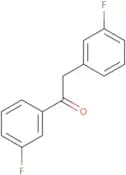
3'-Fluoro-2-(3-fluorophenyl)acetophenone
CAS:Versatile small molecule scaffoldFórmula:C14H10F2OPureza:Min. 95%Peso molecular:232.23 g/mol2-Chloro-5-(2-methoxyphenyl)-1,3,4-thiadiazole
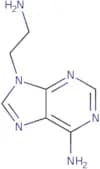
CAS:<p>Versatile small molecule scaffold</p>Fórmula:C9H7ClN2OSPureza:Min. 95%Peso molecular:226.68 g/mol9-(2-Aminoethyl)-9H-purin-6-amine
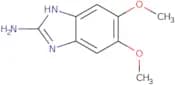
CAS:<p>9-(2-Aminoethyl)-9H-purin-6-amine is a nucleotide analog that has been used as a template for the synthesis of polymers with other heterocycles. The monomeric units are linked by crosslinks, which are formed by reacting two or more chains with an amine group on one of the chains. 9-(2-Aminoethyl)-9H-purin-6-amine is insoluble in water and reacts with cyanogen to form cyanuric acid. The phosphate groups can be reacted with chloride ions to form uracil, which is insoluble in water.</p>Fórmula:C7H10N6Pureza:Min. 95%Peso molecular:178.2 g/mol5,6-Dimethoxy-1H-1,3-benzodiazol-2-amine
CAS:<p>Versatile small molecule scaffold</p>Fórmula:C9H11N3O2Pureza:Min. 95%Peso molecular:193.2 g/mol2-(4-Chlorophenyl)cyclopentan-1-amine hydrochloride
CAS:<p>Versatile small molecule scaffold</p>Fórmula:C11H15Cl2NPureza:Min. 95%Peso molecular:232.15 g/mol2-(4-Chlorophenyl)cyclopentan-1-one
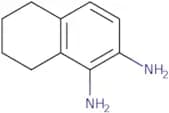
CAS:<p>Versatile small molecule scaffold</p>Fórmula:C11H11ClOPureza:Min. 95%Peso molecular:194.66 g/mol5,6,7,8-Tetrahydronaphthalene-1,2-diamine
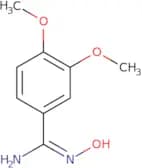
CAS:Versatile small molecule scaffoldFórmula:C10H14N2Pureza:Min. 95%Peso molecular:162.23 g/mol3,4-Dimethoxybenzamidoxime
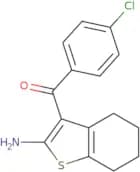
CAS:<p>Versatile small molecule scaffold</p>Fórmula:C9H12N2O3Pureza:Min. 95%Peso molecular:196.2 g/molT62
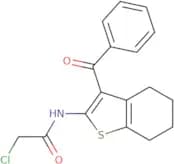
CAS:<p>T62 is a chemical element that belongs to the group of rare-earth metals. It is used in a variety of different industries, such as for the manufacture of magnets and batteries. T62 has been shown to be an effective inhibitor of bacterial ubiquitin ligases, which are enzymes that regulate protein degradation by attaching ubiquitin molecules to proteins. T62 has also been shown to inhibit chronic pain in animal models due to its ability to inhibit adenosine receptors. This drug has shown efficacy in treating bladder cancer and hematopoietic disorders.</p>Fórmula:C15H14ClNOSPureza:Min. 95%Peso molecular:291.8 g/molN-(3-Benzoyl-4,5,6,7-tetrahydro-1-benzothiophen-2-yl)-2-chloroacetamide
CAS:Versatile small molecule scaffoldFórmula:C17H16ClNO2SPureza:Min. 95%Peso molecular:333.8 g/mol[5-(2-Chlorophenyl)fur-2-yl]methanol
CAS:<p>Versatile small molecule scaffold</p>Fórmula:C11H9ClO2Pureza:Min. 95%Peso molecular:208.64 g/mol2-(5-Methyl-1,3-dioxo-2,3-dihydro-1H-isoindol-2-yl)acetic acid
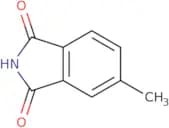
CAS:<p>Versatile small molecule scaffold</p>Fórmula:C11H9NO4Pureza:Min. 95%Peso molecular:219.19 g/mol4-Methylphthalimide
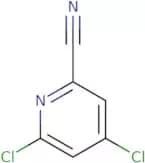
CAS:<p>4-Methylphthalimide is a chiral, birefringent, colorless crystalline compound. It is soluble in water and has a molecular weight of 98.4 g/mol. 4-Methylphthalimide is synthesized by the treatment of methylester with an oxidant and catalytic amide. The chemical reaction yields an isomeric mixture. 4-Methylphthalimide can be used in the treatment of biomolecular research as a chiral stationary phase for gel permeation chromatography (GPC). The compound's high refractive index leads to its use in densities measurements.br>br><br>br>br><br>Densities: 4-methylphthalimide has a density of 1.394 g/cm3 at 20 degrees Celsius and 1 atmosphere pressure.br>br><br>Temperature: 4-methylphthalimide melts at 247 degrees Celsius.br>br><br>Chiral: 4-methyl</p>Fórmula:C9H7NO2Pureza:Min. 95%Peso molecular:161.15 g/mol4,6-Dichloropyridine-2-carbonitrile
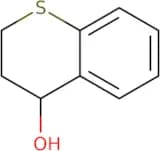
CAS:Versatile small molecule scaffoldFórmula:C6H2N2Cl2Pureza:Min. 95%Peso molecular:172.99 g/mol3,4-Dihydro-2H-1-benzothiopyran-4-ol
CAS:<p>3,4-Dihydro-2H-1-benzothiopyran-4-ol is a reactive intermediate that can be generated by dehydrogenation of benzothiophene. 3,4-Dihydro-2H-1-benzothiopyran-4-ol is used as an activating agent for cross coupling reactions and has been shown to possess functional groups such as cyclopentyl. 3,4-Dihydro-2H-1-benzothiopyran-4-ol has been detected in significant amounts in the X ray crystal structures of lipases. This compound binds to the substrate binding site on lipases and participates in catalytic cleavage. The rate of this reaction increases with temperature and decreases with increasing organic solvent concentration.</p>Fórmula:C9H10OSPureza:Min. 95%Peso molecular:166.24 g/mol2-Chloro-3-[(2S)-1-methylpyrrolidin-2-yl]pyridine
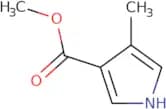
CAS:<p>Versatile small molecule scaffold</p>Fórmula:C10H13ClN2Pureza:Min. 95%Peso molecular:196.67 g/molMethyl 4-methyl-1H-pyrrole-3-carboxylate
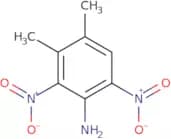
CAS:<p>Methyl 4-methyl-1H-pyrrole-3-carboxylate is a fluorescent probe that has been used in the detection of copper ions. The selectivity and sensitivity of this probe have been shown to be constant, with a detection limit of 0.5 nM and a stoichiometry of 1:1. Methyl 4-methyl-1H-pyrrole-3-carboxylate is also selective for copper, as it does not react with other metal ions such as nickel or cadmium. This compound has an affinity for copper ions and can be used in molecular probes to detect their presence in biological systems, such as cells or tissues. In addition, methyl 4-methyl-1H-pyrrole-3-carboxylate is sensitive to changes in pH levels and can be used to measure the pH of samples by using a colorimetric assay.</p>Fórmula:C7H9NO2Pureza:Min. 95%Peso molecular:139.15 g/mol3,4-Dimethyl-2,6-dinitroaniline
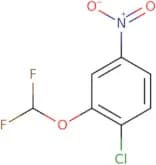
CAS:<p>Versatile small molecule scaffold</p>Fórmula:C8H9N3O4Pureza:Min. 95%Cor e Forma:PowderPeso molecular:211.17 g/mol1-Chloro-2-(difluoromethoxy)-4-nitrobenzene
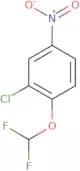
CAS:<p>Versatile small molecule scaffold</p>Fórmula:C7H4ClF2NO3Pureza:Min. 95%Peso molecular:223.56 g/mol2-Chloro-1-(difluoromethoxy)-4-nitro-benzene
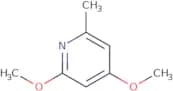
CAS:<p>Versatile small molecule scaffold</p>Fórmula:C7H4ClF2NO3Pureza:Min. 95%Peso molecular:223.56 g/mol2,4-Dimethoxy-6-methylpyridine
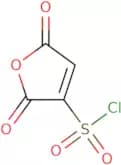
CAS:<p>Versatile small molecule scaffold</p>Fórmula:C8H11NO2Pureza:Min. 95%Peso molecular:153.18 g/mol2,5-Dioxo-2,5-dihydrofuran-3-sulfonyl chloride
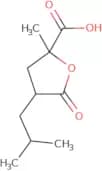
CAS:<p>Versatile small molecule scaffold</p>Fórmula:C4HClO5SPureza:Min. 95%Peso molecular:196.57 g/mol2-Methyl-4-(2-methylpropyl)-5-oxooxolane-2-carboxylic acid
CAS:<p>Versatile small molecule scaffold</p>Fórmula:C10H16O4Pureza:Min. 95%Peso molecular:200.23 g/molrac-(1R,2R,4S)-2-(Aminomethyl)bicyclo[2.2.1]heptan-2-ol hydrochloride
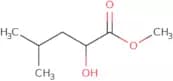
CAS:<p>Versatile small molecule scaffold</p>Fórmula:C8H16ClNOPureza:Min. 95%Peso molecular:177.7 g/molMethyl 2-hydroxy-4-methylvalerate
CAS:<p>Methyl 2-hydroxy-4-methylvalerate is an organic compound that belongs to the class of fatty acids. It is a colorless liquid with a fruity odor. Methyl 2-hydroxy-4-methylvalerate has been shown to inhibit the formation of reactive oxygen species and has antioxidant potential. It also inhibits bone resorption, which may be due to its ability to reduce levels of isobutyric acid in rats and humans. Methyl 2-hydroxy-4-methylvalerate has been found in tropical fruits such as mangoes, durians, and papayas.</p>Fórmula:C7H14O3Pureza:Min. 95%Peso molecular:146.18 g/mol1-[(tert-Butoxy)carbonyl]-4-hydroxypyrrolidine-2-carboxylic acid
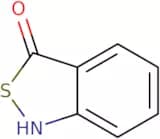
CAS:<p>Versatile small molecule scaffold</p>Fórmula:C10H17NO5Pureza:Min. 95%Peso molecular:231.25 g/mol1,3-Dihydro-2,1-benzothiazol-3-one
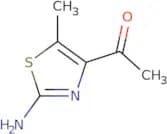
CAS:<p>1,3-Dihydro-2,1-benzothiazol-3-one is a versatile compound widely used in chemistry and research applications. It belongs to the category of Research Chemicals and is highly sought after by scientists and researchers worldwide. This Australian-made product offers exceptional quality and purity, making it a reliable choice for various laboratory experiments and studies. With its unique chemical structure, 1,3-Dihydro-2,1-benzothiazol-3-one opens up new possibilities for innovative research and discovery. Whether you are working on organic synthesis, drug development, or material science, this compound is an essential addition to your scientific toolkit. Trust in its proven performance and explore the endless potential it holds for advancing your research endeavors.</p>Fórmula:C7H5NOSPureza:Min. 95%Peso molecular:151.19 g/mol1-(2-Amino-5-methylthiazol-4-yl)ethanone
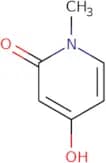
CAS:<p>Versatile small molecule scaffold</p>Fórmula:C6H8N2OSPureza:Min. 95%Peso molecular:156.21 g/mol4-Hydroxy-1-methyl-2-pyridone
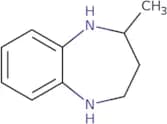
CAS:<p>Versatile small molecule scaffold</p>Fórmula:C6H7NO2Pureza:Min. 95%Peso molecular:125.13 g/mol2-Methyl-2,3,4,5-tetrahydro-1H-1,5-benzodiazepine
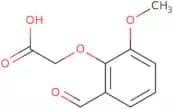
CAS:Versatile small molecule scaffoldFórmula:C10H14N2Pureza:Min. 95%Peso molecular:162.23 g/mol2-(2-Formyl-6-methoxyphenoxy)acetic acid
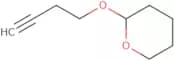
CAS:<p>2-(2-Formyl-6-methoxyphenoxy)acetic acid is a white crystalline solid that occurs as a monomer, dimer, or polymer. It has an asymmetric center and the molecule can exist in four different conformations. When it is crystallized from water, the dihydrate form is obtained; when the substance is heated to produce the anhydrous form, it becomes cyclic and rotates around its central axis. The compound has a centrosymmetric conformation and it can be classified as unidentate because it has only one functional group per molecule. 2-(2-Formyl-6-methoxyphenoxy)acetic acid also has a carboxylate group on its side chain.</p>Fórmula:C10H10O5Pureza:Min. 95%Peso molecular:210.19 g/mol2-(3-Butynyloxy)tetrahydro-2H-pyran
CAS:<p>2-(3-Butynyloxy)tetrahydro-2H-pyran (BOP) is a synthetic chemical that interacts with the insect nervous system. It is an attractant for Lepidoptera and can be used to control pest populations. BOP has been shown to modify the behavior of conspecific insects, and it has also been shown to interact with other insecticides. BOP is a model study compound with stereospecificity, which means that it interacts differently when bound to lepidopteran or dipteran receptors. This compound has been found to have no effect on the metabolism of deoxyribose, but it does show some solvatochromism in different solvents.</p>Fórmula:C9H14O2Pureza:Min. 95%Peso molecular:154.21 g/mol1,4-Dioxa-7-azaspiro[4.5]decane
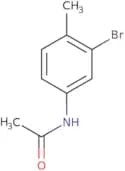
CAS:<p>Versatile small molecule scaffold</p>Fórmula:C7H13NO2Pureza:Min. 95%Peso molecular:143.19 g/molN-(3-Bromo-4-methylphenyl)acetamide
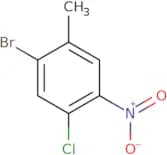
CAS:<p>Versatile small molecule scaffold</p>Fórmula:C9H10BrNOPureza:Min. 95%Peso molecular:228.09 g/mol2-Bromo-4-chloro-5-nitrotoluene
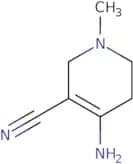
CAS:<p>2-Bromo-4-chloro-5-nitrotoluene is an amination catalyst that can be used in the palladium-catalyzed amination of aryl bromides. 2-Bromo-4-chloro-5-nitrotoluene is a stoichiometric reagent that catalyzes the reaction between an intermediate and ammonia to form an amine. It is compatible with various functional groups, including esters, ethers, alcohols, and amines.</p>Fórmula:C7H5BrClNO2Pureza:Min. 95%Peso molecular:250.48 g/mol4-Amino-1-methyl-1,2,5,6-tetrahydro-pyridine-3-carbonitrile
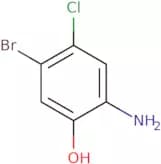
CAS:<p>Versatile small molecule scaffold</p>Fórmula:C7H11N3Pureza:Min. 95%Peso molecular:137.18 g/mol2-Amino-5-bromo-4-chlorophenol
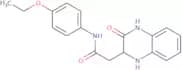
CAS:<p>Versatile small molecule scaffold</p>Fórmula:C6H5BrClNOPureza:Min. 95%Peso molecular:222.47 g/molN-(4-Ethoxyphenyl)-2-(3-oxo-1,2,3,4-tetrahydroquinoxalin-2-yl)acetamide
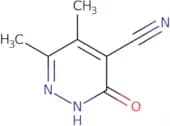
CAS:<p>Versatile small molecule scaffold</p>Fórmula:C18H19N3O3Pureza:Min. 95%Peso molecular:325.4 g/mol5,6-dimethyl-3-oxo-2,3-dihydropyridazine-4-carbonitrile
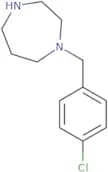
CAS:<p>Versatile small molecule scaffold</p>Fórmula:C7H7N3OPureza:Min. 95%Peso molecular:149.14 g/mol1-(4-Chlorobenzyl)-1,4-diazepane
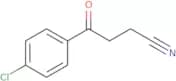
CAS:<p>1-(4-Chlorobenzyl)-1,4-diazepane is a psychoactive drug that belongs to the group of benzodiazepines. It has been detected in a number of samples taken from people who have consumed psychoactive substances. 1-(4-Chlorobenzyl)-1,4-diazepane is used as an analytical tool for the detection of other drugs, such as amphetamine and pentedrone. It can be analysed using gas chromatography with mass spectrometry (GC/MS) or liquid chromatography with tandem mass spectrometry (LC/MS).</p>Fórmula:C12H17ClN2Pureza:Min. 95%Peso molecular:224.73 g/mol4-(4-Chlorophenyl)-4-oxobutanenitrile
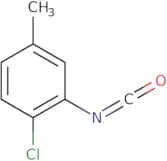
CAS:<p>Versatile small molecule scaffold</p>Fórmula:C10H8ClNOPureza:Min. 95%Peso molecular:193.63 g/mol2-Chloro-5-methylphenyl isocyanate
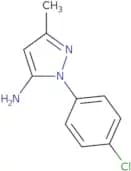
CAS:<p>Versatile small molecule scaffold</p>Fórmula:C8H6ClNOPureza:Min. 95%Peso molecular:167.59 g/mol1-(4-Chlorophenyl)-3-methyl-1H-pyrazol-5-amine
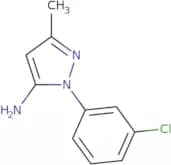
CAS:<p>1-(4-Chlorophenyl)-3-methyl-1H-pyrazol-5-amine is a sulfate ester that can be found in chondroitin sulfates. Its function is to assemble into a long polymer by reacting with the hydroxyl groups of the polysaccharides. Sulfate esters are also used as drugs, such as in the treatment of rheumatoid arthritis. 1-(4-Chlorophenyl)-3-methyl-1H-pyrazol-5-amine can also inhibit the growth of bacteria and fungi by inhibiting their ability to produce chondroitin sulfate.</p>Fórmula:C10H10ClN3Pureza:Min. 95%Peso molecular:207.66 g/mol2-(3-Chloro-phenyl)-5-methyl-2H-pyrazol-3-ylamine
CAS:Versatile small molecule scaffoldFórmula:C10H10ClN3Pureza:Min. 95%Peso molecular:207.66 g/mol7-Amino-6-chloro-4H-benzo[1,4]oxazin-3-one
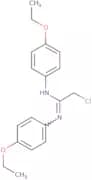
CAS:<p>Versatile small molecule scaffold</p>Fórmula:C8H7ClN2O2Pureza:Min. 95%Peso molecular:198.61 g/mol2-Chloro-N,N'-bis(4-ethoxyphenyl)ethanimidamide
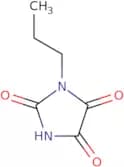
CAS:<p>Versatile small molecule scaffold</p>Fórmula:C18H21ClN2O2Pureza:Min. 95%Peso molecular:332.8 g/mol1-Propylimidazolidine-2,4,5-trione
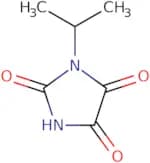
CAS:<p>Versatile small molecule scaffold</p>Fórmula:C6H8N2O3Pureza:Min. 95%Peso molecular:156.14 g/mol1-(Propan-2-yl)imidazolidine-2,4,5-trione
CAS:<p>Versatile small molecule scaffold</p>Fórmula:C6H8N2O3Pureza:Min. 95%Peso molecular:156.14 g/mol1-Butylimidazolidine-2,4,5-trione
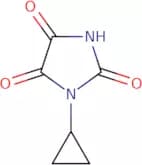
CAS:<p>Versatile small molecule scaffold</p>Fórmula:C7H10N2O3Pureza:Min. 95%Peso molecular:170.17 g/mol1-Cyclopropylimidazolidine-2,4,5-trione
CAS:<p>Versatile small molecule scaffold</p>Fórmula:C6H6N2O3Pureza:Min. 95%Peso molecular:154.12 g/mol



![[5-(2-Chlorophenyl)fur-2-yl]methanol](/_next/image/?url=https%3A%2Fstatic.cymitquimica.com%2Fproducts%2F3D%2Fthumb-webp%2FQBA31366.webp&w=3840&q=75)

![2-Chloro-3-[(2S)-1-methylpyrrolidin-2-yl]pyridine](/_next/image/?url=https%3A%2Fstatic.cymitquimica.com%2Fproducts%2F3D%2Fthumb-webp%2FQBA31689.webp&w=3840&q=75)
![rac-(1R,2R,4S)-2-(Aminomethyl)bicyclo[2.2.1]heptan-2-ol hydrochloride](/_next/image/?url=https%3A%2Fstatic.cymitquimica.com%2Fproducts%2F3D%2Fthumb-webp%2FQBA34480.webp&w=3840&q=75)
![1-[(tert-Butoxy)carbonyl]-4-hydroxypyrrolidine-2-carboxylic acid](/_next/image/?url=https%3A%2Fstatic.cymitquimica.com%2Fproducts%2F3D%2Fthumb-webp%2FQBA35082.webp&w=3840&q=75)
![1,4-Dioxa-7-azaspiro[4.5]decane](/_next/image/?url=https%3A%2Fstatic.cymitquimica.com%2Fproducts%2F3D%2Fthumb-webp%2FQBA36991.webp&w=3840&q=75)
![7-Amino-6-chloro-4H-benzo[1,4]oxazin-3-one](/_next/image/?url=https%3A%2Fstatic.cymitquimica.com%2Fproducts%2F3D%2Fthumb-webp%2FQBA40145.webp&w=3840&q=75)