Building Blocks
Esta seção contém produtos fundamentais para a síntese de compostos orgânicos e biológicos. Building blocks são os materiais de partida essenciais usados para construir moléculas complexas através de várias reações químicas. Eles desempenham um papel crítico na descoberta de medicamentos, ciência dos materiais e pesquisa química. Na CymitQuimica, oferecemos uma ampla gama de building blocks de alta qualidade para apoiar suas pesquisas inovadoras e projetos industriais, garantindo que você tenha os componentes essenciais para uma síntese bem-sucedida.
Subcategorias de "Building Blocks"
- Ácidos Borónicos e Derivados de Ácido Borónico(5.778 produtos)
- Building Blocks Quirais(1.243 produtos)
- Building Blocks Hidrocarbonetos(6.097 produtos)
- Building Blocks orgânicos(61.048 produtos)
Foram encontrados 203115 produtos de "Building Blocks"
Ordenar por
Pureza (%)
0
100
|
0
|
50
|
90
|
95
|
100
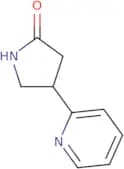
4-(Pyridin-2-yl)pyrrolidin-2-one
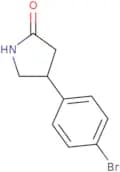
CAS:Versatile small molecule scaffoldFórmula:C9H10N2OPureza:Min. 95%Peso molecular:162.19 g/mol4-(4-Bromophenyl)pyrrolidin-2-one
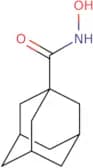
CAS:<p>Versatile small molecule scaffold</p>Fórmula:C10H10BrNOPureza:Min. 95%Peso molecular:240.1 g/molN-Hydroxyadamantane-1-carboxamide
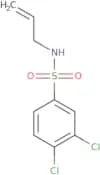
CAS:<p>N-Hydroxyadamantane-1-carboxamide is a research chemical that acts as a growth factor and has various applications in the field of medicine and biology. It has been shown to inhibit tumor necrosis factor-alpha (TNF-α), which plays a role in inflammation and immune response. Additionally, N-Hydroxyadamantane-1-carboxamide can be used as an electrode inhibitor in electrochemical studies.</p>Fórmula:C11H17NO2Pureza:Min. 95%Peso molecular:195.26 g/mol3,4-Dichloro-N-(prop-2-en-1-yl)benzene-1-sulfonamide
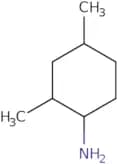
CAS:Versatile small molecule scaffoldFórmula:C9H9Cl2NO2SPureza:Min. 95%Peso molecular:266.14 g/mol2,4-Dimethylcyclohexan-1-amine
CAS:<p>Versatile small molecule scaffold</p>Fórmula:C8H17NPureza:Min. 95%Peso molecular:127.23 g/molN-(Butan-2-yl)-1,3-benzothiazol-2-amine
CAS:Versatile small molecule scaffoldFórmula:C11H14N2SPureza:Min. 95%Peso molecular:206.31 g/molN-Ethyl-1,3-benzothiazol-2-amine
CAS:<p>Versatile small molecule scaffold</p>Fórmula:C9H10N2SPureza:Min. 95%Peso molecular:178.26 g/mol3-[(2-Methylpropane-2-sulfinyl)methyl]aniline
CAS:Versatile small molecule scaffoldFórmula:C11H17NOSPureza:Min. 95%Peso molecular:211.33 g/mol3-[(tert-Butylsulfanyl)methyl]aniline
CAS:<p>Versatile small molecule scaffold</p>Fórmula:C11H17NSPureza:Min. 95%Peso molecular:195.33 g/mol2,4-dichloro-5-methylbenzene-1-sulfonyl chloride
CAS:Versatile small molecule scaffoldFórmula:C7H5Cl3O2SPureza:Min. 95%Peso molecular:259.53 g/mol3-(3,5-Dioxo-2,3,4,5-tetrahydro-[1,2,4]triazin-6-yl)-propionic acid
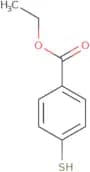
CAS:Versatile small molecule scaffoldFórmula:C6H7N3O4Pureza:Min. 95%Peso molecular:185.14 g/molEthyl 4-sulfanylbenzoate
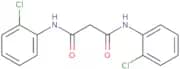
CAS:<p>Ethyl 4-sulfanylbenzoate is an inhibitor of thymidylate synthase. It has been shown to inhibit the production of thymidine and increase the level of l-glutamate in human cells. This compound may be useful in the treatment of certain diseases such as cancer or neurodegenerative disorders.</p>Fórmula:C9H10O2SPureza:Min. 95%Peso molecular:182.24 g/molN,N'-Bis(2-chlorophenyl)propanediamide
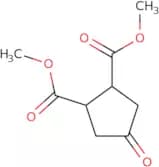
CAS:<p>Versatile small molecule scaffold</p>Fórmula:C15H12Cl2N2O2Pureza:Min. 95%Peso molecular:323.2 g/molrac-1,2-Dimethyl (1R,2S)-4-oxocyclopentane-1,2-dicarboxylate
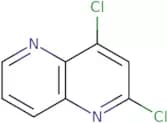
CAS:Versatile small molecule scaffoldFórmula:C9H12O5Pureza:Min. 95%Peso molecular:200.19 g/mol2,4-dichloro-1,5-naphthyridine
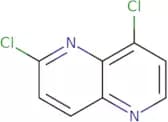
CAS:<p>2,4-Dichloro-1,5-naphthyridine is a methanolic solution of hydrogen chloride and chloroquine. It has been shown to be an effective antimalarial agent. 2,4-Dichloro-1,5-naphthyridine has been synthesized by the reaction of methanolic hydrogen chloride and sodium methoxide with 1,5-dichloronaphthalene in the presence of chloroform. The chemical name for this compound is 2-(2′,4′-dichlorophenyl)-1H-isoindole-1,3(2H)-dione. This chemical has not been studied extensively in humans but it is thought that it may have similar effects to primaquine.</p>Fórmula:C8H4Cl2N2Pureza:Min. 95%Peso molecular:199 g/mol2,8-dichloro-1,5-naphthyridine
CAS:Versatile small molecule scaffoldFórmula:C8H4Cl2N2Pureza:Min. 95%Peso molecular:199 g/molrac-[(1R,2R)-2-Aminocyclohexyl]methanol hydrochloride
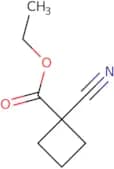
CAS:Versatile small molecule scaffoldFórmula:C7H16ClNOPureza:Min. 95%Peso molecular:165.66 g/molEthyl 1-cyanocyclobutanecarboxylate
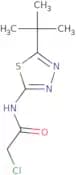
CAS:Ethyl 1-cyanocyclobutanecarboxylate is a cyclic molecule that belongs to the homologues of ethylene. This compound has been shown to react with carbanions in the presence of a base to form anionic initiator molecules. Ethyl 1-cyanocyclobutanecarboxylate can be used as an experimental monomer for ring-opening polymerization reactions, which are nonquantitative and may require temperatures as high as 110°C. The rate of these reactions is determined by the concentration of monomers, which should be made as monodisperse as possible.Fórmula:C8H11NO2Pureza:Min. 95%Peso molecular:153.18 g/molN-(5-tert-Butyl-1,3,4-thiadiazol-2-yl)-2-chloroacetamide
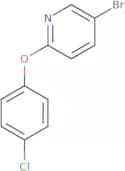
CAS:<p>Versatile small molecule scaffold</p>Fórmula:C8H12ClN3OSPureza:Min. 95%Peso molecular:233.72 g/mol5-Bromo-2-(4-chlorophenoxy)pyridine
CAS:Versatile small molecule scaffoldFórmula:C11H7BrClNOPureza:Min. 95%Peso molecular:284.53 g/molN-[Bis(4-methoxyphenyl)methyl]-2-chloroacetamide
CAS:Versatile small molecule scaffoldFórmula:C17H18ClNO3Pureza:Min. 95%Peso molecular:319.8 g/mol3-Chloro-N,N-diethylpropanamide
CAS:Versatile small molecule scaffoldFórmula:C7H14ClNOPureza:Min. 95%Peso molecular:163.64 g/mol6-Nitro-3,4-dihydro-2H-benzo[b][1,4]oxazine
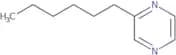
CAS:Versatile small molecule scaffoldFórmula:C8H8N2O3Pureza:Min. 95%Peso molecular:180.16 g/mol2-Hexylpyrazine
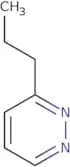
CAS:<p>2-Hexylpyrazine is a heterocyclic organic compound that belongs to the group of alkynyl pyrazines. It is used as a solid catalyst in organic reactions, such as methylation, esterification, and alkylation. 2-Hexylpyrazine has been shown to be effective for bowel disease and inflammatory bowel disease. It has also been shown to inhibit cancer cell growth and is being studied for its potential use in the treatment of autoimmune diseases. 2-Hexylpyrazine is metabolized by bile acids and inflammatory cells into a reactive species which activates G protein coupled receptors on the surface of cells, leading to increased chloride ion concentrations within the cell. This leads to inhibition of dopamine D3 receptor signaling, which may have anti-inflammatory effects.</p>Fórmula:C10H16N2Pureza:Min. 95%Peso molecular:164.25 g/mol3-Propylpyridazine
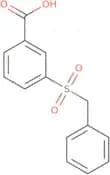
CAS:Versatile small molecule scaffoldFórmula:C7H10N2Pureza:Min. 95%Peso molecular:122.17 g/mol3-Phenylmethanesulfonylbenzoic acid
CAS:Versatile small molecule scaffoldFórmula:C14H12O4SPureza:Min. 95%Peso molecular:276.31 g/mol4-Methyl-2-[(propan-2-yl)amino]benzonitrile
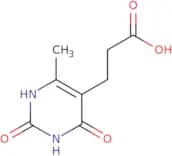
CAS:<p>Versatile small molecule scaffold</p>Fórmula:C11H14N2Pureza:Min. 95%Peso molecular:174.24 g/mol3-(6-Methyl-2,4-dioxo-1,2,3,4-tetrahydropyrimidin-5-yl)propanoic acid
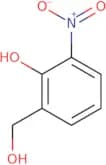
CAS:Versatile small molecule scaffoldFórmula:C8H10N2O4Pureza:Min. 95%Peso molecular:198.18 g/mol2-(Hydroxymethyl)-6-nitrophenol
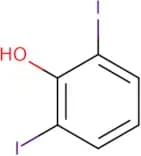
CAS:Salicylaldehyde is a colorless liquid with a spicy odor. It is used in the manufacture of many organic compounds and is found naturally in some plants, such as euglena gracilis and benzaldehyde. Salicylaldehyde can be biotransformed to other types of aldehydes. These include cinnamaldehyde, vanillin, 2-cyanobenzaldehyde, and 2-(hydroxymethyl)-6-nitrophenol (2NHP). 2NHP is an intermediate product of salicylic acid biosynthesis. It is also used to synthesize phenacetin and acetanilide. Acetanilide was once widely used as an analgesic but was withdrawn from clinical use because it caused fatal methemoglobinemia (a disorder in which the body does not have enough oxygen)Fórmula:C7H7NO4Pureza:Min. 95%Peso molecular:169.13 g/mol2,6-Diiodophenol
CAS:2,6-Diiodophenol is a noncompetitive inhibitor that binds to the active site of carbonic anhydrase. It can be used as a pharmaceutical formulation or in sample preparation for gene sequence analysis. 2,6-Diiodophenol has been shown to have competitive inhibition against other inhibitors such as acetazolamide and dichlorphenamide. The marine sponge-derived enzyme carbonic anhydrase (CA) from the Gulf of Mexico was examined by chromatographic and spectroscopic methods. The CA activity was found to be inhibited by 2,6-diiodophenol in a concentration dependent manner with a KI value of 0.06 mM. 2,6-Diiodophenol also inhibits CA activity in rat liver microsomes at concentrations above 1 mM but does not inhibit peroxide production by the microsomal system at concentrations up to 10 mM. The crystal structure of 2,6-diiodophenol bound to CA has been determined using XFórmula:C6H4I2OPureza:Min. 95%Peso molecular:345.9 g/mol2-[(4-Methoxyphenyl)formamido]-2-phenylacetic acid
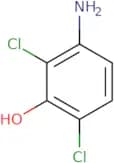
CAS:Versatile small molecule scaffoldFórmula:C16H15NO4Pureza:Min. 95%Peso molecular:285.29 g/mol3-Amino-2,6-dichlorophenol
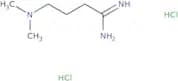
CAS:Versatile small molecule scaffoldFórmula:C6H5Cl2NOPureza:Min. 95%Peso molecular:178.01 g/mol4-(Dimethylamino)butanimidamide dihydrochloride
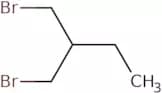
CAS:Versatile small molecule scaffoldFórmula:C6H17Cl2N3Pureza:Min. 95%Peso molecular:202.12 g/mol1-bromo-2-(bromomethyl)butane
CAS:<p>1-bromo-2-(bromomethyl)butane is an aliphatic compound that is used as a propellant. It is also used in the synthesis of epoxy resins and plasticizers. 1-Bromo-2-(bromomethyl)butane can be synthesized by reacting bromine with butane. This reaction is catalyzed by acid or base, and can be conducted at low temperatures. The resulting product has been shown to have properties that are similar to those of other aliphatic compounds, such as being nonflammable and having low toxicity.</p>Fórmula:C5H10Br2Pureza:Min. 95%Peso molecular:229.94 g/mol2-Mercapto-3-methyl-3H-purin-6(9H)-one
CAS:2-Mercapto-3-methyl-3H-purin-6(9H)one (2MMPD) is a purine analogue that has been used as a stabilizer in the synthesis of 3-methylxanthine. It has been shown to be useful for the fragmentation of large molecules in mass spectrometry and also has spectral properties similar to those of purines. The 2MMPD molecule can be used to identify other analogues, such as 3,7-dimethylxanthine, which are otherwise difficult to distinguish from one another. Spectral data for 2MMPD has been obtained from both gas chromatography and high performance liquid chromatography.Fórmula:C6H6N4OSPureza:Min. 95%Peso molecular:182.2 g/molBenzene, (1,1-dimethyl-2-propyn-1-yl)-
CAS:<p>Versatile small molecule scaffold</p>Fórmula:C11H12Pureza:Min. 95%Peso molecular:144.21 g/molrac-(1R,4R)-N-Methyl-4-phenylcyclohexan-1-amine hydrochloride
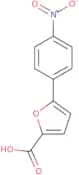
CAS:Versatile small molecule scaffoldFórmula:C13H20ClNPureza:Min. 95%Peso molecular:225.76 g/mol5-(4-Nitrophenyl)-2-furoic acid
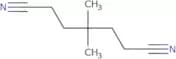
CAS:<p>5-(4-Nitrophenyl)-2-furoic acid is a phenolic acid that has been shown to inhibit protein–protein interactions. It has been proposed as a corrosion inhibitor for metal surfaces, and it has also been used in the synthesis of vitamin B12. 5-(4-Nitrophenyl)-2-furoic acid can be detected using fluorescence resonance energy transfer (FRET) on a surface with a constant concentration, which is proportional to the intensity of fluorescence emission. This compound can also be used as an insulin resistance marker by measuring the time it takes for glucose to enter cells.</p>Fórmula:C11H7NO5Pureza:Min. 95%Peso molecular:233.18 g/mol4,4-Dimethylheptanedinitrile
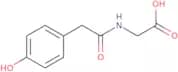
CAS:Versatile small molecule scaffoldFórmula:C9H14N2Pureza:Min. 95%Peso molecular:150.22 g/molp-Hydroxyphenylacetylglycine
CAS:<p>p-Hydroxyphenylacetylglycine (PHPAG) is a metabolite of creatine, which is found in urine samples. It can be detected through chemical analysis of tissue and food composition. The detection sensitivity is determined by the type of sample and the analytical method used. PHPAG has been shown to have diagnostic value for the diagnosis of certain diseases, such as liver cirrhosis, kidney disease, and fatty acid metabolism disorders. PHPAG has also been shown to be an indicator for intracellular levels of fatty acids and polyunsaturated fatty acids (PUFA).</p>Fórmula:C10H11NO4Pureza:Min. 95%Peso molecular:209.2 g/mol6-Bromospiro[3.3]heptane-2-carboxylic acid
CAS:<p>Versatile small molecule scaffold</p>Fórmula:C8H11BrO2Pureza:Min. 95%Peso molecular:219.08 g/mol2-Hydroxy-3,6,7-trimethylquinoxaline
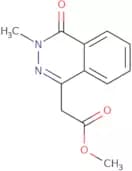
CAS:Versatile small molecule scaffoldFórmula:C11H12N2OPureza:Min. 95%Peso molecular:188.23 g/molMethyl 2-(3-methyl-4-oxo-3,4-dihydrophthalazin-1-yl)acetate
CAS:<p>Versatile small molecule scaffold</p>Fórmula:C12H12N2O3Pureza:Min. 95%Peso molecular:232.23 g/molAcetophenone-d5
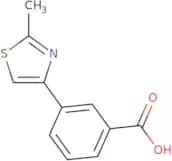
CAS:Produto Controlado<p>Acetophenone-d5 is a deuterated methyl group that is used as an internal standard in nuclear magnetic resonance spectrometry. Acetophenone-d5 has been synthesized by Wittig reaction of styrene and deuterium-labeled phosphonium salt. The purified acetophenone-d5 is chemically stable, thermally and fluorescently stable, nonvolatile, nonflammable and nonexplosive.</p>Fórmula:C8H3D5OPureza:Min. 95%Peso molecular:125.18 g/mol3-(2-Methyl-1,3-thiazol-4-yl)benzoic acid
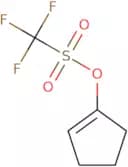
CAS:<p>Versatile small molecule scaffold</p>Fórmula:C11H9NO2SPureza:Min. 95%Peso molecular:219.26 g/molCyclopent-1-en-1-yl trifluoromethanesulfonate
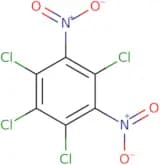
CAS:<p>Cyclopent-1-en-1-yl trifluoromethanesulfonate is a formylating agent that reacts with electrophilic groups and nucleophilic groups. It can be used to synthesize ketones, epoxides, and formyl compounds. Cyclopent-1-en-1-yl trifluoromethanesulfonate has been shown to inhibit the production of chemokines, which are inflammatory mediators that attract immune cells to infected or damaged tissues, and prostaglandins, which are lipid molecules that play a role in the regulation of inflammation.</p>Fórmula:C6H7F3O3SPureza:Min. 95%Peso molecular:216.18 g/mol1,2,3,5-Tetrachloro-4,6-dinitrobenzene
CAS:<p>1,2,3,5-Tetrachloro-4,6-dinitrobenzene is a chlorinating agent that is used to produce hypochlorous acid. It has an activation energy of 116 kJ/mol and a sensitivity test constant of 1.0 × 10. The impurities found in this compound are chloride and hydrogen chloride. This product can be separated using chromatographic methods and the profile depends on the chromatographic method used. The compound can be produced by reacting chlorine with hydroxide solution or sodium hydroxide solution in the presence of a nucleophilic substance such as chloride or ammonia.</p>Fórmula:C6Cl4N2O4Pureza:Min. 95%Peso molecular:305.9 g/mol1,2,3,4-Tetrahydroquinolin-3-ol
CAS:<p>1,2,3,4-Tetrahydroquinolin-3-ol is a stabilizer that can be used to prevent or slow down the polymerization of epoxy resins. It can also be used as an intermediate in the synthesis of other organic compounds. 1,2,3,4-Tetrahydroquinolin-3-ol has been shown to react with amines and nucleophiles to form new compounds. It has also been shown to stabilize proton transfer reactions. This compound is also capable of reacting with inorganic acids to form ring-opening polymers.</p>Fórmula:C9H11NOPureza:Min. 95%Peso molecular:149.19 g/mol2-Benzylbenzo[D]isothiazol-3(2H)-one 1,1-dioxide
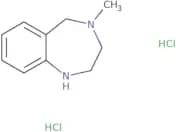
CAS:Versatile small molecule scaffoldFórmula:C14H11NO3SPureza:Min. 95%Peso molecular:273.31 g/mol4-Methyl-2,3,4,5-tetrahydro-1H-1,4-benzodiazepine dihydrochloride
CAS:<p>Versatile small molecule scaffold</p>Fórmula:C10H16Cl2N2Pureza:Min. 95%Peso molecular:235.15 g/mol



![3-[(2-Methylpropane-2-sulfinyl)methyl]aniline](/_next/image/?url=https%3A%2Fstatic.cymitquimica.com%2Fproducts%2F3D%2Fthumb-webp%2FDBA28833.webp&w=3840&q=75)
![3-[(tert-Butylsulfanyl)methyl]aniline](/_next/image/?url=https%3A%2Fstatic.cymitquimica.com%2Fproducts%2F3D%2Fthumb-webp%2FDBA28827.webp&w=3840&q=75)

![3-(3,5-Dioxo-2,3,4,5-tetrahydro-[1,2,4]triazin-6-yl)-propionic acid](/_next/image/?url=https%3A%2Fstatic.cymitquimica.com%2Fproducts%2F3D%2Fthumb-webp%2FDBA28067.webp&w=3840&q=75)
![rac-[(1R,2R)-2-Aminocyclohexyl]methanol hydrochloride](/_next/image/?url=https%3A%2Fstatic.cymitquimica.com%2Fproducts%2F3D%2Fthumb-webp%2FDBA25045.webp&w=3840&q=75)
![N-[Bis(4-methoxyphenyl)methyl]-2-chloroacetamide](/_next/image/?url=https%3A%2Fstatic.cymitquimica.com%2Fproducts%2F3D%2Fthumb-webp%2FDBA23040.webp&w=3840&q=75)
![6-Nitro-3,4-dihydro-2H-benzo[b][1,4]oxazine](/_next/image/?url=https%3A%2Fstatic.cymitquimica.com%2Fproducts%2F3D%2Fthumb-webp%2FDBA22622.webp&w=3840&q=75)
![4-Methyl-2-[(propan-2-yl)amino]benzonitrile](/_next/image/?url=https%3A%2Fstatic.cymitquimica.com%2Fproducts%2F3D%2Fthumb-webp%2FDBA19500.webp&w=3840&q=75)
![2-[(4-Methoxyphenyl)formamido]-2-phenylacetic acid](/_next/image/?url=https%3A%2Fstatic.cymitquimica.com%2Fproducts%2F3D%2Fthumb-webp%2FDBA17253.webp&w=3840&q=75)


![6-Bromospiro[3.3]heptane-2-carboxylic acid](/_next/image/?url=https%3A%2Fstatic.cymitquimica.com%2Fproducts%2F3D%2Fthumb-webp%2FDBA11488.webp&w=3840&q=75)

![2-Benzylbenzo[D]isothiazol-3(2H)-one 1,1-dioxide](/_next/image/?url=https%3A%2Fstatic.cymitquimica.com%2Fproducts%2F3D%2Fthumb-webp%2FDAA41659.webp&w=3840&q=75)