Building Blocks
Esta seção contém produtos fundamentais para a síntese de compostos orgânicos e biológicos. Building blocks são os materiais de partida essenciais usados para construir moléculas complexas através de várias reações químicas. Eles desempenham um papel crítico na descoberta de medicamentos, ciência dos materiais e pesquisa química. Na CymitQuimica, oferecemos uma ampla gama de building blocks de alta qualidade para apoiar suas pesquisas inovadoras e projetos industriais, garantindo que você tenha os componentes essenciais para uma síntese bem-sucedida.
Subcategorias de "Building Blocks"
- Ácidos Borónicos e Derivados de Ácido Borónico(5.778 produtos)
- Building Blocks Quirais(1.243 produtos)
- Building Blocks Hidrocarbonetos(6.097 produtos)
- Building Blocks orgânicos(61.052 produtos)
Foram encontrados 201390 produtos de "Building Blocks"
Ordenar por
Pureza (%)
0
100
|
0
|
50
|
90
|
95
|
100
1-{[(9H-Fluoren-9-yl)methoxy]carbonyl}-3-fluoropyrrolidine-3-carboxylic acid
CAS:Versatile small molecule scaffoldFórmula:C20H18FNO4Pureza:Min. 95%Peso molecular:355.4 g/molMethyl 5-(aminomethyl)pyrazine-2-carboxylate hydrochloride
CAS:Versatile small molecule scaffoldFórmula:C7H10ClN3O2Pureza:Min. 95%Peso molecular:203.62 g/mol9-Chloro-7,10-diazatricyclo[6.4.0.0,2,6]dodeca-1(12),2(6),8,10-tetraene
CAS:Versatile small molecule scaffoldFórmula:C10H9ClN2Pureza:Min. 95%Peso molecular:192.64 g/mol1-Chloro-5H,6H,7H,8H,9H-pyrido[3,4-b]indole
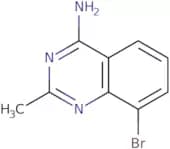
CAS:Versatile small molecule scaffoldFórmula:C11H11ClN2Pureza:Min. 95%Peso molecular:206.67 g/mol8-Bromo-2-methylquinazolin-4-amine
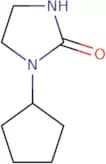
CAS:Versatile small molecule scaffoldFórmula:C9H8BrN3Pureza:Min. 95%Peso molecular:238.08 g/mol1-Cyclopentylimidazolidin-2-one
CAS:<p>Versatile small molecule scaffold</p>Fórmula:C8H14N2OPureza:Min. 95%Peso molecular:154.21 g/moltert-Butyl 6-oxo-2-azabicyclo[3.2.0]heptane-2-carboxylate
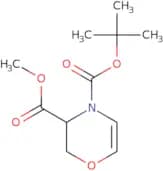
CAS:Versatile small molecule scaffoldFórmula:C11H17NO3Pureza:Min. 95%Peso molecular:211.26 g/mol4-tert-Butyl 3-methyl 3,4-dihydro-2H-oxazine-3,4-dicarboxylate
CAS:Versatile small molecule scaffoldFórmula:C11H17NO5Pureza:Min. 95%Peso molecular:243.3 g/moltert-Butyl N-[(1H-imidazol-4-yl)methyl]carbamate
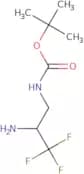
CAS:Versatile small molecule scaffoldFórmula:C9H15N3O2Pureza:Min. 95%Peso molecular:197.23 g/moltert-Butyl N-(2-amino-3,3,3-trifluoropropyl)carbamate
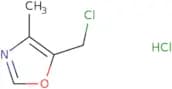
CAS:Versatile small molecule scaffoldFórmula:C8H15F3N2O2Pureza:Min. 95%Peso molecular:228.21 g/mol5-(Chloromethyl)-4-methyl-1,3-oxazole hydrochloride
CAS:Versatile small molecule scaffoldFórmula:C5H7Cl2NOPureza:Min. 95%Peso molecular:168.02 g/moltert-Butyl 2,6-diazaspiro[3.5]nonane-6-carboxylate hydrochloride
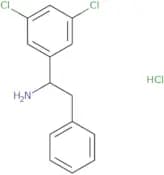
CAS:Versatile small molecule scaffoldFórmula:C12H22N2O2·HClPureza:Min. 95%Peso molecular:262.78 g/mol1-(3,5-Dichlorophenyl)-2-phenylethan-1-amine hydrochloride
CAS:Versatile small molecule scaffoldFórmula:C14H14Cl3NPureza:Min. 95%Peso molecular:302.6 g/mol2-(2-{[(tert-Butoxy)carbonyl]amino}ethyl)benzoic acid
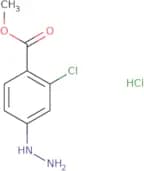
CAS:Versatile small molecule scaffoldFórmula:C14H19NO4Pureza:Min. 95%Peso molecular:265.3 g/molMethyl 2-chloro-4-hydrazinylbenzoate hydrochloride
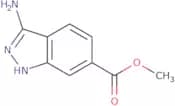
CAS:Versatile small molecule scaffoldFórmula:C8H10Cl2N2O2Pureza:Min. 95%Peso molecular:237.08 g/molMethyl 3-amino-1H-indazole-6-carboxylate
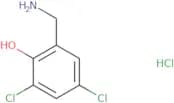
CAS:Versatile small molecule scaffoldFórmula:C9H9N3O2Pureza:Min. 95%Peso molecular:191.19 g/mol2-(Aminomethyl)-4,6-dichlorophenol hydrochloride
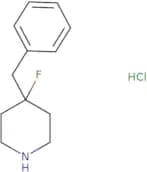
CAS:<p>Versatile small molecule scaffold</p>Fórmula:C7H8Cl3NOPureza:Min. 95%Peso molecular:228.5 g/mol4-Benzyl-4-fluoropiperidine hydrochloride
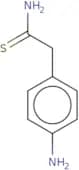
CAS:Versatile small molecule scaffoldFórmula:C12H17ClFNPureza:Min. 95%Peso molecular:229.72 g/mol2-(4-Aminophenyl)ethanethioamide
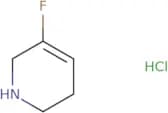
CAS:<p>Versatile small molecule scaffold</p>Fórmula:C8H10N2SPureza:Min. 95%Peso molecular:166.25 g/mol5-Fluoro-1,2,3,6-tetrahydropyridine hydrochloride
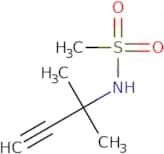
CAS:Versatile small molecule scaffoldFórmula:C5H9ClFNPureza:Min. 95%Peso molecular:137.58 g/molN-(2-Methylbut-3-yn-2-yl)methanesulfonamide
CAS:<p>Versatile small molecule scaffold</p>Fórmula:C6H11NO2SPureza:Min. 95%Peso molecular:161.22 g/mol9-Oxa-2-azaspiro[5.5]undecane hydrochloride
CAS:Versatile small molecule scaffoldFórmula:C9H18ClNOPureza:Min. 95%Peso molecular:191.7 g/molrac-tert-Butyl N-[(3R,4R)-4-(aminomethyl)oxolan-3-yl]carbamate
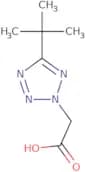
CAS:Versatile small molecule scaffoldFórmula:C10H20N2O3Pureza:Min. 95%Peso molecular:216.3 g/mol2-(5-tert-Butyl-2H-1,2,3,4-tetrazol-2-yl)acetic acid
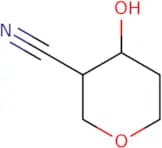
CAS:Versatile small molecule scaffoldFórmula:C7H12N4O2Pureza:Min. 95%Peso molecular:184.2 g/molrac-(3R,4S)-4-Hydroxyoxane-3-carbonitrile
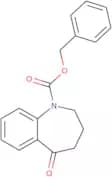
CAS:Versatile small molecule scaffoldFórmula:C6H9NO2Pureza:Min. 95%Peso molecular:127.14 g/molBenzyl 5-oxo-2,3,4,5-tetrahydro-1H-1-benzazepine-1-carboxylate
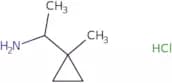
CAS:Versatile small molecule scaffoldFórmula:C18H17NO3Pureza:Min. 95%Peso molecular:295.3 g/mol1-(1-Methylcyclopropyl)ethan-1-amine hydrochloride
CAS:<p>Versatile small molecule scaffold</p>Fórmula:C6H14ClNPureza:Min. 95%Peso molecular:135.63 g/mol8-Bromo-2-(methylthio)pyrazolo[1,5-a][1,3,5]triazin-4-ol
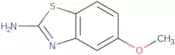
CAS:Versatile small molecule scaffoldFórmula:C6H5BrN4OSPureza:Min. 95%Peso molecular:261.1 g/mol5-Methoxy-1,3-benzothiazol-2-amine
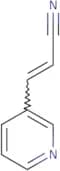
CAS:<p>5-Methoxy-1,3-benzothiazol-2-amine (5MBZ) is a benzothiazepine with inhibitory activity. It has been shown to bind to the mitochondrial membrane potential in cells and reduce the amount of ATP produced by the mitochondria. 5MBZ also has in vitro cytotoxic activity against cancer cells and has been shown to be effective in reducing β-amyloid production. This compound was synthesized through an imine reaction with 2,4,6-trinitrobenzenesulfonic acid and methylamine. 5MBZ was found to be soluble in water and organic solvents.</p>Fórmula:C8H8N2OSPureza:Min. 95%Peso molecular:180.23 g/mol3-(Pyridin-3-yl)prop-2-enenitrile
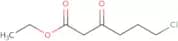
CAS:Versatile small molecule scaffoldFórmula:C8H6N2Pureza:Min. 95%Peso molecular:130.15 g/molEthyl 6-chloro-3-oxohexanoate
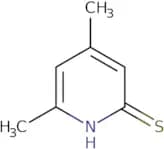
CAS:Ethyl 6-chloro-3-oxohexanoate is an antibacterial agent that belongs to the quinolone class of antibiotics. It is a derivative of aniline, which is oxidized by polyphosphoric acid to form the corresponding carboxylic acid. This product has been shown to have high biological activity against bacteria, including Staphylococcus aureus and Enterococcus faecalis. Ethyl 6-chloro-3-oxohexanoate can be used in combination with piperidine or amines to form esters and salts, respectively. The product can also react with chlorinating agents such as thionyl chloride or phosphorus pentachloride to produce chlorinated derivatives.Fórmula:C8H13ClO3Pureza:Min. 95%Peso molecular:192.64 g/mol4,6-Dimethylpyridine-2-thiol
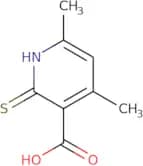
CAS:<p>Versatile small molecule scaffold</p>Fórmula:C7H9NSPureza:Min. 95%Peso molecular:139.22 g/mol4,6-Dimethyl-2-sulfanylpyridine-3-carboxylic acid
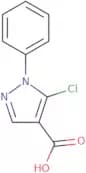
CAS:<p>Versatile small molecule scaffold</p>Fórmula:C8H9NO2SPureza:Min. 95%Peso molecular:183.23 g/mol5-Chloro-1-phenyl-1H-pyrazole-4-carboxylic acid
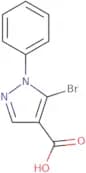
CAS:<p>Versatile small molecule scaffold</p>Fórmula:C10H7ClN2O2Pureza:Min. 95%Peso molecular:222.63 g/mol5-Bromo-1-phenyl-1H-pyrazole-4-carboxylic acid
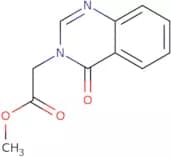
CAS:Versatile small molecule scaffoldFórmula:C10H7BrN2O2Pureza:Min. 95%Peso molecular:267.08 g/molMethyl 2-(4-oxo-3,4-dihydroquinazolin-3-yl)acetate
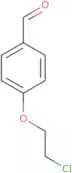
CAS:Versatile small molecule scaffoldFórmula:C11H10N2O3Pureza:Min. 95%Peso molecular:218.21 g/mol4-(2-Chloroethoxy)benzaldehyde
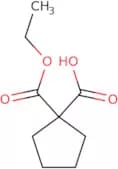
CAS:<p>4-(2-Chloroethoxy)benzaldehyde is a phenolic compound that has been shown to have antioxidant properties. It can scavenge free radicals and inhibit lipid peroxidation through its electron donating activity. 4-(2-Chloroethoxy)benzaldehyde has also been shown to have anti-inflammatory, anticancer, antifungal, and antimicrobial properties in vitro. The biological activities of this compound are most likely due to its synthesis of heterocycles and functionalities. 4-(2-Chloroethoxy)benzaldehyde has been found in the etoac extract of Moringa oleifera leaves as well as other solvents.</p>Fórmula:C9H9ClO2Pureza:Min. 95%Peso molecular:184.62 g/mol1-(Ethoxycarbonyl)cyclopentane-1-carboxylic acid
CAS:Versatile small molecule scaffoldFórmula:C9H14O4Pureza:Min. 95%Peso molecular:186.2 g/mol2-Oxa-6-azaspiro[3.3]heptane-6-ethanamine
CAS:<p>Versatile small molecule scaffold</p>Fórmula:C7H14N2OPureza:Min. 95%Peso molecular:142.2 g/mol2-(2-{[2-(2-Hydroxyethoxy)ethyl]amino}ethoxy)ethan-1-ol
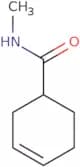
CAS:Versatile small molecule scaffoldFórmula:C8H19NO4Pureza:Min. 95%Peso molecular:193.24 g/molN-Methylcyclohex-3-ene-1-carboxamide
CAS:Versatile small molecule scaffoldFórmula:C8H13NOPureza:Min. 95%Peso molecular:139.19 g/mol5-Amino-1H-pyrazole-3,4-dicarbonitrile
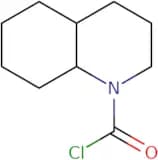
CAS:5-Amino-1H-pyrazole-3,4-dicarbonitrile is a nucleophilic compound that is used for the synthesis of other compounds. It reacts with anilines in the presence of silver ions and hydrogen chloride to form 5-aminopyrazoles. This reaction can also be reversed, forming pyrazoles from 5-aminopyrazoles. The product has been shown to have antimicrobial activity against methicillin resistant Staphylococcus aureus (MRSA), as well as being able to inhibit the growth of Mycobacterium tuberculosis and Mycobacterium avium complex. The product also has an effect on the central nervous system, producing sleepiness and sedation. These effects are due to its ability to inhibit brain monoamine oxidase (MAO) enzymes and block postsynaptic receptors in the central nervous system.Fórmula:C5H3N5Pureza:Min. 95%Peso molecular:133.11 g/molrac-(4aR,8aR)-Decahydroquinoline-1-carbonyl chloride
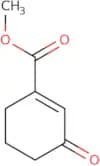
CAS:Versatile small molecule scaffoldFórmula:C10H16ClNOPureza:Min. 95%Peso molecular:201.69 g/molMethyl 3-oxo-cyclohex-1-enecarboxylate
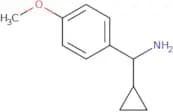
CAS:Methyl 3-oxo-cyclohex-1-enecarboxylate is a catalytic and enantioselective dienophile that has been synthesized for use in the synthesis of carboxylic esters. It can be used as a switchable skeleton, which allows for both enantiomeric forms to be produced from the same starting material, thereby increasing efficiency. Methyl 3-oxo-cyclohex-1-enecarboxylate is also useful in affinity chromatography because it binds with high affinity to carboxylic acids. The mechanism of this reaction involves an E2 elimination reaction followed by a 1,2 addition of water to form an enolate intermediate. This intermediate then reacts with the dienophile to form the desired product.Fórmula:C8H10O3Pureza:Min. 95%Peso molecular:154.17 g/mol1-Cyclopropyl-1-(4-methoxyphenyl)methylamine
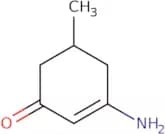
CAS:Versatile small molecule scaffoldFórmula:C11H15NOPureza:Min. 95%Peso molecular:177.25 g/mol3-Amino-5-methylcyclohex-2-en-1-one
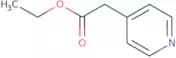
CAS:<p>Versatile small molecule scaffold</p>Fórmula:C7H11NOPureza:Min. 95%Peso molecular:125.17 g/molEthyl 4-pyridylacetate
CAS:Ethyl 4-pyridylacetate is an organic compound that is soluble in solvents. It has a functional group that consists of a covalent bond and a hydrogen atom. This compound can be used as a colloid, assembled, or solvents and it can be used for recycling catalytic functionalities. Multilayer dendrimers are made from ethyl 4-pyridylacetate and have been shown to have photocatalytic properties. The multilayered structure of the dendrimers provides the opportunity for the synthesis of scalable materials with desired functions.Fórmula:C9H11NO2Pureza:Min. 95%Peso molecular:165.19 g/mol6-Hydroxy-2,3-dihydro-1H-indene-5-carbaldehyde
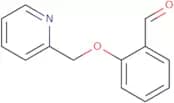
CAS:Versatile small molecule scaffoldFórmula:C10H10O2Pureza:Min. 95%Peso molecular:162.18 g/mol2-(Pyridin-2-ylmethoxy)benzaldehyde
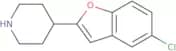
CAS:<p>The chemical compound 2-(Pyridin-2-ylmethoxy)benzaldehyde is a titration indicator that changes color from yellow to red as the pH increases. The anion of this compound is spirolactam, which is an endogenous substance. The sensor yields fluorescence when excited with light in the near infrared region at 710 nm. This emission can be enhanced by nitrosohydroxylamine, which is a fluorophore. When excited in the visible region of the spectrum, 2-(Pyridin-2-ylmethoxy)benzaldehyde emits red light. It has been shown to have biomolecular applications, including quantum yields that are important for understanding how enzymes function in living systems.</p>Fórmula:C13H11NO2Pureza:Min. 95%Peso molecular:213.23 g/mol4-(5-Chloro-1-benzofuran-2-yl)piperidine
CAS:Versatile small molecule scaffoldFórmula:C13H14ClNOPureza:Min. 95%Peso molecular:235.71 g/mol
![1-{[(9H-Fluoren-9-yl)methoxy]carbonyl}-3-fluoropyrrolidine-3-carboxylic acid](/_next/image/?url=https%3A%2Fstatic.cymitquimica.com%2Fproducts%2F3D%2Fthumb-webp%2FEBC66961.webp&w=3840&q=75)

![9-Chloro-7,10-diazatricyclo[6.4.0.0,2,6]dodeca-1(12),2(6),8,10-tetraene](/_next/image/?url=https%3A%2Fstatic.cymitquimica.com%2Fproducts%2F3D%2Fthumb-webp%2FEBC71710.webp&w=3840&q=75)
![1-Chloro-5H,6H,7H,8H,9H-pyrido[3,4-b]indole](/_next/image/?url=https%3A%2Fstatic.cymitquimica.com%2Fproducts%2F3D%2Fthumb-webp%2FEBC71711.webp&w=3840&q=75)
![tert-Butyl 6-oxo-2-azabicyclo[3.2.0]heptane-2-carboxylate](/_next/image/?url=https%3A%2Fstatic.cymitquimica.com%2Fproducts%2F3D%2Fthumb-webp%2FEBC81643.webp&w=3840&q=75)
![tert-Butyl N-[(1H-imidazol-4-yl)methyl]carbamate](/_next/image/?url=https%3A%2Fstatic.cymitquimica.com%2Fproducts%2F3D%2Fthumb-webp%2FEBC81806.webp&w=3840&q=75)
![tert-Butyl 2,6-diazaspiro[3.5]nonane-6-carboxylate hydrochloride](/_next/image/?url=https%3A%2Fstatic.cymitquimica.com%2Fproducts%2F3D%2Fthumb-webp%2FEBC84425.webp&w=3840&q=75)
![2-(2-{[(tert-Butoxy)carbonyl]amino}ethyl)benzoic acid](/_next/image/?url=https%3A%2Fstatic.cymitquimica.com%2Fproducts%2F3D%2Fthumb-webp%2FEBC85257.webp&w=3840&q=75)
![9-Oxa-2-azaspiro[5.5]undecane hydrochloride](/_next/image/?url=https%3A%2Fstatic.cymitquimica.com%2Fproducts%2F3D%2Fthumb-webp%2FEBC87902.webp&w=3840&q=75)
![rac-tert-Butyl N-[(3R,4R)-4-(aminomethyl)oxolan-3-yl]carbamate](/_next/image/?url=https%3A%2Fstatic.cymitquimica.com%2Fproducts%2F3D%2Fthumb-webp%2FEBD02087.webp&w=3840&q=75)
![8-Bromo-2-(methylthio)pyrazolo[1,5-a][1,3,5]triazin-4-ol](/_next/image/?url=https%3A%2Fstatic.cymitquimica.com%2Fproducts%2F3D%2Fthumb-webp%2FECA34635.webp&w=3840&q=75)
![2-Oxa-6-azaspiro[3.3]heptane-6-ethanamine](/_next/image/?url=https%3A%2Fstatic.cymitquimica.com%2Fproducts%2F3D%2Fthumb-webp%2FECA38440.webp&w=3840&q=75)
![2-(2-{[2-(2-Hydroxyethoxy)ethyl]amino}ethoxy)ethan-1-ol](/_next/image/?url=https%3A%2Fstatic.cymitquimica.com%2Fproducts%2F3D%2Fthumb-webp%2FECA38447.webp&w=3840&q=75)