Building Blocks
Subcategorias de "Building Blocks"
- Ácidos Borónicos e Derivados de Ácido Borónico(5.774 produtos)
- Building Blocks Quirais(1.237 produtos)
- Building Blocks Hidrocarbonetos(6.098 produtos)
- Building Blocks orgânicos(60.970 produtos)
Foram encontrados 205135 produtos de "Building Blocks"
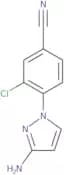
4-(3-Amino-1H-pyrazol-1-yl)-3-chlorobenzonitrile
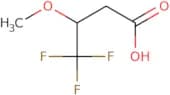
CAS:Versatile small molecule scaffoldFórmula:C10H7ClN4Pureza:Min. 95%Peso molecular:218.64 g/mol4,4,4-Trifluoro-3-methoxybutanoic acid
CAS:Versatile small molecule scaffold
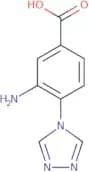
Fórmula:C5H7F3O3Pureza:Min. 95%Peso molecular:172.1 g/mol3-Amino-4-(4H-1,2,4-triazol-4-yl)benzoic acid
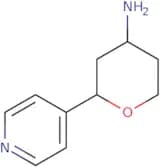
CAS:Versatile small molecule scaffoldFórmula:C9H8N4O2Pureza:Min. 95%Peso molecular:204.19 g/mol2-(Pyridin-4-yl)oxan-4-amine
CAS:Versatile small molecule scaffold
Fórmula:C10H14N2OPureza:Min. 95%Peso molecular:178.23 g/molRef: 3D-TDC04834
Produto descontinuadoMethyl 3-oxo-2-(trifluoromethyl)butanoate
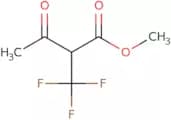
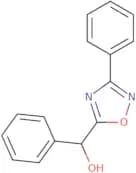
CAS:Versatile small molecule scaffoldFórmula:C6H7F3O3Pureza:Min. 95%Peso molecular:184.11 g/molPhenyl(3-phenyl-1,2,4-oxadiazol-5-yl)methanol
CAS:Versatile small molecule scaffold
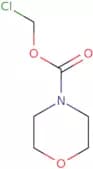
Fórmula:C15H12N2O2Pureza:Min. 95%Peso molecular:252.27 g/molchloromethyl morpholine-4-carboxylate
CAS:Versatile small molecule scaffoldFórmula:C6H10ClNO3Pureza:Min. 95%Peso molecular:179.6 g/mol(2S)-2-[(3,4,5-Trimethoxyphenyl)formamido]propanoic acid
CAS:Versatile small molecule scaffold
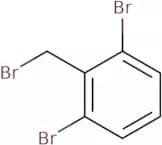
Fórmula:C13H17NO6Pureza:Min. 95%Peso molecular:283.28 g/mol2,6-Dibromobenzyl Bromide
CAS:2,6-Dibromobenzyl Bromide is a reagent that is used in organic synthesis for the transfer of cholesterol esters. It reacts with anhydrous sodium sulfate to form 2,6-dibromobenzyl sulfate, which can then be hydrolyzed to 2,6-dibromobenzyl alcohol or brominated with carbon tetrachloride to produce 2,6-dibromobenzyl chloride. This product is typically used as a solution in solvents such as carbon tetrachloride or hydrogen peroxide. It is also used as a patterning agent when it is coated on a surface and exposed to light using magnetic or optical lithography.
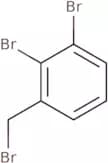
Fórmula:C7H5Br3Pureza:Min. 95%Peso molecular:328.83 g/mol1,2-Dibromo-3-(bromomethyl)benzene
CAS:Versatile small molecule scaffold
Fórmula:C7H5Br3Pureza:Min. 95%Peso molecular:328.83 g/molRef: 3D-TDA70131
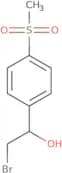
Produto descontinuado2-Bromo-1-(4-methanesulfonylphenyl)ethan-1-ol
CAS:Versatile small molecule scaffold
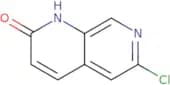
Fórmula:C9H11BrO3SPureza:Min. 95%Peso molecular:279.15 g/mol6-Chloro-1,2-dihydro-1,7-naphthyridin-2-one
CAS:Versatile small molecule scaffold
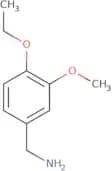
Fórmula:C8H5ClN2OPureza:Min. 95%Peso molecular:180.59 g/mol(4-Ethoxy-3-methoxybenzyl)amine
CAS:Research has shown that (4-Ethoxy-3-methoxybenzyl)amine (EMBA) is a potent inhibitor of bacterial growth. The alkylation of EMBA with methylamine and benzene leads to the formation of aureus, which is an antibiotic that can be used to treat staphylococcus infections. In addition, EMBA can also be methylated with hydroxylamine to form benzylamine, a compound that inhibits the synthesis of the cell wall in bacteria. These properties make EMBA an effective antimicrobial agent.
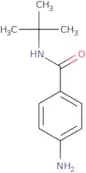
Fórmula:C10H15NO2Pureza:Min. 95%Peso molecular:181.23 g/mol4-Amino-N-(tert-butyl)benzamide
CAS:4-Amino-N-(tert-butyl)benzamide is a chemical intermediate that can be used in the preparation of certain pharmaceuticals. This compound is synthesized through the reaction of 4-aminobenzoyl chloride and tert-butanol, which forms an amide bond. The condensation reaction can be catalyzed by either heat or acid. The product of this reaction is hydrogenated to form 4-amino-N-(tert-butyl)-N'-(chloromethyl)benzamide. This compound can also be prepared by refluxing a mixture of 4-aminobenzaldehyde and hydrazine with chloroform and hydrochloric acid.
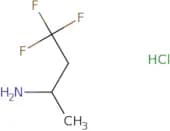
Fórmula:C11H16N2OPureza:Min. 95%Peso molecular:192.26 g/mol4,4,4-Trifluorobutan-2-amine hydrochloride
CAS:Versatile small molecule scaffoldFórmula:C4H9ClF3NPureza:Min. 95%Peso molecular:163.57 g/mol2,2-Dimethyl-3,4-dihydro-2H-benzo[b][1,4]thiazine
CAS:Versatile small molecule scaffoldFórmula:C10H13NSPureza:Min. 95%Peso molecular:179.28 g/mol3-[(2-Methoxy-2-oxoethyl)sulfanyl]propanoic acid
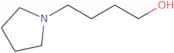
CAS:Versatile small molecule scaffoldFórmula:C6H10O4SPureza:Min. 95%Peso molecular:178.21 g/mol4-(1-Pyrrolidinyl)-1-butanol
CAS:Versatile small molecule scaffold
Fórmula:C8H17NOPureza:Min. 95%Peso molecular:143.23 g/mol2-(Bromomethyl)-1-iodo-3-nitrobenzene
CAS:Versatile small molecule scaffold
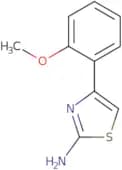
Fórmula:C7H5BrINO2Pureza:Min. 95%Peso molecular:341.93 g/mol4-(2-Methoxy-phenyl)-thiazol-2-ylamine
CAS:4-(2-Methoxy-phenyl)-thiazol-2-ylamine is a flavonoid that is synthesized by the condensation of luteolin with salicylaldehyde. It has been shown to have antibacterial activity against strains of P. aeruginosa and S. aureus, with MIC values of 12.5 µg/mL and 25 µg/mL, respectively. The MIC value for 4-(2-Methoxy-phenyl)-thiazol-2-ylamine against E. coli was found to be 100 µg/mL. 4-(2-Methoxy-phenyl)-thiazol-2-ylamine has been shown to inhibit the growth of organisms such as Escherichia coli, Streptococcus pneumoniae and Staphylococcus aureus in vitro. This compound is not active against Gram positive bacteria such as Bacillus subtilis or GramFórmula:C10H10N2OSPureza:Min. 95%Peso molecular:206.27 g/mol2-Methyl-3H-imidazo[4,5-F]quinoline
CAS:Versatile small molecule scaffold
Fórmula:C11H9N3Pureza:Min. 95%Peso molecular:183.21 g/mol2-{[1,2,4]Triazolo[4,3-a]pyridin-3-yl}ethan-1-amine dihydrochloride
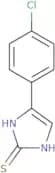
CAS:Versatile small molecule scaffoldFórmula:C8H12Cl2N4Pureza:Min. 95%Peso molecular:235.11 g/mol5-(4-Chlorophenyl)-1H-imidazole-2-thiol
CAS:Versatile small molecule scaffold
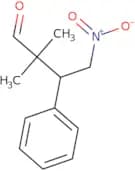
Fórmula:C9H7ClN2SPureza:Min. 95%Peso molecular:210.68 g/mol2,2-Dimethyl-4-nitro-3-phenylbutanal
CAS:Versatile small molecule scaffold
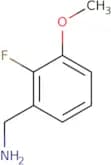
Fórmula:C12H15NO3Pureza:Min. 95%Peso molecular:221.25 g/mol(2-Fluoro-3-methoxyphenyl)methanamine
CAS:Versatile small molecule scaffold
Fórmula:C8H10FNOPureza:Min. 95%Peso molecular:155.17 g/mol2-Fluoro-3-methylbenzylamine
CAS:Versatile small molecule scaffold
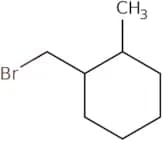
Fórmula:C8H10FNPureza:Min. 95%Peso molecular:139.17 g/mol1-(Bromomethyl)-2-methylcyclohexane
CAS:Versatile small molecule scaffold
Fórmula:C8H15BrPureza:Min. 95%Peso molecular:191.11 g/mol2-[(2-Chlorophenyl)methyl]azepane
CAS:Produto ControladoVersatile small molecule scaffold
Fórmula:C13H18ClNPureza:Min. 95%Peso molecular:223.74 g/mol2-[(Methoxycarbonyl)(methyl)amino]benzoic acid
CAS:2-[(Methoxycarbonyl)(methyl)amino]benzoic acid (MBAA) is a peptide that can be used as a research tool in various biological disciplines. It is an ion channel activator and inhibitor of protein interactions. MBAA interacts with the extracellular domain of the alpha-subunit of the voltage-gated potassium channel, leading to opening of the channel. This compound also binds to the receptor for bradykinin, which activates its function. MBAA has been shown to inhibit Na+/K+ ATPase activity and L-type Ca2+ currents in neuronal cells.
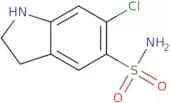
Fórmula:C10H11NO4Pureza:Min. 95%Peso molecular:209.2 g/mol6-Chloro-2,3-dihydro-1H-indole-5-sulfonamide
CAS:Versatile small molecule scaffold
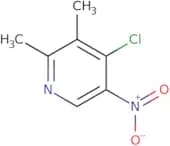
Fórmula:C8H9ClN2O2SPureza:Min. 95%Peso molecular:232.69 g/mol4-Chloro-2,3-dimethyl-5-nitropyridine
CAS:Versatile small molecule scaffold
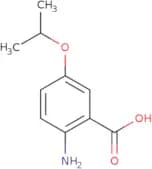
Fórmula:C7H7ClN2O2Pureza:Min. 95%Peso molecular:186.59 g/mol2-Amino-5-(propan-2-yloxy)benzoic acid
CAS:Versatile small molecule scaffold
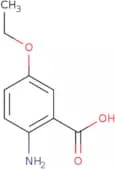
Fórmula:C10H13NO3Pureza:Min. 95%Peso molecular:195.21 g/mol2-Amino-5-ethoxybenzoic acid
CAS:Versatile small molecule scaffold
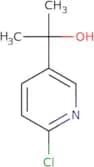
Fórmula:C9H11NO3Pureza:Min. 95%Peso molecular:181.19 g/mol2-(6-Chloropyridin-3-yl)propan-2-ol
CAS:Versatile small molecule scaffold
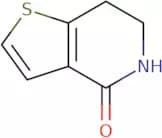
Fórmula:C8H10ClNOPureza:Min. 95%Peso molecular:161.63 g/molTiclopidine Related Compound A
CAS:Versatile small molecule scaffold
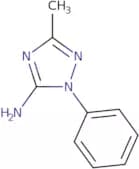
Fórmula:C7H7NOSPureza:Min. 95%Peso molecular:153.2 g/mol3-Methyl-1-phenyl-1H-1,2,4-triazol-5-amine
CAS:Versatile small molecule scaffoldFórmula:C9H10N4Pureza:Min. 95%Peso molecular:174.2 g/molIsoguvacine hydrochloride
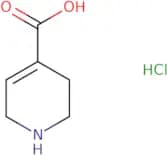
CAS:Isoguvacine is an alkaloid that belongs to the group of pharmacological agents. It has been shown to have a synergic effect with other drugs, such as 5-HT2 receptor antagonists and 5-HT3 receptor antagonists, at the level of the plate test. Isoguvacine inhibits the cyclase enzyme, which catalyzes the conversion of ATP into cAMP. The inhibition leads to a decrease in cAMP levels and consequently a decrease in intracellular calcium levels. This drug also blocks glutamate receptors on neurons, preventing their activation by glutamate.
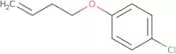
Fórmula:C6H9NO2•HClPureza:Min. 95%Cor e Forma:PowderPeso molecular:163.6 g/mol1-(But-3-en-1-yloxy)-4-chlorobenzene
CAS:Versatile small molecule scaffold
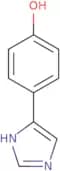
Fórmula:C10H11ClOPureza:Min. 95%Peso molecular:182.64 g/mol4-(1H-Imidazol-4-yl)phenol
CAS:Versatile small molecule scaffold
Fórmula:C9H8N2OPureza:Min. 95%Peso molecular:160.17 g/mol4-(Benzylamino)-3-nitrobenzoic acid
CAS:Versatile small molecule scaffold
Fórmula:C14H12N2O4Pureza:Min. 95%Peso molecular:272.26 g/mol8-Chloro-3-methyl-1H-pyrrolo[3,2-c]quinoline
CAS:Versatile small molecule scaffoldFórmula:C12H9ClN2Pureza:Min. 95%Peso molecular:216.66 g/mol4-(Pyridin-2-yloxy)phenol
CAS:Versatile small molecule scaffold
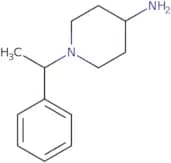
Fórmula:C11H9NO2Pureza:Min. 95%Peso molecular:187.19 g/mol1-(1-Phenylethyl)piperidin-4-amine
CAS:Versatile small molecule scaffold
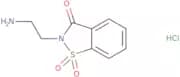
Fórmula:C13H20N2Pureza:Min. 95%Peso molecular:204.31 g/mol2-(2-Aminoethyl)-2,3-dihydro-1,2-benzothiazole-1,1,3-trione hydrochloride
CAS:Versatile small molecule scaffold
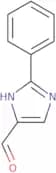
Fórmula:C9H11ClN2O3SPureza:Min. 95%Peso molecular:262.71 g/mol2-Phenyl-1H-imidazole-4-carbaldehyde
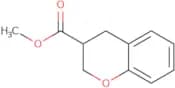
CAS:2-Phenyl-1H-imidazole-4-carbaldehyde is an aldehyde that is used as a ligand in asymmetric synthesis. It can be used in the nitroaldol reaction to produce chiral imidazole derivatives. The compound is useful for the synthesis of molecules with high molecular weight and low reactivity, which can be further modified to produce pharmaceuticals. The compound has been shown to catalyze organic reactions, such as condensation products and stereospecific reactions.Fórmula:C10H8N2OPureza:Min. 95%Peso molecular:172.19 g/molMethyl chroman-3-carboxylate
CAS:Versatile small molecule scaffold
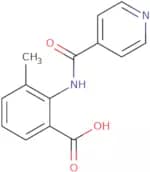
Fórmula:C11H12O3Pureza:Min. 95%Peso molecular:192.21 g/mol3-Methyl-2-(pyridine-4-amido)benzoic acid
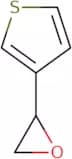
CAS:Versatile small molecule scaffoldFórmula:C14H12N2O3Pureza:Min. 95%Peso molecular:256.26 g/mol2-(Thiophen-3-yl)oxirane
CAS:Versatile small molecule scaffold
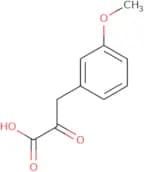
Fórmula:C6H6OSPureza:Min. 95%Peso molecular:126.18 g/mol3-(3-Methoxyphenyl)-2-oxopropanoic acid
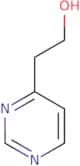
CAS:Vanillic acid is a phenolic compound that can be found in vanilla and other plants. It is an important precursor for the synthesis of aromatic compounds such as ferulic acid, lignin, and coumarin. Vanillic acid has been shown to have a variety of biochemical and chemists properties, including the ability to aromatize, which means it can be used in the preparation of synthetic hormones. This compound also acts as an antioxidant by scavenging reactive oxygen species. Vanillic acid is found in two sources: pre-existing vanillin (from plants) and ferulic acid (from microbial metabolism). Vanillin is derived from coniferyl alcohol and coniferaldehyde, which are both found in poria. Ferulic acid is produced by polyporus fungi and can be converted into vanillic acid via decarboxylation.Fórmula:C10H10O4Pureza:Min. 95%Peso molecular:194.18 g/mol2-(Pyrimidin-4-yl)ethanol
CAS:Versatile small molecule scaffold
Fórmula:C6H8N2OPureza:Min. 95%Peso molecular:124.14 g/molRef: 3D-TCA12132
Produto descontinuado

![(2S)-2-[(3,4,5-Trimethoxyphenyl)formamido]propanoic acid](/_next/image/?url=https%3A%2Fstatic.cymitquimica.com%2Fproducts%2F3D%2Fthumb-webp%2FTDA70967.webp&w=3840&q=75)
![2,2-Dimethyl-3,4-dihydro-2H-benzo[b][1,4]thiazine](/_next/image/?url=https%3A%2Fstatic.cymitquimica.com%2Fproducts%2F3D%2Fthumb-webp%2FTDA30119.webp&w=3840&q=75)
![3-[(2-Methoxy-2-oxoethyl)sulfanyl]propanoic acid](/_next/image/?url=https%3A%2Fstatic.cymitquimica.com%2Fproducts%2F3D%2Fthumb-webp%2FTDA27467.webp&w=3840&q=75)

![2-Methyl-3H-imidazo[4,5-F]quinoline](/_next/image/?url=https%3A%2Fstatic.cymitquimica.com%2Fproducts%2F3D%2Fthumb-webp%2FTDA20185.webp&w=3840&q=75)
![2-{[1,2,4]Triazolo[4,3-a]pyridin-3-yl}ethan-1-amine dihydrochloride](/_next/image/?url=https%3A%2Fstatic.cymitquimica.com%2Fproducts%2F3D%2Fthumb-webp%2FTDA11310.webp&w=3840&q=75)

![2-[(2-Chlorophenyl)methyl]azepane](/_next/image/?url=https%3A%2Fstatic.cymitquimica.com%2Fproducts%2F3D%2Fthumb-webp%2FTCA84113.webp&w=3840&q=75)
![2-[(Methoxycarbonyl)(methyl)amino]benzoic acid](/_next/image/?url=https%3A%2Fstatic.cymitquimica.com%2Fproducts%2F3D%2Fthumb-webp%2FTCA79040.webp&w=3840&q=75)

![8-Chloro-3-methyl-1H-pyrrolo[3,2-c]quinoline](/_next/image/?url=https%3A%2Fstatic.cymitquimica.com%2Fproducts%2F3D%2Fthumb-webp%2FTCA49997.webp&w=3840&q=75)