


Building Blocks
Subcategorias de "Building Blocks"
- Ácidos Borónicos e Derivados de Ácido Borónico(5.774 produtos)
- Building Blocks Quirais(1.237 produtos)
- Building Blocks Hidrocarbonetos(6.098 produtos)
- Building Blocks orgânicos(60.970 produtos)
Foram encontrados 205134 produtos de "Building Blocks"
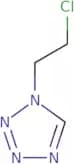
1-(2-Chloroethyl)-1H-1,2,3,4-tetrazole
CAS:1-(2-Chloroethyl)-1H-1,2,3,4-tetrazole is a ligand that can be used in crystallography. It has a low spin state, which can be determined by the diffraction techniques. This ligand is usually studied in the group p2 space group and shown as an orthorhombic system. The parameters for this molecule are calculated using different techniques such as synchrotron radiation and computational algorithms.Fórmula:C3H5ClN4Pureza:Min. 95%Peso molecular:132.55 g/mol4-(Prop-2-enamido)benzoic acid
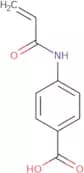
CAS:4-(Prop-2-enamido)benzoic acid is an antimicrobial agent that is used in the synthesis of polymers. 4-(Prop-2-enamido)benzoic acid reacts with ammonium persulfate to form a monomer which can be polymerized with other compounds such as dioxane. The reaction time and activation energy for this compound are determined by the type of solvent used. This compound is biodegradable and has been shown to be easily copolymerized with other substances. 4-(Prop-2-enamido)benzoic acid is soluble in water, dioxane, and dimethylformamide (DMF). It also has a high refractive index under ultraviolet light microscopy when gelatinized. The molecular weight of this compound increases when it is heated due to water loss, but it does not change when it is cooled down or mixed with other chemicals. 4-(Prop-2-Fórmula:C10H9NO3Pureza:Min. 95%Peso molecular:191.18 g/mol2-(Trimethylsilyl)phenol
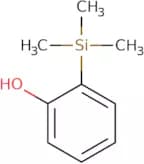
CAS:2-(Trimethylsilyl)phenol is an inorganic compound that is used as a reagent to cleave bonds, which can be achieved by the addition of sodium sulfide or ultrasonic extraction. It also reacts with o-glycosylations and fatty acids. 2-(Trimethylsilyl)phenol is used to prepare samples for analysis by gas chromatography, mass spectrometry, or nuclear magnetic resonance spectroscopy.
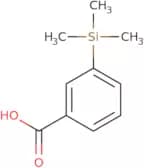
2- (Trimethylsilyl)phenol is an analytical method that has been developed for the determination of chloride in water samples. This method is based on the protonation of chloride ions followed by bond cleavage reactions with protonated trimethylsilyl phenols and sodium sulfide. The reaction products are then analyzed using gas chromatography or infrared spectroscopy.Fórmula:C9H14OSiPureza:Min. 95%Peso molecular:166.29 g/mol3-(Trimethylsilyl)benzoic acid
CAS:Versatile small molecule scaffoldFórmula:C10H14O2SiPureza:Min. 95%Peso molecular:194.3 g/mol4-(Trimethylsilyl)benzoic Acid
CAS:4-(Trimethylsilyl)benzoic Acid is a modification of the benzoic acid molecule. It is an organosilicon compound that can be synthesized by reacting trimethylsilyl chloride with 4-aminobenzoic acid in hydrochloric acid at low temperature. This modification has been shown to form nanoribbons when used as a photoelectron emitter, which changes the nature of the molecule. The functional theory and acetylation analysis have been done on this compound, and it has been shown to be centrosymmetric with a diameter of 1 nm. Synthetic yields are not high because temperatures must be maintained below -78°C.
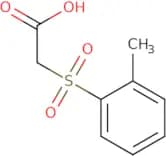
Fórmula:C10H14O2SiPureza:Min. 95%Peso molecular:194.3 g/mol2-(2-Methylbenzenesulfonyl)acetic acid
CAS:2-(2-Methylbenzenesulfonyl)acetic acid is a heterocycle that belongs to the group of organic compounds. It is a chloride, which is a reactive functional group. The chloride can be found in the subunits of proteins and nucleic acids, which are involved in cell division and metabolism. The chloride ion has been shown to function as an antioxidant by scavenging reactive oxygen species such as hydroxyl radicals and peroxides. 2-(2-Methylbenzenesulfonyl)acetic acid also has anti-inflammatory properties, which may be due to its ability to inhibit prostaglandin synthesis. This compound has been shown to have neuroprotective effects against Alzheimer's disease and Parkinson's disease, as well as cancerous tumours. 2-(2-Methylbenzenesulfonyl)acetic acid is prepared by reacting hydrochloric acid with an alkylsulfonyl chloride in the presence of an organic
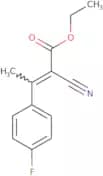
Fórmula:C9H10O4SPureza:Min. 95%Peso molecular:214.24 g/molEthyl 2-cyano-3-(4-fluorophenyl)but-2-enoate
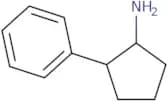
CAS:Versatile small molecule scaffoldFórmula:C13H12FNO2Pureza:Min. 95%Peso molecular:233.24 g/mol2-Phenylcyclopentan-1-amine
CAS:2-Phenylcyclopentan-1-amine is a reconstituted drug that belongs to the group of amines. It is used for the treatment of inflammatory bowel disease, and is also an anti-epileptic drug. 2-Phenylcyclopentan-1-amine has been shown to inhibit mast cell activation and histamine release in rats with experimental colitis. This drug may be effective for the treatment of allergic diseases such as asthma, urticaria, and eczema.
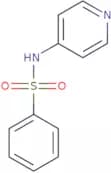
Fórmula:C11H15NPureza:Min. 95%Peso molecular:161.24 g/molN-(Pyridin-4-yl)benzenesulfonamide
CAS:Versatile small molecule scaffoldFórmula:C11H10N2O2SPureza:Min. 95%Peso molecular:234.28 g/mol2-[(2,5-Dimethylphenyl)sulfanyl]acetic acid
CAS:Versatile small molecule scaffold
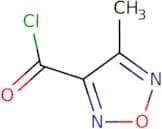
Fórmula:C10H12O2SPureza:Min. 95%Peso molecular:196.27 g/mol4-Methyl-1,2,5-oxadiazole-3-carbonyl chloride
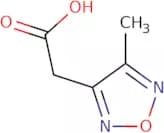
CAS:Versatile small molecule scaffoldFórmula:C4H3ClN2O2Pureza:Min. 95%Peso molecular:146.53 g/mol(4-Methyl-furazan-3-yl)-acetic acid
CAS:Versatile small molecule scaffold
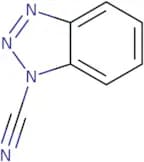
Fórmula:C5H6N2O3Pureza:Min. 95%Peso molecular:142.1 g/mol1-Cyanobenzotriazole
CAS:1-Cyanobenzotriazole is a labile and reactive compound that has been used as a reagent in organic synthesis, due to its nucleophilic properties. 1-Cyanobenzotriazole can be used in the elimination reactions of amines or as a coupling agent for the formation of nitriles from terminal alkynes. The compound has been used as an analytical method for measuring the concentration of protein, nucleic acid and peptide bonds. 1-Cyanobenzotriazole is also used in the preparation of biomolecules such as proteins, peptides, and oligosaccharides.
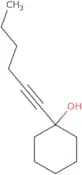
Fórmula:C7H4N4Pureza:Min. 95%Peso molecular:144.13 g/mol1-(Hex-1-yn-1-yl)cyclohexan-1-ol
CAS:Versatile small molecule scaffold
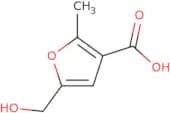
Fórmula:C12H20OPureza:Min. 95%Peso molecular:180.29 g/mol5-(Hydroxymethyl)-2-methylfuran-3-carboxylic acid
CAS:Versatile small molecule scaffold
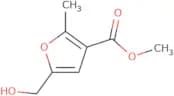
Fórmula:C7H8O4Pureza:Min. 95%Peso molecular:156.14 g/molMethyl 5-(hydroxymethyl)-2-methylfuran-3-carboxylate
CAS:Versatile small molecule scaffold
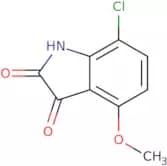
Fórmula:C8H10O4Pureza:Min. 95%Peso molecular:170.16 g/mol7-Chloro-4-methoxyindoline-2,3-dione
CAS:Versatile small molecule scaffold
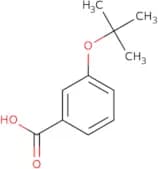
Fórmula:C9H6ClNO3Pureza:Min. 95%Peso molecular:211.6 g/mol3-(tert-Butoxy)benzenecarboxylic acid
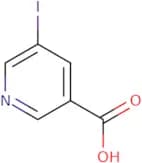
CAS:Versatile small molecule scaffoldFórmula:C11H14O3Pureza:Min. 95%Peso molecular:194.23 g/mol5-iodopyridine-3-carboxylic acid
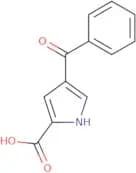
CAS:5-Iodopyridine-3-carboxylic acid is a monoclonal antibody that binds to the epidermal growth factor receptor. It is used in vitro and in vivo as a tool for identifying the epidermal growth factor receptor and its interaction with other proteins. 5-Iodopyridine-3-carboxylic acid has been shown to have high affinity for the epidermal growth factor receptor, and it can be used to identify the presence of this receptor on cells or tissues. The compound has also been conjugated to different molecules, such as carboxylates, which can be used to study their effects on cell uptake.Fórmula:C6H4INO2Pureza:Min. 95%Peso molecular:249 g/mol4-Benzoyl-1H-pyrrole-2-carboxylic acid
CAS:Versatile small molecule scaffoldFórmula:C12H9NO3Pureza:Min. 95%Peso molecular:215.2 g/mol1H,2H,3H,4H,7H,8H-Pyrido[2,3-d]pyridazin-8-one
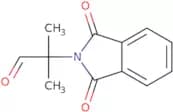
CAS:Versatile small molecule scaffoldFórmula:C7H9N3OPureza:Min. 95%Peso molecular:151.17 g/mol2-(1,3-Dioxo-2,3-dihydro-1H-isoindol-2-yl)-2-methylpropanal
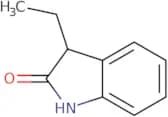
CAS:Versatile small molecule scaffoldFórmula:C12H11NO3Pureza:Min. 95%Peso molecular:217.22 g/mol3-ethylindolin-2-one
CAS:3-Ethylindolin-2-one is a synthetic compound that has been shown to be able to alkylate olefins. It is not yet known what the biological function of 3-ethylindolin-2-one might be. It has been found in leaves, but its presence there is not well understood. The reaction of 3-ethylindolin-2-one with amines gives the corresponding amides, while acylation reactions with alcohols yield esters and other compounds. The addition of 3-ethylindolin-2-one to benzene or butyllithium results in the formation of a new ring system containing three carbons and two nitrogens.
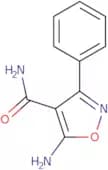
Fórmula:C10H11NOPureza:Min. 95%Peso molecular:161.2 g/mol5-Amino-3-phenyl-1,2-oxazole-4-carboxamide
CAS:5-Amino-3-phenyl-1,2-oxazole-4-carboxamide (5APOC) is a mitochondria membrane permeable compound that inhibits the growth of cancer cells. 5APOC binds to annexin v, which is a protein found in the outer cell membrane. The binding causes depolarization of the mitochondrial membrane and induces apoptosis. 5APOC also inhibits the growth of colon cancer cells by inhibiting the activity of cytotoxic agents and inducing apoptosis. This drug has been shown to be effective against human colon cancer cells in vitro and in vivo.
Fórmula:C10H9N3O2Pureza:Min. 95%Peso molecular:203.2 g/mol2-Cyclopropylglycine
CAS:2-Cyclopropylglycine is a cyclic amino acid that is synthesized from threonine. It is an important intermediate in the biosynthesis of the aminoacyl-tRNA synthetases. The synthesis of 2-cyclopropylglycine begins with the conversion of threonine to homoserine by a series of reactions called the threonine deaminase pathway. Homoserine is converted to 3-hydroxy-2-methylvaleric acid by hydroxymethylglutaryl-CoA synthase and then to 2-cyclopropylglycine by cyclopropane carboxylic acid reductase, which reduces it to 2-cyclopropylmalonic acid, which is then converted to 2-cyclopropylglycine. This compound binds borohydride and forms an unstable complex with phenolic compounds. The affinity for these substrates depends on the pyrroline ring structure, with
Fórmula:C5H9NO2Pureza:Min. 95%Peso molecular:115.13 g/mol3-Cyclopropylalanine
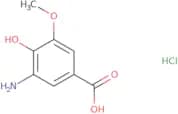
CAS:3-Cyclopropylalanine (3-CPA) is a synthetic amino acid that is used as an enzyme inhibitor for the treatment of metabolic disorders and cancer. 3-CPA inhibits the activity of ns3 protease, which is involved in the production of malonic acid from succinate. The hydrogenated form of 3-CPA has been shown to inhibit protease activity, especially in diagnostic agents. 3-CPA can also be used as a catalyst for chemical reactions and when synthesized as a stable complex with enantiomers, it can be used as a diagnostic agent.Fórmula:C6H11NO2Pureza:Min. 95%Peso molecular:129.16 g/mol3-Amino-4-hydroxy-5-methoxy-benzoic acid, hydrochloride
CAS:Versatile small molecule scaffold
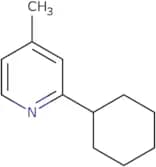
Fórmula:C8H10ClNO4Pureza:Min. 95%Peso molecular:219.62 g/mol2-Cyclohexyl-4-methylpyridine
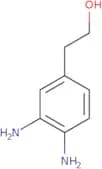
CAS:Versatile small molecule scaffoldFórmula:C12H17NPureza:Min. 95%Peso molecular:175.27 g/mol2-(3,4-Diaminophenyl)ethan-1-ol
CAS:Versatile small molecule scaffold
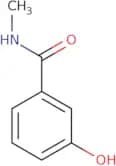
Fórmula:C8H12N2OPureza:Min. 95%Peso molecular:152.19 g/mol3-Hydroxy-N-methylbenzamide
CAS:Versatile small molecule scaffold
Fórmula:C8H9NO2Pureza:Min. 95%Peso molecular:151.16 g/molN-Ethyl-3-hydroxybenzamide
CAS:Versatile small molecule scaffold
Fórmula:C9H11NO2Pureza:Min. 95%Peso molecular:165.19 g/mol3-Hydroxy-N-(2-hydroxyethyl)benzamide
CAS:Versatile small molecule scaffold
Fórmula:C9H11NO3Pureza:Min. 95%Peso molecular:181.19 g/mol3-Hydroxy-N,N-dimethylbenzamide
CAS:Versatile small molecule scaffoldFórmula:C9H11NO2Pureza:Min. 95%Peso molecular:165.19 g/molN,N-Diethyl-3-hydroxybenzamide
CAS:Versatile small molecule scaffoldFórmula:C11H15NO2Pureza:Min. 95%Peso molecular:193.24 g/mol3-[(Morpholin-4-yl)carbonyl]phenol
CAS:Versatile small molecule scaffold
Fórmula:C11H13NO3Pureza:Min. 95%Peso molecular:207.23 g/mol4,6-Dichloro-1,2-dihydro-1,3,5-triazin-2-one
CAS:Versatile small molecule scaffold
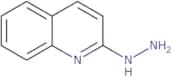
Fórmula:C3HCl2N3OPureza:Min. 95%Peso molecular:165.96 g/mol2-Hydrazinoquinoline
CAS:2-Hydrazinoquinoline is a metal chelate that can be used as an analytical method to detect the presence of metals in urine samples. It is also used for the detection of methyl ethyl trifluoroacetic acid and other organic compounds. 2-Hydrazinoquinoline reacts with metal ions to form metal complexes, which are detected by spectroscopy or x-ray diffraction data. The reaction mechanism is not well understood, but it has been shown that reactive intermediates are involved.
Fórmula:C9H9N3Pureza:Min. 95%Peso molecular:159.19 g/mol2-(Acetyloxy)-2-methylpropanoic acid
CAS:Versatile small molecule scaffoldFórmula:C6H10O4Pureza:Min. 95%Peso molecular:146.14 g/molSpiro[2.5]octan-6-one
CAS:Spiro[2.5]octan-6-one is a cyclopropanated biphenylene that reacts with diazomethane to form the chloride, resulting in an electron-rich spiro compound. The chloride is converted to the corresponding electron-deficient biphenylene by treatment with lead tetraacetate and cyclopropanes. The resulting biphenylenes can be reacted with an excess of cyclohexane in the presence of a catalytic amount of oriented Ni(0) to form the vinylcyclopropanes. This reaction can be used for the synthesis of dimers by reacting two vinylcyclopropanes together.
Fórmula:C8H12OPureza:Min. 95%Cor e Forma:Clear LiquidPeso molecular:124.18 g/mol5-Chloro-2-(1H-pyrrol-1-yl)aniline
CAS:Versatile small molecule scaffoldFórmula:C10H9ClN2Pureza:Min. 95%Peso molecular:192.64 g/mol2-(2,4-Dimethylbenzoyl)furan
CAS:Versatile small molecule scaffold
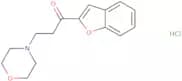
Fórmula:C13H12O2Pureza:Min. 95%Peso molecular:200.23 g/mol1-(1-Benzofuran-2-yl)-3-(morpholin-4-yl)propan-1-one hydrochloride
CAS:Versatile small molecule scaffoldFórmula:C15H18ClNO3Pureza:Min. 95%Peso molecular:295.76 g/molN-[(4-Methylphenyl)methyl]aniline
CAS:Versatile small molecule scaffoldFórmula:C14H15NPureza:Min. 95%Peso molecular:197.27 g/mol1-Acetylpiperidine-3-carboxamide
CAS:Versatile small molecule scaffold
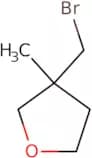
Fórmula:C8H14N2O2Pureza:Min. 95%Peso molecular:170.21 g/mol3-(Bromomethyl)-3-methyloxolane
CAS:Versatile small molecule scaffoldFórmula:C6H11BrOPureza:Min. 95%Peso molecular:179.05 g/mol3,3-Dimethylbutane-1,2,4-triol
CAS:3,3-Dimethylbutane-1,2,4-triol is a triol that is used as an intermediate in the synthesis of polyvinyl chloride. It is also a plasticizer and an intermediate for the production of neopentyl glycol. 3,3-Dimethylbutane-1,2,4-triol can be hydrogenated to form 1,2-dimethoxyethane at temperatures ranging from 40° C to 100° C and pressures ranging from atmospheric pressure to 100 psi. This compound can also be chlorinated to form 1,2-dichloroethane under catalytic conditions at temperatures ranging from 50° C to 120°C and pressures ranging from atmospheric pressure to 5 psi. 3,3-Dimethylbutane-1,2,4-triol can also be solvolyzed with solvents such as ethanol or diethylether under pressures up to 200 psi.Fórmula:C6H14O3Pureza:Min. 95%Peso molecular:134.17 g/mol2-(Dimethoxymethyl)cyclohexan-1-one
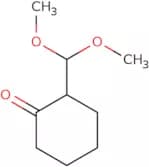
CAS:2-(Dimethoxymethyl)cyclohexan-1-one is a cyclohexanone derivative that has the axial geometry. It is an isomer of 2-(dimethoxy)methylcyclohexanone, which has the same chemical formula and molecular weight but a different geometry (planar). The two compounds have similar spectra, with the exception that 2-(dimethoxymethyl)cyclohexan-1-one has a single proton resonance at δ = 4.71 ppm, whereas 2-(dimethoxy)methylcyclohexanone has two proton resonances at δ = 4.71 ppm and δ = 3.07 ppm. The presence of this single resonance suggests that the molecule is in the axial conformation.Fórmula:C9H16O3Pureza:Min. 95%Peso molecular:172.22 g/mol2-(Dimethoxymethyl)cyclopentan-1-one
CAS:Versatile small molecule scaffold
Fórmula:C8H14O3Pureza:Min. 95%Peso molecular:158.19 g/molEthyl 2-(cyclopent-2-en-1-yl)acetate
CAS:Versatile small molecule scaffoldFórmula:C9H14O2Pureza:Min. 95%Peso molecular:154.21 g/mol3-[3-(4-Methoxyphenyl)oxirane-2-carbonyl]-1H-indole
CAS:Versatile small molecule scaffold
Fórmula:C18H15NO3Pureza:Min. 95%Peso molecular:293.3 g/mol


![2-[(2,5-Dimethylphenyl)sulfanyl]acetic acid](/_next/image/?url=https%3A%2Fstatic.cymitquimica.com%2Fproducts%2F3D%2Fthumb-webp%2FQAA31087.webp&w=3840&q=75)
![1H,2H,3H,4H,7H,8H-Pyrido[2,3-d]pyridazin-8-one](/_next/image/?url=https%3A%2Fstatic.cymitquimica.com%2Fproducts%2F3D%2Fthumb-webp%2FQAA37578.webp&w=3840&q=75)




![3-[(Morpholin-4-yl)carbonyl]phenol](/_next/image/?url=https%3A%2Fstatic.cymitquimica.com%2Fproducts%2F3D%2Fthumb-webp%2FQAA78905.webp&w=3840&q=75)


![Spiro[2.5]octan-6-one](/_next/image/?url=https%3A%2Fstatic.cymitquimica.com%2Fproducts%2F3D%2Fthumb-webp%2FQAA81121.webp&w=3840&q=75)


![N-[(4-Methylphenyl)methyl]aniline](/_next/image/?url=https%3A%2Fstatic.cymitquimica.com%2Fproducts%2F3D%2Fthumb-webp%2FQAA81864.webp&w=3840&q=75)




![3-[3-(4-Methoxyphenyl)oxirane-2-carbonyl]-1H-indole](/_next/image/?url=https%3A%2Fstatic.cymitquimica.com%2Fproducts%2F3D%2Fthumb-webp%2FQAA84958.webp&w=3840&q=75)