Building Blocks
Subcategorias de "Building Blocks"
- Ácidos Borónicos e Derivados de Ácido Borónico(5.774 produtos)
- Building Blocks Quirais(1.237 produtos)
- Building Blocks Hidrocarbonetos(6.098 produtos)
- Building Blocks orgânicos(60.970 produtos)
Foram encontrados 205135 produtos de "Building Blocks"
2-Methoxy-2-(oxan-3-yl)acetic acid
CAS:Versatile small molecule scaffold
Fórmula:C8H14O4Pureza:Min. 95%Peso molecular:174.19 g/molRef: 3D-YNC21247
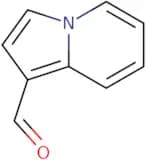
Produto descontinuado1-Indolizinecarboxaldehyde
CAS:Versatile small molecule scaffold
Fórmula:C9H7NOPureza:Min. 95%Peso molecular:145.16 g/mol1-(Adamantan-1-yl)propan-2-one
CAS:1-(Adamantan-1-yl)propan-2-one is an enolate reagent that is used in the synthesis of organic compounds. It reacts with chloride to form a chloroformate and can be used for the preparation of ketones, nitro compounds, and nitroalkanes. The 1-(Adamantan-1-yl)propan-2-one is also an enolate anion that has been shown to react with ethylmercury, nitroethane, and piperidine.
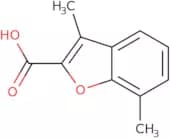
Fórmula:C13H20OPureza:Min. 95%Peso molecular:192.3 g/mol3,7-Dimethyl-1-benzofuran-2-carboxylic acid
CAS:Versatile small molecule scaffold
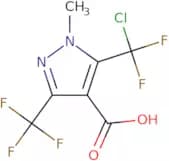
Fórmula:C11H10O3Pureza:Min. 95%Peso molecular:190.19 g/mol5-(Chlorodifluoromethyl)-1-methyl-3-(trifluoromethyl)-1H-pyrazole-4-carboxylic acid
CAS:Versatile small molecule scaffold
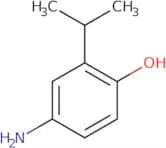
Fórmula:C7H4ClF5N2O2Pureza:Min. 95%Peso molecular:278.56 g/mol4-Amino-2-isopropylphenol
CAS:4-Amino-2-isopropylphenol is a phenolic compound that is used in the synthesis of esters. It reacts with carboxylic acids to form an acylation product, which is selective for hydroxy groups. 4-Amino-2-isopropylphenol can be used as a solvent for phenolic compounds such as resorcinols and hydroquinones. This reagent also selectively reacts with organic solvents preferentially to hydroxy groups on the same molecule. The regioselective reaction of 4-amino-2-isopropylphenol is due to its steric hindrance by the substituent on the isopropyl group.
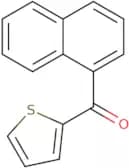
Fórmula:C9H13NOPureza:Min. 95%Peso molecular:151.21 g/mol(Naphthalen-1-yl)(thiophen-2-yl)methanone
CAS:Versatile small molecule scaffold
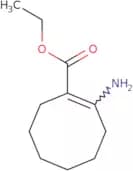
Fórmula:C15H10OSPureza:Min. 95%Peso molecular:238.31 g/molEthyl 2-aminocyclooct-1-ene-1-carboxylate
CAS:Versatile small molecule scaffoldFórmula:C11H19NO2Pureza:Min. 95%Peso molecular:197.27 g/molRef: 3D-GCA66194
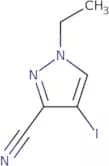
Produto descontinuado1-Ethyl-4-iodo-1H-pyrazole-3-carbonitrile
CAS:Versatile small molecule scaffold
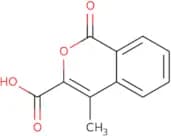
Fórmula:C6H6IN3Pureza:Min. 95%Peso molecular:247.04 g/mol4-Methyl-1-oxo-1H-isochromene-3-carboxylic acid
CAS:Versatile small molecule scaffoldFórmula:C11H8O4Pureza:Min. 95%Peso molecular:204.18 g/mol2-Phenylbenzyl Bromide
CAS:2-Phenylbenzyl Bromide is a compound that is used as an analytical reagent to measure the amount of fatty acids and carboxylic acids in water. It is a good indicator for measuring the degree of pollution in wastewater treatment plants. The fluorescence properties of 2-Phenylbenzyl Bromide are also used for analytical purposes, such as monitoring the reactions between sodium hydroxide solution and ester hydrochlorides. This product has been shown to be active against inflammatory diseases such as arthritis and asthma, as well as cervical cancer. 2-Phenylbenzyl Bromide has also been shown to activate AMPK activators and may be beneficial for the treatment of obesity and diabetes.
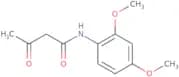
Fórmula:C13H11BrPureza:Min. 95%Peso molecular:247.13 g/mol2',4'-Dimethoxyacetoacetanilide
CAS:2',4'-Dimethoxyacetoacetanilide is a disubstituted dicarbonyl compound that is synthesized by acetoxylation of 2,4-dimethoxybenzaldehyde. The equilibrium between the two forms can be shifted to favor one form through the addition of reagents, such as dimethylformamide or dicarbonyl compounds. The oxidation of 2',4'-dimethoxyacetoacetanilide with hydrogen peroxide yields 2,4-dihydroxydiphenylmethane, which can undergo hydrolysis with hydrochloric acid to yield phenol.
Fórmula:C12H15NO4Pureza:Min. 95%Peso molecular:237.26 g/mol2-(2-Hydroxyethyl)-2H,3H-[1,2,4]triazolo[4,3-a]pyridin-3-one
CAS:Versatile small molecule scaffold
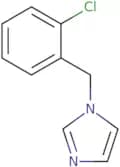
Fórmula:C8H9N3O2Pureza:Min. 95%Peso molecular:179.18 g/mol1-(2-Chlorobenzyl)imidazole
CAS:Versatile small molecule scaffold
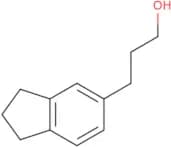
Fórmula:C10H9ClN2Pureza:Min. 95%Peso molecular:192.64 g/mol3-(2,3-Dihydro-1H-inden-5-yl)propan-1-ol
CAS:Versatile small molecule scaffold
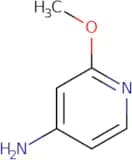
Fórmula:C12H16OPureza:Min. 95%Peso molecular:176.25 g/mol(4-Aminopyridin-2-yl)methanol
CAS:Versatile small molecule scaffold
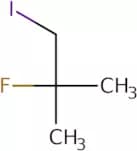
Fórmula:C6H8N2OPureza:Min. 95%Peso molecular:124.14 g/mol2-Fluoro-1-iodo-2-methylpropane
CAS:Versatile small molecule scaffold
Fórmula:C4H8FIPureza:Min. 95%Peso molecular:202.01 g/molRef: 3D-UAA86979
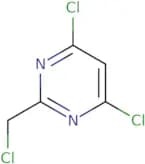
Produto descontinuado4,6-Dichloro-2-(chloromethyl)pyrimidine
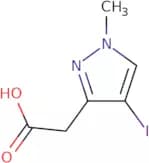
CAS:Versatile small molecule scaffoldFórmula:C5H3Cl3N2Pureza:Min. 95%Peso molecular:197.45 g/mol2-(4-Iodo-1-methyl-1H-pyrazol-3-yl)acetic acid
CAS:Versatile small molecule scaffold
Fórmula:C6H7IN2O2Pureza:Min. 95%Peso molecular:266.04 g/mol4-Methyl-1,3-dihydro-2λ⁶,1-benzothiazole-2,2-dione
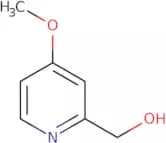
CAS:Versatile small molecule scaffoldFórmula:C8H9NO2SPureza:Min. 95%Peso molecular:183.23 g/mol(4-Methoxy-pyridin-2-yl)-methanol
CAS:(4-Methoxy-pyridin-2-yl)-methanol is a nucleophile that can be used in the preparation of phosphorothioates and triphosphates. It is also used to synthesize oligonucleotides, which are biomolecules used to probe the structure of DNA. This compound has been shown to have high yields and is exothermic, making it a good candidate for catalysis. The chemical properties of (4-Methoxy-pyridin-2-yl)-methanol make it an excellent nucleophile with a strong affinity for phosphorous, which makes it useful in the synthesis of phosphorothioates and triphosphates.
Fórmula:C7H9NO2Pureza:Min. 95%Peso molecular:139.16 g/mol4-Amino-2-cyclopentylpyrimidine-5-carbonitrile
CAS:Versatile small molecule scaffold
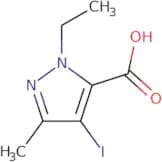
Fórmula:C10H12N4Pureza:Min. 95%Peso molecular:188.23 g/mol1-Ethyl-4-iodo-3-methyl-1H-pyrazole-5-carboxylic acid
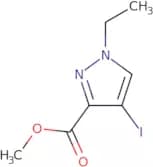
CAS:Versatile small molecule scaffoldFórmula:C7H9IN2O2Pureza:Min. 95%Peso molecular:280.06 g/molMethyl 1-ethyl-4-iodo-1H-pyrazole-3-carboxylate
CAS:Versatile small molecule scaffold
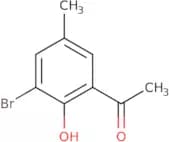
Fórmula:C7H9IN2O2Pureza:Min. 95%Peso molecular:280.06 g/mol1-(3-Bromo-2-hydroxy-5-methylphenyl)ethan-1-one
CAS:Versatile small molecule scaffold
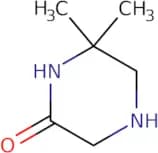
Fórmula:C9H9BrO2Pureza:Min. 95%Peso molecular:229.07 g/mol6,6-Dimethylpiperazin-2-one
CAS:Versatile small molecule scaffold
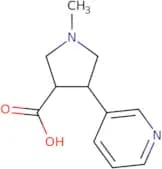
Fórmula:C6H12N2OPureza:Min. 95%Peso molecular:128.17 g/molrac-(3R,4S)-1-Methyl-4-(pyridin-3-yl)pyrrolidine-3-carboxylic acid
CAS:Versatile small molecule scaffoldFórmula:C11H14N2O2Pureza:Min. 95%Peso molecular:206.2 g/molRef: 3D-WGC76687
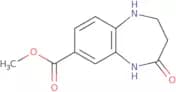
Produto descontinuadoMethyl 4-oxo-2,3,4,5-tetrahydro-1H-1,5-benzodiazepine-7-carboxylate
CAS:Versatile small molecule scaffold
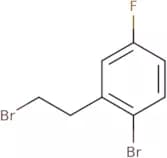
Fórmula:C11H12N2O3Pureza:Min. 95%Peso molecular:220.22 g/mol1-Bromo-2-(2-bromoethyl)-4-fluorobenzene
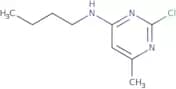
CAS:Versatile small molecule scaffoldFórmula:C8H7Br2FPureza:Min. 95%Peso molecular:281.95 g/molN-Butyl-2-chloro-6-methylpyrimidin-4-amine
CAS:Versatile small molecule scaffold
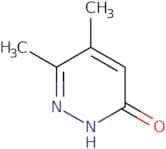
Fórmula:C9H14ClN3Pureza:Min. 95%Peso molecular:199.68 g/mol5,6-Dimethylpyridazin-3(2H)-one
CAS:Versatile small molecule scaffold
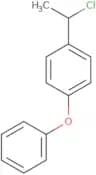
Fórmula:C6H8N2OPureza:Min. 95%Peso molecular:124.14 g/mol1-(1-Chloroethyl)-4-phenoxybenzene
CAS:Versatile small molecule scaffold
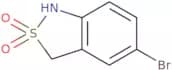
Fórmula:C14H13ClOPureza:Min. 95%Peso molecular:232.7 g/mol5-bromo-1,3-dihydro-2lambda6,1-benzothiazole-2,2-dione
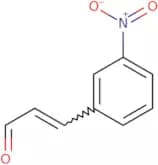
CAS:Versatile small molecule scaffoldFórmula:C7H6BrNO2SPureza:Min. 95%Peso molecular:248.1 g/mol3-(3-Nitrophenyl)acrylaldehyde
CAS:3-(3-Nitrophenyl)acrylaldehyde is an organic compound that belongs to the class of aldehydes. It is used in the synthesis of halogenated compounds, such as dibromohexane, and in organic chemistry as a building block for the preparation of hydrophobic compounds. 3-(3-Nitrophenyl)acrylaldehyde reacts with benzene in an aldol condensation reaction to form 2,4-dinitrobenzaldehyde. This reaction may be catalyzed by acid or base. The efficiency of this reaction is increased when it is carried out at lower temperatures and higher pressures. The ring-opening reaction of 3-(3-nitrophenyl)acrylaldehyde with methanal also proceeds efficiently at lower temperatures and higher pressures.
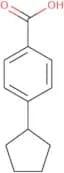
Fórmula:C9H7NO3Pureza:Min. 95%Peso molecular:177.16 g/mol4-Cyclopentylbenzoic acid
CAS:Versatile small molecule scaffold
Fórmula:C12H14O2Pureza:Min. 95%Peso molecular:190.24 g/molRef: 3D-UAA93622
Produto descontinuado4-[(4-Bromophenyl)methoxy]phenol
CAS:Versatile small molecule scaffold
Fórmula:C13H11BrO2Pureza:Min. 95%Peso molecular:279.13 g/mol8-Oxaspiro[4.5]decan-1-ol
CAS:Versatile small molecule scaffold
Fórmula:C9H16O2Pureza:Min. 95%Peso molecular:156.22 g/mol6-Methyl-4H,5H,6H,7H-thieno[2,3-c]pyridine-2-carboxylic acid hydrochloride
CAS:Versatile small molecule scaffoldFórmula:C9H12ClNO2SPureza:Min. 95%Peso molecular:233.72 g/molRef: 3D-QSB06554
Produto descontinuadotert-Butyl 3-hydroxyphenylcarbamate
CAS:Versatile small molecule scaffold
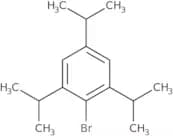
Fórmula:C11H15NO3Pureza:Min. 95%Peso molecular:209.24 g/mol2-Bromo-1,3,5-triisopropylbenzene
CAS:2-Bromo-1,3,5-triisopropylbenzene is an ethylene acetal that is prepared by the catalyzed reaction of aryl chlorides and anhydrous zinc bromide in the presence of triethylamine. The selectivities of this method are high because it can produce mainly a single isomer. The stereoselectivity is also high because the reaction proceeds with the formation of only one stereoisomer. The mechanism for this reaction involves a nucleophilic substitution of the halogenated aryl chloride with the trialkylborane, which generates two different products. This product has been used in the synthesis of biphenyls and nitro compounds.
Fórmula:C15H23BrPureza:Min. 95%Cor e Forma:Colorless Clear LiquidPeso molecular:283.25 g/molRef: 3D-FB33867
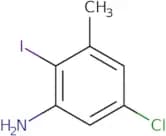
Produto descontinuado5-chloro-2-iodo-3-methylaniline
CAS:Versatile small molecule scaffold
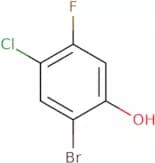
Fórmula:C7H7ClINPureza:Min. 95%Peso molecular:267.5 g/mol2-Bromo-4-chloro-5-fluorophenol
CAS:Versatile small molecule scaffold
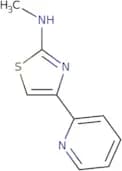
Fórmula:C6H3BrClFOPureza:Min. 95%Peso molecular:225.44 g/molN-Methyl-4-(pyridin-2-yl)-1,3-thiazol-2-amine
CAS:Versatile small molecule scaffold
Fórmula:C9H9N3SPureza:Min. 95%Peso molecular:191.26 g/molethyl 3-[(pyridin-3-ylmethyl)amino]propanoate
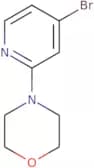
CAS:Versatile small molecule scaffoldFórmula:C11H16N2O2Pureza:Min. 95%Peso molecular:208.3 g/mol4-(4-Bromopyridin-2-yl)morpholine
CAS:Versatile small molecule scaffold
Fórmula:C9H11BrN2OPureza:Min. 95%Peso molecular:243.1 g/molmethyl 6-(methylamino)pyridazine-3-carboxylate
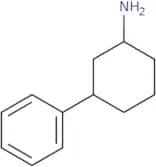
CAS:Versatile small molecule scaffoldFórmula:C7H9N3O2Pureza:Min. 95%Peso molecular:167.2 g/mol3-Phenylcyclohexan-1-amine
CAS:Versatile small molecule scaffold
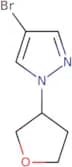
Fórmula:C12H17NPureza:Min. 95%Peso molecular:175.27 g/mol4-Bromo-1-(oxolan-3-yl)-1H-pyrazole
CAS:Versatile small molecule scaffold
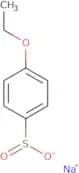
Fórmula:C7H9BrN2OPureza:Min. 95%Peso molecular:217.06 g/molSodium 4-ethoxybenzene-1-sulfinate
CAS:Versatile small molecule scaffold
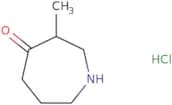
Fórmula:C8H9NaO3SPureza:Min. 95%Peso molecular:208.21 g/mol3-Methylazepan-4-one Hydrochloride
CAS:Versatile small molecule scaffold
Fórmula:C7H13NO·HClPureza:Min. 95%Peso molecular:163.64 g/molRef: 3D-GCA51523
Produto descontinuado



![2-(2-Hydroxyethyl)-2H,3H-[1,2,4]triazolo[4,3-a]pyridin-3-one](/_next/image/?url=https%3A%2Fstatic.cymitquimica.com%2Fproducts%2F3D%2Fthumb-webp%2FGCA65449.webp&w=3840&q=75)


![4-[(4-Bromophenyl)methoxy]phenol](/_next/image/?url=https%3A%2Fstatic.cymitquimica.com%2Fproducts%2F3D%2Fthumb-webp%2FECA58952.webp&w=3840&q=75)
![8-Oxaspiro[4.5]decan-1-ol](/_next/image/?url=https%3A%2Fstatic.cymitquimica.com%2Fproducts%2F3D%2Fthumb-webp%2FQSC75154.webp&w=3840&q=75)
![6-Methyl-4H,5H,6H,7H-thieno[2,3-c]pyridine-2-carboxylic acid hydrochloride](/_next/image/?url=https%3A%2Fstatic.cymitquimica.com%2Fproducts%2F3D%2Fthumb-webp%2FQSB06554.webp&w=3840&q=75)

![ethyl 3-[(pyridin-3-ylmethyl)amino]propanoate](/_next/image/?url=https%3A%2Fstatic.cymitquimica.com%2Fproducts%2F3D%2Fthumb-webp%2FQRB68805.webp&w=3840&q=75)