


Building Blocks
Esta seção contém produtos fundamentais para a síntese de compostos orgânicos e biológicos. Building blocks são os materiais de partida essenciais usados para construir moléculas complexas através de várias reações químicas. Eles desempenham um papel crítico na descoberta de medicamentos, ciência dos materiais e pesquisa química. Na CymitQuimica, oferecemos uma ampla gama de building blocks de alta qualidade para apoiar suas pesquisas inovadoras e projetos industriais, garantindo que você tenha os componentes essenciais para uma síntese bem-sucedida.
Subcategorias de "Building Blocks"
- Ácidos Borónicos e Derivados de Ácido Borónico(5.778 produtos)
- Building Blocks Quirais(1.243 produtos)
- Building Blocks Hidrocarbonetos(6.098 produtos)
- Building Blocks orgânicos(61.057 produtos)
Foram encontrados 200710 produtos de "Building Blocks"
Ordenar por
Pureza (%)
0
100
|
0
|
50
|
90
|
95
|
100
1-Methyl-1,4,5,6,7,8-hexahydropyrazolo[4,3-c]azepine
CAS:<p>Versatile small molecule scaffold</p>Fórmula:C8H13N3Pureza:Min. 95%Peso molecular:151.21 g/mol(2-Fluoro-4-phenylphenyl)methanamine
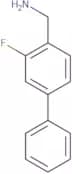
CAS:<p>Versatile small molecule scaffold</p>Fórmula:C13H12FNPureza:Min. 95%Peso molecular:201.24 g/mol5-(Benzyloxy)-2-(propan-2-yl)pyrimidine-4-carboxylic acid
CAS:<p>Versatile small molecule scaffold</p>Fórmula:C15H16N2O3Pureza:Min. 95%Peso molecular:272.3 g/mol1-[4-(Methylsulfanyl)phenyl]ethan-1-amine hydrochloride
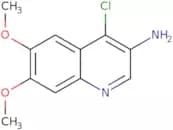
CAS:<p>Versatile small molecule scaffold</p>Fórmula:C9H14ClNSPureza:Min. 95%Peso molecular:203.73 g/mol4-Chloro-6,7-dimethoxy-3-quinolinamine
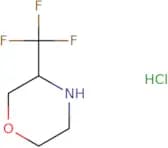
CAS:<p>Versatile small molecule scaffold</p>Fórmula:C11H11ClN2O2Pureza:Min. 95%Peso molecular:238.67 g/mol(3R)-3-(Trifluoromethyl)morpholine hydrochloride
CAS:<p>Versatile small molecule scaffold</p>Fórmula:C5H9ClF3NOPureza:Min. 95%Peso molecular:191.58 g/moltert-butyl N-(3-methylpyridin-4-yl)carbamate
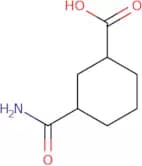
CAS:<p>Versatile small molecule scaffold</p>Fórmula:C11H16N2O2Pureza:Min. 95%Peso molecular:208.25 g/mol3-Carbamoylcyclohexane-1-carboxylic acid
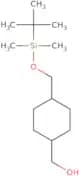
CAS:<p>Versatile small molecule scaffold</p>Fórmula:C8H13NO3Pureza:Min. 95%Peso molecular:171.19 g/molrac-((1R,4R)-4-(((tert-Butyldimethylsilyl)oxy)methyl)cyclohexyl)methanol
CAS:<p>Versatile small molecule scaffold</p>Fórmula:C14H30O2SiPureza:Min. 95%Peso molecular:258.47 g/mol1-(3-Methylbenzyl)-1H-pyrazolo[3,4-d]pyrimidin-4-amine
CAS:<p>Versatile small molecule scaffold</p>Fórmula:C13H13N5Pureza:Min. 95%Peso molecular:239.28 g/molN-Methoxy-N,2-dimethylbenzamide
CAS:<p>Versatile small molecule scaffold</p>Fórmula:C10H13NO2Pureza:Min. 95%Peso molecular:179.22 g/mol3,6-Dimethylimidazo[2,1-b]thiazole-5-carbaldehyde
CAS:<p>Versatile small molecule scaffold</p>Fórmula:C8H8N2OSPureza:Min. 95%Peso molecular:180.23 g/mol1-[(4-Methoxyphenyl)methyl]imidazolidine-2,4,5-trione
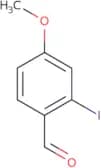
CAS:<p>Versatile small molecule scaffold</p>Fórmula:C11H10N2O4Pureza:Min. 95%Peso molecular:234.21 g/mol2-Iodo-4-methoxybenzaldehyde
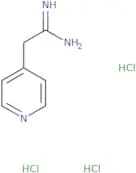
CAS:<p>2-Iodo-4-methoxybenzaldehyde is a chiral compound that can be synthesized through an intramolecular, stereoselective cyclic annulation reaction. The key step in this process is the arylation of 2-iodo-4-methoxybenzaldehyde with ethyl bromide. This compound can also be synthesized by reacting 2-iodobenzoic acid with formaldehyde in the presence of a base. In addition, 2-Iodo-4-methoxybenzaldehyde can be produced by the sequence of nitrogen substitution and tricyclic annulation.</p>Fórmula:C8H7IO2Pureza:Min. 95%Peso molecular:262.04 g/mol2-(Pyridin-4-yl)ethanimidamide trihydrochloride
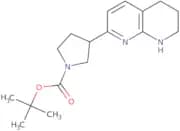
CAS:<p>Versatile small molecule scaffold</p>Fórmula:C7H12Cl3N3Pureza:Min. 95%Peso molecular:244.5 g/moltert-Butyl 3-(5,6,7,8-tetrahydro-1,8-naphthyridin-2-yl)pyrrolidine-1-carboxylate
CAS:<p>Versatile small molecule scaffold</p>Fórmula:C17H25N3O2Pureza:Min. 95%Peso molecular:303.4 g/molRef: 3D-FDD51811
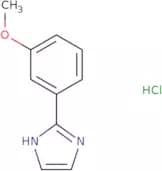
Produto descontinuado2-(3-Methoxyphenyl)-1H-imidazole hydrochloride
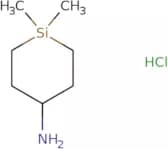
CAS:<p>Versatile small molecule scaffold</p>Fórmula:C10H11ClN2OPureza:Min. 95%Peso molecular:210.66 g/mol1,1-Dimethylsilinan-4-amine hydrochloride
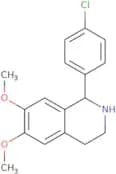
CAS:<p>Versatile small molecule scaffold</p>Fórmula:C7H18ClNSiPureza:Min. 95%Peso molecular:179.76 g/mol1-(4-Chlorophenyl)-6,7-dimethoxy-1,2,3,4-tetrahydroisoquinoline
CAS:<p>Versatile small molecule scaffold</p>Fórmula:C17H18ClNO2Pureza:Min. 95%Peso molecular:303.8 g/mol4-(1,1,2,3,3,3-Hexafluoropropoxy)benzaldehyde
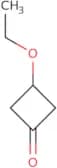
CAS:<p>Versatile small molecule scaffold</p>Fórmula:C10H6F6O2Pureza:Min. 95%Peso molecular:272.14 g/mol3-Ethoxycyclobutan-1-one
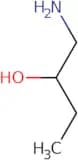
CAS:<p>Versatile small molecule scaffold</p>Fórmula:C6H10O2Pureza:Min. 95%Peso molecular:114.14 g/mol(S)-1-Aminobutan-2-ol
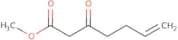
CAS:<p>Versatile small molecule scaffold</p>Fórmula:C4H11NOPureza:Min. 95%Peso molecular:89.14 g/molMethyl 3-oxohept-6-enoate
CAS:<p>Methyl 3-oxohept-6-enoate is a cyclopropane, which is a type of organic compound that contains one or more rings of carbon atoms. This compound can be synthesized by the chemoenzymatic process using hydrogen chloride and activated methylene chloride. The synthesis starts with an acidic condensation process, followed by the hydroalkylation of methyl 3-oxoheptanoate. The resulting product is then isolated through a chiral synthetic process and has an isolated yield of 51%.</p>Fórmula:C8H12O3Pureza:Min. 95%Peso molecular:156.18 g/mol2-Cyclopentyl-5-methyl-2H-pyrazol-3-ylamine
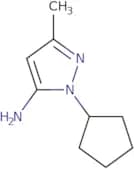
CAS:<p>Versatile small molecule scaffold</p>Fórmula:C9H15N3Pureza:Min. 95%Peso molecular:165.24 g/mol4-(2-Bromophenyl)-1,3-thiazole
CAS:<p>Versatile small molecule scaffold</p>Fórmula:C9H6BrNSPureza:Min. 95%Peso molecular:240.12 g/mol2-(2-methyl-1H-imidazol-1-yl)acetic acid hydrochloride
CAS:<p>Versatile small molecule scaffold</p>Fórmula:C6H9ClN2O2Pureza:Min. 95%Peso molecular:176.6 g/mol5-Methyl-5H,6H,7H-pyrrolo[1,2-a]imidazol-7-amine
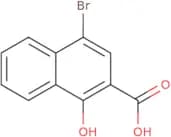
CAS:<p>Versatile small molecule scaffold</p>Fórmula:C7H11N3Pureza:Min. 95%Peso molecular:137.18 g/mol4-bromo-1-hydroxynaphthalene-2-carboxylic acid
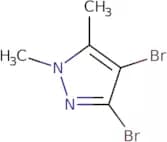
CAS:<p>4-Bromo-1-hydroxynaphthalene-2-carboxylic acid (4BHN) is a spectroscopic compound that has been used as a radioligand to study the binding of dopamine and dopamine D3 receptors. This compound binds to the d3 receptor with high affinity and specificity, but it does not interact with the d1 or d2 receptors. 4BHN has been shown to act as an agonist at the dopamine D3 receptor. It also acts as an antagonist at the piperidine site of the dopamine D2 receptor. The effects of 4BHN are reversible, which means that it can be displaced by unlabeled 4BHN or other compounds that bind to the same site on the receptor. This technique is useful for studying drug interactions and for determining whether drugs have a subtype selectivity profile.</p>Fórmula:C11H7BrO3Pureza:Min. 95%Peso molecular:267.1 g/mol3,4-Dibromo-1,5-dimethyl-1H-pyrazole
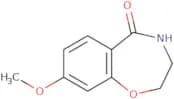
CAS:<p>Versatile small molecule scaffold</p>Fórmula:C5H6Br2N2Pureza:Min. 95%Peso molecular:253.92 g/mol8-Methoxy-2,3,4,5-tetrahydro-1,4-benzoxazepin-5-one
CAS:<p>Versatile small molecule scaffold</p>Fórmula:C10H11NO3Pureza:Min. 95%Peso molecular:193.2 g/mol2-Oxaspiro[4.4]nonane-1,3-dione
CAS:<p>2-Oxaspiro[4.4]nonane-1,3-dione is a heterocycle that has been developed as a lead molecule for the treatment of cancer. It was discovered by researchers at the University of Illinois who were investigating the use of Friedel-Crafts reaction to synthesize triazoles. 2-Oxaspiro[4.4]nonane-1,3-dione has physicochemical parameters that make it ideal for pharmaceutical research and development. This molecule has been shown to have anti-inflammatory properties and can be used to focus on carbon bond synthesis in order to synthesize pyridazines and ketocarboxylic acid derivatives.</p>Fórmula:C8H10O3Pureza:Min. 95%Peso molecular:154.16 g/mol2-(2,6-Dimethoxyphenoxymethyl)oxirane
CAS:<p>Versatile small molecule scaffold</p>Fórmula:C11H14O4Pureza:Min. 95%Peso molecular:210.23 g/mol2-Hydroxy-4-(phenylmethoxy)benzoic Acid Methyl Ester
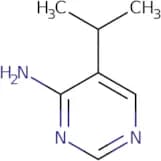
CAS:<p>2-Hydroxy-4-(phenylmethoxy)benzoic Acid Methyl Ester is a benzene derivative that inhibits the binding of xanthones to the benzene ring in a variety of ways. This compound is formed by reacting phenol with methyl benzoate in the presence of acid and heat. The low energy ligand inhibits the binding of xanthones to benzene by forming hydrogen bonds, covalent bonds, or van der Waals forces with the anion. 2-Hydroxy-4-(phenylmethoxy)benzoic acid methyl ester has shown anti-inflammatory properties, which may be due to its ability to inhibit leukocyte adhesion at inflammatory sites.</p>Fórmula:C15H14O4Pureza:Min. 95%Peso molecular:258.27 g/mol5-(Propan-2-yl)pyrimidin-4-amine
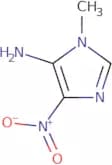
CAS:<p>Versatile small molecule scaffold</p>Fórmula:C7H11N3Pureza:Min. 95%Peso molecular:137.18 g/mol5-Amino-1-methyl-4-nitroimidazole
CAS:<p>5-Amino-1-methyl-4-nitroimidazole is a chemical compound that belongs to the class of azides. It has a molecular weight of 122.13 and a melting point of 187°C. 5-Amino-1-methyl-4-nitroimidazole can be synthesized by amination reaction between methyl nitrite and ammonia in the presence of anhydrous ammonia, followed by filtration. The product is obtained as white crystalline powder with a molecular formula of C3H6N3O2 and a molecular weight of 122.13 g/mol. This compound has been used as an intermediate for the synthesis of other compounds, such as 2,5-diaminohexane hydrochloride ((C6H14N2)Cl). 5-Amino-1-methyl-4-nitroimidazole is also used in xerography, photography, and semiconduct</p>Fórmula:C4H6N4O2Pureza:Min. 95%Cor e Forma:PowderPeso molecular:142.12 g/molRef: 3D-FA31238
Produto descontinuado6-Methoxy-1-(naphthalen-1-yl)-1H,2H,3H,4H,9H-pyrido[3,4-b]indole
CAS:<p>Versatile small molecule scaffold</p>Fórmula:C22H20N2OPureza:Min. 95%Peso molecular:328.4 g/molRef: 3D-EWA47644
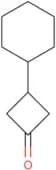
Produto descontinuado3-Cyclohexylcyclobutan-1-one
CAS:<p>Versatile small molecule scaffold</p>Fórmula:C10H16OPureza:Min. 95%Peso molecular:152.23 g/mol{5H,7H,8H-Pyrano[4,3-d]pyrimidin-2-yl}methanamine
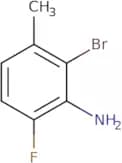
CAS:<p>Versatile small molecule scaffold</p>Fórmula:C8H11N3OPureza:Min. 95%Peso molecular:165.19 g/mol2-Bromo-6-fluoro-3-methylaniline
CAS:<p>Versatile small molecule scaffold</p>Fórmula:C7H7BrFNPureza:Min. 95%Peso molecular:204.04 g/molRef: 3D-EKC95115
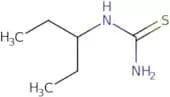
Produto descontinuado(Pentan-3-yl)thiourea
CAS:<p>Versatile small molecule scaffold</p>Fórmula:C6H14N2SPureza:Min. 95%Peso molecular:146.26 g/molEthyl 2-cyano-2-methyl-3-phenylpropanoate
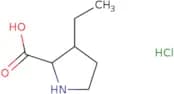
CAS:<p>Versatile small molecule scaffold</p>Fórmula:C13H15NO2Pureza:Min. 95%Peso molecular:217.26 g/mol3-Ethylpyrrolidine-2-carboxylic acid hydrochloride
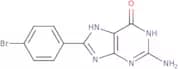
CAS:<p>Versatile small molecule scaffold</p>Fórmula:C7H14ClNO2Pureza:Min. 95%Peso molecular:179.64 g/mol2-Amino-8-(4-bromophenyl)-6,9-dihydro-1H-purin-6-one
CAS:<p>Versatile small molecule scaffold</p>Fórmula:C11H8BrN5OPureza:Min. 95%Peso molecular:306.12 g/mol2,3-Dimethyl-5-oxo-5H-thiazolo[3,2-a]pyrimidine-6-carboxylic acid
CAS:<p>Versatile small molecule scaffold</p>Fórmula:C9H8N2O3SPureza:Min. 95%Peso molecular:224.24 g/mol3-[(5-Propyl-1,3,4-thiadiazol-2-yl)carbamoyl]propanoic acid
CAS:<p>Versatile small molecule scaffold</p>Fórmula:C9H13N3O3SPureza:Min. 95%Peso molecular:243.29 g/mol2,2,2-Trifluoro-1-(4-methyl-1H-indol-3-yl)ethan-1-one
CAS:Produto Controlado<p>Versatile small molecule scaffold</p>Fórmula:C11H8F3NOPureza:Min. 95%Peso molecular:227.18 g/moltert-Butyl 5-bromo-3,4-dihydro-2,7-naphthyridine-2(1H)-carboxylate
CAS:<p>Versatile small molecule scaffold</p>Fórmula:C13H17BrN2O2Pureza:Min. 95%Peso molecular:313.19 g/mol(2S,3R)-2-((((9H-Fluoren-9-yl)methoxy)carbonyl)amino)-3-methoxybutanoic acid
CAS:<p>Versatile small molecule scaffold</p>Fórmula:C20H21NO5Pureza:Min. 95%Peso molecular:355.4 g/mol2-Acetylbenzoic acid
CAS:<p>2-Acetylbenzoic acid is a functional molecule that contains an acetyl group. It can form hydrogen bonds with other molecules and has been shown to induce apoptosis in cells. The reaction products of 2-acetylbenzoic acid are malonic acid, acetylsalicylic acid, and 2-benzoylbenzoic acid. These three compounds are made by the addition of hydrogen or hydroxide to the molecule 2-acetylbenzoic acid. The molecule has two functional groups: a carbonyl group and an acetyl group. The chemical structure of this molecule can be seen in the figure below.<br>2-Acetylbenzoic Acid</p>Fórmula:C9H8O3Pureza:Min. 95%Cor e Forma:PowderPeso molecular:164.16 g/molRef: 3D-FA05086
Produto descontinuado2-Bromo-3,3,3-trifluoro-1-propene
CAS:Produto Controlado<p>2-Bromo-3,3,3-trifluoro-1-propene is a chemical compound that has been synthesized in an asymmetric reaction. The reactant is bromopropane and the product is 2,2,2-trifluoropropene. The methylene group on the propene molecule is activated by the nucleophilic attack of a fluoride ion from hydrogen fluoride to form a cavity with a highly strained bond. The kinetic study of this reaction revealed that the activation energy for the reaction is 42 kJ/mol. Palladium-catalyzed coupling reactions are catalyzed by palladium and require nonpolar solvents such as toluene or dichloromethane. This type of reaction has been shown to be exothermic with an isolated yield of 1%.</p>Fórmula:C3H2BrF3Pureza:Min. 95%Cor e Forma:Colorless PowderPeso molecular:174.95 g/mol
![1-Methyl-1,4,5,6,7,8-hexahydropyrazolo[4,3-c]azepine](/_next/image/?url=https%3A%2Fstatic.cymitquimica.com%2Fproducts%2F3D%2Fthumb-webp%2FFKC42823.webp&w=3840&q=75)

![1-[4-(Methylsulfanyl)phenyl]ethan-1-amine hydrochloride](/_next/image/?url=https%3A%2Fstatic.cymitquimica.com%2Fproducts%2F3D%2Fthumb-webp%2FFIA93777.webp&w=3840&q=75)

![1-(3-Methylbenzyl)-1H-pyrazolo[3,4-d]pyrimidin-4-amine](/_next/image/?url=https%3A%2Fstatic.cymitquimica.com%2Fproducts%2F3D%2Fthumb-webp%2FFGC34324.webp&w=3840&q=75)

![3,6-Dimethylimidazo[2,1-b]thiazole-5-carbaldehyde](/_next/image/?url=https%3A%2Fstatic.cymitquimica.com%2Fproducts%2F3D%2Fthumb-webp%2FFFA18230.webp&w=3840&q=75)
![1-[(4-Methoxyphenyl)methyl]imidazolidine-2,4,5-trione](/_next/image/?url=https%3A%2Fstatic.cymitquimica.com%2Fproducts%2F3D%2Fthumb-webp%2FFEA68609.webp&w=3840&q=75)



![5-Methyl-5H,6H,7H-pyrrolo[1,2-a]imidazol-7-amine](/_next/image/?url=https%3A%2Fstatic.cymitquimica.com%2Fproducts%2F3D%2Fthumb-webp%2FFAD45710.webp&w=3840&q=75)
![2-Oxaspiro[4.4]nonane-1,3-dione](/_next/image/?url=https%3A%2Fstatic.cymitquimica.com%2Fproducts%2F3D%2Fthumb-webp%2FFAA62390.webp&w=3840&q=75)

![6-Methoxy-1-(naphthalen-1-yl)-1H,2H,3H,4H,9H-pyrido[3,4-b]indole](/_next/image/?url=https%3A%2Fstatic.cymitquimica.com%2Fproducts%2F3D%2Fthumb-webp%2FEWA47644.webp&w=3840&q=75)
![{5H,7H,8H-Pyrano[4,3-d]pyrimidin-2-yl}methanamine](/_next/image/?url=https%3A%2Fstatic.cymitquimica.com%2Fproducts%2F3D%2Fthumb-webp%2FEMC23714.webp&w=3840&q=75)

![2,3-Dimethyl-5-oxo-5H-thiazolo[3,2-a]pyrimidine-6-carboxylic acid](/_next/image/?url=https%3A%2Fstatic.cymitquimica.com%2Fproducts%2F3D%2Fthumb-webp%2FEDA93256.webp&w=3840&q=75)
![3-[(5-Propyl-1,3,4-thiadiazol-2-yl)carbamoyl]propanoic acid](/_next/image/?url=https%3A%2Fstatic.cymitquimica.com%2Fproducts%2F3D%2Fthumb-webp%2FEDA88841.webp&w=3840&q=75)


