Building Blocks
Subcategorias de "Building Blocks"
- Ácidos Borónicos e Derivados de Ácido Borónico(5.778 produtos)
- Building Blocks Quirais(1.243 produtos)
- Building Blocks Hidrocarbonetos(6.099 produtos)
- Building Blocks orgânicos(61.038 produtos)
Foram encontrados 205376 produtos de "Building Blocks"
2-[(2-Hydroxy-2-phenylethyl)amino]propan-1-ol
CAS:Versatile small molecule scaffold
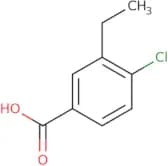
Fórmula:C11H17NO2Pureza:Min. 95%Peso molecular:195.26 g/mol4-Chloro-3-ethylbenzoic acid
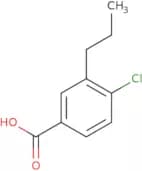
CAS:Versatile small molecule scaffoldFórmula:C9H9ClO2Pureza:Min. 95%Peso molecular:184.62 g/mol4-Chloro-3-propylbenzoic acid
CAS:Versatile small molecule scaffold
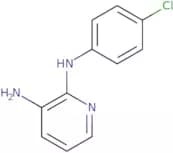
Fórmula:C10H11ClO2Pureza:Min. 95%Peso molecular:198.64 g/mol2-N-(4-Chlorophenyl)pyridine-2,3-diamine
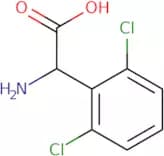
CAS:Versatile small molecule scaffoldFórmula:C11H10ClN3Pureza:Min. 95%Peso molecular:219.67 g/mol2-Amino-2-(2,6-dichlorophenyl)acetic acid
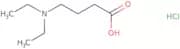
CAS:Versatile small molecule scaffoldFórmula:C8H7Cl2NO2Pureza:Min. 95%Peso molecular:220.05 g/mol4-(Diethylamino)butyric acid hydrochloride
CAS:4-(Diethylamino)butyric acid hydrochloride is a potent antimalarial drug that belongs to the group of benzothiopyrans. It has been shown to be an effective treatment for malaria. This compound is a phenolic compound, which contains a phenol group in its chemical structure. The esterification of 4-(diethylamino)butyric acid hydrochloride with water-soluble derivatives such as acetyl chloride or acetic anhydride yields water-soluble derivatives.Fórmula:C8H18ClNO2Pureza:Min. 95%Peso molecular:195.69 g/molN-[(4-Methoxyphenyl)Methyl]Methanesulfonamide
CAS:Versatile small molecule scaffoldFórmula:C9H13NO3SPureza:Min. 95%Peso molecular:215.27 g/mol4-[4-(Propan-2-yl)benzoyl]piperidine hydrochloride
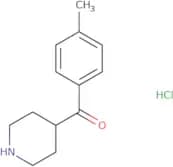
CAS:Versatile small molecule scaffoldFórmula:C15H22ClNOPureza:Min. 95%Peso molecular:267.8 g/mol4-(4-Methylbenzoyl)piperidine hydrochloride
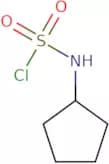
CAS:Versatile small molecule scaffoldFórmula:C13H18ClNOPureza:Min. 95%Peso molecular:239.74 g/molN-Cyclopentylsulfamoyl chloride
CAS:N-Cyclopentylsulfamoyl chloride is a diuretic drug that is used in veterinary medicine. It has been shown to increase fertility in animals. N-Cyclopentylsulfamoyl chloride also has aliphatic, sulfamates, and sulfamoyl chloride properties.
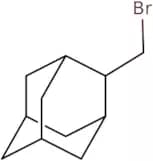
Fórmula:C5H10ClNO2SPureza:Min. 95%Peso molecular:183.66 g/mol2-(Bromomethyl)adamantane
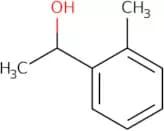
CAS:Versatile small molecule scaffoldFórmula:C11H17BrPureza:Min. 95%Peso molecular:229.16 g/mol(1R)-1-(2-Methylphenyl)ethan-1-ol
CAS:Versatile small molecule scaffold
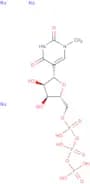
Fórmula:C9H12OPureza:Min. 95%Peso molecular:136.19 g/molN1-Methyl-pseudouridine-5'-triphosphate trisodium, 100mM aqueous solution
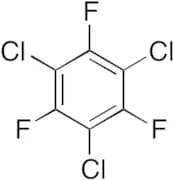
CAS:Methyl-pseudouridine-5'-triphosphate trisodium is the triphosphate of 1-Methylpseudouridine is a substitute for uridine in modified mRNA. This substitution has shown to increase transfection by reducing immuogenicity. UV max wavelength = 272nmFórmula:C10H17N2O15P3•Na3Pureza:Min. 95%Cor e Forma:Clear LiquidPeso molecular:567.17 g/mol1,3,5-Trifluorotrichlorobenzene
CAS:Applications 1,3,5-Trifluorotrichlorobenzene is a useful reagent.
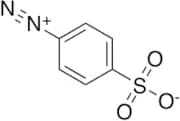
Fórmula:C6Cl3F3Peso molecular:235.424-Diazobenzenesulfonic Acid
CAS:Applications 4-Diazobenzenesulfonic acid (cas# 305-80-6) is a useful research chemical.
Fórmula:C6H4N2O3SPeso molecular:184.17N-(4-Bromophenyl)-N-phenylacrylamide
CAS:Versatile small molecule scaffoldFórmula:C15H12BrNOPureza:Min. 95%Cor e Forma:PowderPeso molecular:302.16 g/moltert-Butyl 4-[(piperazin-1-yl)methyl]piperidine-1-carboxylate
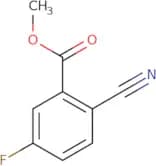
CAS:Versatile small molecule scaffoldFórmula:C15H29N3O2Pureza:Min. 95%Peso molecular:283.41 g/molMethyl 2-cyano-5-fluorobenzoate
CAS:Versatile small molecule scaffold
Fórmula:C9H6FNO2Pureza:Min. 95%Peso molecular:179.15 g/mol(R)-1-Propylpiperidin-3-amine
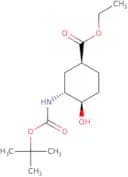
CAS:Please enquire for more information about (R)-1-Propylpiperidin-3-amine including the price, delivery time and more detailed product information at the technical inquiry form on this pageFórmula:C8H18N2Pureza:Min. 95%Peso molecular:142.24 g/mol(1S,3R,4R)-3-(Boc-amino)-4-hydroxy-cyclohexanecarboxylic acid ethyl ester
CAS:Versatile small molecule scaffold
Fórmula:C14H25NO5Pureza:Min. 95%Peso molecular:287.35 g/molMethyl 3-bromo-1-methyl-1H-pyrazole-5-carboxylate
CAS:Versatile small molecule scaffold
Fórmula:C6H7BrN2O2Pureza:Min. 95%Peso molecular:219.04 g/mol4-bromo-1H-imidazole-2-carbaldehyde
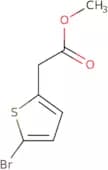
CAS:Versatile small molecule scaffoldFórmula:C4H3BrN2OPureza:Min. 95%Peso molecular:175 g/molMethyl 2-(5-bromothiophen-2-yl)acetate
CAS:Versatile small molecule scaffold
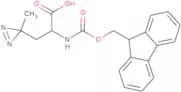
Fórmula:C7H7BrO2SPureza:Min. 95%Peso molecular:235.1 g/molFmoc-L-photo-leucine
CAS:Versatile small molecule scaffoldFórmula:C20H19N3O4Pureza:Min. 95%Peso molecular:365.4 g/mol1-chloro-4-fluoroisoquinoline
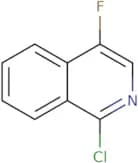
CAS:1-chloro-4-fluoroisoquinoline is a chlorinating agent that has been used as a synthetic method for the synthesis of oxychloride. It is typically used in the presence of palladium catalyst, in the presence of phosphorus and under reductive conditions. The chlorination reaction is initiated by addition of hydrochloric acid or phosphorous oxychloride. The 1-hydroxyisoquinoline reacts with phosphorus to form a chloroformate, which reacts with fluorine gas to produce an intermediate chlorofluorinate. This intermediate then reacts with chlorine gas in the presence of palladium catalyst to generate the desired product, 1-chloro-4-fluoroisoquinoline.Fórmula:C9H5ClFNPureza:Min. 95%Peso molecular:181.59 g/molMethyl 2-amino-5-pyridin-3-yl-1,3-thiazole-4-carboxylate
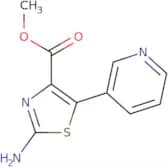
CAS:Versatile small molecule scaffoldFórmula:C10H9N3O2SPureza:Min. 95%Peso molecular:235.26 g/molSpiro[3.3]heptane-2,6-dicarboxylic acid, 2,6-dimethyl ester
CAS:Versatile small molecule scaffoldFórmula:C11H16O4Pureza:Min. 95%Peso molecular:212.25 g/mol6-Chloro-2,8-dimethylimidazo[1,2-b]pyridazine
CAS:Versatile small molecule scaffoldFórmula:C8H8ClN3Pureza:Min. 95%Peso molecular:181.62 g/mol1-(4-Chloro-3-fluorophenyl)ethan-1-amine HCl
CAS:Versatile small molecule scaffoldFórmula:C8H10Cl2FNPureza:Min. 95%Peso molecular:210.08 g/mol2-Bromo-4-(4-fluorophenyl)-1,3-thiazole
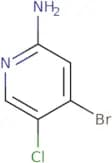
CAS:Versatile small molecule scaffoldFórmula:C9H5NFSBrPureza:Min. 95%Peso molecular:258.11 g/mol4-Bromo-5-chloropyridin-2-amine
CAS:Versatile small molecule scaffoldFórmula:C5H4BrClN2Pureza:Min. 95%Peso molecular:207.46 g/mol(6-Methoxy-pyridin-2-yl)-methanol
CAS:Versatile small molecule scaffoldFórmula:C7H9NO2Pureza:Min. 95%Peso molecular:139.16 g/mol1,5,6,7-Tetrahydro-2H-cyclopenta[b]pyridin-2-one
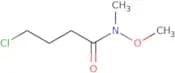
CAS:Versatile small molecule scaffoldFórmula:C8H9NOPureza:Min. 95%Peso molecular:135.17 g/mol4-Chloro-N-methoxy-N-methylbutanamide
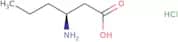
CAS:Versatile small molecule scaffoldFórmula:C6H12ClNO2Pureza:Min. 95%Peso molecular:165.62 g/mol(S)-3-Aminohexanoic acid hydrochloride ee
CAS:Versatile small molecule scaffold
Fórmula:C6H14ClNO2Pureza:Min. 95%Peso molecular:167.63 g/mol2,4-Dichloro-6-(propan-2-yl)pyrimidine
CAS:Versatile small molecule scaffold
Fórmula:C7H8Cl2N2Pureza:Min. 95%Peso molecular:191.05 g/mol5-Chloro-2-ethoxy-phenylamine
CAS:5-Chloro-2-ethoxy-phenylamine is an enzyme inhibitor that binds to the active site of glucocerebrosidase, the enzyme that catalyzes the hydrolysis of glucocerebroside to glucose and ceramide. This compound has been shown to be a selective inhibitor against this enzyme and not affect other hydrolases or chaperones. It was also found that 5-chloro-2-ethoxy-phenylamine can act as a chemical chaperone by stabilizing protein folding in vitro. 5-Chloro-2-ethoxy phenylamine is a new analogue of 3-(3,4,-dichlorophenyl)-1-[(1R,2S)-2-(5,6,-dichloropyridin-3 yl)ethenyl]-1H-pyrazole. It is an inhibitor of Gaucher disease caused by gluFórmula:C8H10ClNOPureza:Min. 95%Peso molecular:171.63 g/mol2-(2,4-dimethoxyphenyl)ethan-1-amine
CAS:Produto ControladoVersatile small molecule scaffoldFórmula:C10H15NO2Pureza:Min. 95%Peso molecular:181.24 g/molThiophen-3-ylmethanamine hydrochloride
CAS:Versatile small molecule scaffold
Fórmula:C5H8ClNSPureza:Min. 95%Peso molecular:149.64 g/mol3-(4-Hydroxyphenyl)hex-4-ynoic acid
CAS:Versatile small molecule scaffoldFórmula:C12H12O3Pureza:Min. 95%Peso molecular:204.22 g/mol2-[(6-Chloro-3,4-dihydro-3-methyl-2,4-dioxo-1(2H)-pyrimidinyl)methyl]-benzonitrile
CAS:2-[(6-Chloro-3,4-dihydro-3-methyl-2,4-dioxo-1(2H)-pyrimidinyl)methyl]-benzonitrile is an antibacterial agent that belongs to the group of nitro compounds. It inhibits bacterial growth by blocking the synthesis of proteins and DNA. 2-[(6-Chloro-3,4-dihydro-3-methyl-2,4-dioxo-1(2H)-pyrimidinyl)methyl]-benzonitrile has been shown to be active against a wide range of bacteria including Gram positive and Gram negative organisms. This compound also exhibits metal ion chelating properties and can be used for the removal of heavy metals from water. The square planar geometry of 2-[(6-Chloro-3,4-(dihydro)-3-(methyl)-2,4-(dioxo)-1Fórmula:C13H10ClN3O2Pureza:Min. 95%Peso molecular:275.69 g/mol3,3-Diethoxypropan-1-amine
CAS:3,3-Diethoxypropan-1-amine is a synthetic drug that reversibly inhibits the growth of bacteria. It has been shown to be effective against methicillin resistant strains of Staphylococcus aureus and Clostridium perfringens, with no detectable activity against acid-fast bacteria such as Mycobacterium tuberculosis or Mycobacterium avium complex. 3,3-Diethoxypropan-1-amine is a heterobifunctional compound that binds to epidermal growth factor with high affinity. 3,3-Diethoxypropan-1-amine can also bind to collagen and liposomal formulations, which may be useful for the treatment of wounds. This drug has been shown to inhibit δ opioid receptors in mice and rats, which is thought to contribute to its analgesic effects.Fórmula:C7H17NO2Pureza:Min. 95%Peso molecular:147.22 g/mol5-bromo-3-methoxy-1h-pyrazole
CAS:Versatile small molecule scaffoldFórmula:C4H5BrN2OPureza:Min. 95%Peso molecular:177 g/molPolycarbosilane
CAS:Polycarbosilane is a cross-linking agent that can be used to modify the surface properties of polymers. It reacts with the hydroxyl groups on the polymer to form carbosilane bonds, which lead to a change in the viscosity and other physical properties of the material. Polycarbosilane is insoluble in water and has an absorption peak at 350 nm. When reacted with argon gas, polycarbosilane reacts with oxygen or nitrogen to produce carbonyls or amines, respectively. Polycarbosilane can react with x-rays or magnetic resonance spectroscopy to produce elemental analysis data for a variety of elements. This chemical also has optical properties that make it useful as an organic solution for optical devices such as lenses and mirrors. Polycarbosilane is stable under most conditions and can be used as an efficient method for environmental pollution control by removing heavy metals from wastewater streams.
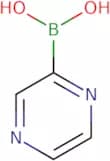
Fórmula:(C2H6Si)nPureza:Min. 95%Cor e Forma:PowderPyrazin-2-ylboronic acid
CAS:Pyrazin-2-ylboronic acid is a white crystalline solid that is soluble in water. It is an efficient and economical selenium source for use in the synthesis of selenides and other selenium compounds. Pyrazin-2-ylboronic acid can be produced by the reaction of aniline with borohydride, or by the reaction of pyrazine with borane. This synthetic process also provides a convenient way to produce diaryl compounds.Fórmula:C4H5BN2O2Pureza:Min. 95%Peso molecular:123.91 g/molOctahydro-2,6-naphthyridin-1(2H)-one acetate
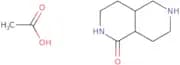
CAS:Produto ControladoPlease enquire for more information about Octahydro-2,6-naphthyridin-1(2H)-one acetate including the price, delivery time and more detailed product information at the technical inquiry form on this page
Fórmula:C8H14N2O•C2H4O2Pureza:Min. 95%Peso molecular:214.26 g/mol10-Oxooctadecanoic acid
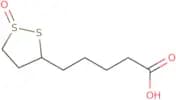
CAS:Please enquire for more information about 10-Oxooctadecanoic acid including the price, delivery time and more detailed product information at the technical inquiry form on this pageFórmula:C18H34O3Pureza:Min. 95%Peso molecular:298.5 g/mol5-(1-Oxodithiolan-3-yl)pentanoic acid
CAS:Please enquire for more information about 5-(1-Oxodithiolan-3-yl)pentanoic acid including the price, delivery time and more detailed product information at the technical inquiry form on this pageFórmula:C8H14O3S2Pureza:Min. 95%Peso molecular:222.3 g/molNe-Z-L-lysine tert-butyl ester hydrochloride
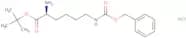
CAS:Ne-Z-L-lysine tert-butyl ester hydrochloride is a multidrug that inhibits the activity of the P-glycoprotein (Pgp) transporter. This drug is an antigen that can be used as a marker for cytostatic drugs, and it can be used in radionuclide localization. Ne-Z-L-lysine tert-butyl ester hydrochloride has been shown to have cytostatic effects on malignant cells, but its cytotoxicity varies depending on the type of cancer cell. Ne-Z-L-lysine tert-butyl ester hydrochloride has also been shown to be degradable and to possess conjugates with antibodies, which makes it useful for treating some types of cancers. Ne-Z-L-lysine tert-butyl ester hydrochloride is not active against resistant cells such as those expressing Pgp or MRP1 proteins.Fórmula:C18H28N2O4·HClPureza:Min. 95%Cor e Forma:White PowderPeso molecular:372.89 g/molRef: 3D-FN47294
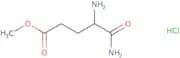
10g229,00€1kgA consultar25g482,00€50g263,00€100g382,00€250gA consultar500gA consultarH-Glu(OMe)-NHdihydrochloride
CAS:Versatile small molecule scaffoldFórmula:C6H13ClN2O3Pureza:Min. 95%Peso molecular:196.63 g/mol
![2-[(2-Hydroxy-2-phenylethyl)amino]propan-1-ol](/_next/image/?url=https%3A%2Fstatic.cymitquimica.com%2Fproducts%2F3D%2Fthumb-webp%2FSBA04241.webp&w=3840&q=75)

![N-[(4-Methoxyphenyl)Methyl]Methanesulfonamide](/_next/image/?url=https%3A%2Fstatic.cymitquimica.com%2Fproducts%2F3D%2Fthumb-webp%2FSBA06031.webp&w=3840&q=75)
![4-[4-(Propan-2-yl)benzoyl]piperidine hydrochloride](/_next/image/?url=https%3A%2Fstatic.cymitquimica.com%2Fproducts%2F3D%2Fthumb-webp%2FSBA06082.webp&w=3840&q=75)


![tert-Butyl 4-[(piperazin-1-yl)methyl]piperidine-1-carboxylate](/_next/image/?url=https%3A%2Fstatic.cymitquimica.com%2Fproducts%2F3D%2Fthumb-webp%2FGQA72248.webp&w=3840&q=75)



![Spiro[3.3]heptane-2,6-dicarboxylic acid, 2,6-dimethyl ester](/_next/image/?url=https%3A%2Fstatic.cymitquimica.com%2Fproducts%2F3D%2Fthumb-webp%2FMBA94279.webp&w=3840&q=75)
![6-Chloro-2,8-dimethylimidazo[1,2-b]pyridazine](/_next/image/?url=https%3A%2Fstatic.cymitquimica.com%2Fproducts%2F3D%2Fthumb-webp%2FSAA41223.webp&w=3840&q=75)



![1,5,6,7-Tetrahydro-2H-cyclopenta[b]pyridin-2-one](/_next/image/?url=https%3A%2Fstatic.cymitquimica.com%2Fproducts%2F3D%2Fthumb-webp%2FNDA49985.webp&w=3840&q=75)


![2-[(6-Chloro-3,4-dihydro-3-methyl-2,4-dioxo-1(2H)-pyrimidinyl)methyl]-benzonitrile](/_next/image/?url=https%3A%2Fstatic.cymitquimica.com%2Fproducts%2F3D%2Fthumb-webp%2FQJB75896.webp&w=3840&q=75)