Building Blocks
Subcategorias de "Building Blocks"
- Ácidos Borónicos e Derivados de Ácido Borónico(5.778 produtos)
- Building Blocks Quirais(1.243 produtos)
- Building Blocks Hidrocarbonetos(6.098 produtos)
- Building Blocks orgânicos(61.042 produtos)
Foram encontrados 204339 produtos de "Building Blocks"
3,6-Dibromopyridine-2-carbaldehyde
CAS:Versatile small molecule scaffold
Fórmula:C6H3Br2NOPureza:Min. 95%Peso molecular:264.9 g/mol1-Bromo-4-[(1E)-4-bromobut-1-en-1-yl]benzene
CAS:Versatile small molecule scaffold
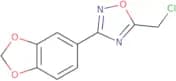
Fórmula:C10H10Br2Pureza:Min. 95%Peso molecular:289.99 g/mol3-(1,3-Dioxaindan-5-yl)-5-(chloromethyl)-1,2,4-oxadiazole
CAS:Versatile small molecule scaffold
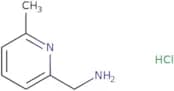
Fórmula:C10H7ClN2O3Pureza:Min. 95%Peso molecular:238.63 g/mol(6-Methylpyridin-2-yl)methanamine hydrochloride
CAS:Versatile small molecule scaffold
Fórmula:C7H11ClN2Pureza:Min. 95%Peso molecular:158.63 g/mol2-(2-Amino-2-cyclopropylethyl)-1λ⁶,2-thiazolidine-1,1-dione
CAS:Versatile small molecule scaffold
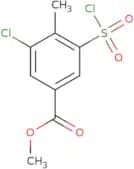
Fórmula:C8H16N2O2SPureza:Min. 95%Peso molecular:204.29 g/molMethyl 3-chloro-5-(chlorosulfonyl)-4-methylbenzoate
CAS:Versatile small molecule scaffold
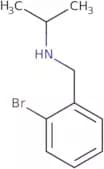
Fórmula:C9H8Cl2O4SPureza:Min. 95%Peso molecular:283.13 g/molN-(2-Bromobenzyl)propan-2-amine
CAS:Versatile small molecule scaffold
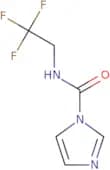
Fórmula:C10H14BrNPureza:Min. 95%Peso molecular:228.13 g/molN-(2,2,2-Trifluoroethyl)-1H-imidazole-1-carboxamide
CAS:Versatile small molecule scaffold
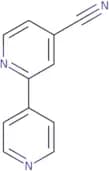
Fórmula:C6H6F3N3OPureza:Min. 95%Peso molecular:193.13 g/mol2-(Pyridin-4-yl)pyridine-4-carbonitrile
CAS:Versatile small molecule scaffold
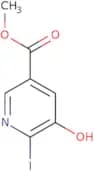
Fórmula:C11H7N3Pureza:Min. 95%Peso molecular:181.19 g/molMethyl 5-hydroxy-6-iodopyridine-3-carboxylate
CAS:Versatile small molecule scaffold
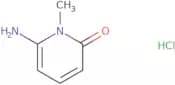
Fórmula:C7H6INO3Pureza:Min. 95%Peso molecular:279.03 g/mol6-Amino-1-methyl-1,2-dihydropyridin-2-one hydrochloride
CAS:Versatile small molecule scaffold
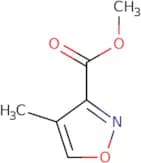
Fórmula:C6H9ClN2OPureza:Min. 95%Peso molecular:160.6 g/molMethyl 4-methyl-1,2-oxazole-3-carboxylate
CAS:Versatile small molecule scaffold
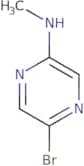
Fórmula:C6H7NO3Pureza:Min. 95%Peso molecular:141.1 g/mol5-Bromo-N-methylpyrazin-2-amine
CAS:Versatile small molecule scaffold
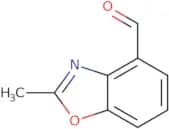
Fórmula:C5H6BrN3Pureza:Min. 95%Peso molecular:188.03 g/mol2-Methyl-1,3-benzoxazole-4-carbaldehyde
CAS:Versatile small molecule scaffold
Fórmula:C9H7NO2Pureza:Min. 95%Peso molecular:161.16 g/molRef: 3D-WSA86446
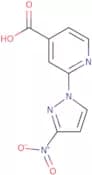
Produto descontinuado2-(3-Nitro-1H-pyrazol-1-yl)pyridine-4-carboxylic acid
CAS:Versatile small molecule scaffold
Fórmula:C9H6N4O4Pureza:Min. 95%Peso molecular:234.17 g/mol6-(1H-1,2,4-Triazol-3-yl)pyridine-3-carboxylic acid
CAS:Versatile small molecule scaffold
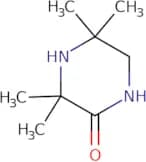
Fórmula:C8H6N4O2Pureza:Min. 95%Peso molecular:190.16 g/mol3,3,5,5-Tetramethylpiperazin-2-one
CAS:Versatile small molecule scaffold
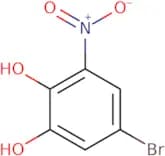
Fórmula:C8H16N2OPureza:Min. 95%Peso molecular:156.23 g/mol5-bromo-3-nitrobenzene-1,2-diol
CAS:Versatile small molecule scaffold
Fórmula:C6H4BrNO4Pureza:Min. 95%Peso molecular:234.01 g/mol2-Chloro-N-[5-methyl-2-(5-methyl-4H-1,2,4-triazol-3-yl)phenyl]acetamide
CAS:Versatile small molecule scaffold
Fórmula:C12H13ClN4OPureza:Min. 95%Peso molecular:264.71 g/mol3-Amino-1-(4-chlorophenyl)propan-1-ol
CAS:Versatile small molecule scaffold
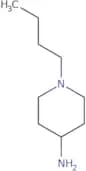
Fórmula:C9H12ClNOPureza:Min. 95%Peso molecular:185.65 g/mol1-Butylpiperidin-4-amine
CAS:Versatile small molecule scaffold
Fórmula:C9H20N2Pureza:Min. 95%Peso molecular:156.27 g/mol2-[(2-Methoxyphenoxy)methyl]benzoic acid
CAS:Versatile small molecule scaffold
Fórmula:C15H14O4Pureza:Min. 95%Peso molecular:258.27 g/molDimethyl 2,4-dibromoglutarate
CAS:Dimethyl 2,4-dibromoglutarate is a stereospecific, unselective opioid receptor ligand. It interacts with the opioid receptors and has been shown to have affinity for both mu and kappa receptors. Dimethyl 2,4-dibromoglutarate has been studied as a potential model for morphine and other selective ligands. The two enantiomers of dimethyl 2,4-dibromoglutarate were synthesized in order to study their selectivity for the opioid receptor. The racemic mixture of dimethyl 2,4-dibromoglutarate was found to be more potent than either of the individual enantiomers. The cyclopropane ring on the left side of the molecule is responsible for this effect. This ring confers higher affinity and selectivity than that on the right side of the molecule.
Fórmula:C7H10Br2O4Pureza:Min. 95%Peso molecular:317.96 g/mol5-(4-Nitro-phenyl)-[1,3,4]thiadiazol-2-ylamine
CAS:Versatile small molecule scaffold
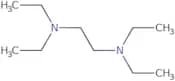
Fórmula:C8H6N4O2SPureza:Min. 95%Peso molecular:222.23 g/molN,N,N',N'-Tetraethylethylenediamine
CAS:N,N,N',N'-Tetraethylethylenediamine is a chemical compound that is used in the production of polyurethane. It can be synthesized from ethylenediamine by reaction with a trialkyl orthoformate and an acid catalyst. This chemical has a hydroxyl group and two asymmetric nitrogen atoms. The steric interactions between the hydrogen atom on the nitrogen atom and the three methyl groups on one carbon atom are responsible for its kinetic data. Tetraethylethylenediamine has been shown to react with copper complexes to form new palladium complexes. These reactions are catalyzed by serine proteases such as subtilisin and pepsin. N,N,N',N'-Tetraethylethylenediamine is also used as a cross-linking agent in polyurethanes. Cross-linked polyurethanes have improved mechanical properties and resistance to abrasion compared
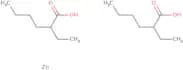
Fórmula:C10H24N2Pureza:Min. 95%Peso molecular:172.32 g/molEthylhexanoic acid zinc
CAS:Ethylhexanoic acid zinc salt is a viscosity-increasing agent that is used in the production of high-viscosity polymers. It is a carboxylate salt of ethyl hexanoic acid and zinc. The reaction of ethylhexane with zirconium oxide produces a viscous liquid with a strong cationic polymerization activity. This product reacts with diphenyl ether and aromatic hydrocarbons to form solid products. The reaction with calcium stearate, an ester of glycerol, results in the formation of particles that are insoluble in water but soluble in organic solvents. Ethylhexane also reacts with ethylene diamine to form methyl myristate, which has kinetic data available for it.
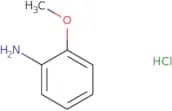
Fórmula:C16H30O4ZnPureza:Min. 95%Peso molecular:351.8 g/molo-Anisidine Hydrochloride
CAS:O-Anisidine Hydrochloride is a sulfa drug that belongs to the group of sulfonamides. It inhibits bacterial growth by interfering with the synthesis of folic acid, which is necessary for cell growth. O-Anisidine Hydrochloride has been shown to have genotoxic effects in vitro and in vivo, as well as carcinogenic potential. Studies have also shown that it has synergistic effects when combined with other drugs. Chronic oral administration of o-anisidine hydrochloride can cause long-term toxicity and genotoxicity, including atp levels.
Fórmula:C7H9NO·HClPureza:Min. 95%Peso molecular:159.61 g/mol2-Phenyl-3-butyn-2-ol
CAS:2-Phenyl-3-butyn-2-ol (2PB2) is an organic compound that has been shown to inhibit the growth of cancer cells in vitro. It is a structural analogue of phenylacetate, which inhibits cell proliferation by inducing apoptosis. 2PB2 induces regression by altering the functional theory of population growth. It is also an isomeric compound and its structure activity relationship has been studied using logistic regression. 2PB2 is protonated at acidic pH, but not at physiological pH, which may be due to its carbinol group. This compound also has a lipase inhibitor effect and was found to interact with molecular descriptors that are involved in cancer cell proliferation.
Fórmula:C10H10OPureza:Min. 95%Peso molecular:146.19 g/mol1-Bromo-2,2-dimethoxypropane
CAS:1-Bromo-2,2-dimethoxypropane is a drug that is used in the synthesis of other compounds. It has been shown to have an inhibitory effect on the reuptake of serotonin, dopamine and norepinephrine by 5-HT1A receptors. This drug may also act as an agonist at β-adrenergic receptors. 1-Bromo-2,2-dimethoxypropane selectively binds to 5-HT1A receptors, leading to increased serotonin levels in the brain.
Fórmula:C5H11BrO2Pureza:Min. 95%Peso molecular:183.04 g/molOctanenitrile
CAS:Octanenitrile is a colorless liquid with a boiling point of 29.8 °C. It is soluble in water, ether, and chloroform, but insoluble in hexane. Octanenitrile has been shown to have an effect on the phase transition temperature by using deuterium isotopes. This compound can also be used to study the deuterium isotope effect on autoimmune diseases and cancer. The amine group in octanenitrile can be used to synthesize methylamines, one of which is malonic acid. The ph optimum for octanenitrile is 7-8. Octanenitrile reacts with hydrochloric acid to produce hydrogen chloride gas and dipropyl ether (CH3-CH2-O-CH3). Octanenitrile also has intramolecular hydrogen bonding that stabilizes the molecule, reducing activation energies for subsequent reactions such as fatty acid synthesis or polyunsaturated fatty acid synthesis
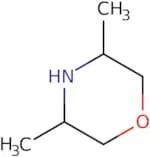
Fórmula:C8H15NPureza:Min. 95%Peso molecular:125.21 g/mol3,5-Dimethylmorpholine
CAS:3,5-Dimethylmorpholine is a chiral amide that has anticancer activity. It is a linker that can be used to form amide bonds between two molecules. 3,5-Dimethylmorpholine has been shown to have labile proton and cellular reactivity in vitro. The reaction selectivity of 3,5-dimethylmorpholine can be improved by using piperidine as the solvent. This compound exhibits anticancer activity against CDK4/6 (cyclin-dependent kinase 4/6) inhibitor-resistant cell lines. It also exhibits anticancerc activity in vitro against cells with high levels of cdk4/6 inhibition.
Fórmula:C6H13NOPureza:Min. 95%Peso molecular:115.17 g/mol3-[3-(Trifluoromethoxy)phenyl]cyclobutan-1-amine hydrochloride
CAS:Versatile small molecule scaffold
Fórmula:C11H13ClF3NOPureza:Min. 95%Peso molecular:267.67 g/mol5,6-Dihydro-4H-pyrrolo[1,2-b]pyrazole-2-carbaldehyde
CAS:Versatile small molecule scaffold
Fórmula:C7H8N2OPureza:Min. 95%Peso molecular:136.15 g/molEthyl 2-bromo-3-(4-fluorophenyl)propanoate
CAS:Versatile small molecule scaffold
Fórmula:C11H12BrFO2Pureza:Min. 95%Peso molecular:275.11 g/mol1-(4-Hydroxyphenyl)piperidine-2,6-dione
CAS:Versatile small molecule scaffold
Fórmula:C11H11NO3Pureza:Min. 95%Peso molecular:205.21 g/mol2-(1-Benzyl-5-methylpyrrolidin-3-yl)ethan-1-amine
CAS:Versatile small molecule scaffold
Fórmula:C14H22N2Pureza:Min. 95%Peso molecular:218.34 g/mol4-(1H-1,2,3-Triazol-1-yl)piperidine dihydrochloride
CAS:Versatile small molecule scaffold
Fórmula:C7H14Cl2N4Pureza:Min. 95%Peso molecular:225.12 g/mol2-Amino-N,4-dimethyl-N-(thiolan-3-yl)pentanamide hydrochloride
CAS:Versatile small molecule scaffold
Fórmula:C11H23ClN2OSPureza:Min. 95%Peso molecular:266.83 g/mol2-Ethoxy-N-methylaniline hydrochloride
CAS:Versatile small molecule scaffold
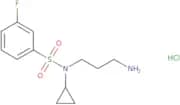
Fórmula:C9H14ClNOPureza:Min. 95%Peso molecular:187.66 g/molN-(3-Aminopropyl)-N-cyclopropyl-3-fluorobenzene-1-sulfonamide hydrochloride
CAS:Versatile small molecule scaffold
Fórmula:C12H18ClFN2O2SPureza:Min. 95%Peso molecular:308.8 g/molN-(2-Hydroxyphenyl)piperidine-4-carboxamide hydrochloride
CAS:Versatile small molecule scaffold
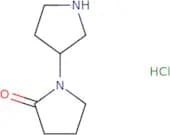
Fórmula:C12H17ClN2O2Pureza:Min. 95%Peso molecular:256.73 g/mol1-(Pyrrolidin-3-yl)pyrrolidin-2-one hydrochloride
CAS:Versatile small molecule scaffold
Fórmula:C8H15ClN2OPureza:Min. 95%Peso molecular:190.67 g/molOctahydropiperazino[1,2-c][1,3]oxazin-6-one hydrochloride
CAS:Versatile small molecule scaffold
Fórmula:C7H13ClN2O2Pureza:Min. 95%Peso molecular:192.64 g/mol2-(3,5-Dichlorophenyl)-2-(ethylamino)acetic acid hydrochloride
CAS:Versatile small molecule scaffold
Fórmula:C10H12Cl3NO2Pureza:Min. 95%Peso molecular:284.6 g/mol1-(3-tert-Butyl-1,2,4-oxadiazol-5-yl)cyclohexan-1-amine hydrochloride
CAS:Produto ControladoVersatile small molecule scaffold
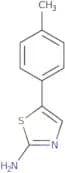
Fórmula:C12H22ClN3OPureza:Min. 95%Peso molecular:259.77 g/mol2-Amino-5-(p-tolyl)thiazole
CAS:Versatile small molecule scaffold
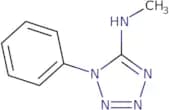
Fórmula:C10H10N2SPureza:Min. 95%Peso molecular:190.27 g/molN-Methyl-1-phenyl-1H-1,2,3,4-tetrazol-5-amine
CAS:Versatile small molecule scaffold
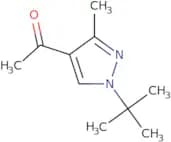
Fórmula:C8H9N5Pureza:Min. 95%Peso molecular:175.19 g/mol1-(1-tert-Butyl-3-methyl-1H-pyrazol-4-yl)ethan-1-one
CAS:Versatile small molecule scaffold
Fórmula:C10H16N2OPureza:Min. 95%Peso molecular:180.25 g/mol5-Methyl-1-(5-methyl-1,2-oxazol-3-yl)-2,3-dihydro-1H-imidazol-2-one
CAS:Versatile small molecule scaffold
Fórmula:C8H9N3O2Pureza:Min. 95%Peso molecular:179.18 g/moltert-Butyl 3-(bromomethylidene)azetidine-1-carboxylate
CAS:Versatile small molecule scaffold
Fórmula:C9H14BrNO2Pureza:Min. 95%Peso molecular:248.12 g/molRef: 3D-XXB41921
Produto descontinuado


![1-Bromo-4-[(1E)-4-bromobut-1-en-1-yl]benzene](/_next/image/?url=https%3A%2Fstatic.cymitquimica.com%2Fproducts%2F3D%2Fthumb-webp%2FQXB89863.webp&w=3840&q=75)


![2-Chloro-N-[5-methyl-2-(5-methyl-4H-1,2,4-triazol-3-yl)phenyl]acetamide](/_next/image/?url=https%3A%2Fstatic.cymitquimica.com%2Fproducts%2F3D%2Fthumb-webp%2FWGC60184.webp&w=3840&q=75)

![2-[(2-Methoxyphenoxy)methyl]benzoic acid](/_next/image/?url=https%3A%2Fstatic.cymitquimica.com%2Fproducts%2F3D%2Fthumb-webp%2FACA45688.webp&w=3840&q=75)

![5-(4-Nitro-phenyl)-[1,3,4]thiadiazol-2-ylamine](/_next/image/?url=https%3A%2Fstatic.cymitquimica.com%2Fproducts%2F3D%2Fthumb-webp%2FAAA83363.webp&w=3840&q=75)



![3-[3-(Trifluoromethoxy)phenyl]cyclobutan-1-amine hydrochloride](/_next/image/?url=https%3A%2Fstatic.cymitquimica.com%2Fproducts%2F3D%2Fthumb-webp%2FJBD28849.webp&w=3840&q=75)
![5,6-Dihydro-4H-pyrrolo[1,2-b]pyrazole-2-carbaldehyde](/_next/image/?url=https%3A%2Fstatic.cymitquimica.com%2Fproducts%2F3D%2Fthumb-webp%2FYZA56446.webp&w=3840&q=75)


![Octahydropiperazino[1,2-c][1,3]oxazin-6-one hydrochloride](/_next/image/?url=https%3A%2Fstatic.cymitquimica.com%2Fproducts%2F3D%2Fthumb-webp%2FYGC02753.webp&w=3840&q=75)