Building Blocks
Subcategorias de "Building Blocks"
- Ácidos Borónicos e Derivados de Ácido Borónico(5.778 produtos)
- Building Blocks Quirais(1.243 produtos)
- Building Blocks Hidrocarbonetos(6.099 produtos)
- Building Blocks orgânicos(61.038 produtos)
Foram encontrados 205376 produtos de "Building Blocks"
(4-Amino-phenyl)-acetic acid methyl ester hydrochloride
CAS:Versatile small molecule scaffold
Fórmula:C9H12ClNO2Pureza:Min. 95%Peso molecular:201.65 g/mol3-Bromo-2-methyl-furan
CAS:3-Bromo-2-methyl-furan is a substituted quinoline. It is a synthetic reagent that can be used for the synthesis of bromofuran derivatives. The methyl group on the 3rd carbon atom in 3-bromo-2-methyl-furan is a substituent that can be exchanged with other substituents, such as alkylation, to produce a variety of products.
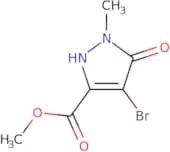
3-Bromo-2-methyl furan has been shown to be able to extract metal ions from their complexes and form stable complexes. This property makes it an ideal reagent for metalation reactions.Fórmula:C5H5BrOPureza:Min. 95%Peso molecular:161 g/molMethyl 4-bromo-5-hydroxy-1-methyl-1H-pyrazole-3-carboxylate
CAS:Versatile small molecule scaffold
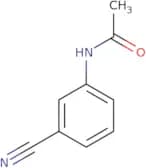
Fórmula:C6H7BrN2O3Pureza:Min. 95%Peso molecular:235.04 g/molN-(3-Cyanophenyl)acetamide
CAS:N-(3-Cyanophenyl)acetamide is a hydrogen-bonding molecule that has been detected in the gas phase. It has also been observed to interact with water, forming hydrogen bonding interactions and solvatochromism. The equilibrium of N-(3-cyanophenyl)acetamide can be shifted by changing the solvent conditions and pH. This molecule has three conformations when it is in the gaseous phase, including a planar conformation. In addition, N-(3-cyanophenyl)acetamide can be used as a probe for determining hydrogen bonding interactions and conformations due to its ability to form hydrogen bonds with other molecules.
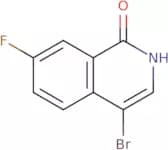
Fórmula:C9H8N2OPureza:Min. 95%Peso molecular:160.18 g/mol4-Bromo-7-fluoroisoquinolin-1-ol
CAS:Versatile small molecule scaffold
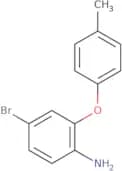
Fórmula:C9H5BrFNOPureza:Min. 95%Peso molecular:242.04 g/mol4-Bromo-2-(4-methylphenoxy)aniline
CAS:Versatile small molecule scaffold
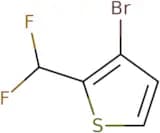
Fórmula:C13H12BrNOPureza:Min. 95%Peso molecular:278.14 g/mol3-Bromo-2-(difluoromethyl)thiophene
CAS:Versatile small molecule scaffold
Fórmula:C5H3BrF2SPureza:Min. 95%Peso molecular:213.04 g/mol7-Bromo-3H-imidazo[4,5-b]pyridine
CAS:Versatile small molecule scaffold
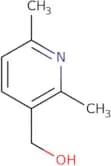
Fórmula:C6H4BrN3Pureza:Min. 95%Peso molecular:198.02 g/mol(2,6-Dimethylpyridin-3-yl)methanol
CAS:Versatile small molecule scaffold
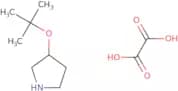
Fórmula:C8H11NOPureza:Min. 95%Peso molecular:137.18 g/mol(3S)-3-(tert-Butoxy)pyrrolidine, oxalic acid
CAS:Versatile small molecule scaffold
Fórmula:C10H19NO5Pureza:Min. 95%Peso molecular:233.26 g/mol(7S,8aS)-7-Fluoro-octahydropyrrolo[1,2-a]pyrazine dihydrochloride
CAS:Versatile small molecule scaffold
Fórmula:C7H15Cl2FN2Pureza:Min. 95%Peso molecular:217.11 g/mol2-Azido-1-(piperidin-1-yl)ethan-1-one
CAS:Versatile small molecule scaffold
Fórmula:C7H12N4OPureza:Min. 95%Peso molecular:168.2 g/molrac-(1S,3R)-3-Butylcyclobutan-1-ol
CAS:Versatile small molecule scaffold
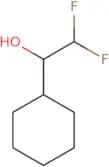
Fórmula:C8H16OPureza:Min. 95%Peso molecular:128.2 g/mol1-Cyclohexyl-2,2-difluoroethan-1-ol
CAS:Versatile small molecule scaffold
Fórmula:C8H14F2OPureza:Min. 95%Peso molecular:164.19 g/molRef: 3D-DGA80110
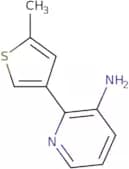
Produto descontinuado2-(5-Methylthiophen-3-yl)pyridin-3-amine
CAS:Versatile small molecule scaffold
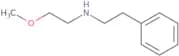
Fórmula:C10H10N2SPureza:Min. 95%Peso molecular:190.27 g/mol(2-Methoxyethyl)(2-phenylethyl)amine
CAS:Produto ControladoVersatile small molecule scaffold
Fórmula:C11H17NOPureza:Min. 95%Peso molecular:179.26 g/mol2-{4-[2-(Pyrrolidin-1-yl)ethoxy]phenyl}ethan-1-amine dihydrochloride
CAS:Versatile small molecule scaffold
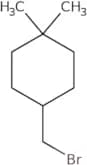
Fórmula:C14H24Cl2N2OPureza:Min. 95%Peso molecular:307.3 g/mol4-(Bromomethyl)-1,1-dimethylcyclohexane
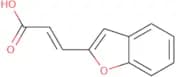
CAS:Versatile small molecule scaffoldFórmula:C9H17BrPureza:Min. 95%Peso molecular:205.13 g/mol(2E)-3-(1-benzofuran-2-yl)prop-2-enoic acid
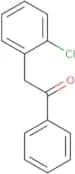
CAS:(2E)-3-(1-benzofuran-2-yl)prop-2-enoic acid is a white solid that has the chemical formula CHClO. It is soluble in chloroform, ether, and benzene. When heated to 105°C in the presence of air, it decomposes to release oxygen and carbon dioxide. (2E)-3-(1-benzofuran-2-yl)prop-2-enoic acid is used as an intermediate for organic synthesis reactions such as alkylation reactions and Friedel - Crafts reactions. Thermal analysis of this compound indicates that it has a high thermal stability with respect to thermal decomposition. (2E)-3-(1-benzofuran-2-yl)prop-2-enoic acid can be reacted with azide or diphenyl ether to form a coordination complex. This compound also reacts with potassium or phosphorus oxychloride to form oxychlorides.Fórmula:C11H8O3Pureza:Min. 95%Peso molecular:188.18 g/mol2-(2-Chlorophenyl)-1-phenylethan-1-one
CAS:Versatile small molecule scaffold
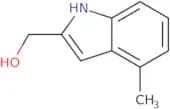
Fórmula:C14H11ClOPureza:Min. 95%Peso molecular:230.69 g/mol(4-Methyl-1H-indol-2-yl)methanol
CAS:Versatile small molecule scaffold
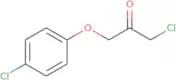
Fórmula:C10H11NOPureza:Min. 95%Peso molecular:161.2 g/mol1-Chloro-3-(4-chlorophenoxy)propan-2-one
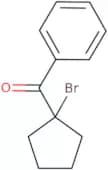
CAS:Versatile small molecule scaffoldFórmula:C9H8Cl2O2Pureza:Min. 95%Peso molecular:219.06 g/mol(1-Bromocyclopentyl)(phenyl)methanone
CAS:Versatile small molecule scaffold
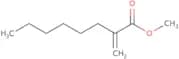
Fórmula:C12H13BrOPureza:Min. 95%Peso molecular:253.13 g/molMethyl 2-methylideneoctanoate
CAS:Versatile small molecule scaffold
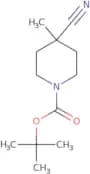
Fórmula:C10H18O2Pureza:Min. 95%Peso molecular:170.25 g/moltert-Butyl 4-cyano-4-methylpiperidine-1-carboxylate
CAS:Versatile small molecule scaffold
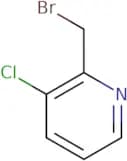
Fórmula:C12H20N2O2Pureza:Min. 95%Peso molecular:224.3 g/mol2-(bromomethyl)-3-chloropyridine
CAS:Versatile small molecule scaffold
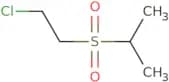
Fórmula:C6H5BrClNPureza:Min. 95%Peso molecular:206.47 g/mol2-(2-Chloroethanesulfonyl)propane
CAS:Versatile small molecule scaffold
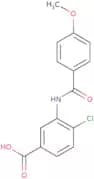
Fórmula:C5H11ClO2SPureza:Min. 95%Peso molecular:170.66 g/mol4-Chloro-3-(4-methoxybenzamido)benzoic acid
CAS:Versatile small molecule scaffold
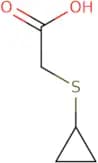
Fórmula:C15H12ClNO4Pureza:Min. 95%Peso molecular:305.71 g/mol2-(Cyclopropylsulfanyl)acetic acid
CAS:Versatile small molecule scaffold
Fórmula:C5H8O2SPureza:Min. 95%Peso molecular:132.18 g/mol4-(Thiophen-2-yl)-1H,4H,5H,6H,7H-imidazo[4,5-c]pyridine-6-carboxylic acid
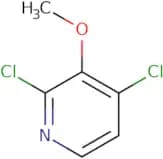
CAS:Versatile small molecule scaffoldFórmula:C11H11N3O2SPureza:Min. 95%Peso molecular:249.29 g/mol2,4-Dichloro-3-methoxypyridine
CAS:Versatile small molecule scaffold
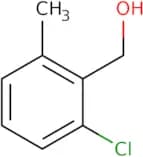
Fórmula:C6H5Cl2NOPureza:Min. 95%Peso molecular:178.01 g/mol(2-Chloro-6-methylphenyl)methanol
CAS:Versatile small molecule scaffold
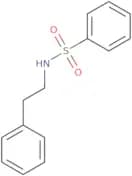
Fórmula:C8H9ClOPureza:Min. 95%Peso molecular:156.61 g/molN-(2-Phenylethyl)benzenesulfonamide
CAS:N-(2-Phenylethyl)benzenesulfonamide is a biodegradable and aerobic catalyst that is used in the production of nitrates. It can be recycled and has a high solubility, which allows for efficient extraction from wastewater effluents. The reactor system can be operated at an aerobic or anaerobic conditions. N-(2-Phenylethyl)benzenesulfonamide is soluble in water and can be hydrolyzed by acids or bases to release ammonia gas. The process can also be sustainable due to the use of renewable energy sources such as solar, wind, tidal, or biomass power.
Fórmula:C14H15NO2SPureza:Min. 95%Peso molecular:261.34 g/mol2-[Ethyl(propan-2-yl)amino]ethan-1-ol
CAS:Produto ControladoVersatile small molecule scaffold
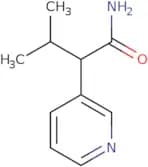
Fórmula:C7H17NOPureza:Min. 95%Peso molecular:131.22 g/mol3-Methyl-2-(pyridin-3-yl)butanamide
CAS:Versatile small molecule scaffold
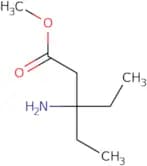
Fórmula:C10H14N2OPureza:Min. 95%Peso molecular:178.23 g/molMethyl 3-amino-3-ethylpentanoate
CAS:Versatile small molecule scaffold
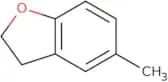
Fórmula:C8H17NO2Pureza:Min. 95%Peso molecular:159.23 g/mol5-Methyl-2,3-dihydro-1-benzofuran
CAS:Versatile small molecule scaffold
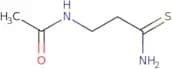
Fórmula:C9H10OPureza:Min. 95%Peso molecular:134.17 g/molN-(2-Carbamothioylethyl)acetamide
CAS:Versatile small molecule scaffold
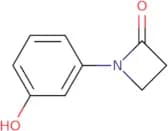
Fórmula:C5H10N2OSPureza:Min. 95%Peso molecular:146.21 g/mol1-(3-Hydroxyphenyl)azetidin-2-one
CAS:Versatile small molecule scaffold
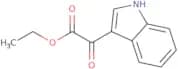
Fórmula:C9H9NO2Pureza:Min. 95%Peso molecular:163.17 g/molEthyl 2-(indol-3-yl)-2-oxoacetate
CAS:Ethyl 2-(indol-3-yl)-2-oxoacetate is a hydroxy derivative of the amino acid tyrosine. It inhibits the enzyme tyrosine hydroxylase, which catalyzes the conversion of tyrosine to L-DOPA. This in turn affects dopamine synthesis and has an inhibitory effect on rat brain. Ethyl 2-(indol-3-yl)-2-oxoacetate also inhibits methylmagnesium borohydride in vitro, which is a reagent that breaks down esters, amides, and nitriles. Tyrosine hydroxylase is inhibited by the presence of two hydroxy groups on the ethyl side chain and one hydroxy group on the indole ring. It can be used as a structural analogue for other drugs that are used to treat Parkinson's disease or depression.
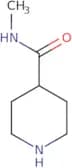
Fórmula:C12H11NO3Pureza:Min. 95%Peso molecular:217.22 g/molN-Methylpiperidine-4-carboxamide
CAS:Versatile small molecule scaffold
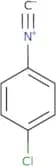
Fórmula:C7H14N2OPureza:Min. 95%Peso molecular:142.2 g/mol1-Chloro-4-isocyanobenzene
CAS:1-Chloro-4-isocyanobenzene (1CI) is an organic compound that has been used as a chemical probe for the detection of amines and other molecules on metal surfaces. The frequency shift in Raman spectra, which is observed after the addition of 1CI to the metal surface, is used to detect amines. 1CI has also been shown to be a potent inhibitor of mitochondrial function. This molecule binds to nucleophilic sites on metal surfaces and forms covalent bonds with them, leading to a high degree of inhibition.
1CI can be synthesized in three steps from commercially available starting materials and is relatively easy to purify.Fórmula:C7H4ClNPureza:Min. 95%Peso molecular:137.56 g/mol2-[3-(Propan-2-yl)phenoxy]acetic acid
CAS:2-[3-(Propan-2-yl)phenoxy]acetic acid is a chemical compound that is used as an additive in benzene, and is a phytotoxic chemical. It prevents the formation of chlorophyll by blocking electron transport and inhibiting photosynthesis. 2-[3-(Propan-2-yl)phenoxy]acetic acid is used to induce callus tissue from lettuce, radish, and other plants. This compound also inhibits the growth of various bacteria including Escherichia coli and Pseudomonas aeruginosa.
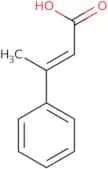
Fórmula:C11H14O3Pureza:Min. 95%Peso molecular:194.23 g/mol3-Phenylbut-2-enoic acid
CAS:3-Phenylbut-2-enoic acid is a prochiral, carbonyl compound that can be used in the synthesis of chiral pharmaceuticals. Mechanistic studies have shown that 3-phenylbut-2-enoic acid is a catalytic hydrogenation reagent that converts prochiral substrates to their corresponding chiral products. When combined with binap and butenoic acid, 3-phenylbut-2-enoic acid can catalyze the asymmetric synthesis of butenoate. The reaction yields high enantiomeric excesses and good yields.
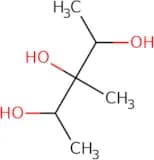
Fórmula:C10H10O2Pureza:Min. 95%Peso molecular:162.19 g/mol3-Methylpentane-2,3,4-triol
CAS:Versatile small molecule scaffold
Fórmula:C6H14O3Pureza:Min. 95%Peso molecular:134.17 g/molRef: 3D-BAA18510
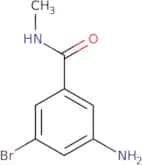
Produto descontinuado3-Amino-5-bromo-N-methylbenzamide
CAS:Versatile small molecule scaffold
Fórmula:C8H9BrN2OPureza:Min. 95%Peso molecular:229.07 g/mol6-Bromoimidazo[2,1-b][1,3]thiazole
CAS:Versatile small molecule scaffold
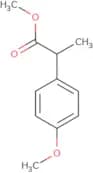
Fórmula:C5H3BrN2SPureza:Min. 95%Peso molecular:203.06 g/molMethyl 2-(4-methoxyphenyl)propanoate
CAS:Versatile small molecule scaffold
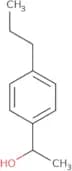
Fórmula:C11H14O3Pureza:Min. 95%Peso molecular:194.23 g/mol(1R)-1-(4-Propylphenyl)ethan-1-ol
CAS:Versatile small molecule scaffold
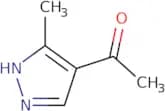
Fórmula:C11H16OPureza:Min. 95%Peso molecular:164.24 g/mol1-(5-Methyl-1H-Pyrazol-4-Yl)Ethanone
CAS:Phenylhydrazine is a white crystalline solid with a molecular weight of 150.25, and the molecular formula C6H5NHN. It is soluble in water, alcohol, ether and chloroform. Phenylhydrazine can react with an acid chloride to form a hydrazone; this reaction is used in the synthesis of some pharmaceuticals. The most common use of phenylhydrazine is as a precursor to various pharmaceuticals, such as antipyretics and anti-inflammatory agents. Phenylhydrazine reacts with zinc chloride to form 1-(5-methyl-1H-pyrazol-4-yl)ethanone.
Fórmula:C6H8N2OPureza:Min. 95%Peso molecular:124.14 g/mol


![7-Bromo-3H-imidazo[4,5-b]pyridine](/_next/image/?url=https%3A%2Fstatic.cymitquimica.com%2Fproducts%2F3D%2Fthumb-webp%2FHYB17485.webp&w=3840&q=75)
![(7S,8aS)-7-Fluoro-octahydropyrrolo[1,2-a]pyrazine dihydrochloride](/_next/image/?url=https%3A%2Fstatic.cymitquimica.com%2Fproducts%2F3D%2Fthumb-webp%2FHXC93968.webp&w=3840&q=75)

![2-{4-[2-(Pyrrolidin-1-yl)ethoxy]phenyl}ethan-1-amine dihydrochloride](/_next/image/?url=https%3A%2Fstatic.cymitquimica.com%2Fproducts%2F3D%2Fthumb-webp%2FHHC68177.webp&w=3840&q=75)
![4-(Thiophen-2-yl)-1H,4H,5H,6H,7H-imidazo[4,5-c]pyridine-6-carboxylic acid](/_next/image/?url=https%3A%2Fstatic.cymitquimica.com%2Fproducts%2F3D%2Fthumb-webp%2FFRB28535.webp&w=3840&q=75)
![2-[Ethyl(propan-2-yl)amino]ethan-1-ol](/_next/image/?url=https%3A%2Fstatic.cymitquimica.com%2Fproducts%2F3D%2Fthumb-webp%2FCAA89361.webp&w=3840&q=75)
![2-[3-(Propan-2-yl)phenoxy]acetic acid](/_next/image/?url=https%3A%2Fstatic.cymitquimica.com%2Fproducts%2F3D%2Fthumb-webp%2FBAA87852.webp&w=3840&q=75)
![6-Bromoimidazo[2,1-b][1,3]thiazole](/_next/image/?url=https%3A%2Fstatic.cymitquimica.com%2Fproducts%2F3D%2Fthumb-webp%2FADA00130.webp&w=3840&q=75)