Building Blocks
Subcategorias de "Building Blocks"
- Ácidos Borónicos e Derivados de Ácido Borónico(5.778 produtos)
- Building Blocks Quirais(1.243 produtos)
- Building Blocks Hidrocarbonetos(6.098 produtos)
- Building Blocks orgânicos(61.042 produtos)
Foram encontrados 204339 produtos de "Building Blocks"
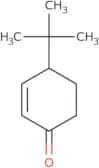
4-tert-Butylcyclohex-2-en-1-one
CAS:Versatile small molecule scaffold
Fórmula:C10H16OPureza:Min. 95%Peso molecular:152.23 g/molRef: 3D-AAA93707
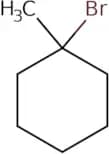
Produto descontinuado1-Bromo-1-methylcyclohexane
CAS:1-Bromo-1-methylcyclohexane is a monomolecular gas that is used as an intermediate in organic synthesis. It reacts with halides to form cyclopentyl derivatives. This reaction has been shown to be faster than the corresponding reaction of 1-bromocyclohexane with chlorides or bromides. The rate of this reaction may be due to the polarizability and conformational changes of the molecule upon substitution by a methyl group. 1-Bromo-1-methylcyclohexane is also an ionizing reagent, which means it can cause electrophilic reactions to occur on other molecules. It has been found that the solvent effect on this product can affect its reactivity, with solvents such as water having more of an effect than solvents such as benzene. 1-Bromo-1-methylcyclohexane has been shown to interact with other compounds in both transfer and complex
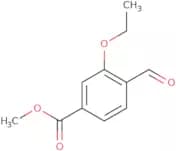
Fórmula:C7H13BrPureza:Min. 95%Peso molecular:177.08 g/mol3-ethoxy-4-formyl-benzoic acid methyl ester
CAS:Versatile small molecule scaffoldFórmula:C11H12O4Pureza:Min. 95%Peso molecular:208.21 g/mol2-{4-[2-(Pyrrolidin-1-yl)ethoxy]phenyl}ethan-1-amine dihydrochloride
CAS:Versatile small molecule scaffold
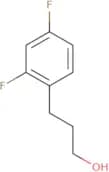
Fórmula:C14H24Cl2N2OPureza:Min. 95%Peso molecular:307.3 g/mol3-(2,4-Difluorophenyl)propan-1-ol
CAS:Versatile small molecule scaffold
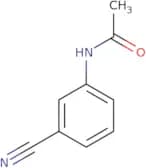
Fórmula:C9H10F2OPureza:Min. 95%Peso molecular:172.17 g/molN-(3-Cyanophenyl)acetamide
CAS:N-(3-Cyanophenyl)acetamide is a hydrogen-bonding molecule that has been detected in the gas phase. It has also been observed to interact with water, forming hydrogen bonding interactions and solvatochromism. The equilibrium of N-(3-cyanophenyl)acetamide can be shifted by changing the solvent conditions and pH. This molecule has three conformations when it is in the gaseous phase, including a planar conformation. In addition, N-(3-cyanophenyl)acetamide can be used as a probe for determining hydrogen bonding interactions and conformations due to its ability to form hydrogen bonds with other molecules.
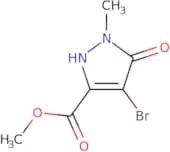
Fórmula:C9H8N2OPureza:Min. 95%Peso molecular:160.18 g/molMethyl 4-bromo-5-hydroxy-1-methyl-1H-pyrazole-3-carboxylate
CAS:Versatile small molecule scaffold
Fórmula:C6H7BrN2O3Pureza:Min. 95%Peso molecular:235.04 g/mol1-(Propan-2-yl)-N-[1-(propan-2-yl)-4,5,6,7-tetrahydro-1H-indazol-5-yl]-4,5,6,7-tetrahydro-1H-indazol-5-amine
CAS:Versatile small molecule scaffold
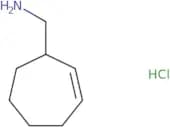
Fórmula:C20H31N5Pureza:Min. 95%Peso molecular:341.5 g/mol(Cyclohept-2-en-1-yl)methanamine hydrochloride
CAS:Versatile small molecule scaffold
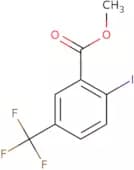
Fórmula:C8H16ClNPureza:Min. 95%Peso molecular:161.7 g/molMethyl 2-iodo-5-(trifluoromethyl)benzoate
CAS:Versatile small molecule scaffold
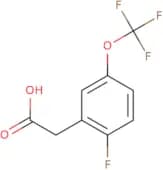
Fórmula:C9H6F3IO2Pureza:Min. 95%Peso molecular:330.04 g/mol2-Fluoro-5-(trifluoromethoxy)phenylacetic acid
CAS:Versatile small molecule scaffoldFórmula:C9H6F4O3Pureza:Min. 95%Peso molecular:238.14 g/mol6-(Aminooxy)hexanoic acid hydrochloride
CAS:Versatile small molecule scaffold
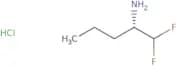
Fórmula:C6H14ClNO3Pureza:Min. 95%Peso molecular:183.63 g/mol(2S)-1,1-Difluoropentan-2-amine hydrochloride
CAS:Versatile small molecule scaffold
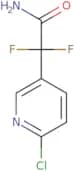
Fórmula:C5H12ClF2NPureza:Min. 95%Peso molecular:159.6 g/mol2-(6-Chloropyridin-3-yl)-2,2-difluoroacetamide
CAS:Versatile small molecule scaffoldFórmula:C7H5ClF2N2OPureza:Min. 95%Peso molecular:206.58 g/mol[1-(Fluoromethyl)cyclopropyl]methanesulfonyl chloride
CAS:Versatile small molecule scaffold
Fórmula:C5H8ClFO2SPureza:Min. 95%Peso molecular:186.63 g/molRef: 3D-PCC96395
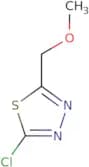
Produto descontinuado2-Chloro-5-(methoxymethyl)-1,3,4-thiadiazole
CAS:Versatile small molecule scaffoldFórmula:C4H5ClN2OSPureza:Min. 95%Peso molecular:164.61 g/mol4,5,6,7-Tetrahydropyrazolo[1,5-a]pyrazine dihydrochloride
CAS:Versatile small molecule scaffoldFórmula:C6H11Cl2N3Pureza:Min. 95%Peso molecular:196.08 g/mol4-(3-Cyclopropyl-1H-1,2,4-triazol-5-yl)aniline
CAS:Versatile small molecule scaffold
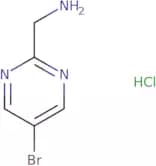
Fórmula:C11H12N4Pureza:Min. 95%Peso molecular:200.24 g/mol(5-bromopyrimidin-2-yl)methanamine hcl
CAS:Versatile small molecule scaffold
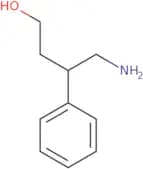
Fórmula:C5H7BrClN3Pureza:Min. 95%Peso molecular:224.49 g/mol4-Amino-3-phenylbutan-1-ol
CAS:Versatile small molecule scaffold
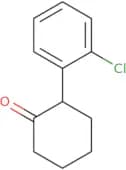
Fórmula:C10H15NOPureza:Min. 95%Peso molecular:165.23 g/mol2-(2-Chlorophenyl)cyclohexan-1-one
CAS:Versatile small molecule scaffold
Fórmula:C12H13ClOPureza:Min. 95%Peso molecular:208.68 g/mol2-Chloro-3,4-dihydronaphthalen-1(2H)-one
CAS:2-Chloro-3,4-dihydronaphthalen-1(2H)-one is a sulfoxide with significant antifungal activity. It has been shown to be effective against Candida albicans and other fungi, including Aspergillus niger and Mucor racemosus. It is commonly used as an electrolyte in electroluminescent devices, such as light emitting diodes (LEDs). The reaction time for the formation of 2-chloro-3,4-dihydronaphthalen-1(2H)-one from potassium sulfate is dependent on the acid catalyst used. Organic chemists have shown that the use of 2-chloro-3,4-dihydronaphthalen-1(2H)-one can inhibit leukotriene synthesis.
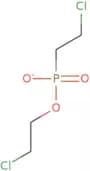
Fórmula:C10H9OClPureza:Min. 95%Peso molecular:180.63 g/mol(2-Chloroethoxy)(2-chloroethyl)phosphinic acid
CAS:Versatile small molecule scaffold
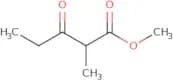
Fórmula:C4H8Cl2O3PPureza:Min. 95%Peso molecular:205.98 g/mol2-Methyl-3-oxo-pentanoicacid methyl ester
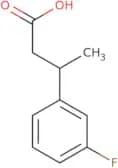
CAS:The synthesis of 2-methyl-3-oxo-pentanoic acid methyl ester is accomplished by a three step process. The first step is the intramolecular condensation of 2,2-dimethylpropionic acid with acetone to form a 1:1 mixture of 3,4-dihydroxybutyl and 4,4-dihydroxybutyl esters. The second step is the selective transesterification of the 3,4-dihydroxybutyl ester with benzaldehyde. This reaction provides an optically pure 2-methyl-3-oxo-pentanoic acid methyl ester as the major product. The third step is an aldol condensation between the ketone from the second step and acetone to produce another optically pure 2,2 dimethylpropionic acid methyl ester.Fórmula:C7H12O3Pureza:Min. 95%Peso molecular:144.17 g/mol3-(3-Fluorophenyl)butanoic acid
CAS:Versatile small molecule scaffold
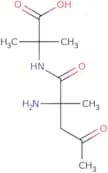
Fórmula:C10H11FO2Pureza:Min. 95%Peso molecular:182.19 g/mol2-(2-acetamido-2-methylpropanamido)-2-methylpropanoic acid
CAS:Versatile small molecule scaffoldFórmula:C10H18N2O4Pureza:Min. 95%Peso molecular:230.26 g/mol7-Bromo-[1,3]thiazolo[4,5-c]pyridin-2-amine
CAS:Versatile small molecule scaffold
Fórmula:C6H4BrN3SPureza:Min. 95%Peso molecular:230.09 g/mol1-(Pyridin-3-yl)-1H-pyrazole-4-carboxylic acid hydrochloride
CAS:Versatile small molecule scaffold
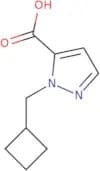
Fórmula:C9H8ClN3O2Pureza:Min. 95%Peso molecular:225.63 g/mol1-(Cyclobutylmethyl)-1H-pyrazole-5-carboxylic acid
CAS:Versatile small molecule scaffoldFórmula:C9H12N2O2Pureza:Min. 95%Peso molecular:180.2 g/molRef: 3D-WJC58413
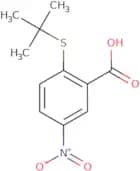
Produto descontinuado2-(tert-Butylsulfanyl)-5-nitrobenzoic acid
CAS:Versatile small molecule scaffold
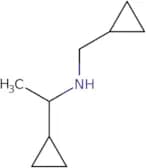
Fórmula:C11H13NO4SPureza:Min. 95%Peso molecular:255.29 g/mol(1-Cyclopropylethyl)(cyclopropylmethyl)amine
CAS:Versatile small molecule scaffold
Fórmula:C9H17NPureza:Min. 95%Peso molecular:139.24 g/molEthyl 1-amino-1-cyclobutanecarboxylate monohydrochloride
CAS:Ethyl 1-amino-1-cyclobutanecarboxylate monohydrochloride is a cyclic carbonyl compound that is used as a building block in organic synthesis. It has been used to synthesize a number of natural products, such as piperarborenine and cyclobutanes. This compound can be synthesized by reacting ethyl chloroformate with cyclobutanecarbaldehyde in the presence of an acid or base catalyst. The steric and geometric properties of this molecule are highlighted below.
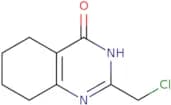
Fórmula:C2H5O2CC4H6NH2·HClPureza:Min. 95%Peso molecular:179.64 g/mol2-(Chloromethyl)-5,6,7,8-tetrahydroquinazolin-4(3H)-one
CAS:Versatile small molecule scaffold
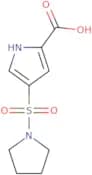
Fórmula:C9H11ClN2OPureza:Min. 95%Peso molecular:198.65 g/mol4-(Pyrrolidine-1-sulfonyl)-1H-pyrrole-2-carboxylic acid
CAS:Versatile small molecule scaffoldFórmula:C9H12N2O4SPureza:Min. 95%Peso molecular:244.27 g/mol2-[(4-Aminophenyl)sulfanyl]-5-chlorobenzonitrile
CAS:Versatile small molecule scaffold
Fórmula:C13H9ClN2SPureza:Min. 95%Peso molecular:260.74 g/mol[2-(3-Methoxyphenyl)ethyl][(trimethyl-1H-pyrazol-4-yl)methyl]amine
CAS:Versatile small molecule scaffold
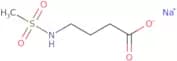
Fórmula:C16H23N3OPureza:Min. 95%Peso molecular:273.37 g/molSodium 4-methanesulfonamidobutanoate
CAS:Versatile small molecule scaffold
Fórmula:C5H10NNaO4SPureza:Min. 95%Peso molecular:203.19 g/mol2-Bromo-3,3,3-trifluoro-1-propene
CAS:Produto Controlado2-Bromo-3,3,3-trifluoro-1-propene is a chemical compound that has been synthesized in an asymmetric reaction. The reactant is bromopropane and the product is 2,2,2-trifluoropropene. The methylene group on the propene molecule is activated by the nucleophilic attack of a fluoride ion from hydrogen fluoride to form a cavity with a highly strained bond. The kinetic study of this reaction revealed that the activation energy for the reaction is 42 kJ/mol. Palladium-catalyzed coupling reactions are catalyzed by palladium and require nonpolar solvents such as toluene or dichloromethane. This type of reaction has been shown to be exothermic with an isolated yield of 1%.
Fórmula:C3H2BrF3Pureza:Min. 95%Cor e Forma:Colorless PowderPeso molecular:174.95 g/molPiperyline
CAS:Piperyline is an alkanoic acid that has shown to be effective against skin cancer. It also has antimicrobial properties, which may be due to its ability to bind metal ions and form polymeric compounds. Piperyline inhibits microbial growth by inhibiting the synthesis of proteins and nucleic acids. The antimicrobial activity is related to its cationic polymerization with hydroxyl groups, which forms a structure that can inhibit microbial enzymes and disrupt microbial cell membranes. This compound also interacts with the skin's natural lipids, making it difficult for microorganisms to attach and grow on the skin. Piperyline is synthesized in organic chemistry laboratories as an amide precursor of other pharmaceuticals such as penicillin.
Fórmula:C16H17NO3Pureza:Min. 95%Peso molecular:271.31 g/mol

![2-{4-[2-(Pyrrolidin-1-yl)ethoxy]phenyl}ethan-1-amine dihydrochloride](/_next/image/?url=https%3A%2Fstatic.cymitquimica.com%2Fproducts%2F3D%2Fthumb-webp%2FHHC68177.webp&w=3840&q=75)
![1-(Propan-2-yl)-N-[1-(propan-2-yl)-4,5,6,7-tetrahydro-1H-indazol-5-yl]-4,5,6,7-tetrahydro-1H-indaz…](/_next/image/?url=https%3A%2Fstatic.cymitquimica.com%2Fproducts%2F3D%2Fthumb-webp%2FJDC14931.webp&w=3840&q=75)

![[1-(Fluoromethyl)cyclopropyl]methanesulfonyl chloride](/_next/image/?url=https%3A%2Fstatic.cymitquimica.com%2Fproducts%2F3D%2Fthumb-webp%2FPCC96395.webp&w=3840&q=75)
![4,5,6,7-Tetrahydropyrazolo[1,5-a]pyrazine dihydrochloride](/_next/image/?url=https%3A%2Fstatic.cymitquimica.com%2Fproducts%2F3D%2Fthumb-webp%2FQGA89407.webp&w=3840&q=75)


![7-Bromo-[1,3]thiazolo[4,5-c]pyridin-2-amine](/_next/image/?url=https%3A%2Fstatic.cymitquimica.com%2Fproducts%2F3D%2Fthumb-webp%2FTEA80175.webp&w=3840&q=75)


![2-[(4-Aminophenyl)sulfanyl]-5-chlorobenzonitrile](/_next/image/?url=https%3A%2Fstatic.cymitquimica.com%2Fproducts%2F3D%2Fthumb-webp%2FVJC36571.webp&w=3840&q=75)
![[2-(3-Methoxyphenyl)ethyl][(trimethyl-1H-pyrazol-4-yl)methyl]amine](/_next/image/?url=https%3A%2Fstatic.cymitquimica.com%2Fproducts%2F3D%2Fthumb-webp%2FVWB92946.webp&w=3840&q=75)