


Building Blocks
Esta seção contém produtos fundamentais para a síntese de compostos orgânicos e biológicos. Building blocks são os materiais de partida essenciais usados para construir moléculas complexas através de várias reações químicas. Eles desempenham um papel crítico na descoberta de medicamentos, ciência dos materiais e pesquisa química. Na CymitQuimica, oferecemos uma ampla gama de building blocks de alta qualidade para apoiar suas pesquisas inovadoras e projetos industriais, garantindo que você tenha os componentes essenciais para uma síntese bem-sucedida.
Subcategorias de "Building Blocks"
- Ácidos Borónicos e Derivados de Ácido Borónico(5.778 produtos)
- Building Blocks Quirais(1.243 produtos)
- Building Blocks Hidrocarbonetos(6.099 produtos)
- Building Blocks orgânicos(61.038 produtos)
Foram encontrados 205376 produtos de "Building Blocks"
Ordenar por
Pureza (%)
0
100
|
0
|
50
|
90
|
95
|
100
2-[(4-Methanesulfonylphenyl)sulfanyl]benzoic acid
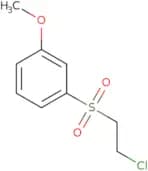
CAS:Versatile small molecule scaffoldFórmula:C14H12O4S2Pureza:Min. 95%Peso molecular:308.4 g/mol1-(2-Chloroethanesulfonyl)-3-methoxybenzene
CAS:Versatile small molecule scaffoldFórmula:C9H11ClO3SPureza:Min. 95%Peso molecular:234.7 g/mol1-Chloro-4-[(2-chloroethyl)sulfonyl]benzene
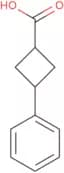
CAS:Versatile small molecule scaffoldFórmula:C8H8Cl2O2SPureza:Min. 95%Peso molecular:239.12 g/molrac-(1S,3S)-3-Phenylcyclobutane-1-carboxylic acid
CAS:Rac-1-phenylcyclobutane-1-carboxylic acid is a carbanion that contains a cyclopropylcarbinyl group. It can be prepared by the reaction of ketones with lithium diisopropylamide. Rac-1-phenylcyclobutane-1-carboxylic acid is used as an intermediate in the synthesis of drugs such as ampicillin and erythromycin.
Fórmula:C11H12O2Pureza:Min. 95%Peso molecular:176.21 g/mol7-Methylpyrazolo[1,5-a]pyridine-3-carboxylic acid
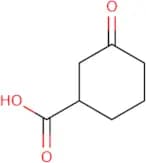
CAS:Versatile small molecule scaffoldFórmula:C9H8N2O2Pureza:Min. 95%Peso molecular:176.17 g/mol3-Oxo-1-cyclohexanecarboxylic acid
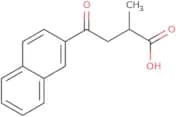
CAS:3-Oxo-1-cyclohexanecarboxylic acid is a structural isomer of cyclohexanecarboxylic acid. It is a white crystalline solid that can react with monoxide to form 3-oxocyclohexane carboxylic acid or with chlorine to form 3-chlorocyclohexane carboxylic acid. The reaction rate and regioselectivity are dependent on the catalyst used. With catalytic amounts of copper and air, 3-oxocyclohexane carboxylic acid is formed preferentially, but when using an excess of copper, the chlorinated product is obtained in higher yields. This reaction occurs because the orthoformic carbon atom has a greater electron density than the meta formic carbon atom. The reaction mechanism begins with oxidation of the metal to form a metal oxide which then reacts with CO to produce CO2 and H2O.Fórmula:C7H10O3Pureza:Min. 95%Peso molecular:142.15 g/mol2-Methyl-4-(naphthalen-2-yl)-4-oxobutanoic acid
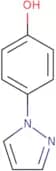
CAS:Versatile small molecule scaffoldFórmula:C15H14O3Pureza:Min. 95%Peso molecular:242.27 g/mol4-(1H-Pyrazol-1-yl)phenol
CAS:Versatile small molecule scaffoldFórmula:C9H8N2OPureza:Min. 95%Peso molecular:160.17 g/molethyl 3-[(propan-2-yl)amino]propanoate
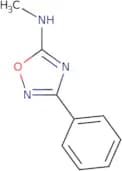
CAS:Versatile small molecule scaffoldFórmula:C8H17NO2Pureza:Min. 95%Peso molecular:159.2 g/molN-Methyl-3-phenyl-1,2,4-oxadiazol-5-amine
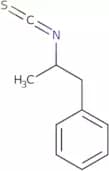
CAS:Versatile small molecule scaffoldFórmula:C9H9N3OPureza:Min. 95%Peso molecular:175.19 g/mol(2-Isothiocyanatopropyl)benzene
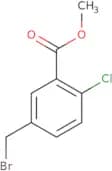
CAS:Versatile small molecule scaffoldFórmula:C10H11NSPureza:Min. 95%Peso molecular:177.27 g/molMethyl 5-bromomethyl-2-chlorobenzoate
CAS:Methyl 5-bromomethyl-2-chlorobenzoate is a cytotoxic agent that inhibits tumor growth. It is a potent inhibitor of the enzyme PARP-1, which is involved in DNA repair, and inhibits tumor growth in vivo. Methyl 5-bromomethyl-2-chlorobenzoate is also able to complex with temozolomide and potentiate its antitumor activity. This drug has been shown to inhibit tumor growth in xenograft models, including xenografts of human non-small cell lung cancer cells transplanted into mice.Fórmula:C9H8BrClO2Pureza:Min. 95%Peso molecular:263.52 g/molThieno[3,2-d]pyrimidine-4-thiol
CAS:Versatile small molecule scaffoldFórmula:C6H4N2S2Pureza:Min. 95%Peso molecular:168.2 g/mol4-Hydrazinothieno[3,2-d]pyrimidine
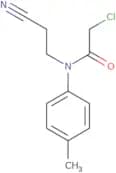
CAS:Versatile small molecule scaffoldFórmula:C6H6N4SPureza:Min. 95%Peso molecular:166.21 g/mol2-Chloro-N-(2-cyanoethyl)-N-(4-methylphenyl)acetamide
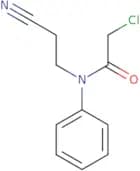
CAS:Versatile small molecule scaffoldFórmula:C12H13ClN2OPureza:Min. 95%Peso molecular:236.7 g/mol2-Chloro-N-(2-cyanoethyl)-N-phenylacetamide
CAS:Versatile small molecule scaffoldFórmula:C11H11ClN2OPureza:Min. 95%Peso molecular:222.67 g/molThieno[3,2-d]pyrimidin-4(1H)-one
CAS:Thieno[3,2-d]pyrimidin-4(1H)-one is a synthetic compound that has been shown to inhibit cancer cell proliferation. It has an amination reaction at the 2' position of the pyrimidine ring and this pharmacophore is responsible for its anticancer activity. Thieno[3,2-d]pyrimidin-4(1H)-one inhibits leukemia HL-60 cells with a potency similar to that of imatinib. It also inhibits hepg2 cells, which are tumor cells derived from hepatocytes. The kinase selectivity profile of thieno[3,2-d]pyrimidin-4(1H)-one does not show any toxicity towards normal cells such as human skin fibroblasts or human umbilical vein endothelial cells. Thieno[3,2-d]pyrimidin-4(1H)-one exhibits a safety profile similarFórmula:C6H4N2OSPureza:Min. 95%Peso molecular:152.17 g/mol1-{Thieno[3,2-d]pyrimidin-4-yl}pyrrolidine
CAS:Versatile small molecule scaffold
Fórmula:C10H11N3SPureza:Min. 95%Peso molecular:205.28 g/mol3-Amino-8-methyl-1,3-diazaspiro[4.5]decane-2,4-dione
CAS:Versatile small molecule scaffoldFórmula:C9H15N3O2Pureza:Min. 95%Peso molecular:197.23 g/mol2-Methyl-2-[(propan-2-yl)amino]propanenitrile
CAS:Versatile small molecule scaffoldFórmula:C7H14N2Pureza:Min. 95%Peso molecular:126.2 g/mol
![2-[(4-Methanesulfonylphenyl)sulfanyl]benzoic acid](/_next/image/?url=https%3A%2Fstatic.cymitquimica.com%2Fproducts%2F3D%2Fthumb-webp%2FRAA18513.webp&w=3840&q=75)

![1-Chloro-4-[(2-chloroethyl)sulfonyl]benzene](/_next/image/?url=https%3A%2Fstatic.cymitquimica.com%2Fproducts%2F3D%2Fthumb-webp%2FRAA19184.webp&w=3840&q=75)
![7-Methylpyrazolo[1,5-a]pyridine-3-carboxylic acid](/_next/image/?url=https%3A%2Fstatic.cymitquimica.com%2Fproducts%2F3D%2Fthumb-webp%2FRAA20547.webp&w=3840&q=75)
![ethyl 3-[(propan-2-yl)amino]propanoate](/_next/image/?url=https%3A%2Fstatic.cymitquimica.com%2Fproducts%2F3D%2Fthumb-webp%2FRAA21722.webp&w=3840&q=75)
![Thieno[3,2-d]pyrimidine-4-thiol](/_next/image/?url=https%3A%2Fstatic.cymitquimica.com%2Fproducts%2F3D%2Fthumb-webp%2FRAA22924.webp&w=3840&q=75)
![4-Hydrazinothieno[3,2-d]pyrimidine](/_next/image/?url=https%3A%2Fstatic.cymitquimica.com%2Fproducts%2F3D%2Fthumb-webp%2FRAA22926.webp&w=3840&q=75)
![Thieno[3,2-d]pyrimidin-4(1H)-one](/_next/image/?url=https%3A%2Fstatic.cymitquimica.com%2Fproducts%2F3D%2Fthumb-webp%2FRAA23410.webp&w=3840&q=75)
![1-{Thieno[3,2-d]pyrimidin-4-yl}pyrrolidine](/_next/image/?url=https%3A%2Fstatic.cymitquimica.com%2Fproducts%2F3D%2Fthumb-webp%2FRAA23448.webp&w=3840&q=75)
![3-Amino-8-methyl-1,3-diazaspiro[4.5]decane-2,4-dione](/_next/image/?url=https%3A%2Fstatic.cymitquimica.com%2Fproducts%2F3D%2Fthumb-webp%2FRAA25293.webp&w=3840&q=75)
![2-Methyl-2-[(propan-2-yl)amino]propanenitrile](/_next/image/?url=https%3A%2Fstatic.cymitquimica.com%2Fproducts%2F3D%2Fthumb-webp%2FRAA25647.webp&w=3840&q=75)