Building Blocks
Subcategorias de "Building Blocks"
- Ácidos Borónicos e Derivados de Ácido Borónico(5.778 produtos)
- Building Blocks Quirais(1.243 produtos)
- Building Blocks Hidrocarbonetos(6.099 produtos)
- Building Blocks orgânicos(61.038 produtos)
Foram encontrados 205376 produtos de "Building Blocks"
4-chlorofuro[3,2-c]pyridine-2-carboxylic acid
CAS:Versatile small molecule scaffold
Fórmula:C8H4ClNO3Pureza:Min. 95%Peso molecular:197.6 g/mol1-{4-Chlorofuro[3,2-c]pyridin-2-yl}ethan-1-one
CAS:Versatile small molecule scaffoldFórmula:C9H6ClNO2Pureza:Min. 95%Peso molecular:195.6 g/mol4,5-Dihydro-4-oxo-furo[3,2-C]pyridine-2-carboxaldehyde
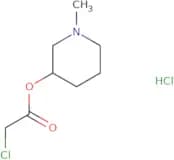
CAS:Versatile small molecule scaffoldFórmula:C8H5NO3Pureza:Min. 95%Peso molecular:163.13 g/mol1-Methylpiperidin-3-yl 2-chloroacetate hydrochloride
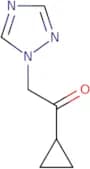
CAS:Versatile small molecule scaffoldFórmula:C8H15Cl2NO2Pureza:Min. 95%Peso molecular:228.1 g/mol1-Cyclopropyl-2-(1H-1,2,4-triazol-1-yl)ethan-1-one
CAS:Versatile small molecule scaffoldFórmula:C7H9N3OPureza:Min. 95%Peso molecular:151.17 g/mol1-[4-Chloro-2-(trifluoromethyl)phenyl]ethan-1-one
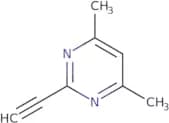
CAS:Versatile small molecule scaffoldFórmula:C9H6ClF3OPureza:Min. 95%Peso molecular:222.59 g/mol2-Ethynyl-4,6-dimethylpyrimidine
CAS:2-Ethynyl-4,6-dimethylpyrimidine (2EDMP) is a ligand that can be used to form two-dimensional supramolecular frameworks. It can assemble into chains and trifluoroacetate chains by hydrogen bonds with other 2EDMP molecules. The solvent evaporation technique is used to form these supramolecular frameworks from the liquid solution of 2EDMP. The structural properties of 2EDMP are well characterized by its two-dimensional crystal structure and the intermolecular interactions between it and other molecules in the crystal.
Fórmula:C8H8N2Pureza:Min. 95%Peso molecular:132.16 g/mol1-(4-Methylbenzenesulfonyl)bicyclo[1.1.0]butane
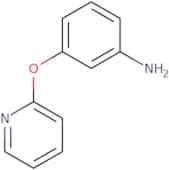
CAS:Versatile small molecule scaffoldFórmula:C11H12O2SPureza:Min. 95%Peso molecular:208.28 g/mol3-(Pyridin-2-yloxy)aniline
CAS:3-(Pyridin-2-yloxy)aniline is a synthetic compound that is used as a potent inhibitor of the enzyme tyrosine hydroxylase. This enzyme catalyzes the conversion of tyrosine to L-3,4-dihydroxyphenylalanine and plays a key role in the synthesis of dopamine. 3-(Pyridin-2-yloxy)aniline has been shown to be effective in treating Parkinson's disease and other disorders that involve neuronal degeneration and cell death. This drug inhibits the production of dopamine by binding to tyrosine hydroxylase, thereby preventing it from converting tyrosine into L-3,4-dihydroxyphenylalanine. The compound also has significant inhibitory activity against cyclin dependent kinases (CDKs), which are enzymes that regulate the activity of protein kinases.
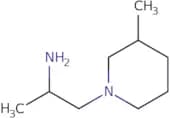
Fórmula:C11H10N2OPureza:Min. 95%Peso molecular:186.21 g/mol1-(3-Methylpiperidin-1-yl)propan-2-amine
CAS:Versatile small molecule scaffoldFórmula:C9H20N2Pureza:Min. 95%Peso molecular:156.27 g/molMethyl 2,4,6-trichlorobenzoate
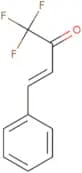
CAS:Versatile small molecule scaffoldFórmula:C8H5Cl3O2Pureza:Min. 95%Peso molecular:239.5 g/mol1,1,1-Trifluoro-4-phenylbut-3-en-2-one
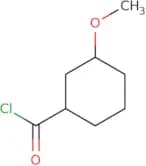
CAS:Trifluoromethanesulfonic acid is a superacidic acid that has been used in organic synthesis. It has been shown to be reactive with electron-deficient molecules such as methyl cinnamate, which can lead to the formation of anions and carbanions. Trifluoromethanesulfonic acid is also able to protonate carbonyls, which makes it useful for the synthesis of functionalized carbonyls. Trifluoromethanesulfonic acid is hydrophobic and reacts with membranes, making it useful for protein extraction. It also reacts with s. typhimurium, a bacterium that causes food poisoning.Fórmula:C10H7F3OPureza:Min. 95%Peso molecular:200.16 g/mol3-Methoxycyclohexane-1-carbonyl chloride
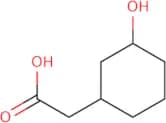
CAS:Versatile small molecule scaffoldFórmula:C8H13ClO2Pureza:Min. 95%Peso molecular:176.64 g/mol2-(3-Hydroxycyclohexyl)acetic acid
CAS:Versatile small molecule scaffold
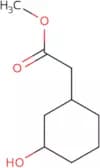
Fórmula:C8H14O3Pureza:Min. 95%Peso molecular:158.19 g/molMethyl 2-(3-hydroxycyclohexyl)acetate
CAS:Versatile small molecule scaffold
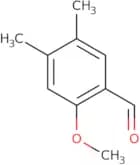
Fórmula:C9H16O3Pureza:Min. 95%Peso molecular:172.22 g/mol2-Methoxy-4,5-dimethylbenzaldehyde
CAS:Versatile small molecule scaffold
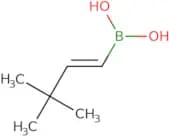
Fórmula:C10H12O2Pureza:Min. 95%Peso molecular:164.2 g/mol2-t-Butyl-E-vinylboronic acid
CAS:Versatile small molecule scaffold
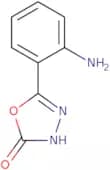
Fórmula:C6H13BO2Pureza:Min. 95%Peso molecular:127.98 g/mol5-(2-Aminophenyl)-2,3-dihydro-1,3,4-oxadiazol-2-one
CAS:5-(2-Aminophenyl)-2,3-dihydro-1,3,4-oxadiazol-2-one is an organic compound that belongs to the class of hydrazides. It has been used in the synthesis of other compounds and is used as a catalyst for peptide coupling reactions. The melting point of this compound is 139°C, and it decomposes at temperatures above 230°C. 5-(2-Aminophenyl)-2,3-dihydro-1,3,4-oxadiazol-2-one hydrolyzes to release ammonia and 2HCl. This reaction can be catalyzed by methylamine or hydrazine. 5-(2-Aminophenyl)-2,3-dihydro-1,3,4-oxadiazol-2-one can also undergo rearrangement reactions with methylamine or hydrazine to form anth
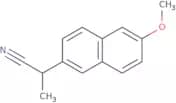
Fórmula:C8H7N3O2Pureza:Min. 95%Peso molecular:177.16 g/mol2-(6-Methoxynaphthalen-2-yl)propanenitrile
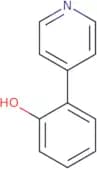
CAS:2-(6-Methoxynaphthalen-2-yl)propanenitrile is a naturally occurring amino acid that can be synthesized in the laboratory. It has been found to inhibit enzyme activities such as ammonium sulfate, microbial metabolism and amide formation in bacteria. 2-(6-Methoxynaphthalen-2-yl)propanenitrile also inhibits the growth of bacteria by blocking the synthesis of proteins, DNA and RNA. The activity of this drug is specific for bacterial strains and does not affect higher organisms such as humans or mice. This compound is chiral, meaning that it can exist in two forms which are mirror images of each other. 2-(6-Methoxynaphthalen-2-yl)propanenitrile has been shown to be active against a number of bacterial strains including Pseudomonas aeruginosa, Streptococcus pyogenes and Staphylococcus aureFórmula:C14H13NOPureza:Min. 95%Peso molecular:211.26 g/mol2-(Pyridin-4-yl)phenol
CAS:Versatile small molecule scaffoldFórmula:C11H9NOPureza:Min. 95%Peso molecular:171.19 g/mol
![4-chlorofuro[3,2-c]pyridine-2-carboxylic acid](/_next/image/?url=https%3A%2Fstatic.cymitquimica.com%2Fproducts%2F3D%2Fthumb-webp%2FLDA51808.webp&w=3840&q=75)

![1-{4-Chlorofuro[3,2-c]pyridin-2-yl}ethan-1-one](/_next/image/?url=https%3A%2Fstatic.cymitquimica.com%2Fproducts%2F3D%2Fthumb-webp%2FLDA51810.webp&w=3840&q=75)
![4,5-Dihydro-4-oxo-furo[3,2-C]pyridine-2-carboxaldehyde](/_next/image/?url=https%3A%2Fstatic.cymitquimica.com%2Fproducts%2F3D%2Fthumb-webp%2FLDA51817.webp&w=3840&q=75)
![1-[4-Chloro-2-(trifluoromethyl)phenyl]ethan-1-one](/_next/image/?url=https%3A%2Fstatic.cymitquimica.com%2Fproducts%2F3D%2Fthumb-webp%2FLDA52034.webp&w=3840&q=75)
![1-(4-Methylbenzenesulfonyl)bicyclo[1.1.0]butane](/_next/image/?url=https%3A%2Fstatic.cymitquimica.com%2Fproducts%2F3D%2Fthumb-webp%2FLDA53730.webp&w=3840&q=75)