Building Blocks
Esta seção contém produtos fundamentais para a síntese de compostos orgânicos e biológicos. Building blocks são os materiais de partida essenciais usados para construir moléculas complexas através de várias reações químicas. Eles desempenham um papel crítico na descoberta de medicamentos, ciência dos materiais e pesquisa química. Na CymitQuimica, oferecemos uma ampla gama de building blocks de alta qualidade para apoiar suas pesquisas inovadoras e projetos industriais, garantindo que você tenha os componentes essenciais para uma síntese bem-sucedida.
Subcategorias de "Building Blocks"
- Ácidos Borónicos e Derivados de Ácido Borónico(5.778 produtos)
- Building Blocks Quirais(1.243 produtos)
- Building Blocks Hidrocarbonetos(6.099 produtos)
- Building Blocks orgânicos(61.038 produtos)
Foram encontrados 205375 produtos de "Building Blocks"
Ordenar por
Pureza (%)
0
100
|
0
|
50
|
90
|
95
|
100
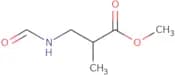
3-Methylamino-2-methylpropionic acid methyl ester
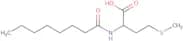
CAS:Versatile small molecule scaffoldFórmula:C6H13NO2Pureza:Min. 95%Peso molecular:131.17 g/mol4-(Methylthio)-2-octanamidobutanoic acid
CAS:Versatile small molecule scaffold
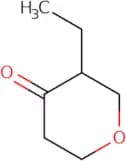
Fórmula:C13H25NO3SPureza:Min. 95%Peso molecular:275.41 g/mol3-Ethyloxan-4-one
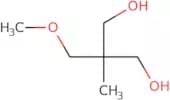
CAS:Versatile small molecule scaffoldFórmula:C7H12O2Pureza:Min. 95%Peso molecular:128.17 g/mol2-(Methoxymethyl)-2-methylpropane-1,3-diol
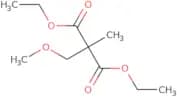
CAS:Versatile small molecule scaffoldFórmula:C6H14O3Pureza:Min. 95%Peso molecular:134.17 g/mol1,3-Diethyl 2-(methoxymethyl)-2-methylpropanedioate
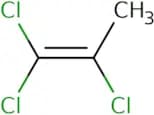
CAS:Versatile small molecule scaffoldFórmula:C10H18O5Pureza:Min. 95%Peso molecular:218.25 g/mol1,1,2-Trichloroprop-1-ene
CAS:1,1,2-Trichloroprop-1-ene is a reactive chemical that can be used as a feedstock for the production of chlorinated products. 1,1,2-Trichloroprop-1-ene is produced by the reaction of chlorine with hydrocarbons. It has been shown to have inorganic impurities such as chloride and hydrated metal hydroxides. The reaction mixture is heated and the catalyst is added to remove these impurities. The product may be purified further by distillation or recrystallization.
Fórmula:C3H3Cl3Pureza:Min. 95%Peso molecular:145.41 g/molN-[(Thiophen-2-yl)methyl]acetamide
CAS:Versatile small molecule scaffoldFórmula:C7H9NOSPureza:Min. 95%Peso molecular:155.22 g/molN-[(5-Sulfamoylthiophen-2-yl)methyl]acetamide
CAS:Versatile small molecule scaffoldFórmula:C7H10N2O3S2Pureza:Min. 95%Peso molecular:234.3 g/mol[(2,3-Dihydro-1,4-benzodioxin-2-yl)methyl](propyl)amine hydrochloride
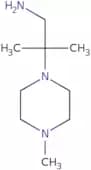
CAS:Versatile small molecule scaffoldFórmula:C12H18ClNO2Pureza:Min. 95%Peso molecular:243.73 g/mol2-Methyl-2-(4-methyl-piperazin-1-yl)-propylamine
CAS:Versatile small molecule scaffoldFórmula:C9H21N3Pureza:Min. 95%Peso molecular:171.28 g/molN,N-Diethyl-3-(hydrazinecarbonyl)benzene-1-sulfonamide
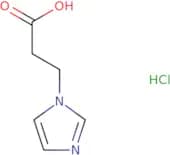
CAS:Versatile small molecule scaffoldFórmula:C11H17N3O3SPureza:Min. 95%Peso molecular:271.34 g/mol3-Imidazol-1-yl-propionic acid hydrochloride
CAS:Versatile small molecule scaffold
Fórmula:C6H9ClN2O2Pureza:Min. 95%Peso molecular:176.6 g/mol(1S)-1-(4-Nitrophenyl)ethan-1-ol
CAS:(1S)-1-(4-Nitrophenyl)ethan-1-ol is an intermediate in the synthesis of a chiral alcohol. It can be prepared by hydrogenolysis of (1R)-1-phenylethanol with palladium on carbon, followed by catalytic reduction of the nitro group. The hydrogenolysis can also be carried out in the presence of lipase, which will produce a higher yield. This intermediate can then be used to synthesize other compounds, such as 4-nitroacetophenone and chiral alcohols.Fórmula:C8H9NO3Pureza:Min. 95%Cor e Forma:PowderPeso molecular:167.16 g/mol1-Phenyl-1H,4H,5H,6H-cyclopenta[C]pyrazole-3-carboxylic acid
CAS:Versatile small molecule scaffold
Fórmula:C13H12N2O2Pureza:Min. 95%Peso molecular:228.25 g/mol3-(3-Furyl)-3-oxopropanenitrile
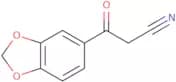
CAS:Versatile small molecule scaffoldFórmula:C7H5NO2Pureza:Min. 95%Peso molecular:135.12 g/mol3-(1,3-Benzodioxol-5-yl)-3-oxopropanenitrile
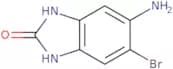
CAS:Versatile small molecule scaffoldFórmula:C10H7NO3Pureza:Min. 95%Peso molecular:189.16 g/mol5-Amino-6-bromo-2,3-dihydro-1H-1,3-benzodiazol-2-one
CAS:Versatile small molecule scaffoldFórmula:C7H6BrN3OPureza:Min. 95%Peso molecular:228.05 g/molMethyl 4,5-dichloro-3-hydroxythiophene-2-carboxylate
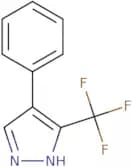
CAS:Methyl 4,5-dichloro-3-hydroxythiophene-2-carboxylate is a therapeutic drug that can modulate autoimmune diseases. It has been shown to have an antigenic effect in mice with type 1 diabetes and has been used therapeutically for the treatment of autoimmune disease. This compound also inhibits the production of autoantibodies in a mouse model of systemic lupus erythematosus and may be effective in treating autoimmune diseases.Fórmula:C6H4Cl2O3SPureza:Min. 95%Peso molecular:227.06 g/mol4-Phenyl-3-(trifluoromethyl)-1H-pyrazole
CAS:Versatile small molecule scaffoldFórmula:C10H7F3N2Pureza:Min. 95%Peso molecular:212.17 g/mol6-Hydroxy-3-(methylsulfanyl)-1,2,4-triazine-5-carboxamide
CAS:Versatile small molecule scaffoldFórmula:C5H6N4O2SPureza:Min. 95%Peso molecular:186.19 g/mol

![N-[(Thiophen-2-yl)methyl]acetamide](/_next/image/?url=https%3A%2Fstatic.cymitquimica.com%2Fproducts%2F3D%2Fthumb-webp%2FWAA40324.webp&w=3840&q=75)
![N-[(5-Sulfamoylthiophen-2-yl)methyl]acetamide](/_next/image/?url=https%3A%2Fstatic.cymitquimica.com%2Fproducts%2F3D%2Fthumb-webp%2FWAA40329.webp&w=3840&q=75)
amine hydrochloride](/_next/image/?url=https%3A%2Fstatic.cymitquimica.com%2Fproducts%2F3D%2Fthumb-webp%2FWAA40480.webp&w=3840&q=75)


![1-Phenyl-1H,4H,5H,6H-cyclopenta[C]pyrazole-3-carboxylic acid](/_next/image/?url=https%3A%2Fstatic.cymitquimica.com%2Fproducts%2F3D%2Fthumb-webp%2FWDA19736.webp&w=3840&q=75)