Building Blocks
Esta seção contém produtos fundamentais para a síntese de compostos orgânicos e biológicos. Building blocks são os materiais de partida essenciais usados para construir moléculas complexas através de várias reações químicas. Eles desempenham um papel crítico na descoberta de medicamentos, ciência dos materiais e pesquisa química. Na CymitQuimica, oferecemos uma ampla gama de building blocks de alta qualidade para apoiar suas pesquisas inovadoras e projetos industriais, garantindo que você tenha os componentes essenciais para uma síntese bem-sucedida.
Subcategorias de "Building Blocks"
- Ácidos Borónicos e Derivados de Ácido Borónico(5.778 produtos)
- Building Blocks Quirais(1.243 produtos)
- Building Blocks Hidrocarbonetos(6.098 produtos)
- Building Blocks orgânicos(61.042 produtos)
Foram encontrados 204339 produtos de "Building Blocks"
Ordenar por
Pureza (%)
0
100
|
0
|
50
|
90
|
95
|
100
7-benzyl-3-thia-7-azabicyclo[3.3.1]nonan-9-one
CAS:7-benzyl-3-thia-7-azabicyclo[3.3.1]nonan-9-one (7BAN) is a compound that has been shown to have antiarrhythmic effects in animal models. The conformational stability of 7BAN has been determined by single crystal x-ray diffraction data, and the conformers have been determined by conformational analysis. The conformation of this drug is stabilized by the benzyl group and the azabicyclo group, which are responsible for its antiarrhythmic activity.Fórmula:C14H17NOSPureza:Min. 95%Peso molecular:247.36 g/mol3-(Ethylsulfanyl)benzonitrile
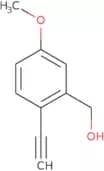
CAS:Versatile small molecule scaffoldFórmula:C9H9NSPureza:Min. 95%Peso molecular:163.24 g/mol(2-Ethynyl-5-methoxyphenyl)methanol
CAS:Versatile small molecule scaffold
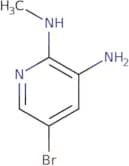
Fórmula:C10H10O2Pureza:Min. 95%Peso molecular:162.19 g/mol5-Bromo-2-N-methylpyridine-2,3-diamine
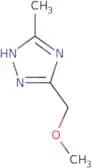
CAS:Versatile small molecule scaffoldFórmula:C6H8BrN3Pureza:Min. 95%Peso molecular:202.05 g/mol5-(Methoxymethyl)-3-methyl-1H-1,2,4-triazole
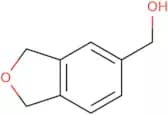
CAS:Versatile small molecule scaffoldFórmula:C5H9N3OPureza:Min. 95%Peso molecular:127.14 g/mol(1,3-dihydro-2-benzofuran-5-yl)methanol
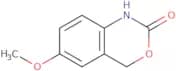
CAS:Versatile small molecule scaffoldFórmula:C9H10O2Pureza:Min. 95%Peso molecular:150.18 g/mol6-Methoxy-2,4-dihydro-1H-3,1-benzoxazin-2-one
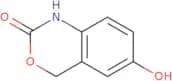
CAS:Versatile small molecule scaffoldFórmula:C9H9NO3Pureza:Min. 95%Peso molecular:179.17 g/mol6-Hydroxy-2,4-dihydro-1H-3,1-benzoxazin-2-one
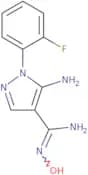
CAS:Versatile small molecule scaffoldFórmula:C8H7NO3Pureza:Min. 95%Peso molecular:165.15 g/mol5-Amino-1-(2-fluorophenyl)-N'-hydroxy-1H-pyrazole-4-carboximidamide
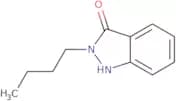
CAS:Versatile small molecule scaffoldFórmula:C10H10FN5OPureza:Min. 95%Peso molecular:235.22 g/mol2-Butyl-2,3-dihydro-1H-indazol-3-one
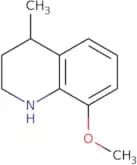
CAS:Versatile small molecule scaffoldFórmula:C11H14N2OPureza:Min. 95%Peso molecular:190.24 g/mol8-Methoxy-4-methyl-1,2,3,4-tetrahydroquinoline
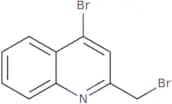
CAS:Versatile small molecule scaffoldFórmula:C11H15NOPureza:Min. 95%Peso molecular:177.24 g/mol4-Bromo-2-(bromomethyl)quinoline
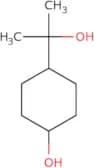
CAS:Versatile small molecule scaffoldFórmula:C10H7Br2NPureza:Min. 95%Peso molecular:300.98 g/mol4-(2-Hydroxypropan-2-yl)cyclohexan-1-ol
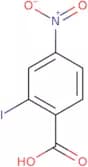
CAS:Versatile small molecule scaffoldFórmula:C9H18O2Pureza:Min. 95%Peso molecular:158.24 g/mol2-iodo-4-nitrobenzoic acid
CAS:2-Iodo-4-nitrobenzoic acid is a synthetic heterocyclic compound with the molecular formula C6H3INO2Cl. It has a picric pharmacophore, which is a structural motif that consists of a trifluoromethyl group and two nitro groups. 2-Iodo-4-nitrobenzoic acid is insoluble in water and hydrochloric acid. It can be synthesized by reacting diphenylmethane with sodium hydroxide solution and then adding hydrochloric acid to the resultant solution. The chemical structure of 2-iodo-4-nitrobenzoic acid appears as an orange crystalline solid in its pure form, but it has not been observed to have any biological activity. The chemical shifts for the methyl protons are between 1.5 and 4 ppm, and the chemical shifts for the hydrogen protons are between 2 and 4 ppm in its nmr spectra.Fórmula:C7H4INO4Pureza:Min. 95%Peso molecular:293 g/molPyridazine-3-carboxylic acid hydrazide
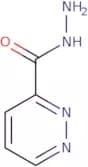
CAS:Pyridazine-3-carboxylic acid hydrazide is a chemical compound that belongs to the class of heterocyclic compounds. It can be synthesized by reacting 3-hydrazinopyridine with pyridine in a process that involves elemental analysis and spectral analysis. This compound has been shown to react with metal ions and form a ligand complex. Pyridazine-3-carboxylic acid hydrazide also has electronic spectra when it reacts with acids and bases, which are related to its formation constants. The parameters of this chemical are given below:Fórmula:C5H6N4OPureza:Min. 95%Peso molecular:138.13 g/mol5,5-Dimethyl-2,4-pyrrolidinedione
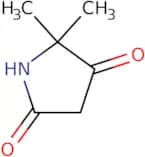
CAS:5,5-Dimethyl-2,4-pyrrolidinedione is the common name for a photochemical reaction that produces the anion of a substituted pyrrole. The reaction starts with a ketone or an aldehyde and two molecules of formaldehyde. This reaction is usually carried out in the presence of light. The efficiency of this process depends on the substituents on the molecule. In some cases, n-substituted pyrroles are more efficient than n-acetylated or n-alkylated pyrroles. If all three substituents are hydrogens, then the reactivity diminishes. 5,5-Dimethyl-2,4-pyrrolidinedione has been used as a precursor to produce 1-(1H)indolium salts and other compounds with antiinflammatory properties by alkylation or methoxycarbonylation reactions.Fórmula:C6H9NO2Pureza:Min. 95%Peso molecular:127.14 g/mol1-Ethyl-1H-pyrazole-3-carboxamide
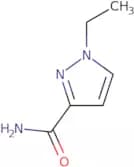
CAS:1-Ethyl-1H-pyrazole-3-carboxamide (1EPC) is a carbonic anhydrase inhibitor. It is used in the treatment of cancer, including lung carcinoma and breast carcinoma. 1EPC inhibits the growth of cancer cells by inhibiting the production of ATP in hypoxic regions of the tumor cell, thereby causing a dose-dependent cytotoxicity effect. This drug also has anticancer effects against fibroblast cells and carcinoma cells, as well as inhibiting the synthesis of DNA and RNA.Fórmula:C6H9N3OPureza:Min. 95%Peso molecular:139.16 g/mol4-Bromo-2-nitrobenzenesulphonyl chloride
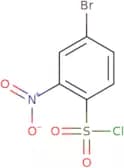
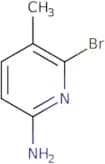
CAS:Versatile small molecule scaffoldFórmula:C6H3BrClNO4SPureza:Min. 95%Peso molecular:300.51 g/mol6-bromo-5-methylpyridin-2-amine
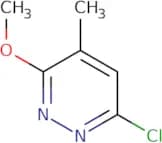
CAS:6-Bromo-5-methylpyridin-2-amine is an imidazopyridine drug that has been shown to inhibit the growth of bacterial strains in vitro. It also binds to the electron density, which may be due to its heteroaromatic ring and ionization potential. 6BMPA is synthesized by reacting 2-chloro-6-bromopyridine with 5-methylpyridinium iodide. For the synthesis of a monomer, 6BMPA is reacted with a second molecule of 5-methylpyridinium iodide, yielding the imidazopyrazine as a product. Drug discovery for this compound has been shown to be promising in animal models.Fórmula:C6H7BrN2Pureza:Min. 95%Peso molecular:187 g/mol6-Chloro-3-Methoxy-4-methylpyridazine
CAS:6-Chloro-3-Methoxy-4-methylpyridazine is an alkoxide of hydrazine. It is a white crystalline solid that melts at 130 °C and has a mp of 138 °C. 6-Chloro-3-Methoxy-4-methylpyridazine is selective for the liver, and has been used in research to study hepatic diseases. It has also been used as an intermediate in the synthesis of other compounds. The 6-chloro group on the pyridine nitrogen atom reacts with phosphorus oxychloride to produce a monohydrate salt, which can be hydrolyzed by refluxing with water to form the oxychloride salt. The chloride atom on the methoxy group can be replaced by chlorine by heating with phosphorus and hydrazine monohydrate. This process is efficient because it produces only one chlorinated product instead of two chlorinated products that are produced when chlorine gas is added directly toFórmula:C6H7ClN2OPureza:Min. 95%Peso molecular:158.59 g/mol
![7-benzyl-3-thia-7-azabicyclo[3.3.1]nonan-9-one](/_next/image/?url=https%3A%2Fstatic.cymitquimica.com%2Fproducts%2F3D%2Fthumb-webp%2FPDA39804.webp&w=3840&q=75)