Building Blocks
Esta seção contém produtos fundamentais para a síntese de compostos orgânicos e biológicos. Building blocks são os materiais de partida essenciais usados para construir moléculas complexas através de várias reações químicas. Eles desempenham um papel crítico na descoberta de medicamentos, ciência dos materiais e pesquisa química. Na CymitQuimica, oferecemos uma ampla gama de building blocks de alta qualidade para apoiar suas pesquisas inovadoras e projetos industriais, garantindo que você tenha os componentes essenciais para uma síntese bem-sucedida.
Subcategorias de "Building Blocks"
- Ácidos Borónicos e Derivados de Ácido Borónico(5.778 produtos)
- Building Blocks Quirais(1.243 produtos)
- Building Blocks Hidrocarbonetos(6.097 produtos)
- Building Blocks orgânicos(61.048 produtos)
Foram encontrados 203115 produtos de "Building Blocks"
Ordenar por
Pureza (%)
0
100
|
0
|
50
|
90
|
95
|
100
2-Bromo-4,5,6,7-tetrahydrothiazolo[4,5-c]pyridine
CAS:<p>2-Bromo-4,5,6,7-tetrahydrothiazolo[4,5-c]pyridine</p>Fórmula:C6H7BrN2SPureza:95%Cor e Forma:SolidPeso molecular:219.10g/mol1-(2,6-Difluorobenzoyl)piperidin-4-one
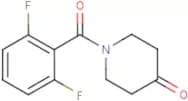
CAS:<p>1-(2,6-Difluorobenzoyl)piperidin-4-one</p>Pureza:95+%Peso molecular:239.22g/molRef: 54-PC446094
Produto descontinuadoPiperidin-4-one, N-CBZ protected
CAS:<p>Piperidin-4-one, N-CBZ protected</p>Fórmula:C13H15NO3Pureza:97%Cor e Forma: off white to faint lemon crystalline solidPeso molecular:233.26g/mol2,3,5,6-Tetrafluoropyridine
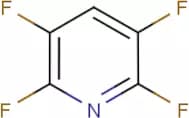
CAS:2,3,5,6-TetrafluoropyridineFórmula:C5HF4NPureza:98%Cor e Forma: clear. colourless liquidPeso molecular:151.06g/molImipenem monohydrate
CAS:<p>Imipenem monohydrate</p>Fórmula:C12H17N3O4S·H2OPureza:95% (nmr) (Typical Value in Batch COA)Cor e Forma: yellow solidPeso molecular:317.36g/molN-Acetylpiperidin-4-one
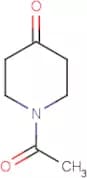
CAS:<p>N-Acetylpiperidin-4-one</p>Fórmula:C7H11NO2Pureza:95+%Cor e Forma: clear. very dark yellow to orange. viscous oilPeso molecular:141.17g/molPiperidin-4-one hydrochloride hydrate
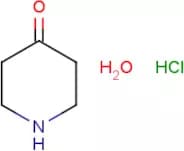
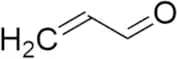
CAS:<p>Piperidin-4-one hydrochloride hydrate</p>Fórmula:C5H9NO·ClH·H2OPureza:97%Cor e Forma: white crystalline solidPeso molecular:153.61g/molAcrolein (stabilized with Hydroquinone)
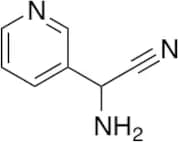
CAS:Fórmula:C3H4OCor e Forma:Colourless to Pale Yellow OilPeso molecular:56.06α-Amino-3-pyridineacetonitrile (>85%)
CAS:Produto ControladoFórmula:C7H7N3Pureza:>85%Cor e Forma:NeatPeso molecular:133.151Diphenylmethane
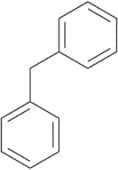
CAS:<p>Diphenylmethane is a chemical that has been used in the synthesis of pharmaceuticals and other organic compounds. It is also a useful reagent for the preparation of synthetic amines. Diphenylmethane can be used to synthesize drugs such as epidermal growth factor, which stimulates the growth and differentiation of keratinocytes. This chemical also has a number of potential therapeutic uses for metabolic disorders and infectious diseases, including hepatitis. The mechanism by which this compound reacts with nitrogen atoms is not fully understood, but it may involve the formation of diphenylmethanesulfinic acid.</p>Fórmula:C13H12Pureza:Min. 99 Area-%Cor e Forma:White PowderPeso molecular:168.23 g/molRef: 3D-FD34703
Produto descontinuadoN-Acetyl-L-alanine
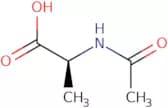
CAS:<p>N-Acetyl-L-alanine is the N-acetylated form of L-alanine and is a nonessential amino acid. It is an amide containing one nitrogen atom and two carbonyl groups. The nitrogen can be found in either the alpha or beta position on the amide. The biological properties of N-acetyl-L-alanine are similar to those of L-alanine, as it is used as a substrate for protein synthesis and has been shown to inhibit p21 and epidermal growth factor. The conformational properties of N-acetyl-L-alanine are different from that of L-alanine due to its changed shape, which may affect its biological activity.</p>Fórmula:C5H9NO3Pureza:Min. 95%Cor e Forma:White PowderPeso molecular:131.13 g/mol7-Azaindole
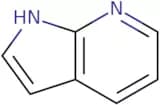
CAS:<p>7-Azaindole is a reactive chemical that has been shown to be effective in the treatment of skin cancer, as well as hepatic steatosis. The compound can promote the transfer of hydrogen atoms and form a dimer with protonated nitrogen. 7-Azaindole reacts rapidly with nucleophiles such as amines, alcohols, and thiols to form covalent bonds. The reaction mechanism is characterized by an initial protonation step followed by nucleophilic attack or hydrogen transfer from the nucleophile to 7-azaindole. Kinetic studies have demonstrated that the rate of this reaction depends on the concentration of both reactants.</p>Fórmula:C7H6N2Cor e Forma:PowderPeso molecular:118.14 g/mol2'-Methoxyacetophenone
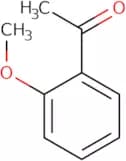
CAS:<p>2'-Methoxyacetophenone is a member of the class of halogenated phenols that exhibits anti-inflammatory activities. It inhibits protease activity in vitro and has been shown to have anti-inflammatory effects in vivo. 2'-Methoxyacetophenone is a ruthenium complex with hydrochloride salt that has been shown to be an efficient catalyst for acylation reactions. This compound also inhibits the transfer of the nerve impulse from the trigeminal nerve to the brain, which may be due to its ability to inhibit lipid peroxidation and protein autoxidation. 2'-Methoxyacetophenone has also been shown to have antimicrobial activity against gram-negative bacterial species, such as Proteus vulgaris, Escherichia coli, Pseudomonas aeruginosa, and Salmonella enterica.</p>Fórmula:C9H10O2Pureza:Min. 98 Area-%Cor e Forma:Clear LiquidPeso molecular:150.17 g/molRef: 3D-FM71392
Produto descontinuadoQuinoline 2,4-dicarboxylic acid
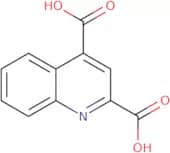
CAS:<p>Quinoline 2,4-dicarboxylic acid (QDA) is a novel cytotoxic agent that targets cervical cancer cells. It inhibits the uptake of glucose and other nutrients by cervical cancer cells, leading to cell death through apoptosis. QDA also inhibits the expression of genes involved in cross-linking reactions, which are important for the structural integrity of proteins. This agent has been shown to inhibit the growth of aniline-induced breast cancer cells and glutamate-stimulated PC12 cells. QDA binds to DNA and forms covalent bonds with nucleotide bases, inhibiting DNA synthesis, as well as interfering with protein synthesis and cell division. The QDA mechanism is similar to that of benzoquinolines and estrone sulfate.</p>Fórmula:C11H7NO4Pureza:Min. 95%Cor e Forma:White PowderPeso molecular:217.18 g/mol1,2,3,6-Tetrahydropyridine
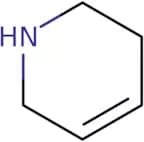
CAS:<p>1,2,3,6-Tetrahydropyridine is an experimental drug that acts as a dopamine receptor antagonist. It has been shown to induce neuronal death in the presence of excess dopamine by inhibiting the uptake of dopamine by neurons. The nitrogen atom in position 6 may be involved in binding to the receptor and initiating the conformational change needed for activation. Tetrahydropyridine binds to the D1 and D2 receptors with high affinity, but it does not bind to D4 receptors. Tetrahydropyridine can also inhibit locomotor activity in mice and rats.</p>Fórmula:C5H9NPureza:Min. 95%Cor e Forma:Colorless Yellow Clear LiquidPeso molecular:83.13 g/molD-Valinol
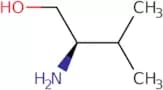
CAS:<p>D-Valinol is a synthetic compound that contains a chiral alcohol group. It is an ester hydrochloride salt of D-valinol and has been shown to be clinically effective in treating chronic lymphocytic leukemia (CLL). This drug is a potent inhibitor of the bcr-abl kinase, which is involved in the regulation of protein synthesis. D-Valinol binds to the kinase domain of this enzyme and inhibits its activity by preventing it from transferring phosphate groups from ATP to tyrosine residues on proteins. D-Valinol also inhibits chloride channels, which are required for cell survival.</p>Fórmula:C5H13NOPureza:Min. 95%Cor e Forma:PowderPeso molecular:103.16 g/molRef: 3D-FV36829
Produto descontinuado3-Hydroxy-3,4-dihydro-2H-1-benzopyran-4-one
CAS:<p>Versatile small molecule scaffold</p>Fórmula:C9H8O3Pureza:Min. 95%Cor e Forma:PowderPeso molecular:164.16 g/mol4-Nitroindole
CAS:<p>4-Nitroindole is a versatile building block with a variety of applications. It can be used in the synthesis of complex compounds, research chemicals, and reagents. 4-Nitroindole is also useful in the synthesis of speciality chemicals and as an intermediate for the preparation of other compounds. This compound is high quality and has many uses as a reaction component or scaffold.</p>Fórmula:C8H6N2O2Peso molecular:162.15 g/mol6-Azaindole
CAS:<p>6-Azaindole is a fine chemical that can be used as a reagent, building block, and intermediate. It is a versatile compound that has been shown to have high quality and complex chemistry. 6-Azaindole is an important reaction component in the synthesis of other compounds with pharmaceutical applications such as amide synthons, amino acid esters, and pharmaceutical intermediates. 6-Azaindole can also be used as a scaffold for the preparation of indoles. CAS No: 271-29-4</p>Fórmula:C7H6N2Peso molecular:118.14 g/mol2-(4-Methylphenyl)piperidine
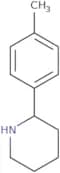
CAS:<p>Versatile small molecule scaffold</p>Fórmula:C12H17NPureza:Min. 95%Cor e Forma:Clear LiquidPeso molecular:175.27 g/molRef: 3D-KDA23766
Produto descontinuado
![2-Bromo-4,5,6,7-tetrahydrothiazolo[4,5-c]pyridine](/_next/image/?url=https%3A%2Fstatic.cymitquimica.com%2Fproducts%2F54%2Fthumb-webp%2FOR300257.webp&w=3840&q=75)