


Building Blocks
Subcategorias de "Building Blocks"
- Ácidos Borónicos e Derivados de Ácido Borónico(5.784 produtos)
- Building Blocks Quirais(1.242 produtos)
- Building Blocks Hidrocarbonetos(6.105 produtos)
- Building Blocks orgânicos(61.065 produtos)
Foram encontrados 205418 produtos de "Building Blocks"
2-[(Diethylamino)methyl]cyclohexan-1-amine
CAS:Versatile small molecule scaffoldFórmula:C11H24N2Pureza:Min. 95%Peso molecular:184.32 g/molClonidine hydrochloride
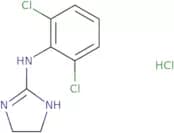
CAS:Clonidine hydrochloride is a drug used in the treatment of hypertension and other cardiac diseases. It belongs to the class of drugs called centrally acting alpha-2 adrenergic agonists. Clonidine hydrochloride is also used for its antihypertensive effects in patients with neurogenic orthostatic hypotension, diabetic neuropathy, and glomerular filtration rate. The long-term efficacy and safety profile of clonidine hydrochloride has been established in clinical trials that have shown it to be effective in reducing symptoms of chronic pain and opioid withdrawal, as well as improving quality of life. Clonidine hydrochloride may be administered orally or transdermally. Clonidine binds to both alpha-1 and alpha-2 adrenergic receptors, which are responsible for vasoconstriction, inhibition of renin secretion from the kidneys, decreased sympathetic nerve activity, and increased parasympathetic nerve activity. This drug also has a protective effect on bone cancer cells
Fórmula:C9H9Cl2N3•HClPureza:Min. 95%Cor e Forma:PowderPeso molecular:266.55 g/mol(2-Bromoethoxy)-tert-butyldimethylsilane
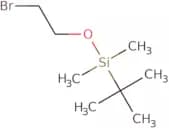
CAS:2-Bromoethoxy-tert-butyldimethylsilane is a conjugate that has been shown to have anticancer efficacy in vivo. It is a pyrimidine derivative and inhibits the viral enzyme RNA polymerase, thereby inhibiting viral replication. 2-Bromoethoxy-tert-butyldimethylsilane also inhibits glyceraldehyde 3-phosphate dehydrogenase, which is an enzyme that catalyzes the conversion of glucose into glyceraldehyde 3-phosphate and plays an important role in glycolysis. The compound has been shown to be active against mouse tumors, which are associated with endogenous retroviruses. The compound has also been shown to inhibit gapdh, an enzyme involved in energy metabolism and cancer therapy.Fórmula:C8H19BrOSiPureza:Min. 95%Cor e Forma:Colorless Clear LiquidPeso molecular:239.23 g/mol5-Bromo-1-methyl-1H-1,2,3-triazole
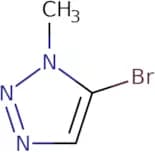
CAS:Please enquire for more information about 5-Bromo-1-methyl-1H-1,2,3-triazole including the price, delivery time and more detailed product information at the technical inquiry form on this page
Fórmula:C3H4BrN3Pureza:Min. 95%Peso molecular:162 g/mol3-Bromoquinoline
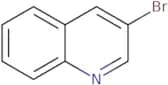
CAS:3-Bromoquinoline is a brominated quinoline derivative that can be synthesized by cross-coupling reactions. The compound's chemical structure is similar to the 3-azidoquinoline, which was studied in quantum theory and molecular modeling. The 3-bromoquinoline molecule has been shown to exist in two different coordination geometries: octahedral and trigonal bipyramidal. In the octahedral geometry, the 3-bromoquinoline molecule is bound to three bromine atoms and one nitrogen atom, with an intramolecular hydrogen bond between the nitrogen atom and the quinoline ring system. The trigonal bipyramidal geometry also features an intramolecular hydrogen bond between the nitrogen atom and quinoline ring system, as well as a halogen bonding interaction with one of the three bromine atoms.
Fórmula:C9H6BrNPureza:Min. 95%Cor e Forma:Yellow PowderPeso molecular:208.05 g/molRef: 3D-FB15276
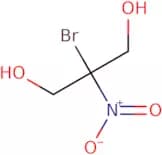
Produto descontinuado2-Bromo-2-nitro-1,3-propanediol
CAS:2-Bromo-2-nitro-1,3-propanediol (BNP) is a preservative that is used in wastewater treatment. It is an antimicrobial agent that has synergistic effects with other antimicrobial agents such as triclosan, benzalkonium chloride and sesquiterpene lactones. 2-Bromo-2-nitro-1,3-propanediol has been shown to have a phase transition temperature of -28°C, which can be used to identify it in the laboratory. This compound also has a pK value of 4.4, which indicates that it is weakly acidic. 2-Bromo-2-nitro-1,3-propanediol can be used as an analytical method for the determination of p - hydroxybenzoic acid in aqueous samples by electrochemical impedance spectroscopy (EIS).
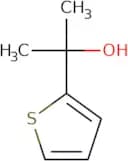
Fórmula:C3H6BrNO4Pureza:Min. 95%Cor e Forma:PowderPeso molecular:199.99 g/mol2-(Thiophen-2-yl)propan-2-ol
CAS:Versatile small molecule scaffold
Fórmula:C7H10OSPureza:Min. 95%Peso molecular:142.22 g/mol4-m-Tolyl-thiazol-2-ylamine
CAS:Versatile small molecule scaffold
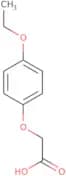
Fórmula:C10H10N2SPureza:Min. 95%Peso molecular:190.26 g/mol2-(4-Ethoxyphenoxy)acetic acid
CAS:Versatile small molecule scaffold
Fórmula:C10H12O4Pureza:Min. 95%Peso molecular:196.2 g/mol3-[(2-Hydroxyethyl)sulfanyl]propan-1-ol
CAS:3-[(2-Hydroxyethyl)sulfanyl]propan-1-ol is a sulfide metabolite that is formed in the body from the sulfhydryl group of cysteine. It is an aliphatic compound that can be found in plants, animals, and microorganisms. 3-[(2-Hydroxyethyl)sulfanyl]propan-1-ol has been shown to inhibit bacterial growth by binding to DNA and RNA. This process inhibits transcription and replication of bacterial DNA, which leads to cell death.
Fórmula:C5H12O2SPureza:Min. 95%Peso molecular:136.22 g/mol4-(4-Methoxyphenyl)cyclohexan-1-one
CAS:Versatile small molecule scaffold
Fórmula:C13H16O2Pureza:Min. 95%Peso molecular:204.26 g/mol{2-[(3-Carboxypropanoyl)oxy]ethyl}trimethylammonium chloride
CAS:Succinylcholine is a depolarizing neuromuscular blocking agent that is used in surgical procedures. Succinylcholine hydrolyzes to succinic acid and choline in vivo and is metabolized by the liver. The half-life of succinylcholine is about 2 minutes in humans. It has been shown that this drug causes respiratory paralysis, but only at high doses. Succinylcholine also has potent cardiac effects, which are due to its ability to block nicotinic acetylcholine receptors on the heart muscle. It was found that succinylmonocholine (a metabolite of succinylcholine) can be detected in urine samples after administration of this drug with a kinetic data analysis method. This method uses LC-MS/MS to measure the concentration of succinylmonocholine in human serum and isolated heart tissue samples. A pharmacokinetic study showed that succinycholines accumulation rate constant was 0.051 ± 0.
Fórmula:C9H18ClNO4Pureza:Min. 95%Peso molecular:239.69 g/mol2-[(2,6-Dimethylphenoxy)methyl]oxirane
CAS:Versatile small molecule scaffold
Fórmula:C11H14O2Pureza:Min. 95%Peso molecular:178.23 g/mol2,2'-dichlorobenzophenone
CAS:2,2'-dichlorobenzophenone is a benzophenone derivative that is used as a precursor in the production of dyes, flame retardants, and plasticizers. It has the molecular conformations of both cis and trans isomers. In the cis conformation, the dipole moment points towards the 2 position on the ring. The trans conformation has a dipole moment pointing to the 3 position on the ring.
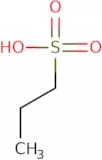
Fórmula:C13H8Cl2OPureza:Min. 95%Peso molecular:251.11 g/mol1-Propanesulfonic acid
CAS:1-Propanesulfonic acid is a chemical compound with the molecular formula CHOS. It is a white, water-soluble solid that can be used as a strong acid in organic synthesis. 1-Propanesulfonic acid has been shown to have high values of cell lysis and basic protein stability when used as an analytical method for wastewater treatment. This chemical compound has been shown to be stable in the presence of redox potentials, which would make it an ideal candidate for use in electrochemical impedance spectroscopy. The structural analysis of 1-propanesulfonic acid shows that it is very similar to dinucleotide phosphate, which is needed for DNA replication and transcription.
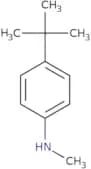
Fórmula:CH3CH2CH2SO3HPureza:Min. 95%Peso molecular:124.16 g/mol4-tert-Butyl-N-methylaniline
CAS:Versatile small molecule scaffold
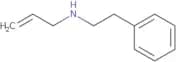
Fórmula:C11H17NPureza:Min. 95%Peso molecular:163.26 g/mol(2-Phenylethyl)(prop-2-en-1-yl)amine
CAS:Produto ControladoVersatile small molecule scaffold
Fórmula:C11H15NPureza:Min. 95%Peso molecular:161.24 g/molMethyl [(4-aminobenzoyl)amino]acetate
CAS:Versatile small molecule scaffold
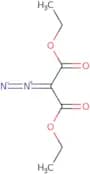
Fórmula:C10H12N2O3Pureza:Min. 95%Peso molecular:208.21 g/mol1,3-Diethyl 2-diazopropanedioate
CAS:1,3-Diethyl 2-diazopropanedioate is a heterocyclic molecule with a chemical formula of C6H8N2O4. It has been used in pharmaceutical preparations and as an intermediate in the synthesis of other chemicals. 1,3-Diethyl 2-diazopropanedioate is hydrolyzed by ectonucleotidase to produce malonic acid and ethyl diazoacetate. This reaction may be important in the development of cancer due to its ability to react with DNA. The reactions are also involved in the chain reactions that lead to clotting of blood and thrombin receptor activation, which can result in a heart attack or stroke.
Fórmula:C7H10N2O4Pureza:Min. 95%Peso molecular:186.17 g/mol2-[(Naphthalen-2-yloxy)methyl]oxirane
CAS:2-[(Naphthalen-2-yloxy)methyl]oxirane is a monomer that can be used to produce epoxides, amines, and other organic compounds. It is used as a transport agent and catalytic agent for the ring-opening of epoxides. The cyanosilylation reaction of 2-[(naphthalen-2-yloxy)methyl]oxirane with bis[trimethylsilyl]acetamide produces cyanosilylated products. This compound has been shown to be a ligand for phosphazene and polyethers, as well as an effective catalyst in the synthesis of cyclic ethers.
Fórmula:C13H12O2Pureza:Min. 95%Peso molecular:200.23 g/mol
![2-[(Diethylamino)methyl]cyclohexan-1-amine](/_next/image/?url=https%3A%2Fstatic.cymitquimica.com%2Fproducts%2F3D%2Fthumb-webp%2FFCA76207.webp&w=3840&q=75)


![3-[(2-Hydroxyethyl)sulfanyl]propan-1-ol](/_next/image/?url=https%3A%2Fstatic.cymitquimica.com%2Fproducts%2F3D%2Fthumb-webp%2FFAA32360.webp&w=3840&q=75)

![{2-[(3-Carboxypropanoyl)oxy]ethyl}trimethylammonium chloride](/_next/image/?url=https%3A%2Fstatic.cymitquimica.com%2Fproducts%2F3D%2Fthumb-webp%2FFAA29717.webp&w=3840&q=75)
![2-[(2,6-Dimethylphenoxy)methyl]oxirane](/_next/image/?url=https%3A%2Fstatic.cymitquimica.com%2Fproducts%2F3D%2Fthumb-webp%2FFAA29634.webp&w=3840&q=75)

![Methyl [(4-aminobenzoyl)amino]acetate](/_next/image/?url=https%3A%2Fstatic.cymitquimica.com%2Fproducts%2F3D%2Fthumb-webp%2FFAA25986.webp&w=3840&q=75)
![2-[(Naphthalen-2-yloxy)methyl]oxirane](/_next/image/?url=https%3A%2Fstatic.cymitquimica.com%2Fproducts%2F3D%2Fthumb-webp%2FFAA23406.webp&w=3840&q=75)