Building Blocks
Subcategorias de "Building Blocks"
- Ácidos Borónicos e Derivados de Ácido Borónico(5.781 produtos)
- Building Blocks Quirais(1.242 produtos)
- Building Blocks Hidrocarbonetos(6.101 produtos)
- Building Blocks orgânicos(61.038 produtos)
Foram encontrados 205338 produtos de "Building Blocks"
3-Methyl-3H-[1,2,3]triazolo[4,5-d]pyrimidin-7-amine
CAS:3-Methyl-3H-[1,2,3]triazolo[4,5-d]pyrimidin-7-amine is a purine ligand that can be protonated at the N7 nitrogen. It has been shown to have biological properties such as anion binding and also shows strong dichroism spectra. The structure of 3-methyl-3H-[1,2,3]triazolo[4,5-d]pyrimidin-7-amine has been determined by X-ray crystallography and magnetic resonance spectroscopy. This ligand is not easily protonated in aqueous solution due to its high basicity. The protonation state of this ligand is sensitive to pH changes in the environment.
Fórmula:C5H6N6Pureza:Min. 95%Peso molecular:150.14 g/mol2-Ethoxy-1-naphthaldehyde
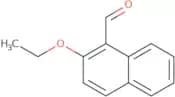
CAS:2-Ethoxy-1-naphthaldehyde is a synthetic compound that is an intermediate in the synthesis of nafcillin sodium. It is also used as an intermediate for the production of acetonitrile, which can be used as a solvent. 2-Ethoxy-1-naphthaldehyde has been shown to have optical properties similar to those of anthracene and dihedral angles similar to those of peroxide. It undergoes dehydrating reactions with hydrogen peroxide, forming acetic acid, water, and hydrogen dioxide. This compound also has a strong tendency to form hydrogen bonds with other molecules.
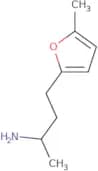
Fórmula:C13H12O2Pureza:Min. 95%Peso molecular:200.23 g/mol4-(5-Methylfuran-2-yl)butan-2-amine
CAS:Versatile small molecule scaffold
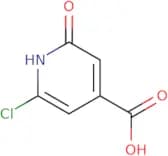
Fórmula:C9H15NOPureza:Min. 95%Peso molecular:153.22 g/mol6-chloro-2-oxo-1,2-dihydropyridine-4-carboxylic acid
CAS:6-Chloro-2-oxo-1,2-dihydropyridine-4-carboxylic acid (6CODPC) is a carboxylic acid that is an active ingredient in some fungicides. It has been shown to inhibit the growth of certain plant pathogens such as viruses and bacteria. 6CODPC binds to the enzyme ribonucleotide reductase, which is involved in DNA synthesis and replication, leading to the inhibition of RNA synthesis and protein synthesis. This leads to cell death by apoptosis. 6CODPC also inhibits the production of proteins in plants that are necessary for photosynthesis.
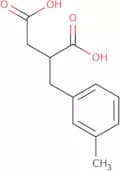
Fórmula:C6H4ClNO3Pureza:Min. 95%Peso molecular:173.6 g/mol2-(3-Methylbenzyl)succinic acid
CAS:2-(3-Methylbenzyl)succinic acid is a sulfate metabolite that has been shown to regulate the activity of sulfate-reducing bacteria. It was first identified as a major metabolite in incubations with benzylsuccinic acid and xylene. The isomers of 2-(3-methylbenzyl)succinic acid are benzoate and hydroxyphthalide. The geochemical significance of this compound is not yet known, but it may signify the presence of microbial metabolism in the environment. The compound can be found at nanomolar concentrations in natural environments and has been shown to inhibit microbial growth by mechanisms that remain unclear.
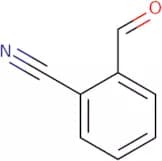
Fórmula:C12H14O4Pureza:Min. 95%Peso molecular:222.24 g/mol2-Cyanobenzaldehyde
CAS:2-Cyanobenzaldehyde is an aldehyde that reacts with nucleophiles such as trifluoromethanesulfonic acid to form a molecule. 2-Cyanobenzaldehyde has potent inhibitory activity against the kinase glycogen synthase kinase 3 (GSK3) and can be used to treat autoimmune diseases. It also reacts with hydrochloric acid in solution to form an intermediate, which is then reacted with glycine and ATP to produce a chiral compound. The product of this reaction has been shown to be active methylene, which was synthesized by asymmetric synthesis.
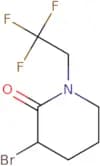
Fórmula:C8H5NOPureza:Min. 95%Cor e Forma:PowderPeso molecular:131.13 g/mol3-Bromo-1-(2,2,2-trifluoroethyl)piperidin-2-one
CAS:Versatile small molecule scaffold
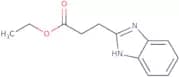
Fórmula:C7H9BrF3NOPureza:Min. 95%Peso molecular:260.05 g/molEthyl 3-(1H-benzimidazol-2-yl)propanoate
CAS:Versatile small molecule scaffold
Fórmula:C12H14N2O2Pureza:Min. 95%Peso molecular:218.25 g/mol1-[(4-Chlorophenyl)phenylmethyl]piperazine
CAS:Produto Controlado1-[(4-Chlorophenyl)phenylmethyl]piperazine is an analytical reagent that is used in the determination of meclozine, a drug used for the treatment of nausea and vomiting. 1-[(4-Chlorophenyl)phenylmethyl]piperazine is a nucleophile, which means that it can donate electrons to other molecules. It can be used as a catalyst to increase the rate of chemical reactions. 1-[(4-Chlorophenyl)phenylmethyl]piperazine may also be used in wastewater treatment because it has been shown to have phospholipidosis inhibiting properties. The levorotatory form (1R-enantiomer) of this compound has been shown to inhibit protein synthesis in vitro and is an amine oxidase inhibitor that binds to proteins with nitrogen atoms. This nucleophilic compound may also be converted into an n-oxide or dinucleotide phosphate by hydrochloric acid and
Fórmula:C17H19ClN2Pureza:Min. 95%Peso molecular:286.8 g/molRef: 3D-FC20350
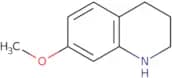
Produto descontinuado7-Methoxy-1,2,3,4-tetrahydroquinoline
CAS:Versatile small molecule scaffold
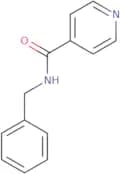
Fórmula:C10H13NOPureza:Min. 95%Peso molecular:163.22 g/molN-Benzylpyridine-4-carboxamide
CAS:N-Benzylpyridine-4-carboxamide is a synthetic compound that has been shown to have anticancer, anti-inflammatory, and neuropathic properties. This compound is an innovative drug candidate for the treatment of inflammatory diseases and cancer. N-Benzylpyridine-4-carboxamide inhibits the production of chemokines, which are cytokines that are involved in the recruitment of cells to sites of inflammation and infection. The mechanism involves the ring opening of the amide bond between the nitro group and the carboxylic acid group. The pharmacophore is derived from this ring opening reaction. This compound also blocks receptor subtypes such as 5HT3A or NMDA receptors, which may lead to neuropathic effects.
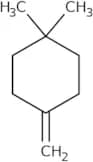
Fórmula:C13H12N2OPureza:Min. 95%Peso molecular:212.25 g/mol1,1-dimethyl-4-methylidenecyclohexane
CAS:Mesityl oxide is a colorless liquid with a sweet odor that is used as a flavor and fragrance agent. It can be found in the volatile fraction of many essential oils such as lavender, rosemary, and sage. Mesityl oxide has been identified by gas chromatography-mass spectrometry (GC-MS) to be present in the volatile fraction of these oils. It is also found in many foods such as red wine, coffee, and beer. Mesityl oxide has been shown to have differentiating properties in initially similar samples. This compound can be detected by GC-MS using an oxidized pentane extraction procedure.
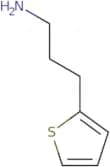
Mesityl oxide is not considered to be toxic at low doses but may cause irritation at high doses.Fórmula:C9H16Pureza:Min. 95%Peso molecular:124.23 g/mol3-(Thiophen-2-yl)propan-1-amine
CAS:3-(Thiophen-2-yl)propan-1-amine is an organic solvent that is used as a reactant in the production of polyphosphoric acid. It is also used in the synthesis of pharmaceuticals. This compound can be produced by reacting chloroformate with propylamine and aluminium chloride in a solution of hydrochloric acid, producing 3-(thiophen-2-yl)propan-1-amine and hydrogen chloride gas. The reaction can also be carried out using phosphoryl chloride and propylamine to produce 3-(thiophen-2-yl)propan-1-amine and phosphorus pentoxide.
Fórmula:C7H11NSPureza:Min. 95%Peso molecular:141.24 g/mol4H,5H,6H-Thieno[3,4-c]pyrrole-4,6-dione
CAS:4H,5H,6H-Thieno[3,4-c]pyrrole-4,6-dione is a potent antitumor agent that inhibits the activity of protein kinases. It has been shown to have the ability to inhibit tumor growth in animal models and has been shown to be effective against resistant microorganisms such as Staphylococcus aureus and Mycobacterium tuberculosis. 4H,5H,6H-Thieno[3,4-c]pyrrole-4,6-dione has also been shown to improve hematopoiesis by stimulating colony stimulating factor production. This compound is metabolized through a number of metabolic transformations including oxidative deamination by monoamine oxidase or pyridoxal phosphate dependent aminotransferases. The biological properties of 4H,5H,6H-Thieno[3,4-c]pyrrole-4
Fórmula:C6H3NO2SPureza:Min. 95%Peso molecular:153.16 g/molRef: 3D-GAA00782
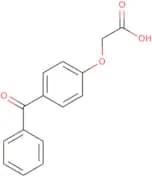
Produto descontinuado2-(4-Benzoylphenoxy)acetic acid
CAS:2-(4-Benzoylphenoxy)acetic acid is a phenoxy compound that can be used as an antinociceptive agent. It has been shown to inhibit the pain response in mice by binding to the peripheral cannabinoid receptor CB2 and blocking intracellular calcium channels, thereby inhibiting the release of pro-inflammatory molecules. 2-(4-Benzoylphenoxy)acetic acid also inhibits the activity of two enzymes involved in carbonic acid production and glucose metabolism, which may provide protection against metabolic disorders. Computational methods have been used to model the molecular structure of 2-(4-benzoylphenoxy)acetic acid, which are then compared with experimental data on hydrogen bonding interactions between dihedral angles and intramolecular hydrogen bonds.
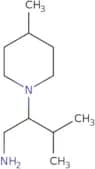
Fórmula:C15H12O4Pureza:Min. 95%Peso molecular:256.25 g/mol3-Methyl-2-(4-methylpiperidin-1-yl)butan-1-amine
CAS:Versatile small molecule scaffold
Fórmula:C11H24N2Pureza:Min. 95%Peso molecular:184.32 g/mol3-Bromo-1-(prop-2-en-1-yl)pyrrolidin-2-one
CAS:Versatile small molecule scaffold
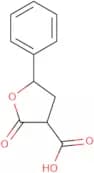
Fórmula:C7H10BrNOPureza:Min. 95%Peso molecular:204.06 g/mol2-Oxo-5-phenyloxolane-3-carboxylic acid
CAS:Versatile small molecule scaffold
Fórmula:C11H10O4Pureza:Min. 95%Peso molecular:206.19 g/molRef: 3D-GAA00595
Produto descontinuado2-[(4-Methanesulfonyl-2-nitrophenyl)amino]acetic acid
CAS:Versatile small molecule scaffold
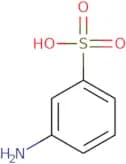
Fórmula:C9H10N2O6SPureza:Min. 95%Peso molecular:274.25 g/mol3-Aminobenzenesulfonic acid
CAS:3-Aminobenzenesulfonic acid (ABAS) is a chemical that belongs to the group of inhibitor molecules. It has been shown to be an efficient inhibitor of the enzyme carbonic anhydrase, which is essential for the conversion of CO2 to bicarbonate and protons. This inhibition causes a decrease in pH and increased thermal expansion, leading to increased permeability of water through cell walls. ABAS has also been shown to have antibacterial efficacy against bacteria such as Escherichia coli, Pseudomonas aeruginosa, and Staphylococcus aureus. Furthermore, it has been used in wastewater treatment due to its ability to break down organic matter into simpler compounds.
Fórmula:H2NC6H4SO3HPureza:Min. 95%Peso molecular:173.19 g/mol
![3-Methyl-3H-[1,2,3]triazolo[4,5-d]pyrimidin-7-amine](/_next/image/?url=https%3A%2Fstatic.cymitquimica.com%2Fproducts%2F3D%2Fthumb-webp%2FGAA31255.webp&w=3840&q=75)

![1-[(4-Chlorophenyl)phenylmethyl]piperazine](/_next/image/?url=https%3A%2Fstatic.cymitquimica.com%2Fproducts%2F3D%2Fthumb-webp%2FFC20350.webp&w=3840&q=75)
![4H,5H,6H-Thieno[3,4-c]pyrrole-4,6-dione](/_next/image/?url=https%3A%2Fstatic.cymitquimica.com%2Fproducts%2F3D%2Fthumb-webp%2FGAA00782.webp&w=3840&q=75)

![2-[(4-Methanesulfonyl-2-nitrophenyl)amino]acetic acid](/_next/image/?url=https%3A%2Fstatic.cymitquimica.com%2Fproducts%2F3D%2Fthumb-webp%2FQDA55840.webp&w=3840&q=75)