Building Blocks
Subcategorias de "Building Blocks"
- Ácidos Borónicos e Derivados de Ácido Borónico(5.780 produtos)
- Building Blocks Quirais(1.239 produtos)
- Building Blocks Hidrocarbonetos(6.100 produtos)
- Building Blocks orgânicos(61.005 produtos)
Foram encontrados 205234 produtos de "Building Blocks"
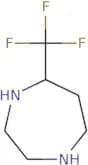
5-(Trifluoromethyl)-1,4-diazepane
CAS:Versatile small molecule scaffold
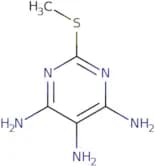
Fórmula:C6H11F3N2Pureza:Min. 95%Peso molecular:168.16 g/mol2-(Methylthio)pyrimidine-4,5,6-triamine
CAS:2-(Methylthio)pyrimidine-4,5,6-triamine is a centrosymmetric molecule with a molecular weight of 184.07 g/mol. It forms hydrogen bonds with water and interacts with other molecules. 2-(Methylthio)pyrimidine-4,5,6-triamine has been shown to form stacking interactions in crystal structures due to the presence of hydrogen bonds. Hydrogen bonds are formed between molecules when the partial positive charge on one molecule is attracted to the partial negative charge on another molecule. The attraction between these molecules can be facilitated by the presence of water molecules and is most prevalent in substances that have a high degree of hydrogen bonding potential, such as sugars and proteins.
2-(Methylthio)pyrimidine-4,5,6-triamine has also been shown to form hydrogen bonds with organic compounds such as methanol and ethanol.Fórmula:C5H9N5SPureza:Min. 95%Peso molecular:171.22 g/mol4-Phenylquinazolin-2(1H)-One
CAS:4-Phenylquinazolin-2(1H)-One is a chemical compound that is related to tylosin tartrate. It is a water-soluble substance that contains a 1-6 carbon atom chain with an alkoxy group. This compound has an acidic nature and is commonly used in research studies as a reference standard or for ion extraction purposes. Its chemical name is derived from its structure, and it shares similarities with erythromycin, a well-known antibiotic.
Fórmula:C14H10N2OPureza:Min. 95%Peso molecular:222.24 g/mol3-[(3-Chlorophenyl)sulfamoyl]benzoic acid
CAS:3-[(3-Chlorophenyl)sulfamoyl]benzoic acid is a high purity chemical that has been used as a research tool in the fields of cell biology and pharmacology. 3-[(3-Chlorophenyl)sulfamoyl]benzoic acid has been shown to activate receptors, ligands, and ion channels. It has also been used as an inhibitor of protein interactions. This compound is soluble in DMSO and ethanol, but not water.
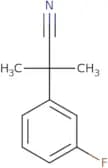
Fórmula:C13H10ClNO4SPureza:Min. 95%Peso molecular:311.74 g/mol2-(3-Fluorophenyl)-2-methylpropanenitrile
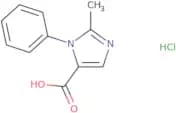
CAS:Versatile small molecule scaffoldFórmula:C10H10FNPureza:Min. 95%Peso molecular:163.19 g/mol2-Methyl-1-phenyl-1H-imidazole-5-carboxylic acid hydrochloride
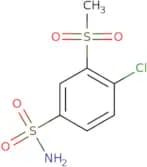
CAS:Versatile small molecule scaffoldFórmula:C11H11ClN2O2Pureza:Min. 95%Peso molecular:238.67 g/mol4-Chloro-3-methanesulfonylbenzene-1-sulfonamide
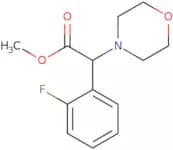
CAS:Versatile small molecule scaffoldFórmula:C7H8ClNO4S2Pureza:Min. 95%Peso molecular:269.7 g/molMethyl 2-(2-fluorophenyl)-2-(morpholin-4-yl)acetate
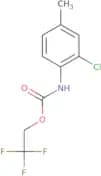
CAS:Versatile small molecule scaffoldFórmula:C13H16FNO3Pureza:Min. 95%Peso molecular:253.27 g/mol2,2,2-Trifluoroethyl N-(2-chloro-4-methylphenyl)carbamate
CAS:Versatile small molecule scaffoldFórmula:C10H9ClF3NO2Pureza:Min. 95%Peso molecular:267.63 g/mol5-Boc-1-oxa-5-azaspiro[2.3]hexane
CAS:Versatile small molecule scaffold
Fórmula:C9H15NO3Pureza:Min. 95%Peso molecular:185.22 g/mol(2S)-2-[(3,4,5-Trimethoxyphenyl)formamido]propanoic acid
CAS:Versatile small molecule scaffold
Fórmula:C13H17NO6Pureza:Min. 95%Peso molecular:283.28 g/mol2-Chloro-N-[cyclohexyl(phenyl)methyl]acetamide
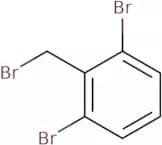
CAS:Versatile small molecule scaffoldFórmula:C15H20ClNOPureza:Min. 95%Peso molecular:265.78 g/mol2,6-Dibromobenzyl Bromide
CAS:2,6-Dibromobenzyl Bromide is a reagent that is used in organic synthesis for the transfer of cholesterol esters. It reacts with anhydrous sodium sulfate to form 2,6-dibromobenzyl sulfate, which can then be hydrolyzed to 2,6-dibromobenzyl alcohol or brominated with carbon tetrachloride to produce 2,6-dibromobenzyl chloride. This product is typically used as a solution in solvents such as carbon tetrachloride or hydrogen peroxide. It is also used as a patterning agent when it is coated on a surface and exposed to light using magnetic or optical lithography.
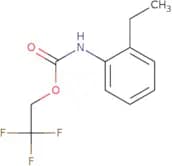
Fórmula:C7H5Br3Pureza:Min. 95%Peso molecular:328.83 g/mol2,2,2-Trifluoroethyl N-(2-ethylphenyl)carbamate
CAS:Versatile small molecule scaffold
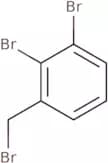
Fórmula:C11H12F3NO2Pureza:Min. 95%Peso molecular:247.21 g/mol1,2-Dibromo-3-(bromomethyl)benzene
CAS:Versatile small molecule scaffold
Fórmula:C7H5Br3Pureza:Min. 95%Peso molecular:328.83 g/molRef: 3D-TDA70131
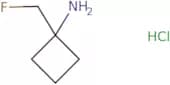
Produto descontinuado1-(Fluoromethyl)cyclobutan-1-amine hydrochloride
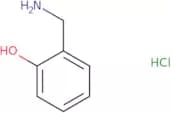
CAS:Versatile small molecule scaffoldFórmula:C5H11ClFNPureza:Min. 95%Peso molecular:139.6 g/mol2-(Aminomethyl)phenol hydrochloride
CAS:2-(Aminomethyl)phenol hydrochloride is a transition metal-containing compound that has an oxidation potential of 1.5 volts. It is used as a catalyst in the oxidation of organic compounds and as a molybdenum cofactor in the enzyme sulfite oxidase, which catalyzes the conversion of sulfite to sulfate. This substance also functions as a colorant and an oxidant in dyeing and printing processes. 2-Aminophenol hydrochloride has been used for the treatment of respiratory diseases, such as asthma, bronchitis and emphysema, due to its ability to inhibit inflammation.
Fórmula:C7H10ClNOPureza:Min. 95%Peso molecular:159.61 g/mol1-(2,2,3,3-Tetrafluoropropyl)piperazine
CAS:Versatile small molecule scaffold
Fórmula:C7H12F4N2Pureza:Min. 95%Peso molecular:200.18 g/molMK 1903
CAS:MK 1903 is a fatty acid that has been shown to reduce insulin resistance and metabolic disorders by increasing ATP levels in the body. It has also been shown to have anti-angiogenic effects, which may be due to its ability to decrease neutrophil recruitment and improve the clinical use of MK 1903. This drug has been found to synergistically work with ursodeoxycholic acid for the treatment of inflammatory diseases.
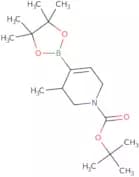
Fórmula:C8H8N2O2Pureza:Min. 95%Peso molecular:164.16 g/mol1-Boc-3-methyl-1,2,3,6-tetrahydropyridine-4-pinacol ester
CAS:Versatile small molecule scaffold
Fórmula:C17H30BNO4Pureza:Min. 95%Peso molecular:323.24 g/mol

![3-[(3-Chlorophenyl)sulfamoyl]benzoic acid](/_next/image/?url=https%3A%2Fstatic.cymitquimica.com%2Fproducts%2F3D%2Fthumb-webp%2FGMA95584.webp&w=3840&q=75)
![5-Boc-1-oxa-5-azaspiro[2.3]hexane](/_next/image/?url=https%3A%2Fstatic.cymitquimica.com%2Fproducts%2F3D%2Fthumb-webp%2FJMB66442.webp&w=3840&q=75)
![(2S)-2-[(3,4,5-Trimethoxyphenyl)formamido]propanoic acid](/_next/image/?url=https%3A%2Fstatic.cymitquimica.com%2Fproducts%2F3D%2Fthumb-webp%2FTDA70967.webp&w=3840&q=75)
![2-Chloro-N-[cyclohexyl(phenyl)methyl]acetamide](/_next/image/?url=https%3A%2Fstatic.cymitquimica.com%2Fproducts%2F3D%2Fthumb-webp%2FYAA45941.webp&w=3840&q=75)