Building Blocks
Subcategorias de "Building Blocks"
- Ácidos Borónicos e Derivados de Ácido Borónico(5.786 produtos)
- Building Blocks Quirais(1.246 produtos)
- Building Blocks Hidrocarbonetos(6.107 produtos)
- Building Blocks orgânicos(61.079 produtos)
Foram encontrados 205461 produtos de "Building Blocks"
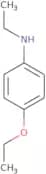
4-Ethoxy-N-ethylaniline
CAS:Versatile small molecule scaffold
Fórmula:C10H15NOPureza:Min. 95%Peso molecular:165.23 g/molMethyl 2,6-dichloro-3,5-dinitrobenzoate
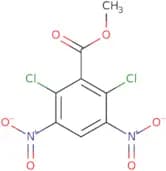
CAS:Versatile small molecule scaffold
Fórmula:C8H4Cl2N2O6Pureza:Min. 95%Peso molecular:295.03 g/mol4-(3-Chlorophenoxy)-benzoic acid
CAS:Versatile small molecule scaffold
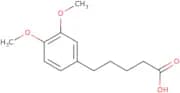
Fórmula:C13H9ClO3Pureza:Min. 95%Peso molecular:248.66 g/mol5-(3,4-Dimethoxyphenyl)pentanoic acid
CAS:Versatile small molecule scaffold
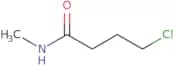
Fórmula:C13H18O4Pureza:Min. 95%Peso molecular:238.28 g/mol4-Chloro-N-methylbutanamide
CAS:Versatile small molecule scaffold
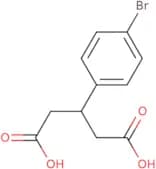
Fórmula:C5H10ClNOPureza:Min. 95%Peso molecular:135.59 g/mol3-(4-Bromophenyl)pentanedioic acid
CAS:Versatile small molecule scaffold
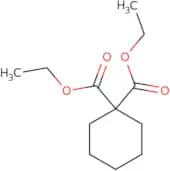
Fórmula:C11H11BrO4Pureza:Min. 95%Peso molecular:287.11 g/molDiethyl 1,1-cyclohexanedicarboxylate
CAS:Diethyl 1,1-cyclohexanedicarboxylate is an ester that can be hydrolyzed by alkaline conditions. It can be used as a solvent and as a raw material in the production of other chemicals. Diethyl 1,1-cyclohexanedicarboxylate is more soluble in water than diethyl ether and diethylene glycol. The cyclohexane ring helps to prevent the formation of peroxides when exposed to air. This product is mainly used as a solvent for lacquer thinners, paints, varnishes, and resins.
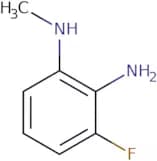
Fórmula:C12H20O4Pureza:Min. 95%Peso molecular:228.29 g/mol3-Fluoro-1-N-methylbenzene-1,2-diamine
CAS:Versatile small molecule scaffold
Fórmula:C7H9FN2Pureza:Min. 95%Peso molecular:140.16 g/mol[3-(1,3-Benzoxazol-2-yl)phenyl]methanol
CAS:Versatile small molecule scaffold
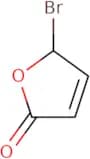
Fórmula:C14H11NO2Pureza:Min. 95%Peso molecular:225.24 g/mol5-bromo-2,5-dihydrofuran-2-one
CAS:Versatile small molecule scaffold
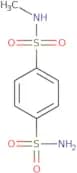
Fórmula:C4H3BrO2Pureza:Min. 95%Peso molecular:162.97 g/mol1-N-Methylbenzene-1,4-disulfonamide
CAS:Versatile small molecule scaffold
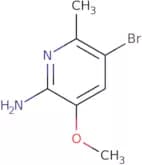
Fórmula:C7H10N2O4S2Pureza:Min. 95%Peso molecular:250.3 g/mol5-bromo-3-methoxy-6-methylpyridin-2-amine
CAS:Versatile small molecule scaffold
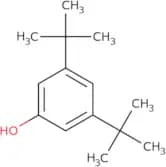
Fórmula:C7H9BrN2OPureza:Min. 95%Peso molecular:217.1 g/mol3,5-Di-tert-butylphenol
CAS:3,5-Di-tert-butylphenol is a reactive compound that has been used as an analytical control agent. It has been shown to have an absorption maximum at 230 nm and a strong absorption band in the ultraviolet region of the spectrum. 3,5-Di-tert-butylphenol is also known to have a high uptake capacity for citric acid and sodium carbonate in uptake assays. The hydrogen bond between 3,5-Di-tert-butylphenol and p-hydroxybenzoic acid is intramolecular and can be broken by heating with acetate extract. This compound has been shown to be toxic in Sprague Dawley rats. 3,5-Di-tert-butylphenol undergoes activation energies of 2.6 kcal/mol (1) and 10 kcal/mol (2).
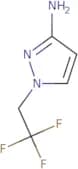
Fórmula:C14H22OPureza:Min. 95%Peso molecular:206.33 g/mol1-(2,2,2-Trifluoroethyl)-1H-pyrazol-3-amine
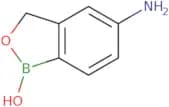
CAS:Versatile small molecule scaffoldFórmula:C5H6F3N3Pureza:Min. 95%Peso molecular:165.12 g/mol5-amino-1,3-dihydro-2,1-benzoxaborol-1-ol
CAS:Versatile small molecule scaffold
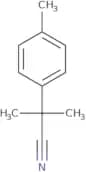
Fórmula:C7H8BNO2Pureza:Min. 95%Peso molecular:149 g/mol2-Methyl-2-(p-tolyl)propanenitrile
CAS:Versatile small molecule scaffold
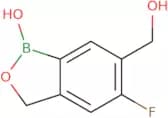
Fórmula:C11H13NPureza:Min. 95%Peso molecular:159.23 g/mol5-Fluoro-6-(hydroxymethyl)-1,3-dihydro-2,1-benzoxaborol-1-ol
CAS:Versatile small molecule scaffold
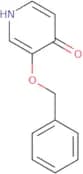
Fórmula:C8H8BFO3Pureza:Min. 95%Peso molecular:181.96 g/mol3-(Benzyloxy)-1,4-dihydropyridin-4-one
CAS:Versatile small molecule scaffold
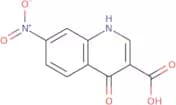
Fórmula:C12H11NO2Pureza:Min. 95%Peso molecular:201.22 g/mol4-Hydroxy-7-nitroquinoline-3-carboxylic acid
CAS:Versatile small molecule scaffold
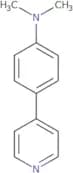
Fórmula:C10H6N2O5Pureza:Min. 95%Peso molecular:234.16 g/molN,N-Dimethyl-4-(pyridin-4-yl)aniline
CAS:N,N-Dimethyl-4-(pyridin-4-yl)aniline is an antimicrobial agent that belongs to the group of diazotization agents. It is used as a precursor for the synthesis of various diazonium salts. N,N-Dimethyl-4-(pyridin-4-yl)aniline is also used in the production of dyes and pharmaceuticals. It has been shown to be active against many types of bacteria, including luteum cultures and some strains of Staphylococcus aureus. The mechanism of action is not fully understood but it may be due to its ability to hydrolyze chloride or nitrate. N,N-Dimethyl-4-(pyridin-4-yl)aniline can also be converted into intermediates for the synthesis of other chemicals such as diazonium salts, which are useful for producing synthetic rubber and other products.
Fórmula:C13H14N2Pureza:Min. 95%Peso molecular:198.26 g/mol


![[3-(1,3-Benzoxazol-2-yl)phenyl]methanol](/_next/image/?url=https%3A%2Fstatic.cymitquimica.com%2Fproducts%2F3D%2Fthumb-webp%2FQCA54083.webp&w=3840&q=75)